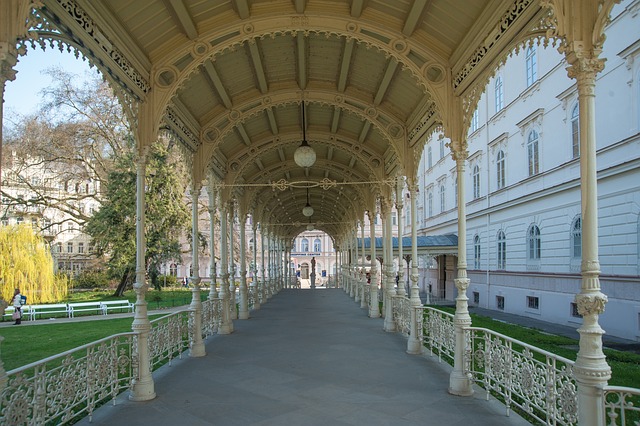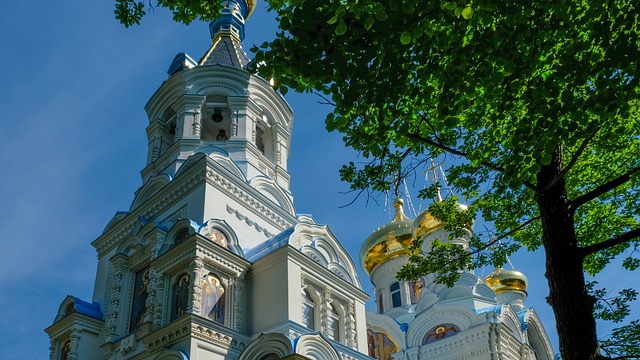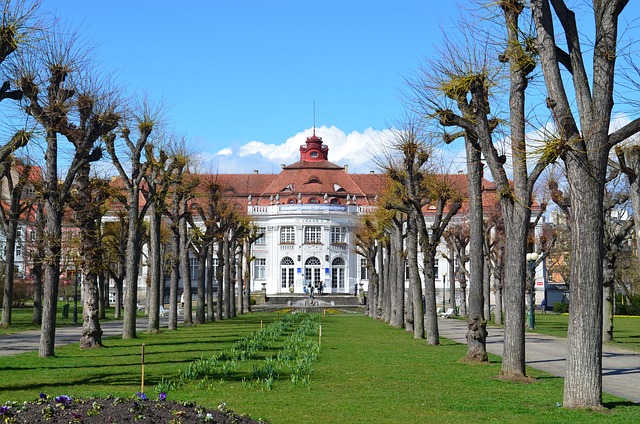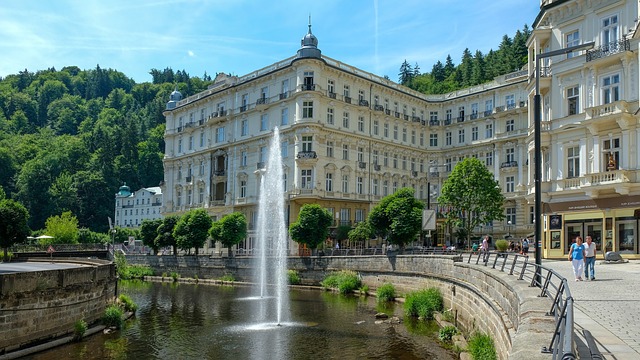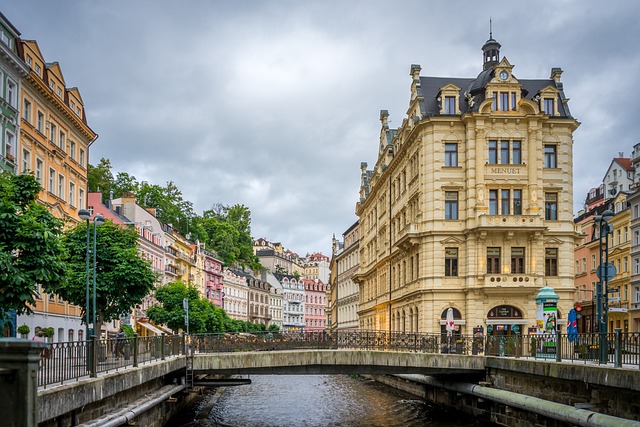
City view of Karlovy Vary, Czech Republic

Karlovy Vary

Karlovy Vary, a renowned spa town in the Czech Republic, is famous for its thermal springs and grand spa buildings. Located in a picturesque valley surrounded by forests, Karlovy Vary attracts visitors seeking relaxation and rejuvenation. The town is known for its elegant architecture, including neoclassical and Art Nouveau-style buildings, many of which house luxurious spas. The famous annual Karlovy Vary International Film Festival brings movie lovers from around the world. With its relaxing atmosphere, healing waters, and beautiful surroundings, Karlovy Vary is an ideal destination for a peaceful retreat.

Top attractions & things to do in Karlovy Vary

If you’re searching for the best things to do in Karlovy Vary, this guide brings together the top attractions and must-see places to visit in Karlovy Vary. The top picks below highlight the most visited sights for first-time visitors, plus a few local favorites worth adding.

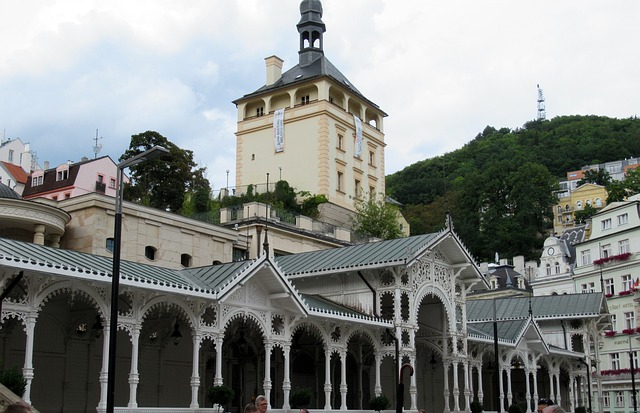
Castle Colonnade in Karlovy Vary, Czech Republic

Castle Colonnade

Tucked beneath the ancient Castle Tower, the Castle Colonnade was built between 1911 and 1913 in an elegant Art Nouveau style by architect Franz Josef Rolletz. Its sinuous ironwork arches and floral motifs frame two restorative springs: the Upper Castle Spring and the Lower Castle Spring, each flowing at 45 °C. Mosaic-tiled drinking basins bear the town’s coat of arms, while forged benches invite visitors to linger in the therapeutic mist. Behind the colonnade, a short trail ascends to the medieval Castle Tower, offering sweeping views of the valley. Legend claims that knights once paused here to replenish their strength before tournaments. Annual tea dances recreate Edwardian-era spa soirees beneath twinkling lanterns. Restoration efforts uncovered original glass-paneled roof sections, now restored to their early 20th-century luster. Enclosed on two sides by lime trees and hydrangeas, the Castle Colonnade remains a peaceful retreat where art nouveau elegance meets healing hydrotherapy.
Ads place
Ads place
Ads place
Ads place
Ads place
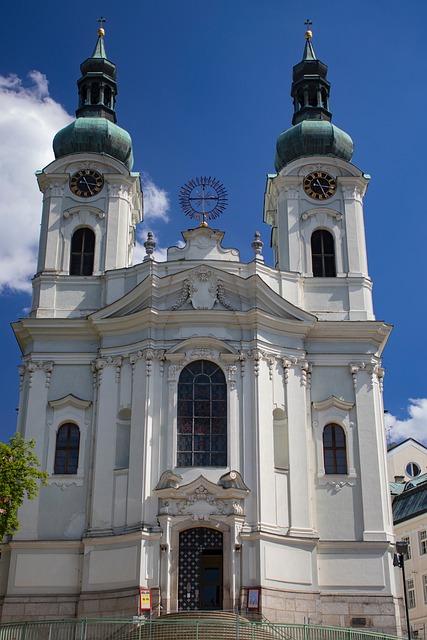
Church of St. Mary Magdalene in Karlovy Vary, Czech Republic

Church of St. Mary Magdalene

Perched above the Thermal Springs, the Church of St. Mary Magdalene is a Baroque masterpiece designed by Kilian Ignaz Dientzenhofer between 1736 and 1745. Its twin onion-domed towers and curving facade dominate the spa town skyline. Inside, sumptuous frescoes by local artists depict biblical scenes in vivid hues, while a carved wooden pulpit and marble altar showcase masterful craftsmanship. Beneath the floor, an underground crypt holds relics of saints and 18th-century nobles who endowed the church. A historic mechanical organ fills the nave during Sunday services and summer concerts, its pipes echoing off stuccoed vaults. Legend tells of miraculous healings after drinking nearby mineral waters and praying here, and annual processions draw pilgrims from across Europe. Guided tours reveal hidden side chapels and a rare collection of Baroque liturgical vestments. Garden terraces offer panoramic views of the Colonnades and river valley, providing a serene vantage point for both worshippers and history enthusiasts.
Ads place
Ads place
Ads place
Ads place
Ads place
Hot Spring Colonnade in Karlovy Vary, Czech Republic

Hot Spring Colonnade

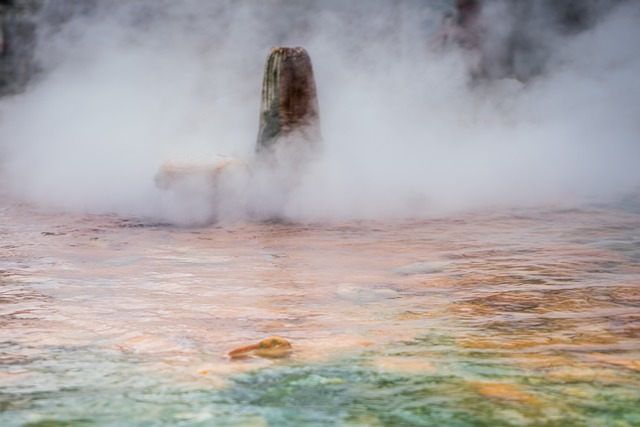
The Hot Spring Colonnade is a feat of modernist architecture, its glass-and-steel pavilion enclosing the powerful Vrzhidlo spring, which jets hot water up to 12 meters at a scalding 72 °C. Completed in 1975 to replace an earlier structure, its spacious hall frames the geyser against a backdrop of Czech countryside. Smaller taps around the perimeter dispense varying-temperature waters rich in minerals like magnesium, calcium, and sulphates—each reputed to soothe different ailments. Visitors can sample chilled water at tasting stations and marvel at the underground geyser chamber illuminated by underwater lamps. Informational panels explain the spring’s role in 19th-century spa medicine and recount Emperor Franz Joseph’s visits. A mezzanine gallery offers close-up views of the erupting fountain, while thermal benches invite leisurely contemplation. Eco-sensors monitor flow rates to guarantee sustainable usage. As evening falls, subtle colored lighting transforms the colonnade into a serene oasis of wellness and architectural innovation.
Ads place
Ads place
Ads place
Ads place
Ads place
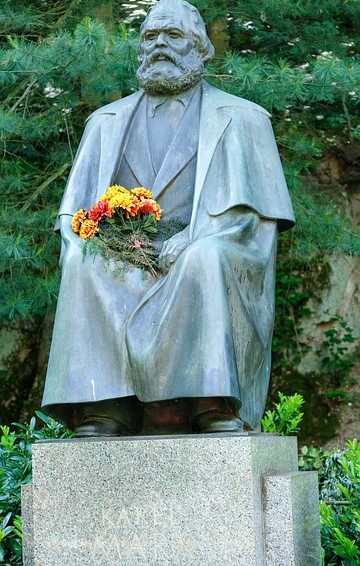
Karl Marx Statue in Karlovy Vary, Czech Republic

Karl Marx Statue

Standing in a quiet garden off the Tepla embankment, the life-size bronze statue of Karl Marx commemorates his 1874 visit to Karlovy Vary, where he sought health cures at the hot springs. Sculpted in 1968 by local artist Rudolf Popp, it portrays Marx in a reflective pose with rolled papers under his arm, symbolizing his enduring intellectual legacy. Nearby plaques recount his spa treatments and philosophical discussions with contemporaries, while a small information kiosk displays reproductions of correspondence and first editions of Das Kapital. The statue’s stone base incorporates fragments of spa tiles from the 19th century, and commemorative events on Marx’s birthday feature lectures on social theory. Mature lindens and birches shade the enclave, creating a contemplative atmosphere. Visitors often pause here before touring nearby colonnades, finding in Marx’s figure a reminder of the town’s historic allure for thinkers, writers, and artists seeking both healing and inspiration.
Ads place
Ads place
Ads place
Ads place
Ads place
Market Colonnade in Karlovy Vary, Czech Republic

Market Colonnade

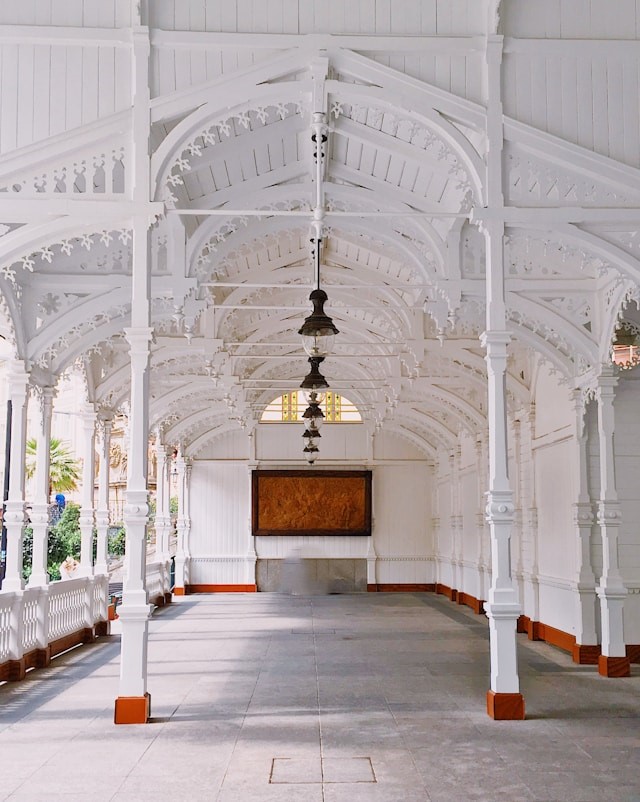
Built in 1883 in a quaint Swiss-style, the Market Colonnade’s white-painted wooden latticework shelters three therapeutic springs: Charles IV, Lower Castle, and the Market Spring. Originally designed by master carpenter Gustav Wiedermann, its decorative eaves and carved gables recall Alpine chalets. Visitors gather at distinctive iron drinking fountains, each engraved with the spring’s mineral analysis and tasting notes. A hidden plaque commemorates Emperor Francis Joseph’s favored visit in 1852. Seasonal flower boxes cheer the arcade in summer, while gas lanterns lend a nostalgic glow at dusk. Beneath the wooden floorboards lies an artifact display of 19th-century porcelain cups and official spa regulations. Local storytellers entertain guests with tales of spa-era poets and royalty who strolled these planked walkways. Today, street cafes spill onto the adjoining square, where patrons sip mineral elixirs and sample regional pastries. The Market Colonnade remains a charming fusion of Alpine design and Czech spa tradition.
Ads place
Ads place
Ads place
Ads place
Ads place
Mill Colonnade in Karlovy Vary, Czech Republic

Mill Colonnade

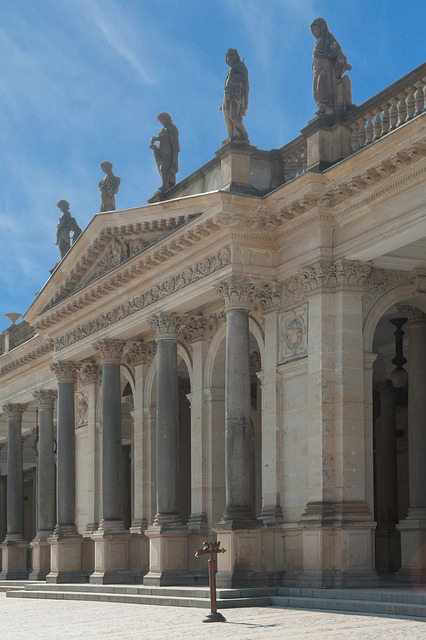
Stretching 132 meters along the Tepla River, the Mill Colonnade is a neoclassical masterpiece featuring 124 towering Corinthian columns and ornate vaulted ceilings. Designed by architect Josef Zitek in 1871, it shelters five famed mineral springs: the healing Mill Spring, woodland-cooled Rusalka spring, the duo of Prince Wenceslas I and II springs, and the legendary Libuše spring, named after the mythical Czech princess. Visitors sip each water from distinctive porcelain cups, believing in benefits from improved digestion to joint relief. Beneath the colonnade lies a concealed galleria of reliefs depicting local legends, while seasonal string quartets perform on the central terrace. A little-known tradition invites guests to toss a coin into the spring trough for wishes of health and prosperity. At dawn, mist rising off the river mingles with steam from the hot waters, creating an ethereal atmosphere often captured by photographers. Meticulous preservation work has restored original stone balustrades and mosaics, ensuring this iconic spa landmark continues to offer relaxation and wonder.
Ads place
Ads place
Ads place
Ads place
Ads place
Park Colonnade in Karlovy Vary, Czech Republic

Park Colonnade

Known locally as Sadova Kolonada, the Park Colonnade was erected in 1881 as part of Dvorzhak Park’s spa circuit. Its delicate wrought-iron arches and scrollwork support a glass canopy that protects visitors from sun and rain while they sip waters from hidden mineral springs. Ornate cast-iron drinking fountains bear the names of long-forgotten wells, and tiled floor panels mark historic spring locations. Shaded stone benches face a small lily pond fed by a trickling spring, creating tranquil reflections. Birdsong fills the air as local volunteers maintain rose beds and herb gardens nearby. In autumn, leaf-peeping tours highlight the park’s chestnuts and maples, while springtime brings guided botanical walks showcasing native spa plants. Original gas lamp posts were retrofitted with Victorian-style lanterns during a 2018 restoration, preserving the colonnade’s 19th-century charm. Sadova Kolonada remains a peaceful enclave for spa-goers and nature lovers alike.
Ads place
Ads place
Ads place
Ads place
Ads place
Saint Peter and Paul Cathedral in Karlovy Vary, Czech Republic

Saint Peter and Paul Cathedral

Dominating the city skyline with its five golden onion domes, the Russian Orthodox Saint Peter and Paul Cathedral was built between 1893 and 1908 in homage to Moscow’s Kremlin churches. Architect Hilary Pavlovich designed its striking red-and-white exterior, while Craftsman Ivan Belopolski painted its interior frescoes depicting saints in vibrant Byzantine style. A carved iconostasis of rare Siberian pine separates nave and sanctuary, adorned with icons donated by Tsar Alexander III. Regular liturgy services in Old Church Slavonic fill the halls with choral resonance, and seasonal Russian choir concerts draw audiences from across Bohemia. A small museum adjacent to the vestibule displays vestments, gospel books, and the original Russian bell set. The cathedral’s hilltop location offers panoramic views of Karlovy Vary’s colonnades and hot springs below, while its gilded domes shimmer in the evening light—a vivid symbol of the town’s multicultural heritage.
Ads place
Ads place
Ads place
Ads place
Ads place
Smetana Park in Karlovy Vary, Czech Republic

Smetana Park

Named after Czech composer Bedrzhich Smetana, Smetana Park offers 1.5 hectares of meticulously manicured landscaped gardens, fragrant flower beds, and meandering walking paths shaded by lime and oak trees. A white pavilion stage hosts free chamber music concerts and poetry readings on summer afternoons. Bronze busts of Smetana and other musical luminaries punctuate the lawns, while wrought-iron benches invite visitors to linger over “houskove knedliky” and locally roasted coffee. A small ornamental pond attracts swans and ducks, and flowering hydrangea borders create vivid color contrasts. Seasonal horticultural displays—tulip festivals in spring and chrysanthemum showcases in autumn—draw botanical enthusiasts. The park’s eastern edge offers framed views of the Becherovka Museum façade across the river, linking natural beauty with Karlovy Vary’s distilling traditions. Twilight lanterns guide evening strollers past Art Nouveau lamp posts, blending cultural heritage with serene green space.
Ads place
Ads place
Ads place
Ads place
Ads place
Tepla River Promenade in Karlovy Vary, Czech Republic

Tepla River Promenade

The Tepla River Promenade meanders along both banks of the gently flowing Tepla, framed by 19th-century spa pavilions and colonnades. Its cobblestone path winds beneath chestnut and lime trees, connecting the Mill Colonnade to the Market and Park Colonnades in a seamless riverfront circuit. Benches crafted from local Bohemian granite offer rest stops overlooking tranquil riverside cascades and fish-populated pools. Cafes with outdoor terraces serve spa waters paired with “vrzhidelni” pastries, while artisan stalls sell hand-blown glass flutes and garnet jewelry. Artistic bollards cast decorative shadows at dusk, and festive string lights transform the walkway into a twinkling avenue during summer concerts. Ecological signage explains local river ecology and efforts to restore native trout populations. Footbridges with ornate iron railings invite photographers to capture reflections of pastel-hued buildings. The promenade’s gentle curve and soothing water soundtrack make it a beloved relaxation route for visitors seeking both history and harmony.
Ads place
Ads place
Ads place
Ads place
Ads place