
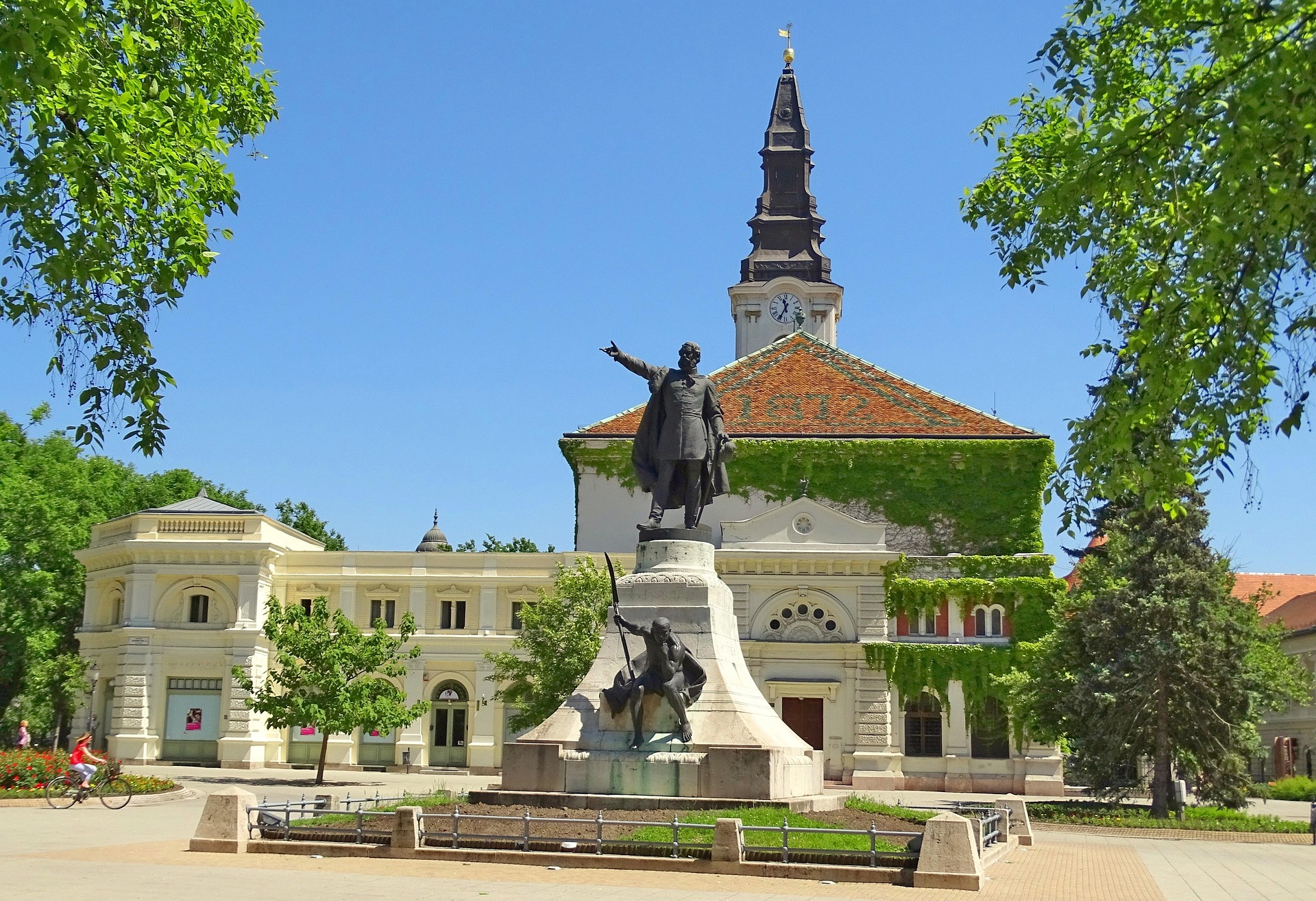
City view of Kecskemét, Hungary

Kecskemét

Kecskemét, set in the heart of the Great Hungarian Plain, dazzles with art nouveau architecture and lively cultural life. The ornate City Hall, with its ceramic-adorned façade and melodic chimes, anchors the main square, while the Franciscan Church and Cifra Palace add layers of historic grandeur. Explore the Kodály Institute’s musical legacy or catch a show at the imposing József Katona Theater. The city’s bustling markets are famed for fruit brandies and paprika, while spring’s "Apricot Blossom Festival” fills streets with parades and folk music. Green parks and gardens surround the city center, and nearby Kecskemét Zoo and arboretum delight families and nature lovers. Traditional csárdas serve spicy fish soup and creamy desserts, embodying the city’s reputation for hospitality. Kecskemét is also known for its vibrant jazz scene, hosting the Kecskemét Jazz Festival every autumn with performances by Hungarian and international artists.

Top attractions & things to do in Kecskemét

If you’re searching for the best things to do in Kecskemét, this guide brings together the top attractions and must-see places to visit in Kecskemét. The top picks below highlight the most visited sights for first-time visitors, plus a few local favorites worth adding.

Cifra Palace in Kecskemét, Hungary

Cifra Palace

The Cifra Palace stands as one of Hungary's finest examples of Art Nouveau architecture, capturing visitors' attention with its vibrant facade and intricate ornamentation. Completed in 1902, it was designed by the acclaimed architect Geza Markus, famous for his daring use of colorful ceramics and eclectic motifs. The exterior features stunning Zsolnay tiles, creating a visually striking mosaic of reds, yellows, blues, and greens. Originally built to house luxury apartments and shops, it now hosts the Kecskemet Gallery, showcasing contemporary Hungarian art and local artists' exhibitions. The palace's interiors continue the Art Nouveau theme, with decorative ironwork and beautifully painted ceilings reflecting Hungarian folklore influences. A lesser-known fact is that its lavish facade includes symbolic representations of Hungarian national identity through carefully integrated floral and geometric motifs. A visit to Cifra Palace is a journey through Hungary's rich artistic history.
Ads place
Ads place
Ads place
Ads place
Ads place
Great Church in Kecskemét, Hungary

Great Church

The Great Church is a monumental landmark in Kecskemet, celebrated for its impressive scale and elegant Baroque architecture. Completed in 1806, it was meticulously designed by architect Gabor Fischer, blending traditional Hungarian elements with Baroque splendor. The church's facade is dominated by twin towers, reaching an imposing height of 74 meters, making them visible from across the city. Inside, visitors marvel at the richly decorated altarpiece and beautifully painted ceiling frescoes illustrating scenes from biblical narratives. The interior is also notable for its magnificent acoustics, making it an ideal venue for concerts and musical performances. The Great Church's large bell, cast in 1819, remains among Hungary's largest, ringing out during special events and festivals. Interestingly, beneath the church lies an extensive crypt, where numerous notable citizens and clergy members have been laid to rest. The church remains a center for spiritual life and cultural events in Kecskemet today.
Ads place
Ads place
Ads place
Ads place
Ads place
Hungarian Museum of Photography in Kecskemét, Hungary

Hungarian Museum of Photography

The Hungarian Museum of Photography in Kecskemet is dedicated to preserving and showcasing Hungary's rich photographic heritage. Founded in 1991, it is one of the few museums globally exclusively devoted to the art of photography, featuring collections from both historical and contemporary Hungarian photographers. Housed in a beautifully restored Art Nouveau building, the museum displays original photographic equipment, rare prints, and significant archives documenting the evolution of Hungarian photography. Notably, it includes the works of celebrated photographers like Andre Kertesz, whose groundbreaking compositions influenced modern photography worldwide. The museum regularly hosts rotating exhibitions and international collaborations, attracting photography enthusiasts and researchers alike. A lesser-known highlight is the museum's extensive library, which contains a remarkable array of photography literature, journals, and rare publications from the past century. Visitors can also explore interactive exhibitions explaining early photographic processes, providing an engaging learning experience. This museum remains a vital hub for photographic education and cultural dialogue in Hungary.
Ads place
Ads place
Ads place
Ads place
Ads place
Kecskemet Town Hall in Kecskemét, Hungary

Kecskemet Town Hall

Kecskemet Town Hall is a magnificent neo-Renaissance building that serves as the administrative and symbolic heart of the city. Constructed between 1893 and 1897, it was envisioned by renowned architect Odon Lechner, often referred to as Hungary's "Gaudi" for his unique and decorative style. Lechner incorporated distinct Hungarian folk motifs into the design, evident in the ornate facade, decorative ceramics, and elaborate ironwork. The building's distinctive roof features multi-colored Zsolnay ceramic tiles, creating a vivid visual impression. Inside, the main council chamber is adorned with grand murals depicting historical scenes significant to Kecskemet's past. A lesser-known yet fascinating detail is the town hall's ornamental staircase, considered a masterpiece of Hungarian craftsmanship, featuring intricate patterns inspired by local traditions. The tower, soaring over the city, provides stunning panoramic views, particularly at sunset. Kecskemet Town Hall stands as a testament to Hungarian architectural ingenuity and civic pride.
Ads place
Ads place
Ads place
Ads place
Ads place
Toy Museum and Workshop in Kecskemét, Hungary

Toy Museum and Workshop

The Toy Museum and Workshop in Kecskemet offers visitors a nostalgic journey through the evolution of toys and childhood play over centuries. Established in 1981, it is housed in a charming historic building, preserving thousands of toys dating back as far as the 18th century. The collection features a remarkable array of handmade dolls, intricate mechanical toys, vintage board games, and wooden figures that reflect Hungary's rich folk traditions and craftsmanship. Highlights include toys crafted by famed Hungarian toymakers like Ferenc Vida and other regional artisans. Beyond exhibitions, the museum hosts interactive workshops where visitors of all ages can create traditional Hungarian toys using age-old techniques. A unique feature is the miniature railroad display, meticulously designed to showcase Hungarian towns and countryside. A lesser-known fact is the museum's extensive collection of toys inspired by local folklore and fairy tales, offering insight into the nation's cultural heritage. It remains a treasured cultural institution beloved by families.
Ads place
Ads place
Ads place
Ads place
Ads place