
City view of Kemi, Finland

Kemi

Kemi sits on the Bothnian Bay and built its identity on sea trade and industry, while winter turned it into a stage for ice. The SnowCastle began in 1996 as a seasonal build and still inspires ice rooms and events even as designs change. At the harbour, icebreaker cruises offer a strange thrill: floating in a survival suit among sea ice, then warming up with coffee. Try salmon soup, reindeer stew, or a simple grilled sausage from a kiosk when fingers go numb. A walk through the small centre reveals murals and a few wooden houses that survived redevelopment. In summer, the shoreline becomes a calm cycling route with long light and gull calls. Quirky fact: locals sometimes measure winter by how quickly visitors accept the survival suit as normal clothing, and the photos end up looking like a bright orange penguin parade.

Top attractions & things to do in Kemi

If you’re searching for the best things to do in Kemi, this guide brings together the top attractions and must-see places to visit in Kemi. The top picks below highlight the most visited sights for first-time visitors, plus a few local favorites worth adding.

Kemi Art Museum in Kemi, Finland

Kemi Art Museum

Kemi Art Museum is a bright surprise for a small coastal town, and it rewards visitors who expect Lapland culture to be only about nature. Founded in 1947, the museum began by displaying a 136-piece collection donated by teacher Ape Rantaniemi, and it has grown into a focused institution with about 2,700 works. The holdings span the 19th century to the present, balancing early Finnish modernism with exhibitions that spotlight contemporary art in the north. Rooms are compact enough to feel approachable, so you can actually look closely instead of marching through endless galleries. Temporary shows bring in new voices, while the permanent collection keeps returning to light, color, and the geometry of everyday Finnish life. Plan your visit like a good espresso: short, intense, and memorable. Afterward, step outside toward the harbor for a palette cleanser of sea wind and gull calls, and you will notice how the museum quietly trains your eye to read the landscape with more detail.
Ads place
Ads place
Ads place
Ads place
Ads place
Kemi Church in Kemi, Finland

Kemi Church

Kemi Church rises in red brick like a northern cathedral, formal on the outside and surprisingly warm once you step into the nave. Designed by architect Josef Stenback, the Gothic Revival building was completed in 1902 and consecrated in 1903, giving the young town a confident skyline. Its capacity of about 1,200 hints that this was meant as a civic landmark, not just a parish room, and the tall windows pull daylight deep into the interior. Look for the big round window above the main entrance and the soaring altar wall, where pointed arches and slim columns echo larger European churches without copying them exactly. A renovation in 2003 refreshed the space while keeping the restrained Nordic feel: pale surfaces, clear sightlines, and an acoustic that makes even a quiet rehearsal sound ceremonial. Visit at dusk in winter, when snow brightens the grounds and the brick facade turns almost copper, then take a short walk to the waterfront to feel how close faith and sea air sit in Kemi.
Ads place
Ads place
Ads place
Ads place
Ads place
Kemi Inner Old Harbour in Kemi, Finland

Kemi Inner Old Harbour

Kemi's Inner Old Harbour is the city's summer living room, where sea air, red warehouses, and long evenings do the charm work for you. The waterfront sits close to the center at Rantabulevardi, so you wander here after lunch and still feel like you slipped out to the coast. The place has a working backstory: early harbor customs buildings were active by 1872, and customs operations began in 1873, shaping Kemi as a trading stop. One local curiosity is the White Customs Villa, once the customs administrator's residence, which keeps a trace of bureaucracy amid the picnic mood. Today the quay is built for simple pleasures: benches, walking paths, and pop-up events that make the waterline feel communal rather than touristic. Make it a small ritual: grab coffee, watch boats settle, and let the Gulf of Bothnia breeze reset your brain. In the evening, the red warehouse buildings glow against a pale sky and reflections turn the water into hammered metal. Even off-season, the openness is worth a quick loop, because the weather becomes part of the show.
Ads place
Ads place
Ads place
Ads place
Ads place
Kemi SnowCastle & SnowExperience365 in Kemi, Finland

Kemi SnowCastle & SnowExperience365

Kemi's shoreline gets a fairy-tale makeover when the SnowCastle rises, proving that winter architecture can be both playful and precise. The first SnowCastle was built in 1996, and it is rebuilt each winter with a different design, shifting the city's skyline for a few bright months. That debut season reportedly attracted about 300,000 visitors, and the scale has stayed ambitious: the complex has ranged from 13,000 to 20,000 m2, with towers reaching over 20 m at its peak. Even when the layout changes, familiar elements return, including a chapel, restaurant, and snow-and-ice spaces that feel oddly calm despite the spectacle. For a year-round taste of the concept, the resort's SnowExperience365 building was completed in the winter of 2019-2020, letting you walk on snow and admire ice sculptures even in summer heat. Go near opening time for cleaner photos and quieter corridors, then warm up on the seafront promenade; the contrast between Baltic wind and carved ice is part of the magic.
Ads place
Ads place
Ads place
Ads place
Ads place
Sampo Icebreaker Cruise in Kemi, Finland

Sampo Icebreaker Cruise

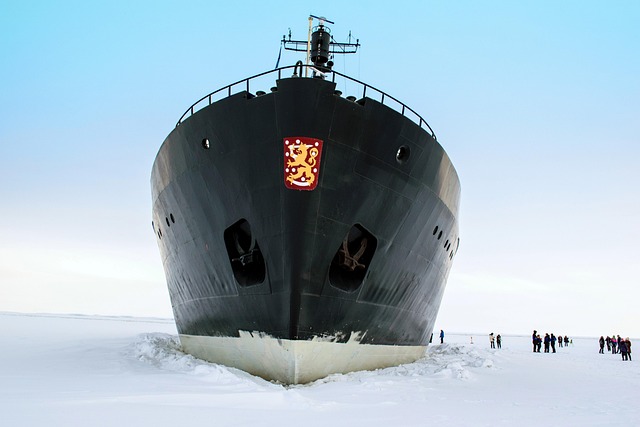
You do not have to be a ship nerd to feel the thrill of stepping aboard Sampo, the icebreaker that turned Kemi into a gateway to the frozen Bothnian Bay. Built at the Wartsila Hietalahti shipyard, the vessel was launched in 1960 and completed in 1961, then later found a second life as an icebreaker cruise based in Kemi. At 75.68 m long with a 17.40 m beam, it looks compact from the quay but carries serious engineering, designed to keep channels open when the sea locks up. On typical cruises you tour the bridge and engine rooms, then watch the bow shoulder through ice like slow motion thunder. The signature moment is the supervised ice swim in a flotation suit, a practical Arctic ritual that feels half science experiment, half bragging rights. Pick a cold, clear day if you can: the white horizon, the ship's deep vibration, and the crunch under hull combine into a memory that stays loud long after you step back onto land.
Ads place
Ads place
Ads place
Ads place
Ads place