
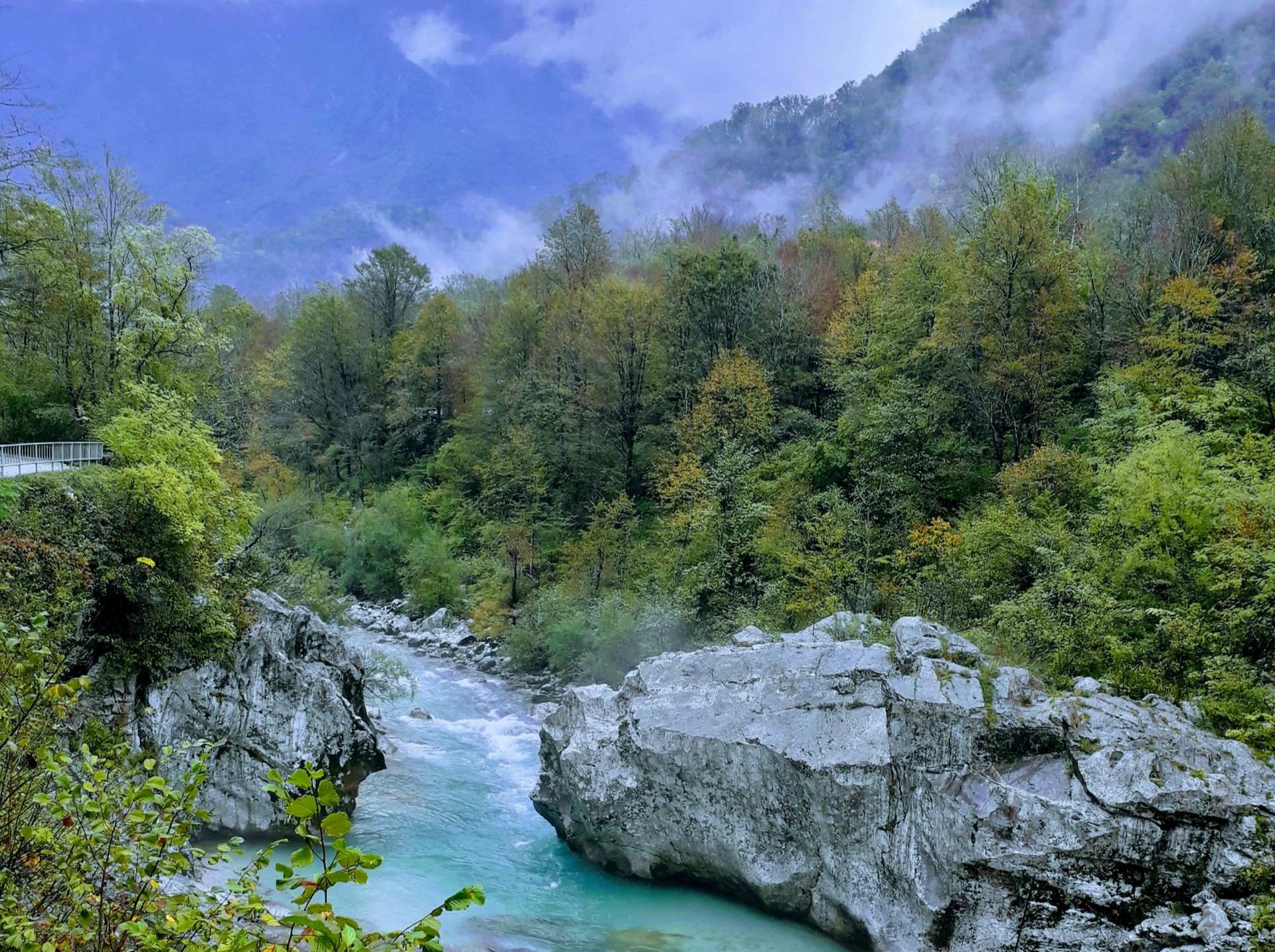
City view of Kobarid, Slovenia

Kobarid

Kobarid sits where the Soca turns a blue that painters debate and photographers chase in all weathers. The museum treats the First World War with care, mapping the Isonzo fronts so trenches become legible rather than distant history. Walk to the Italian ossuary on the hill for a difficult view, then balance the day with the Kozjak waterfall walk through fern shade and wooden bridges. Cheese from the valley competes with frika, a skillet of potatoes and curds that solves cold weather in ten minutes and wins repeat orders. Records of dairying go back centuries; so do river stories told by kayakers who read rapids like sentences and annotate with paddles. Unusual fact: a local beekeeper once trained visitors to listen to hives before tasting honey, and the lesson worked better than marketing. Evening is for terrazas and a glass of Rebula or local craft beer, while the river keeps counting stones in the dark and never loses track.

Top attractions & things to do in Kobarid

If you’re searching for the best things to do in Kobarid, this guide brings together the top attractions and must-see places to visit in Kobarid. The top picks below highlight the most visited sights for first-time visitors, plus a few local favorites worth adding.

Italian Charnel House and St Anthony Church in Kobarid, Slovenia

Italian Charnel House and St Anthony Church

Above the town, the Italian Charnel House circles St Anthony Church in a solemn ring of stone that turns landscape into memorial. Constructed between 1936 and 1938, it gathers the remains of 7014 Italian soldiers from World War I, moving them from scattered graves into numbered niches. The church itself predates the monument, with records of rebuilding in the 17th century after earlier damage. Architects used local limestone and a restrained Romanesque vocabulary—arches, simple cornices, measured shadow—to keep the emphasis on names and silence. Climb the steps and read the plaques; the sequence of battalions and dates, especially 1915 and 1917, sketches the war's tempo better than any paragraph. From the terrace the Soca valley looks almost gentle, and the ossuary's circular plan feels like a hand drawn around the town. On anniversaries, wreaths and low speeches replace tour chatter, and the breeze lifts cypress scent across the gravel. It is a place for counting, not spectacle, and for the slow acceptance that mountains keep memory with more discipline than people do.
Ads place
Ads place
Ads place
Ads place
Ads place
Kobarid Museum in Kobarid, Slovenia

Kobarid Museum

War stories in Kobarid find their fullest voice inside the Kobarid Museum, where trench maps, letters, and objects from the Isonzo Front turn dates into faces. Opened in the 1990s, the museum earned European recognition for how it humanizes the battles along the turquoise Soca. A large relief model shows the front lines during 1915-1917, while a film condenses the disastrous twelfth battle of 1917 that pushed troops across mountain passes. Display cases explain rations by weight—hard bread, tinned meat, and a daily spirit—alongside a soldier's pack kept under regulation at roughly 25 kilograms. One section maps alpine mule routes cut under the Austro-Hungarian command; another presents photographs annotated with coordinates taken from captured notebooks. The quietest room holds letters dated October 1916, their pencil lines still legible, and a periscope shows how men watched no-man's-land without lifting their heads. Before leaving, step onto the balcony to read the valley: the river glints like wire, the mountains close ranks, and the town below feels both shelter and witness to a century that learned new words for loss.
Ads place
Ads place
Ads place
Ads place
Ads place
Kozjak Waterfall in Kobarid, Slovenia

Kozjak Waterfall

A short forest path and a run of wooden galleries lead to Kozjak Waterfall, a green room where water drops into a stone amphitheater like a stage cue. The main fall measures around 15 meters, dramatic after spring melt, and its pool stays a steady near 9-10 degrees even on hot days. Boards bolted to limestone were first installed for visitors in the 1990s, replacing older tracks that hugged the bank of the Soca. Look close for drill holes and iron pins from earlier routes, practical scars that record maintenance after floods. The gorge narrows to a slot, so tripods require courtesy; passing places are signed every 10 meters. Birds nest in ledges above the spray, and the sound edits talk into a single hush. If rain swells the stream, wardens may limit entry, a call made with gauges upstream calibrated in the 20th century. On overcast afternoons the pool turns bottle glass, and the waterfall's white thread seems brighter than sky. Walk back slowly; brief openings on the return show the valley and its bridges.
Ads place
Ads place
Ads place
Ads place
Ads place
Napoleon Bridge in Kobarid, Slovenia

Napoleon Bridge

A single graceful span over the Soca carries the name Napoleon Bridge, recalling the passage of French troops in 1797 even though the stone arch seen today is later. Early crossings existed by the 18th century, rebuilt after floods and wartime damage; engineers completed the current version in the 1920s with reinforced concrete hidden behind dressed limestone. Its deck sits about 15 meters above water in normal flow, high enough to keep wagons safe from sudden rises. Look for the cutwater on the upstream pier and sidewalks roughly 1 meter wide added for pedestrians when traffic changed after the new road alignment. In low light the parapet casts a curve into the river, and trout shadows hold beneath the green. Panels at the approach explain why the route mattered to armies and merchants, and why the bridge was mined, then spared, when orders were countermanded late in the war. Stand midspan and the valley opens in both directions; the mountains feel close, the town compact, and the bridge itself the necessary line that kept lives, letters, and livestock moving.
Ads place
Ads place
Ads place
Ads place
Ads place
Tonovcov Grad Archaeological Site in Kobarid, Slovenia

Tonovcov Grad Archaeological Site

A low, broad hill above Kobarid holds Tonovcov Grad, an archaeological site where late antiquity left a compact city of stone. Excavations date major occupation to the 4th-6th centuries, with house foundations, cisterns, and at least two small churches mapped across the ridge. One basilica shows an apse added in the 5th century; another preserves threshold grooves that marked the passage of countless feet. Informational panels outline the site plan in a clear orthogonal diagram, and a reconstruction drawing suggests roof heights around 3-4 meters. Access follows a signed path of roughly 45 minutes from town, and the final approach rises gently through hornbeam and pine. From the top, the view runs from the Soca's bends to the foothills, and the wind carries the same notes that once cooled cooking fires. Pebbles crunch, lizards bolt, and history feels both specific and unguarded. If you come late, the stones hold the day's heat and shadows make room plans legible; come early, and birds write the site into morning as if reopening the ledger after a long pause.
Ads place
Ads place
Ads place
Ads place
Ads place