
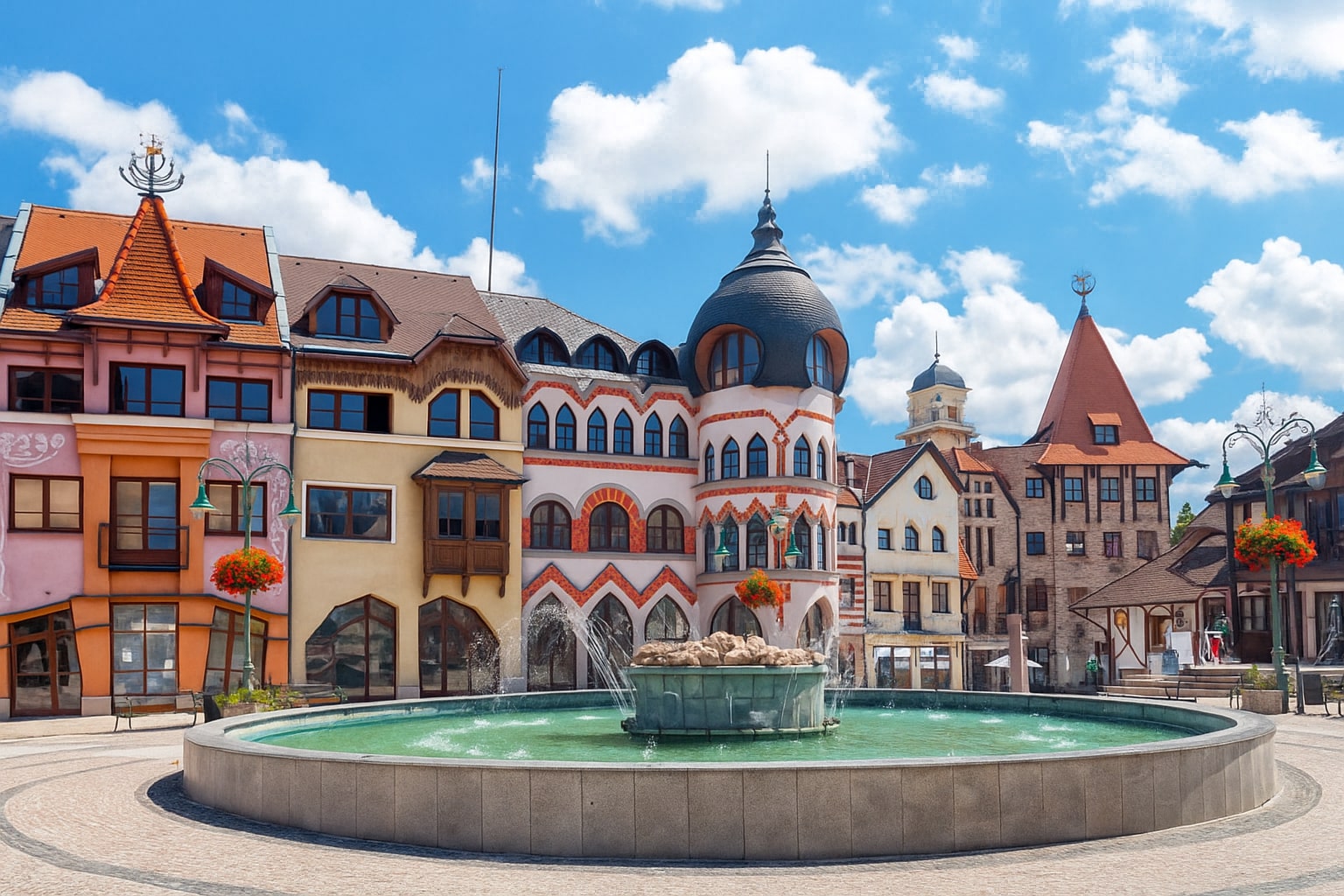
City view of Komarno, Slovakia

Komarno

Komarno lives where two rivers hold a conversation, the Danube and the Vah trading currents like old colleagues. Fortifications loop the town in geometry that once mattered for cannons and now matters for picnics. The Europe Place square collects miniature architectural styles from the continent into a witty promenade, part lesson, part selfie engine. Kitchens serve fish soup with serious paprika, then calm things down with honey cakes and coffee that lingers. Bilingual menus reflect daily code switching, a local superpower. A small museum explains shipbuilding while model makers argue cheerfully over rivet counts. Evenings belong to riverside benches and long talks. Peculiar and delightful, a statue of a novelist sits with an empty chair beside him, and locals take turns completing the scene, proving that literature becomes a public sport when a city leaves room on the bench for the reader.

Top attractions & things to do in Komarno

If you’re searching for the best things to do in Komarno, this guide brings together the top attractions and must-see places to visit in Komarno. The top picks below highlight the most visited sights for first-time visitors, plus a few local favorites worth adding.

Danube Region Museum in Komarno, Slovakia

Danube Region Museum

If you want the region to speak in complete sentences, start here. The Danube Region Museum gathers archaeology, folk craft, and urban memory into well-paced rooms that respect evidence. A founding date in 1886 is often cited, and the collection ranges from Roman finds and Avar belt fittings to guild chests and river tools that smell faintly of oil and silt. Labels avoid romance and stick to clear timelines, while a lapidarium lets inscriptions do their own talking. Ethnographic rooms set out linen work, stove tiles, and wedding crowns with quiet pride; ship models explain how freight once read currents like a second language. Conservation notes demystify storage, humidity, and reversible repairs so visitors see the backstage that keeps objects honest. Temporary shows tie contemporary art to place, proving museums can hold dialogue, not just drawers. Step outside and the Danube’s wind edits your thoughts; step back in and the vitrines translate that breeze into dates, routes, and tools you can name.
Ads place
Ads place
Ads place
Ads place
Ads place
Danube–Vah Confluence Promenade in Komarno, Slovakia

Danube–Vah Confluence Promenade

Where two working rivers meet, Komarno sets out a levee walk that doubles as a front-row seat to geography. The promenade follows the crown of flood defenses with steady views across the Danube and the mouth of the Vah, a calm ribbon that still remembers timber rafts and barge trains. Wayfinding boards sketch shipping lanes, bank stabilization, and bird corridors; benches face west for sunsets that color the shipyard cranes politely. Runners share the path with anglers negotiating wind, and in spring the willows present a green curtain that edits city noise into a murmur. A small lookout notes historic water levels from past surges, turning hydrology into readable memory. Cyclists appreciate the continuity toward cross-border routes and the new bridge’s elegant line, an everyday reminder of connectivity. Watch for cormorants and swans working the eddies like pros, and for survey staff checking levees after storms—maintenance is the quiet hero of river life. It is a simple walk, yes, but it teaches with every meter.
Ads place
Ads place
Ads place
Ads place
Ads place
Europe Place in Komarno, Slovakia

Europe Place

A few steps from the riverfront, a playful ensemble turns a square into a geography lesson with a smile. Europe Place arranges facades inspired by national styles around an intimate court, a civic set piece completed in the 2000s to showcase diversity at a walkable scale. You move from steep gables to arcades, from sober plaster to tilework, while plaques explain which motifs nod toward which capitals. The trick works because proportions stay modest and materials remain honest. A small chapel, cobbles, and benches keep the mood local even as the tour feels continental. In the evening, strings of lights and cafe chatter turn the court into a stage; in daylight, children trace countries with ice-cream spoons. The project sits where Danube trade has long braided languages, so the architectural collage reads as biography rather than gimmick. Look for a discreet map key, notes on Renaissance and Baroque cues, and a panel about cross-border friendships—soft infrastructure that cities cultivate as carefully as parks.
Ads place
Ads place
Ads place
Ads place
Ads place
Komarno Fortress in Komarno, Slovakia

Komarno Fortress

Approach along the grassed glacis and you notice how the angles begin steering you long before the walls appear. This is a layered defensive organism where the Old and New forts knit together, turning river junction and trade routes into strategy. Plans took shape from the 16th century onward as Habsburg engineers answered repeated Ottoman pressure with geometry and patience, refining a star fort logic of bastions, ditches, and ravelins. Later repairs standardized brick and earth to absorb artillery shock rather than resist it with vanity. During 1848–1849 the complex served as a stubborn revolutionary anchor, a reminder that fortresses also store ideas. Walk the covered way, read the surviving casemate numbers, and the site becomes a textbook of military engineering written in lime and silence. On calm days you can trace supply routes to the Danube and the Vah like faint pencil marks. Concerts and living-history weekends now thread culture through the caponiers, proof that endurance and reuse can share the same stones, politely.
Ads place
Ads place
Ads place
Ads place
Ads place
St Andrew's Church in Komarno, Slovakia

St Andrew's Church

From the square the church looks composed; inside, the plan reveals how communities rebuild with memory rather than haste. Parish records point to a medieval predecessor, but the present character reflects Baroque rebuilding after the destructive 1763 earthquake reshaped much of the town. A calm nave, measured cornices, and a disciplined pulpit show theology translated into wood and plaster. Side altars carry images retouched in the 18th century, and a modest organ balcony still surprises with warmth during rehearsal. Mason marks on reused blocks testify to thrift as conservation, while a small plaque links repairs to Jesuit networks that once stitched education to devotion. The tower’s clock, adjusted through generations, taught neighbors to agree on minutes long before apps tried the same. Stand near the font worn by fingertips and the building feels less like a monument than a ledger of baptisms, storms, and steadiness—a civic instrument tuned to everyday faith. Leave at dusk and the facade keeps its poise without help.
Ads place
Ads place
Ads place
Ads place
Ads place