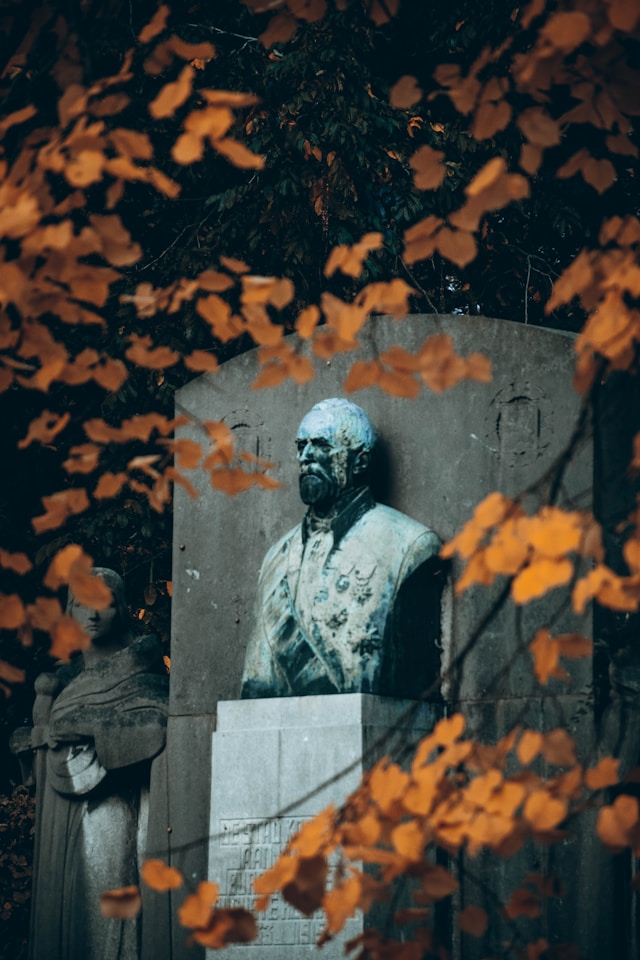
Astridpark
In Kortrijk, Belgium .
More places to visit in Kortrijk
Discover more attractions and things to do in Kortrijk.
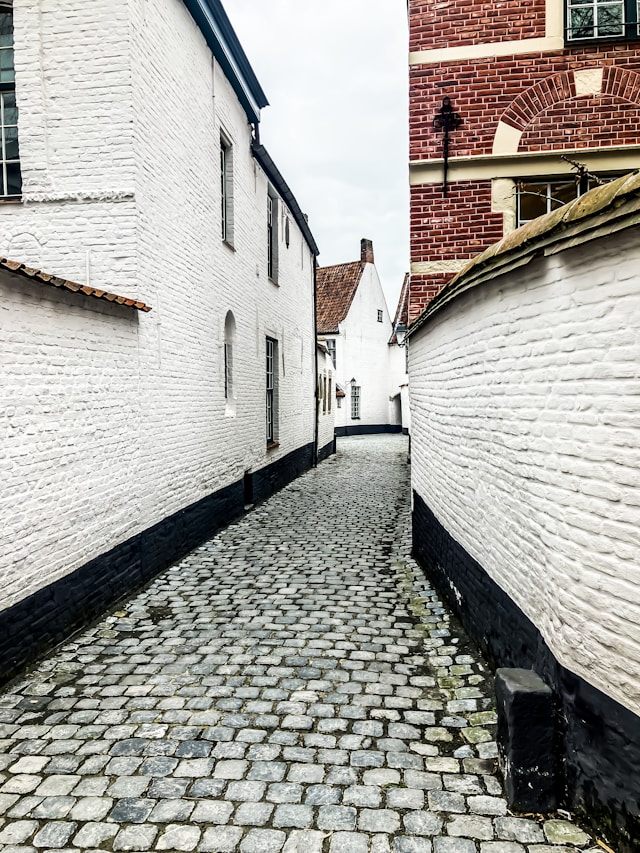
Beguinage of Kortrijk
The Beguinage of Kortrijk (Begijnhof) is a UNESCO World Heritage site and one of the best-preserved beguinages in Belgium. Founded in 1238 , the beguinage was home to a community of lay religious women known as Beguines , who lived a semi-monastic lifestyle. The beguinage consists of small, whitewashed houses, a chapel, and a convent, all set around quiet courtyards and gardens. Walking through the narrow streets of the beguinage, visitors can experience a peaceful atmosphere that contrasts with the bustling city outside. The on-site museum provides insight into the life of the Beguines and the social and religious significance of these communities. The Beguinage of Kortrijk is a tranquil oasis and a fascinating glimpse into medieval religious life. The chapel’s hidden garden features medicinal herbs once cultivated by the Beguines for healing. Every autumn, the beguinage hosts a candlelit procession honoring its founders, blending history with local tradition.
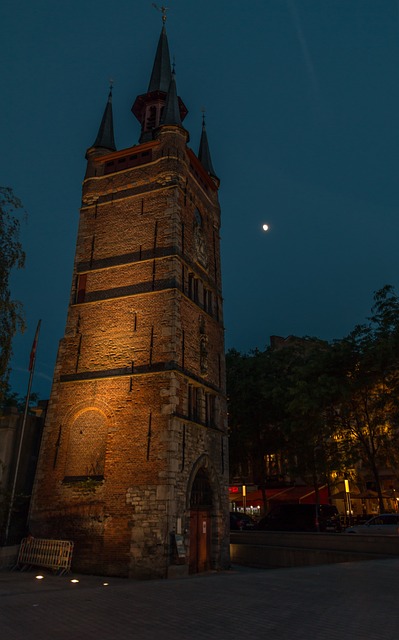
Belfry of Kortrijk
The Belfry of Kortrijk (Belfort van Kortrijk) is a striking medieval tower located on the Grote Markt (Market Square). Dating back to the 12th century , the belfry originally served as a watchtower and symbol of the city's independence. It is part of the UNESCO World Heritage site listing of Belgian belfries. The tower has undergone multiple restorations but retains its historical charm with a blend of Romanesque and Gothic architectural elements. At the top of the belfry is a carillon with 48 bells , which still chime regularly, adding to the square's ambiance. Visitors can climb the tower for panoramic views of the city and learn about Kortrijk's rich history. The belfry is a testament to the city's medieval past and remains a key historical landmark. The oldest bell, cast in 1425 , still rings during the annual Kortrijk Festival of Light. A hidden staircase leads to a medieval guardroom, where soldiers once kept watch over the city.
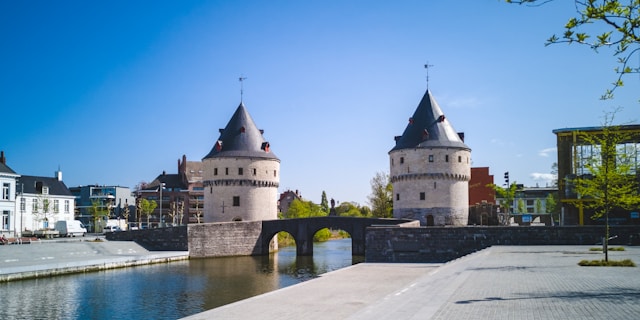
Broel Towers
The Broel Towers (Broeltorens) are iconic landmarks of Kortrijk, standing proudly on the banks of the River Lys . These two imposing towers, built in the 12th and 13th centuries , were once part of the city's medieval fortifications. The southern tower, known as the Speytorre , was used to control river traffic, while the northern tower, the Ingelborchtorre , served as an armory. Today, the towers are among the few remaining parts of Kortrijk's original defenses. Visitors can admire their robust architecture and picturesque setting by the water. The nearby Broel Bridge, which connects the two towers, adds to the charm of the area, making it a popular spot for photography. A visit to the Broel Towers offers a glimpse into Kortrijk's military history and its importance as a fortified city. During recent renovations, archaeologists uncovered 14th-century weaponry buried beneath the towers. The site now hosts a summer medieval market where blacksmiths demonstrate ancient forging techniques.
Buda Island
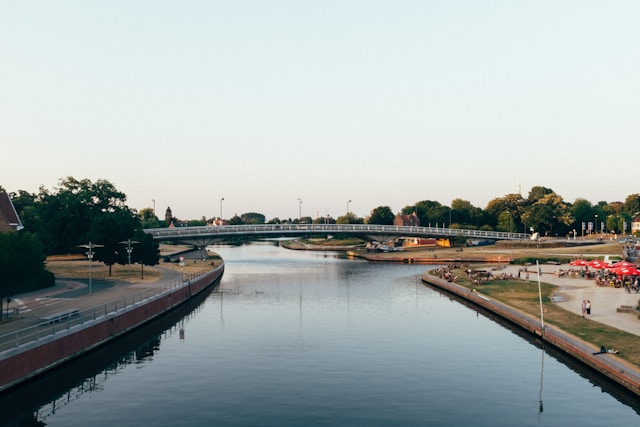
Buda Island (Eilandje van Buda) is a vibrant cultural district located between two branches of the River Lys in Kortrijk. This creative hub is home to several art galleries, theaters, and studios, making it a focal point for contemporary art and culture in the city. The Buda Factory, a former industrial building, has been transformed into a cultural center where artists and creatives can work and exhibit their art. Buda Island also hosts various festivals and events throughout the year, including performances, art exhibitions, and workshops. Visitors can explore the unique blend of old industrial architecture and modern artistic innovation. Buda Island is the perfect destination for art lovers and those looking to experience Kortrijk's contemporary cultural scene. A new underground studio complex opened in 2023, offering residencies to international digital artists. The annual BudaFest transforms the island into an open-air stage for avant-garde theater and music.

Church of Our Lady
The Church of Our Lady (Onze-Lieve-Vrouwekerk) is one of Kortrijk's oldest and most significant churches. Built in the 12th century in Romanesque style and later expanded in Gothic style, the church played a key role during the Battle of the Golden Spurs in 1302 , as it housed the relic of the Holy Cross. The interior of the church is rich with historical and religious art, including the famous altarpiece 'The Erection of the Cross' by Anthony van Dyck . The church also contains beautiful stained glass windows and a large organ. Visitors can explore the church's serene interior and learn about its connection to key historical events in Kortrijk's past. The Church of Our Lady is a spiritual and historical treasure that reflects the city's deep religious heritage. A recent restoration project revealed 13th-century frescoes depicting saints hidden beneath later plasterwork. The church’s crypt now houses a small exhibit on medieval liturgical practices, including rare chalices and vestments.
Groeninge Monument
The Groeninge Monument, located in Groeningepark, commemorates the famous Battle of the Golden Spurs , which took place near Kortrijk in 1302 . This battle saw a surprising victory for the Flemish militia over the French knights, marking a significant moment in Flemish history. The monument, unveiled in 1906 , features statues and inscriptions that celebrate the bravery and determination of the Flemish soldiers. The surrounding park is a peaceful green space where visitors can relax while reflecting on the historical significance of the site. The Groeninge Monument is an important symbol of Flemish identity and pride, and it serves as a reminder of Kortrijk's place in the history of Flanders. At night, the monument is illuminated with projections depicting scenes from the battle. The park’s “Whispering Wall” echoes phrases from the Flemish oath sworn by soldiers before the conflict.
Kortrijk 1302 Museum
Kortrijk 1302 Museum is dedicated to one of the most famous events in Flemish history: the Battle of the Golden Spurs , which took place near Kortrijk in 1302 . This museum offers an immersive experience into the medieval conflict between the French forces and the Flemish militia, who achieved a surprising victory. Through interactive exhibits, historical artifacts, and multimedia displays, visitors can learn about the causes, course, and consequences of the battle. The museum also highlights the cultural significance of the battle, which is seen as a symbol of Flemish pride and independence. Located in a historical building near the city center, Kortrijk 1302 Museum provides both history enthusiasts and casual visitors with a deep understanding of this pivotal moment in Flanders' history. A newly added VR experience lets visitors "fight" alongside medieval soldiers in a 3D-rendered battlefield. The museum’s archive holds letters from 14th-century Flemish leaders , offering firsthand accounts of the struggle for autonomy.
Saint Martin's Church
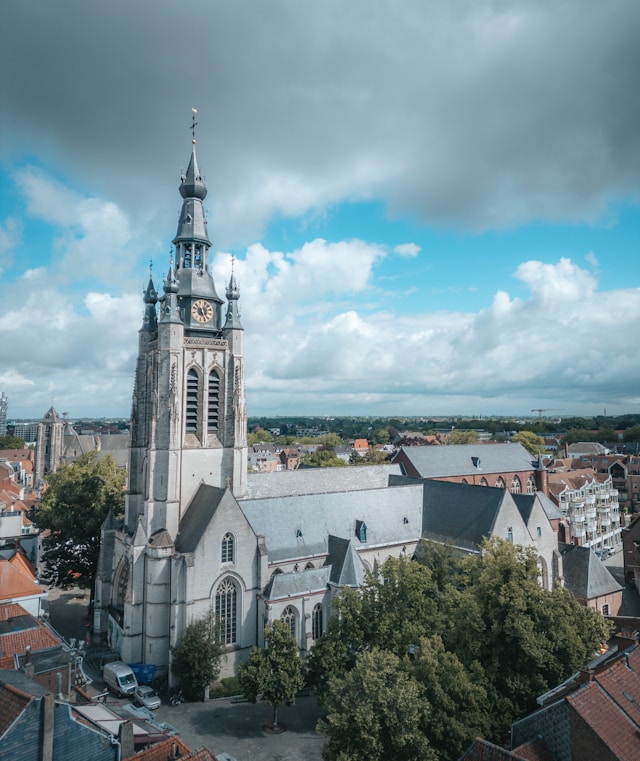
Saint Martin's Church (Sint-Maartenskerk) is one of the most important religious buildings in Kortrijk. Originally built in the 14th century , the church is a stunning example of Gothic architecture . It features a towering spire that dominates the city's skyline and can be seen from various points around Kortrijk. The interior of the church is equally impressive, with intricate stained glass windows , beautiful altars, and an ornate organ. Saint Martin's Church has witnessed key events in the city's history, and its peaceful atmosphere offers visitors a place for reflection and worship. The church is not only a spiritual center but also a historical landmark that showcases Kortrijk's rich architectural heritage. A recent restoration uncovered a 15th-century mural of Saint Martin sharing his cloak, hidden for centuries. The church now hosts a monthly organ concert series , featuring compositions by Flemish Baroque masters.
Texture Museum
The Texture Museum in Kortrijk tells the fascinating story of the city's role in the global linen industry . Housed in a former industrial building along the River Lys , the museum showcases the rich heritage of textile production in the region, particularly during the 19th and early 20th centuries . Exhibits explore the history of flax cultivation, the technical innovations in textile production, and the economic impact of the industry on Kortrijk and beyond. The museum also includes interactive displays and contemporary art exhibitions that relate to the theme of textiles. The Texture Museum provides a comprehensive look at how the linen industry shaped Kortrijk's economy and culture, making it a must-visit for those interested in industrial history and craftsmanship. Visitors can try their hand at weaving on replica 19th-century looms during weekend workshops. The museum’s rooftop terrace offers panoramic views of the river and hosts pop-up exhibits on sustainable fashion.