
City view of Kragujevac, Serbia

Kragujevac

Kragujevac carries the poise of a place that has been both workshop and capital, staging Serbia’s first theatre, first modern printing press, and early civic reforms long before trend became a word. The Sumarice Memorial Park asks for quiet stamina, its museum speaking 1941 with documents that do not overact. Nearby, the old cannon foundry grounds the Technical Museum; lathes, steam, and castings reveal why engineers treat patience like a tool. The center pivots between student cafes, book fairs, and bakeries that cut gibanica as if measuring. A leafy promenade leads to galleries installed inside former factories where the brick still smells faintly of oil. Locals swear by roasted peppers layered with snow-white kajmak, a combination that turns lunch into a plan. A small surprise: a courtyard workshop where watchmakers repair heirlooms under magnifying lenses, narrating each screw. Kragujevac wins you over by showing how precision becomes a temperament.

Top attractions & things to do in Kragujevac

If you’re searching for the best things to do in Kragujevac, this guide brings together the top attractions and must-see places to visit in Kragujevac. The top picks below highlight the most visited sights for first-time visitors, plus a few local favorites worth adding.

Amidza Konak in Kragujevac, Serbia

Amidza Konak

A timber gallery folds around a courtyard and the city suddenly remembers its years as a princely seat lived at a domestic scale. Built in the 19th century for the household of Milos Obrenovic, the residence takes the vocabulary of an Ottoman town house and translates it to the temperament of Sumadija. The steward nicknamed Amidza gave the building its familiar name and the rooms still balance protocol with warmth. Today displays lean toward ethnography textiles copper and carved chests that explain how taste and labor held a family together. Window light travels across painted ceilings and settles on floors worn by negotiations that once decided salaries marriages and journeys. The house carries its age lightly and the garden keeps a shade that edits voices to a courteous level. Step back to the street and the modern town resumes but the cadence of a working konak stays with you longer than expected.
Ads place
Ads place
Ads place
Ads place
Ads place
Knezev Arsenal Old Foundry Museum in Kragujevac, Serbia

Knezev Arsenal Old Foundry Museum

Brick workshops line a rail spur and the smell of oil lingers like a footnote to the nineteenth century. The arsenal began in 1853 under Prince Aleksandar Karadjordjevic when minister Ilija Garasanin pushed a program of self reliance and invited French engineers to train local crews. Cast iron and steam turned the town into a laboratory where rifles and machine parts defined a new kind of patriotism. Today the Topolivnica halls display lathes gauges and blueprints and the guides talk about tolerances with the pride of old craftsmen. Photographs show women at presses during hard decades and explain how industry and education learned to cooperate. Glass roofs leak generous daylight so metal looks honest rather than theatrical and the yard keeps rails that once carried ideas as efficiently as ore. You leave with a sharper ear for machines and a sense that industrial heritage is simply memory that learned to work for a living.
Ads place
Ads place
Ads place
Ads place
Ads place
Knjazevsko Srpski Teatar in Kragujevac, Serbia

Knjazevsko Srpski Teatar

Evening gathers under a modest facade and the foyer fills with that pleasant hush a city makes when it is ready to listen. The theater traces its founding to 1835 when Joakim Vujic staged plays under the patronage of Milos Obrenovic and gave Serbia a professional stage in its own tongue. Since then the Serbian language stage has rehearsed everything from comedies of manners to arguments about identity as if culture were public service. Posters in the corridor read like a diary of experiments and returns and the auditorium rewards precision more than volume. Directors borrow modern tricks but keep faith with the intimacy of a room where breath carries. After the curtain the square outside feels newly tuned and conversation rises a key as if the city had agreed on better grammar. The name Knjazevsko srpski teatar remains a promise that stories here will be local enough to matter and large enough to travel.
Ads place
Ads place
Ads place
Ads place
Ads place
Prince Milos Court Complex in Kragujevac, Serbia

Prince Milos Court Complex

Paths through old trees lead to buildings that once organized a young state with careful handwriting and a talent for compromise. When Kragujevac became capital in 1818 Milos Obrenovic laid out his court near workshops and classrooms so policy and practice would share the same yard. Here scribes copied decrees after the autonomy confirmed in 1830 and envoys negotiated taxes uniforms and roads for the Principality of Serbia. Surviving offices and pavilions show how wood stone and whitewash can express confidence without arrogance. Guides tell stories about audiences held on rainy days and about clerks who measured time by bells rather than by ego. The complex now hosts exhibitions and lectures that keep the habit of civil conversation alive. Stand under the eaves and the city feels correctly scaled and practical and the idea of a capital becomes something you can walk through not just read about.
Ads place
Ads place
Ads place
Ads place
Ads place
Sumarice Memorial Park and 21 October Museum in Kragujevac, Serbia

Sumarice Memorial Park and 21 October Museum

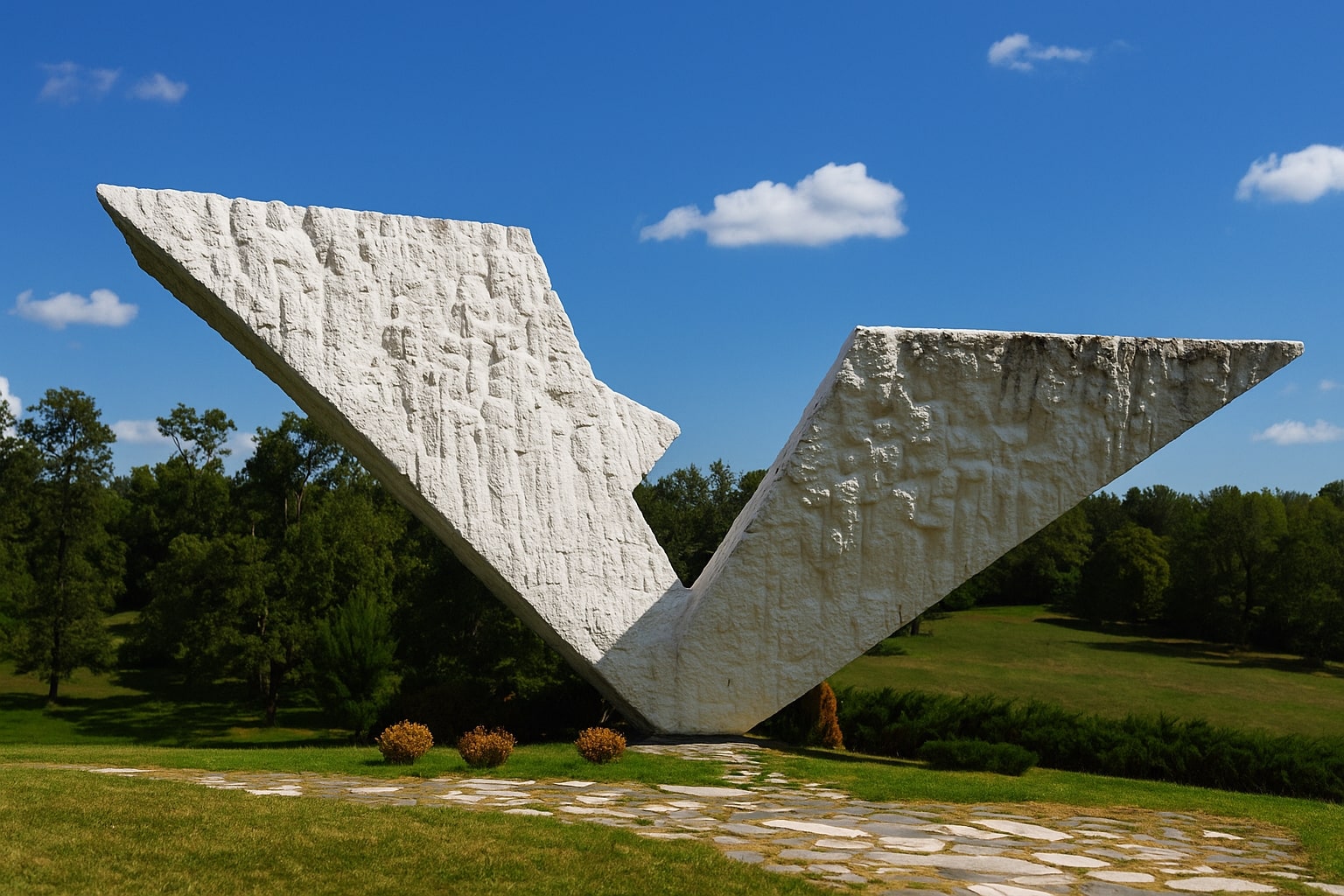
Grass rolls into quiet hollows and rows of young pines guide you toward places where the wind still lowers its voice. The park remembers 1941 when the city was struck by reprisals now known as the Kragujevac massacre and the landscape became a ledger of absent names. Inside the 21 October Museum architecture turns remembrance into space with bare walls and light that refuses to flatter. Outside the sculpture called Interrupted Flight suggests wings halted in mid ascent and the path between monuments teaches attention step by step. Every October the city gathers to read the same dates out loud and the silence that follows does the heavier work. School groups arrive with notebooks and leave with fewer words which is the right result for a lesson of this size. Walk back across the meadows and the trees seem to breathe for those who cannot and the museum keeps the breath steady.
Ads place
Ads place
Ads place
Ads place
Ads place