
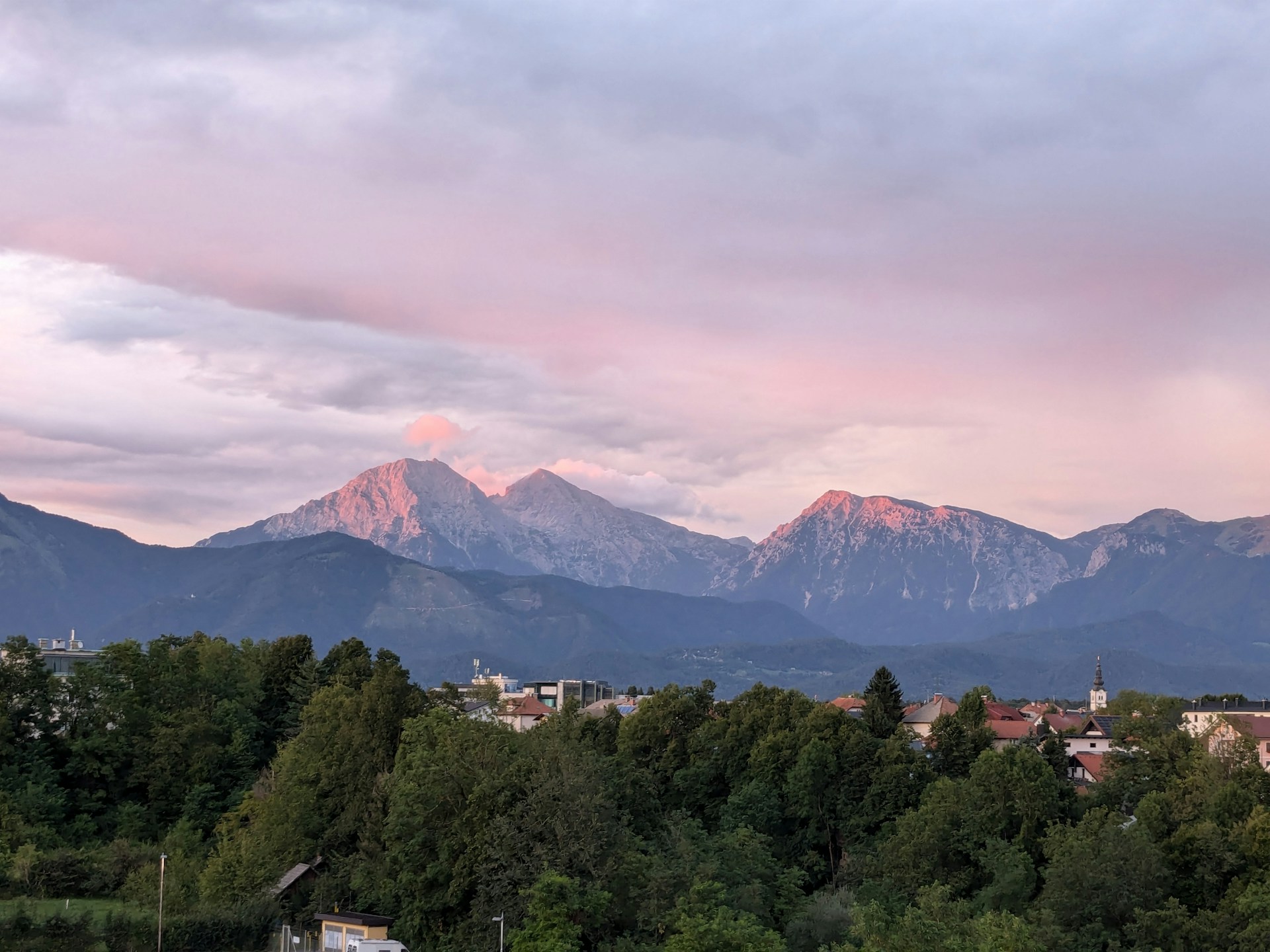
City view of Kranj, Slovenia

Kranj

Kranj sits on a limestone tongue above river gorges, a natural balcony that kept traders alert. The town claims poet France Preseren with justified pride; his house museum pairs manuscripts with street scenes that still feel accurate. Subterranean tunnels used during the 20th century now host tours and jazz sets; the acoustics are better than anyone expects underground. Order kranjska klobasa with mustard or a plate of buckwheat zganci, and let a glass of sour cherry liqueur finish the argument. Factories made shoes and stories; today, galleries and bike lanes draft a new routine without erasing the old one. Unusual fact: a diving team once staged an art exhibit in the river canyon, complete with waterproof labels. From the church tower, the Kamnik Alps look close enough to borrow; storms announce themselves like serious guests, then clear the air neatly.

Top attractions & things to do in Kranj

If you’re searching for the best things to do in Kranj, this guide brings together the top attractions and must-see places to visit in Kranj. The top picks below highlight the most visited sights for first-time visitors, plus a few local favorites worth adding.

Khislstein Castle and Gorenjska Museum in Kranj, Slovenia

Khislstein Castle and Gorenjska Museum

Folded into the town’s cliff line, Khislstein Castle stitches older walls to a careful modern addition that houses the Gorenjska Museum. Documents trace fortifications here to the 13th century, later adjusted during the 16th century when firearms reshaped defense. Exhibits move from Roman Poetovio-era finds to folk costumes, with a standout room on France Preseren and regional printers. Courtyards host concerts; a new wing, added in the 21st century, uses glass to keep the massing light and the canyon visible. The museum’s timelines are crisp without being dry, and wall captions respect both scholars and casual visitors. Step onto the terrace and the Sava and Kokra valleys meet at your feet, a geography lesson delivered in real time. In winter, the wind climbs the rock face and threads through embrasures that once watched for trouble. Here, preservation feels less like a varnish and more like a conversation with stone.
Ads place
Ads place
Ads place
Ads place
Ads place
Kokra River Canyon Walk in Kranj, Slovenia

Kokra River Canyon Walk

Just below the main street, the ground falls away into the Kokra Canyon, a surprising green trench running under the town’s bridges. Trails drop quickly to the water, where temperature falls by several degrees and the noise of traffic thins to a hush. Information boards cite protection measures from the 1980s to stabilize slopes and revive riparian habitats. Footbridges span narrowings at heights approaching 20 meters, and rock faces show the region’s layered geology like pages. After rain, pools take on a deeper hue and the current writes short, bright sentences around boulders. In spring, pairs of dippers patrol with scripted dives; in winter, ice rimes the steps, so grips and caution are advised. The canyon’s closeness to the center is the revelation: five minutes and you are in a different register of Kranj. Climb back via the long stair aligned with the old mill race, and the town returns like a curtain rising.
Ads place
Ads place
Ads place
Ads place
Ads place
Kranj Tunnels (WWII Shelters) in Kranj, Slovenia

Kranj Tunnels (WWII Shelters)

Beneath the old town lies a network of tunnels cut during World War II, later repurposed for civil protection and public tours. The system extends for roughly 1,300 meters, with reinforced sections added in the 1960s when new regulations demanded stronger supports. Exhibits explain ventilation, lighting, and the logistics of sheltering a population that could be summoned by siren within minutes. Temperature stays steady, so a jacket helps even in July. Occasional art installations use the raw concrete as a backdrop, turning infrastructure into gallery. Guides point out chalk marks left by crews measuring rock stability and the niches where generators once stood. Emerging onto daylight after an hour underground sharpens your sense of the town above: bridges, bells, and bakeries suddenly feel provisional. The tunnels make history tactile, a set of corridors that link fear, planning, and the stubborn desire to keep life going under pressure.
Ads place
Ads place
Ads place
Ads place
Ads place
Old Town and Preseren House in Kranj, Slovenia

Old Town and Preseren House

Kranj’s ridge-top old town pulls you along a spine of cobbles toward a modest door where Slovenia’s national poet once lived. The Preseren House presents manuscripts, editions, and a life distilled into rooms that still feel domestic; the poet’s dates, 1800–1849, anchor a nation’s literary map. Outside, facades show Renaissance windows spliced with later Baroque plaster, while the street grid follows a medieval logic perfected for trade and defense. Cafe chairs occupy former cart bays, and the smell of roasted beans wraps the square even on cold mornings. A small plaque notes town privileges renewed in the 16th century, and guides point out flood marks that prove the nearby rivers’ reach. As evening falls, lamps burn low and the rooftops float like shallow boats above the canyon edge. The house museum is not large, but it is precise, and it frames words that many visitors first met in school with the quiet dignity of their making.
Ads place
Ads place
Ads place
Ads place
Ads place
St. Cantianus Cathedral and Pungert in Kranj, Slovenia

St. Cantianus Cathedral and Pungert

At the crest of the ridge, St. Cantianus Cathedral gathers the town’s skyline into a disciplined composition of tower and nave. Sources mention a church by the 14th century, with later Baroque refurbishments smoothing earlier Gothic ribs. Inside, altars by regional carvers from around 1700 hold their gilding with quiet confidence, and the organ loft frames a view back toward the door like a camera. A short walk leads to Pungert, the compact fort with a playground and green where ramparts once enforced curfew. From here, the meeting of Sava and Kokra is almost audible, and the town’s plan looks purpose-built for wind and watch. The cathedral’s tower clock keeps the civic tempo, and its bell metal, recast after damage in the 20th century, carries clean across the roofs. Wedding parties often pause in the small square, proof that sacred space and everyday celebration still share the same coordinates.
Ads place
Ads place
Ads place
Ads place
Ads place