
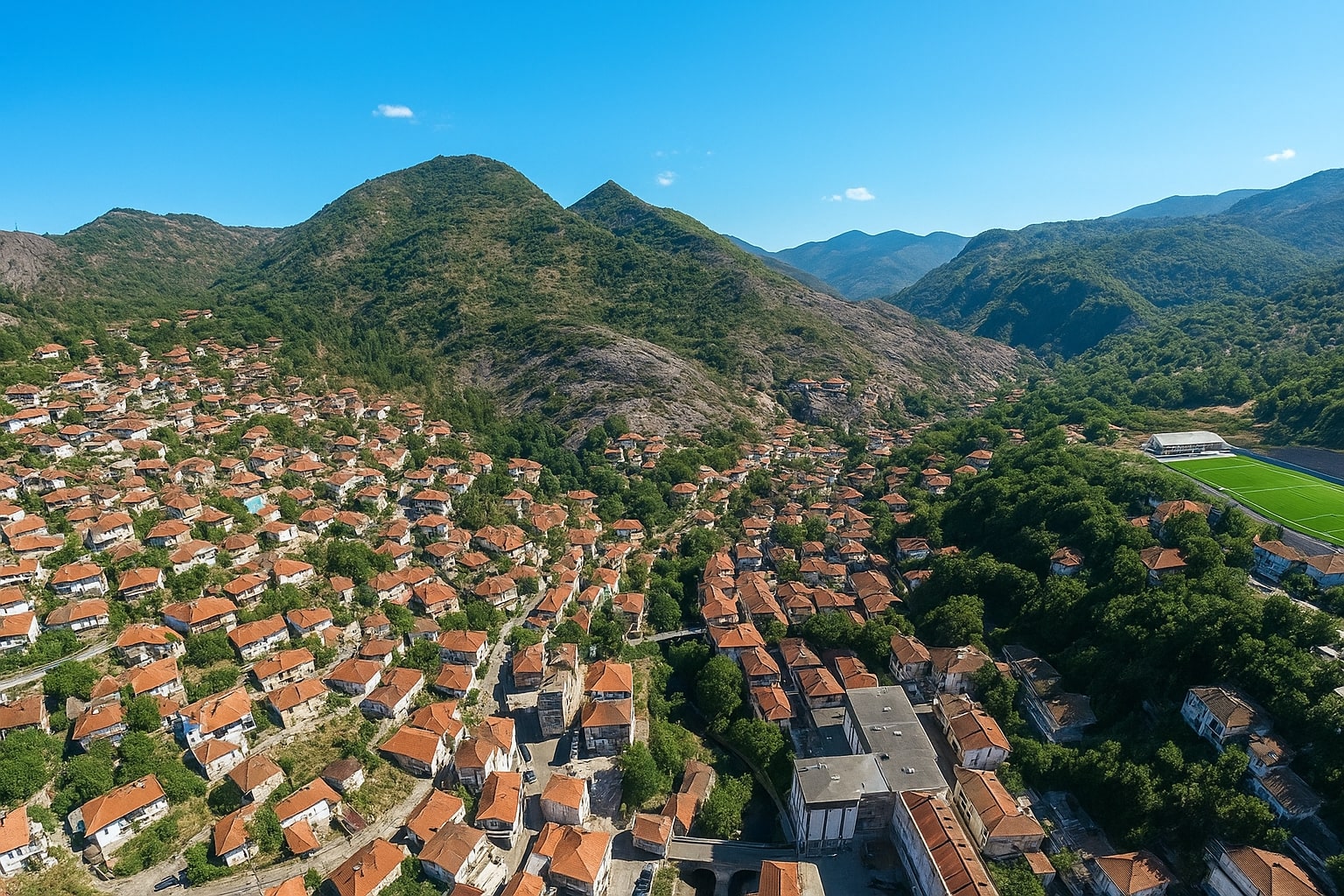
City view of Kratovo, North Macedonia

Kratovo

Kratovo curls inside an ancient volcanic crater and makes bridges look easy. Stone towers remember merchant families and arched spans hop ravines like tidy punctuation. The old bazaar sells copperwork with hammered constellations and bakeries deliver warm simit that embarrasses willpower. Nearby Stone Dolls guard footpaths where shepherds trade weather lore older than maps. Restaurants serve beans cooked slowly in clay and pies that should probably be illegal but are joyfully ignored. Guides love legends and tunnels whisper about medieval mining days and lucky strikes. Climb to outlooks where red roofs gather like a chessboard and descend for coffee with village honey. Bridge names read like nicknames and every arch seems to remember a private scene. Children skip stones under the towers and count ripples with scientific patience. Kratovo tells history with a wink and serves another slice while you listen.

Top attractions & things to do in Kratovo

If you’re searching for the best things to do in Kratovo, this guide brings together the top attractions and must-see places to visit in Kratovo. The top picks below highlight the most visited sights for first-time visitors, plus a few local favorites worth adding.

Ethno House Shancheva in Kratovo, North Macedonia

Ethno House Shancheva

Tucked away on a narrow cobbled street, the Ethno House Shancheva immerses visitors in the domestic life of 19th-century Kratovo. Once the home of a wealthy merchant family, the house has been carefully preserved to showcase period furniture, handwoven textiles, and intricate wood carvings. Each room tells a story, from the formal salon where guests were received to the cozy kitchen with its traditional hearth. The architecture reflects both Ottoman influences and local building traditions, with stone foundations supporting timber-framed upper floors. Visitors can admire the craftsmanship of embroidered garments and learn about customs surrounding weddings, harvests, and religious celebrations. The garden, shaded by vines, offers a peaceful spot to rest after exploring the town’s towers and bridges. Guided tours provide context that transforms the objects on display into living history, allowing a deeper appreciation of Kratovo’s cultural identity.
Ads place
Ads place
Ads place
Ads place
Ads place
Kratovo Museum in Kratovo, North Macedonia

Kratovo Museum

Housed in a restored Ottoman-era building, the Kratovo Museum offers an intimate journey through the town’s rich history. Its exhibits span from prehistoric artifacts and Roman coins to mining tools from the Middle Ages that testify to Kratovo’s role as a major Balkan mining center. Detailed maps and documents illustrate the extent of its trade connections, while traditional costumes and household items bring everyday life of past centuries into focus. The museum also features an impressive collection of photographs capturing the town’s transformation through time. A highlight is the display on the famous Kratovo towers, providing insight into their construction and role in defense. Knowledgeable staff share stories that bring the exhibits to life, making each visit both educational and personal. Outside, the museum’s courtyard offers a peaceful spot to reflect, framed by views of cobbled streets and stone bridges that mirror the artifacts inside.
Ads place
Ads place
Ads place
Ads place
Ads place
Lesnovo Monastery in Kratovo, North Macedonia

Lesnovo Monastery

Located a short drive from Kratovo, the Lesnovo Monastery is a masterpiece of medieval Orthodox architecture and spirituality. Founded in the 14th century by Despot Jovan Oliver, a noble in the court of Emperor Dusan, the monastery is dedicated to St. Gabriel of Lesnovo. Its church walls are covered in exceptionally well-preserved frescoes, depicting biblical scenes and vivid portraits of saints in the distinctive Byzantine style. The iconostasis, carved from wood and richly decorated, is a highlight for art lovers. Historically, the monastery was an important cultural center, housing a scriptorium where manuscripts were copied and preserved. Nestled among rolling hills, it exudes a sense of peace, with the sound of birdsong blending into the chanting of monks. Pilgrims and visitors alike are drawn to its spiritual atmosphere and artistic heritage, making it one of the most treasured monastic sites in North Macedonia.
Ads place
Ads place
Ads place
Ads place
Ads place
Old Bridges of Kratovo in Kratovo, North Macedonia

Old Bridges of Kratovo

Arched gracefully over the Kratovska and Tabachka rivers, Kratovo’s stone bridges are masterworks of Ottoman engineering and local craftsmanship. Many date back to the 15th and 16th centuries, built to connect the town’s hilly neighborhoods and facilitate the movement of miners, traders, and pilgrims. Constructed from local volcanic stone, their elegant curves were designed to withstand seasonal floods while allowing pack animals and carts to cross safely. The most famous, such as the Radin Bridge, carry legends of sacrifice and devotion, including tales of a young girl whose spirit is said to protect the structure. Walking these bridges today offers not just scenic views of the town’s red-tiled roofs but also a tangible link to its vibrant mercantile history. Worn smooth by centuries of footsteps, each bridge feels like an open-air museum, where architecture, storytelling, and the sound of rushing water combine into an unforgettable experience.
Ads place
Ads place
Ads place
Ads place
Ads place
Stone Towers of Kratovo in Kratovo, North Macedonia

Stone Towers of Kratovo

Rising above the rooftops like silent sentinels, the Stone Towers of Kratovo are among the most distinctive remnants of the town’s medieval fortifications. Built primarily during the 14th and 15th centuries, these towers once guarded trade routes and the thriving mining industry that made Kratovo a regional hub. Originally there were twelve towers, though only a handful remain, each named after prominent local families or historic events. Constructed from volcanic stone, their thick walls have withstood earthquakes, wars, and centuries of weather. From the upper levels, guards could monitor the narrow streets and the bridges spanning the Kratovska River. Some towers were later adapted for residential use, blending defensive purpose with everyday life. Today, they are beloved landmarks that connect the town’s present to its fortified past. As you walk through Kratovo, the towers appear unexpectedly at street corners, reminding visitors of an era when security and commerce shaped the city’s skyline.
Ads place
Ads place
Ads place
Ads place
Ads place