
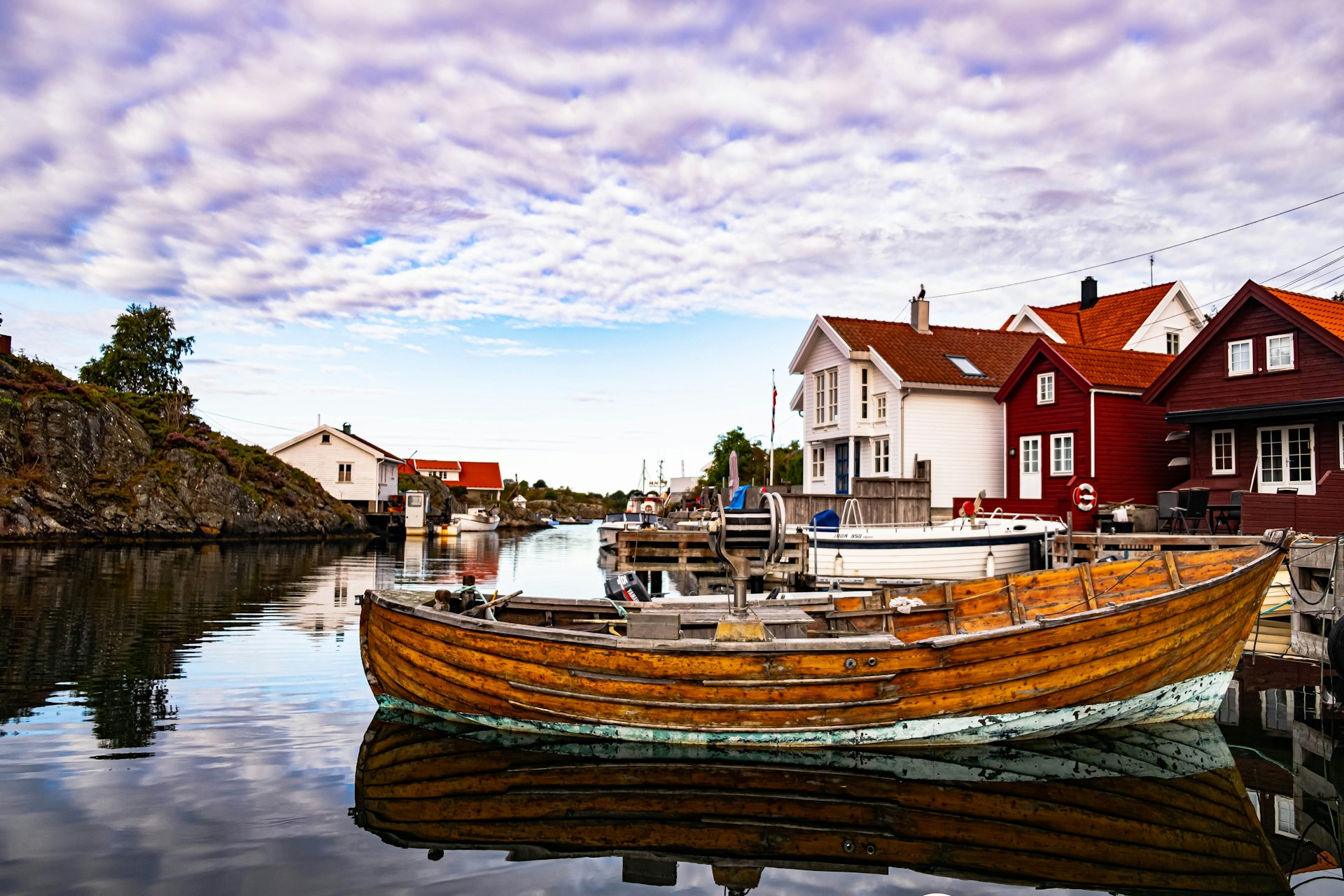
City view of Kristiansand, Norway

Kristiansand

Kristiansand, on Norway’s southern coast, blends its role as a transport hub with a distinctly relaxed coastal life. The old town, with its grid of streets, reflects 17th-century planning, while modern waterfront developments welcome ferries and cruise ships. Summers bring festivals, open-air concerts, and crowds to the city’s sandy beach, a rarity in Norway. The seafood market brims with fresh catches, and local restaurants excel at turning them into inventive dishes. Kristiansand Zoo and Amusement Park adds a family-friendly dimension, drawing visitors from across Scandinavia. A lesser-known point: the city has one of Norway’s sunniest climates, making it a favored escape for those seeking warmth without leaving the country. Kristiansand offers a balance of energy and ease, serving both as a starting point for journeys deeper into Norway and as a destination in its own right.

Top attractions & things to do in Kristiansand

If you’re searching for the best things to do in Kristiansand, this guide brings together the top attractions and must-see places to visit in Kristiansand. The top picks below highlight the most visited sights for first-time visitors, plus a few local favorites worth adding.

Christiansholm Fortress in Kristiansand, Norway

Christiansholm Fortress

Round granite walls press close to the sea, a compact fort that has guarded the harbor through storms and changing borders. The city itself was founded in 1641 by King Christian IV, and the fortress followed in the late 17th century to secure the skerries and shipping lanes. Cannons still stare down the waterfront from embrasures, their black barrels a reminder that power once depended on iron and patience. Within the courtyard, exhibitions explain how soldiers rationed grain, repaired ropes, and drilled under a star-shaped defense plan drawn to trap incoming fire. Summer turns the bastions into a picnic terrace while concerts echo against granite that has learned to hold sound. On quiet mornings, gulls take the watch, and the fort feels less like a relic than a working outline of the town, scaled to the tide and the measured beat of ship horns. A small lighthouse once guided approaches here, and the powder magazine remains intact enough to whisper seventeenth-century routines.
Ads place
Ads place
Ads place
Ads place
Ads place
Kilden Performing Arts Centre in Kristiansand, Norway

Kilden Performing Arts Centre

The waterfront here bends into a wave of timber that seems to gather voices before a single note is played. Opened in 2012, the building wraps a sweeping facade of Norwegian oak around theatres and rehearsal rooms that serve the Kristiansand Symphony Orchestra, Kilden Theatre, and Opera Sor. Inside, acousticians shaped surfaces so that whispers carry and brass blooms without strain, a small miracle of acoustics achieved through careful geometry. The main hall frames performers rather than swallowing them, while foyers dissolve into the harbor through glass that reads like a second stage. On stormy evenings, the facade becomes a lantern and the lobby a civic living room where audiences arrive early simply to watch rain move across the fjord. The program switches from classical anchors to Nordic jazz and new drama, proving that serious art thrives best when the architecture listens as intently as the crowd.
Ads place
Ads place
Ads place
Ads place
Ads place
Kristiansand Zoo and Amusement Park in Kristiansand, Norway

Kristiansand Zoo and Amusement Park

A day here blends coastal woodland, gentle lagoons, and the thrill of close animal encounters without losing a sense of Norwegian nature. Founded in 1966, the park has grown into a habitat-focused experience with more than 140 species, from lynx and moose to lions dozing on warm rock. Families wander into a full-scale town from childrens literature, created by Thorbjorn Egner; its cobbled lanes lead to Kardemomme by where polite thieves and a talking parrot still teach civility. On summer nights, pirate sails cut across the lake during Kaptein Sabeltann shows, a local legend turned theatrical adventure. Keepers discuss conservation work in plain language, linking daily care to breeding programs that reach far beyond Kristiansand. The ride area adds a dose of laughter between quiet paths shaded by pines. What lingers is the careful pacing of the park: enclosures screened by reeds, wooden boardwalks skimming water, and just enough spectacle to let curiosity, not noise, set the rhythm.
Ads place
Ads place
Ads place
Ads place
Ads place
Posebyen Old Town in Kristiansand, Norway

Posebyen Old Town

White clapboard houses line long, orderly streets where bicycles outnumber cars and lilacs lean over pale fences. The plan dates to 1641, when King Christian IV imposed a strict grid plan to keep lanes straight and fires easier to fight. After several blazes in the 19th century, regulations insisted on spacing and yards, creating a district that now counts hundreds of wooden houses within walking distance of the Otra River. Residents paint doorframes carefully and stack firewood like sculpture, while cafes take over corners that once sold salt and rope. Guides point out carpenters marks on beams, a quiet archive of hand skills behind every tidy facade. Come early, when laundry lines snap in the sea breeze and shadows draw geometry across the boards; the neighborhood feels lived in rather than staged, a working memory that keeps the city honest.
Ads place
Ads place
Ads place
Ads place
Ads place
Ravnedalen Park in Kristiansand, Norway

Ravnedalen Park

A cliff amphitheater rises behind a lily pond, and paths curl into spruce shade as if designed for lingering conversation. The park was laid out in 1874 by General Joseph Frantz Oscar Wergeland, who transformed a former military drill ground into a public garden framed by towering granite cliffs. He championed bandshell concerts and botanical variety, ideas that still shape summer evenings when choirs test the natural acoustics. Cafes serve waffles under trees planted during the 19th century, and a small waterfall keeps the pond alive with ripples that mirror swallows at dusk. Climb a little and you find viewpoints that stack rooftops, river, and harbor like a layered painting. The charm is in the pacing: benches exactly where a story ought to continue, steps cut to match the stride, and the sense that a military mind softened into poetry without losing discipline.
Ads place
Ads place
Ads place
Ads place
Ads place