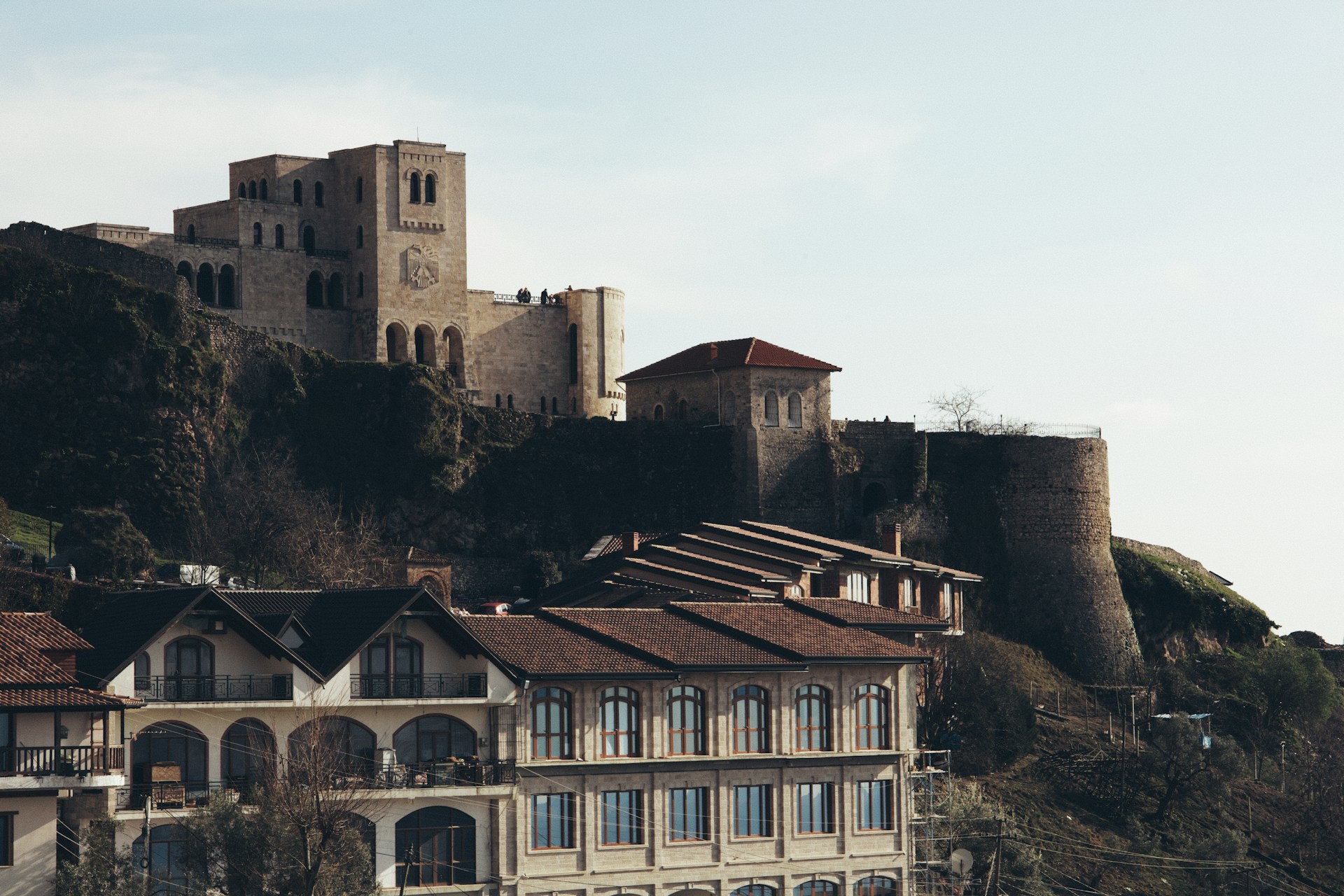

City view of Krujë, Albania

Krujë

Krujë is famous for its historical significance as the hometown of Albania's national hero, Skanderbeg. The Krujë Castle houses the Skanderbeg Museum, dedicated to his resistance against the Ottoman Empire. The old bazaar below the castle is a charming place to shop for traditional crafts and souvenirs. The Ethnographic Museum, located in an old Ottoman house, showcases traditional Albanian life. Krujë's historical and cultural richness make it a must-visit.

Top attractions & things to do in Krujë

If you’re searching for the best things to do in Krujë, this guide brings together the top attractions and must-see places to visit in Krujë. The top picks below highlight the most visited sights for first-time visitors, plus a few local favorites worth adding.

Ethnographic Museum in Krujë, Albania

Ethnographic Museum

The Ethnographic Museum in Krujë is housed in a beautifully preserved 18th-century Ottoman-era building within the castle grounds. This museum offers an in-depth look at traditional Albanian life and culture through its extensive collection of artifacts and exhibits. The building itself is a fine example of Ottoman architecture, with wooden ceilings, intricate carvings, and a charming courtyard. Inside, the museum's displays are arranged to represent the various aspects of daily life in historic Krujë, including domestic interiors, clothing, tools, and household items. One of the highlights is the reconstruction of a traditional Albanian guest room, complete with original furniture and decorations. The exhibits provide insights into the social customs, craftsmanship, and lifestyle of the Albanian people over the centuries. The Ethnographic Museum not only preserves important cultural heritage but also educates visitors about the rich traditions and history of Krujë. It offers a fascinating and immersive experience, making it an essential stop for anyone interested in Albanian culture and history. The museum's courtyard features a 400-year-old mulberry tree used for silk production during Ottoman rule. Hidden behind a wall panel is a 19th-century "bridal chest" containing intact wedding garments from 1823.
Ads place
Ads place
Ads place
Ads place
Ads place
Krujë Castle (Kalaja e Krujës) in Krujë, Albania

Krujë Castle (Kalaja e Krujës)

Krujë Castle is a symbol of Albanian resistance against the Ottoman Empire and a site of immense historical significance. Perched on a rocky hilltop, the castle dates back to the 5th or 6th century and played a crucial role during the 15th century when Skanderbeg used it as his base to resist Ottoman invasions. The castle complex houses several important buildings, including the Skanderbeg Museum, which celebrates the life and legacy of the national hero with exhibits of weapons, documents, and artifacts from the period. Visitors can explore the well-preserved fortifications, towers, and the Ethnographic Museum, which offers insights into traditional Albanian life. The castle's location provides stunning panoramic views of the surrounding countryside and the Adriatic Sea, making it a popular spot for both history enthusiasts and nature lovers. Walking through Krujë Castle, one can almost feel the echoes of past battles and the enduring spirit of Albanian independence that it symbolizes. Recent excavations revealed a secret escape tunnel connecting the castle to the nearby Sari Salltik Tekke. The castle's walls contain embedded Venetian cannonballs from 1478 sieges, preserved as historical artifacts.
Ads place
Ads place
Ads place
Ads place
Ads place
Old Bazaar (Pazari i Vjetër) in Krujë, Albania

Old Bazaar (Pazari i Vjetër)

The Old Bazaar of Krujë is a vibrant and historic market that offers a glimpse into the traditional Albanian way of life. Dating back to the Ottoman period, the bazaar's cobblestone streets are lined with wooden shops and stalls, where local artisans and merchants sell a wide variety of goods. Visitors can find handmade crafts, traditional clothing, antiques, souvenirs, and a range of locally produced items such as olive oil, honey, and raki. The bazaar is not just a shopping destination but also a cultural experience, as it retains the charm and atmosphere of centuries past. The architecture of the bazaar, with its characteristic Ottoman design, adds to the overall ambiance, making it a picturesque spot for photography and exploration. The Old Bazaar is also home to several small cafes and eateries where visitors can enjoy traditional Albanian cuisine and refreshments. Whether you're looking to purchase unique souvenirs or simply soak in the historical ambiance, the Old Bazaar is a must-visit attraction in Krujë. The bazaar's 17th-century weighing scales are still used by spice merchants today. Archaeologists found Byzantine-era coins beneath the cobblestones during a 2020 drainage project.
Ads place
Ads place
Ads place
Ads place
Ads place
Skanderbeg Museum in Krujë, Albania

Skanderbeg Museum

Located within the Krujë Castle, the Skanderbeg Museum is dedicated to the life and legacy of Gjergj Kastrioti, known as Skanderbeg, Albania's national hero. The museum, inaugurated in 1982, is housed in a building designed to resemble a medieval fortress, blending seamlessly with the castle's historic architecture. Inside, the museum's exhibits chronicle Skanderbeg's struggle against the Ottoman Empire, showcasing a wealth of artifacts, including weapons, armor, documents, and maps. Highlights include a replica of Skanderbeg's sword and helmet, as well as paintings and sculptures depicting significant moments from his life. The museum also provides context about the broader historical and cultural landscape of 15th-century Albania. Through detailed displays and informative descriptions, visitors gain a deep understanding of Skanderbeg's strategies, battles, and his role in unifying the Albanian people. The Skanderbeg Museum is not just a repository of historical artifacts; it is a tribute to the enduring legacy of a leader who remains a symbol of resistance and national pride in Albania. The sword replica was forged using 15th-century metallurgy techniques based on Venetian archives. A recently decoded Latin manuscript in the collection reveals Skanderbeg's diplomatic correspondence with the Papal States.
Ads place
Ads place
Ads place
Ads place
Ads place
The Sari Salltik Tekke (Teqja e Sari Salltikut) in Krujë, Albania

The Sari Salltik Tekke (Teqja e Sari Salltikut)

Perched on the slopes of Mount Krujë, shrouded in mist and myth, the Sari Salltik Tekke is a spiritual sanctuary and a hidden gem tied to Albania’s Bektashi Sufi tradition. Named after the revered 13th-century dervish Sari Salltik, this tekke (a Sufi lodge) is believed to mark the spot where the mystic saint meditated in a cave, blending nature and devotion into a single sacred experience. The site, accessible via a winding mountain trail, is a pilgrimage destination for Bektashis and a place of curiosity for history enthusiasts. The tekke itself is modest—a small stone structure adorned with green and white Bektashi symbols—but its power lies in its serene setting. Inside, the cave where Sari Salltik is said to have prayed remains a focal point, its walls darkened by centuries of candle smoke and whispered prayers. Carbon dating of candle wax residues revealed continuous worship since the 14th century. In 2021, a rare Ottoman-era prayer manuscript was discovered hidden in a crevice within the cave.
Ads place
Ads place
Ads place
Ads place
Ads place