
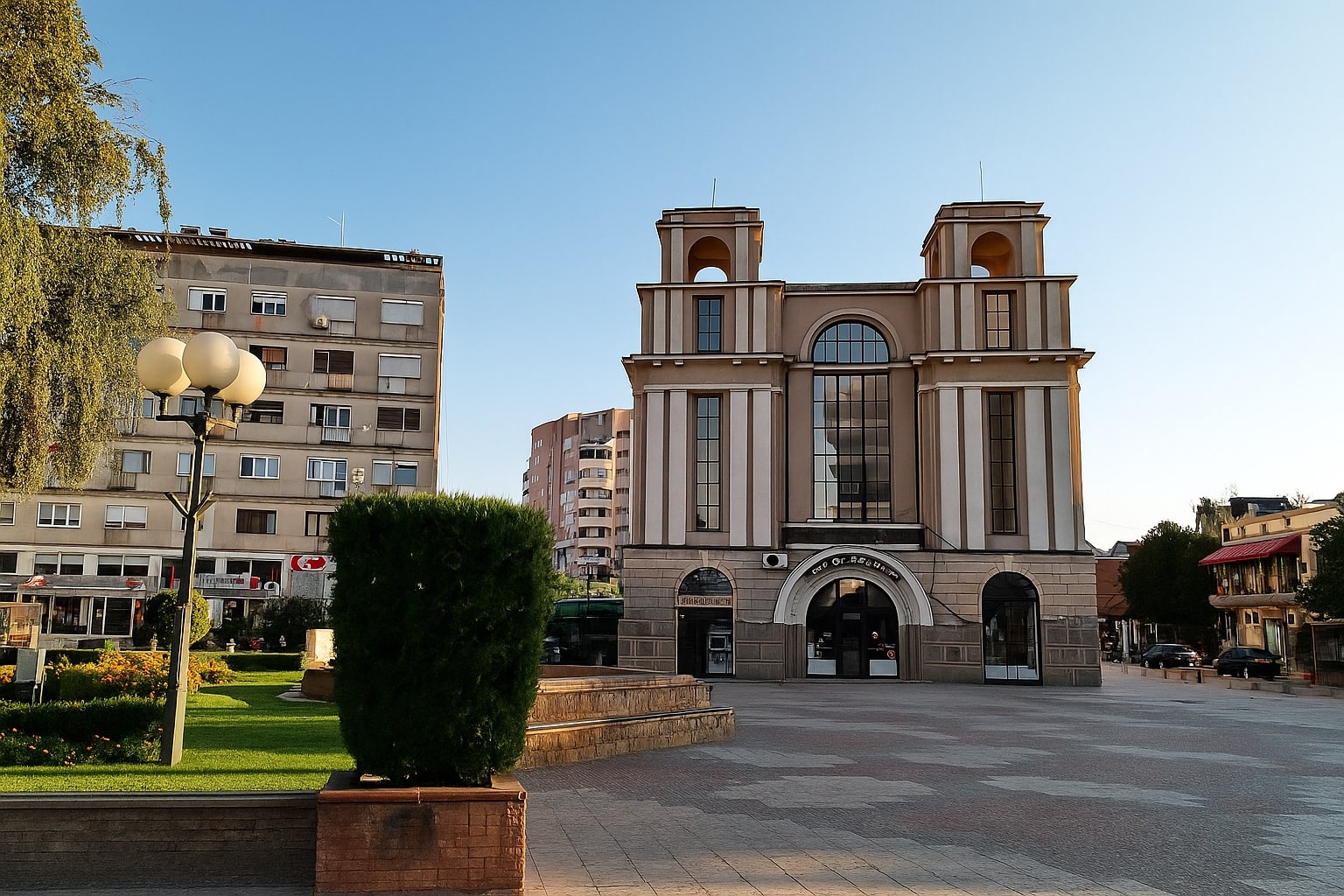
City view of Kumanovo, North Macedonia

Kumanovo

Kumanovo greets visitors with appetite and wordplay. The town loves a joke almost as much as a stew and both traditions predate Kokino, a megalithic observatory that aligns stars like punctual guests. The center mixes socialist modernism with older facades while street art adds bright commentary. Markets bristle with peppers and cheeses and bakeries produce soft somun that vanishes with alarming speed. Locals recommend creamy beans from clay pots and grilled meats with serious salads. Parks host chess duels and music festivals turn squares into open air living rooms. Day trips reach rolling hills where vineyards make convincing liquid arguments. Visit the museum for folklore exhibits and photographs from theatrical festivals. Cafes debate football tactics with courtroom intensity, and laughter acquits everyone. On weekends cyclists trace ribbons of road to villages where lunch arrives in clay rather than on plates.

Top attractions & things to do in Kumanovo

If you’re searching for the best things to do in Kumanovo, this guide brings together the top attractions and must-see places to visit in Kumanovo. The top picks below highlight the most visited sights for first-time visitors, plus a few local favorites worth adding.

ASNOM Memorial Center – Pelince in Kumanovo, North Macedonia

ASNOM Memorial Center – Pelince

Located in the village of Pelince, the ASNOM Memorial Center commemorates the first session of the Anti-Fascist Assembly for the National Liberation of Macedonia held on August 2, 1944. Built as a replica of the original building in Prohor Pcinjski Monastery, now across the border in Serbia, it honors a pivotal moment in Macedonian statehood. The site’s architecture blends modern simplicity with historical symbolism, and inside, exhibitions feature documents, photographs, and personal items from assembly delegates. A central hall recreates the meeting space, allowing visitors to step into the atmosphere of that historic day. Surrounding gardens and open-air spaces provide a setting for annual celebrations of the Ilinden Uprising and ASNOM anniversary. The memorial serves as both a museum and a gathering place, reinforcing the enduring ideals of freedom and unity born from the struggle against fascism.
Ads place
Ads place
Ads place
Ads place
Ads place
Kokino Observatory in Kumanovo, North Macedonia

Kokino Observatory

Perched at 1,030 meters above sea level, Kokino Observatory is one of the world’s oldest known megalithic observatories, dated to around the 19th century BC. Discovered in 2001, the site features carved stone markers used by ancient astronomers to track the solstices, equinoxes, and lunar cycles. NASA recognized Kokino in 2005 as the fourth oldest observatory on Earth, placing it alongside sites like Stonehenge. Visitors can explore terraces cut into volcanic rock, each aligned with specific celestial events. The panoramic view over the surrounding mountains adds to its mystique, especially at sunrise when shadows align perfectly with ancient markers. Archaeological finds here suggest Kokino also served ceremonial and agricultural planning purposes. Local myths weave the site into the region’s identity, portraying it as a place where sky and earth converse. Standing among the weathered stones, one feels connected to a tradition of observation stretching back more than 3,800 years.
Ads place
Ads place
Ads place
Ads place
Ads place
Kumanovo City Center in Kumanovo, North Macedonia

Kumanovo City Center

Kumanovo’s city center blends historical layers with a lively modern spirit, offering a snapshot of the town’s evolving identity. The main square is framed by early 20th century buildings, Ottoman-era remnants, and contemporary facades, creating a dynamic architectural collage. Cafés spill onto wide pedestrian avenues where locals meet for coffee under plane trees, and street musicians add to the atmosphere. Nearby stands the Clock Tower, a relic from the Ottoman period that has watched over the town for generations. Markets fill side streets with fresh produce, spices, and handcrafted goods, reflecting the area’s agricultural richness. Murals and public art celebrate Kumanovo’s cultural diversity, while evening promenades turn the center into a social stage. The fusion of tradition and modern life makes the city center not just a meeting place, but the beating heart of community life, embodying the resilience and warmth of its people.
Ads place
Ads place
Ads place
Ads place
Ads place
Pelince Ethno Village in Kumanovo, North Macedonia

Pelince Ethno Village

Adjacent to the ASNOM Memorial Center, Pelince Ethno Village offers a living glimpse into rural Macedonian traditions. The open-air museum features reconstructed houses, workshops, and barns styled after 19th century village life. Each building is furnished with authentic tools, textiles, and household items that tell the story of everyday existence in the region. Visitors can watch demonstrations of weaving, pottery, and woodcarving, preserving skills passed down through generations. Seasonal festivals bring music, dance, and food stalls serving local specialties like pastrmajlija and homemade rakija. Surrounded by green fields and shaded by walnut trees, the village invites leisurely exploration and conversation with craftspeople. It complements the historical narrative of the nearby ASNOM site by connecting political history with the cultural roots of the people. Pelince Ethno Village is not just a museum—it is a celebration of heritage that remains vibrant and relevant today.
Ads place
Ads place
Ads place
Ads place
Ads place
St. George Monastery – Staro Nagorichane in Kumanovo, North Macedonia

St. George Monastery – Staro Nagorichane

Set amid rolling fields north of Kumanovo, the Monastery of St. George in Staro Nagorichane is a masterpiece of 14th century Byzantine architecture. Built under the patronage of Serbian King Stefan Milutin, it was constructed atop the ruins of an older church from the 11th century. The monastery is famed for its vivid frescoes painted by master artists of the Palaiologan Renaissance, depicting saints, biblical scenes, and the life of St. George in intricate detail. Its stone and brick facade showcases harmonious symmetry, while the interior dome soars above a space bathed in soft natural light. Restoration efforts have preserved its artistic treasures, making it a living testament to medieval artistry. Pilgrims and art historians alike are drawn to its peaceful grounds, where ancient cypresses guard the walls. In spring, wildflowers bloom along the path, framing this sacred site as both a spiritual refuge and an architectural jewel.
Ads place
Ads place
Ads place
Ads place
Ads place