
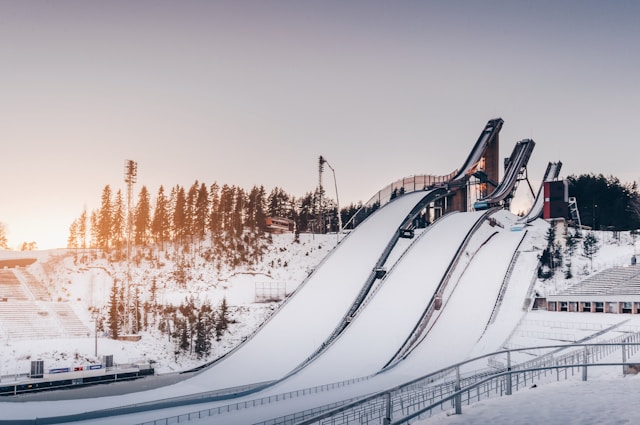
City view of Lahti, Finland

Lahti

Lahti is a lake district hub that built global sports fame, especially through the Ski Games first held in 1923. The Salpausselka ski jumps define the skyline, and the sports museum explains how a town learns to live with snow. Down at the Vesijarvi harbour, old warehouses now host restaurants serving fried vendace, creamy fish soup, and rye bread with butter. Sibelius Hall brings concerts to the waterfront and doubles as a lesson in modern wood design. Walk to the Ristinkirkko church by Alvar Aalto for quiet lines and good acoustics, then finish with a sweet korvapuusti cinnamon roll. In summer, the lakeside route to Vesijarvi islands turns into an easy day trip. Quirky detail: locals love the giant ski statue at the stadium so much that it appears in graduation photos, as if everyone needs at least one heroic winter pose.

Top attractions & things to do in Lahti

If you’re searching for the best things to do in Lahti, this guide brings together the top attractions and must-see places to visit in Lahti. The top picks below highlight the most visited sights for first-time visitors, plus a few local favorites worth adding.

Church of the Cross (Ristinkirkko) in Lahti, Finland

Church of the Cross (Ristinkirkko)

The Church of the Cross (Ristinkirkko) is Lahti at its most restrained and powerful: a modernist church that feels calm, precise, and quietly daring. Completed in 1978 and designed by Alvar Aalto, it is one of the last projects linked to Finland's most influential architect, and the interior shows his gift for shaping light as much as walls. The space is uncluttered but never cold; pale surfaces and careful geometry create a sense of quiet focus that works whether you come for architecture, reflection, or simple curiosity. Look up toward the tower and notice how the vertical lines echo the city's civic axis, a subtle dialogue with the nearby townscape. Visit in late afternoon when winter light is low and soft, and the whole room seems to glow without any theatrics. Give yourself a slow loop, then step outside and notice how quickly city noise feels far away.
Ads place
Ads place
Ads place
Ads place
Ads place
Lahti City Hall in Lahti, Finland

Lahti City Hall

Lahti City Hall is a confidence move in brick and vertical lines, and it still sets the tone for the centre more than a century after it opened. Designed by architect Eliel Saarinen and completed in 1912, the building represents late Art Nouveau with a tower that reads like a civic exclamation mark. Stand back and you will see why it photographs so well: dark masonry, rhythmic windows, and a silhouette that feels both strict and elegant. One of the best ways to enjoy it is simply to circle the block slowly, because the proportions shift with every angle and the details are easy to miss at speed. On winter days, the facade looks almost cinematic against pale snow; in summer, the brick warms and the whole building feels friendlier. Even if you never go inside, this is a great anchor point for a city walk, linking the market area, parks, and the lakefront in a clean, walkable loop.
Ads place
Ads place
Ads place
Ads place
Ads place
Lahti Museum of Visual Arts Malva in Lahti, Finland

Lahti Museum of Visual Arts Malva

Malva is Lahti's modern creative engine, a museum that mixes art, design, posters, and city culture without feeling like a textbook. The Lahti Museum of Visual Arts Malva opened on 29 April 2022 in the Malski building, a repurposed former brewery that gives the galleries an industrial edge. Inside, the programme moves between contemporary exhibitions and the kinds of visual culture Lahti is known for, including strong poster and graphic design traditions. The best experience is to treat Malva like a slow wander: start with the current headline show, then drift into smaller rooms where you can get close to prints, materials, and details that disappear at speed. Keep an eye on how the building itself participates, with raw surfaces and high volumes that make installations feel bolder. If you want a small Easter egg, look for public art and façade elements that turn the surrounding street into part of the museum mood. Plan at least 90 minutes, then step back out and notice how Lahti's creative life is stitched into everyday walking routes.
Ads place
Ads place
Ads place
Ads place
Ads place
Lahti Sports Centre & Salpausselka Ski Jumps in Lahti, Finland

Lahti Sports Centre & Salpausselka Ski Jumps

Lahti does winter sport like a headline, and the Lahti Sports Centre is the stage where the city turns snow into spectacle. The complex is anchored by the Salpausselka ski jumps, whose profiles you can spot from far across town, and it is tightly linked to the long-running Lahti Ski Games, first organized in 1923. Walk up close and you will see how the venue balances stadium scale with everyday use: forest-edged paths, training tracks, and viewpoints that make the ridge feel like part of the city. Even out of season, the towers are photogenic and slightly surreal, especially in summer when green slopes replace snow. Do a slow loop around the base, then climb for a closer look at the take-off ramps and landing hills; it is surprisingly calming when nothing is flying. Pair the visit with a short café stop nearby and you will get the full Lahti rhythm: sport, nature, and practical design in one compact area.
Ads place
Ads place
Ads place
Ads place
Ads place
Lanu Sculpture Park in Lahti, Finland

Lanu Sculpture Park

Lanu Sculpture Park is Lahti's best example of art that does not ask for a white wall. Hidden in the forested Kariniemi area, the park was built between 1989 and 1992 and features 12 sculptures commissioned from Finnish artist Olavi Lanu. The works are cast in concrete but imitate natural materials, so at first glance you may think you are seeing twisted trunks, mossy forms, or figures growing out of the ground. That camouflage is the point: Lanu wanted the pieces to blend into the landscape and change with the seasons. Summer hides them in green; winter turns them into pale, snow-edged silhouettes. Take your time and you will start noticing faces, gestures, and humor in the shapes, like the forest is quietly acting. Go in the morning for calmer paths, or in late afternoon when low light makes the textures pop. It is free, slightly eerie in the best way, and wildly photogenic without feeling like an Instagram trap.
Ads place
Ads place
Ads place
Ads place
Ads place
Pikku-Vesijarvi Park & Musical Fountain in Lahti, Finland

Pikku-Vesijarvi Park & Musical Fountain

Pikku-Vesijarvi is Lahti's easiest mood upgrade: a small lakeside park where the city suddenly feels softer, greener, and slower. The headline feature is the musical fountain, performing here since 1997 with a surprisingly serious setup: about 600 jets, a top spray around 15 m, and roughly 250 lights that turn dark evenings into a miniature show. Locals treat it as an after-work reset, looping the paths with coffee and letting the water do the entertainment. In warm months, the lawns become picnic territory; in cooler seasons, the fountain is at its best when the air is crisp and the lights look sharper. Do one full lap of the lake, then cut through nearby footbridges and small paths to keep the walk varied. It is not a blockbuster sight, and that is exactly the point: a simple place that makes Lahti feel liveable, not staged.
Ads place
Ads place
Ads place
Ads place
Ads place
Radio and TV Museum Mastola in Lahti, Finland

Radio and TV Museum Mastola

Tune into Lahti's tech side at the Radio and TV Museum Mastola, a place that makes broadcasting history feel surprisingly hands-on. The museum sits on Radiomaki, right beneath the city's iconic radio towers, and it works as both nostalgia and an easy lesson in how media shaped everyday life. Expect old studio gear, radios, early television culture, and exhibitions that explain big shifts without turning the visit into homework. What makes Mastola special is the setting: you can walk in from forested paths and step straight into the story of signals, sound, and national communication. Plan your visit as a two-part loop: explore the galleries, then head outside for a closer look at the towers and the hilltop atmosphere. It is a smart choice in winter because it is warm, compact, and different from the usual art-and-architecture circuit, yet it still feels deeply connected to Lahti's identity.
Ads place
Ads place
Ads place
Ads place
Ads place
Radiomaki Radio Towers in Lahti, Finland

Radiomaki Radio Towers

Radiomaki is where Lahti literally broadcast itself into the 20th century, and the hill still feels like a local landmark rather than a curated attraction. The twin radio masts were built in 1927 and rise about 150 m, a pair of lines on the skyline you can spot from all over town. The original broadcasting station was inaugurated on 22 April 1928, when longwave radio was serious infrastructure, not background noise. Because the hill is part of the Salpausselka ridge system, the terrain adds a natural drama: pine air, sandy paths, and a gentle sense of elevation without any hard hiking. Walk around the base, then look up and you will understand why the masts became a city symbol. Many visitors pair the outdoor loop with the nearby Mastola museum, but the towers alone are worth the stop, especially at dusk when the silhouette sharpens. Come in light fog if you get the chance; the masts fade into cloud and the whole place feels like a minimalist film set.
Ads place
Ads place
Ads place
Ads place
Ads place
Sibelius Hall in Lahti, Finland

Sibelius Hall

On the Vesijarvi waterfront, Sibelius Hall is the kind of building that makes you slow down before you even buy a ticket. The wooden concert and congress centre rose here in spring 2000, designed by architects Hannu Tikka and Kimmo Lintula, with Finnish forests as a core inspiration. Inside, the main hall is praised for its acoustics, so even a rehearsal can feel unusually crisp and intimate. Take a moment in the foyer to notice how timber, glass, and the nearby lake light work together; the place feels modern but never sterile. The location is part of the experience: you can arrive via a harbour stroll, hear gulls outside, and then step into a calm, warm sound world. If you are not catching a concert, check for guided tours or daytime events, then linger on the waterfront afterwards for a low-effort Lahti evening.
Ads place
Ads place
Ads place
Ads place
Ads place
Ski Museum in Lahti, Finland

Ski Museum

If you want Lahti in one indoor stop, start at the Ski Museum, tucked beside the Salpausselka jumps at the sports centre. It leans into the fun without dumbing anything down: you can trace the evolution of Nordic skiing while also trying interactive stations that make the sport feel physical, not just historical. The flagship exhibition Sense of Skiing connects everyday ski culture with elite competition, including the story of the annual Lahti Ski Games that have shaped the city since 1923. Look for details that visitors miss, like how equipment design changes with terrain and temperature, and how ski-jumping technique is explained through simple, memorable visuals. This is also a smart bad-weather plan, because the museum is compact, warm, and easy to combine with a walk outside for photos of the towers. Give it an hour, then step back outdoors and you will read the whole sports centre with new eyes.
Ads place
Ads place
Ads place
Ads place
Ads place