
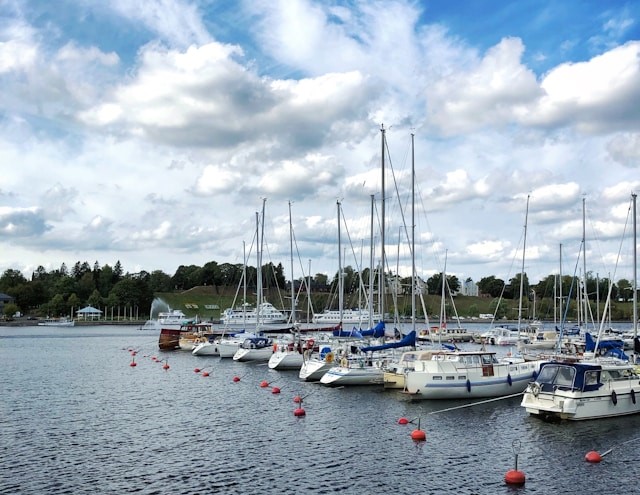
City view of Lappeenranta, Finland

Lappeenranta

Lappeenranta sits on Lake Saimaa near the eastern border, with a fortress hill shaped in the 1700s and a summer rhythm built around beaches. The old fort area holds museums, craft shops, and cafes for coffee with berry cake. Down at the harbour, boats leave for Saimaa cruises, and stands sell grilled vendace, smoked fish, and the famous vety and atomi meat pastries with pickles. The sandcastle event on the waterfront returns in warm months, and its themes change yearly like a public art joke. Try local ice cream after a sauna session at the shore, then stroll the wooden houses near the fort ramparts. A calmer detour is the Wolkoff House Museum, a merchant home that hints at cross border trade stories. Quirky fact: the city loves debating which pastry is better, vety or atomi, and people will offer detailed rankings as if they were reviewing fine dining.

Top attractions & things to do in Lappeenranta

If you’re searching for the best things to do in Lappeenranta, this guide brings together the top attractions and must-see places to visit in Lappeenranta. The top picks below highlight the most visited sights for first-time visitors, plus a few local favorites worth adding.

Harbour Square (Satamatori) in Lappeenranta, Finland

Harbour Square (Satamatori)

Summer in Lappeenranta has a heartbeat, and it is easiest to hear it at the harbour. On Satamatori (Harbour Square), kiosks start early with coffee and the local snacks vety and atomi, meat pies that are part fast food, part folklore. A few restaurant ships stay moored nearby, including the long-running Prinsessa Armaada, so lunch can happen right on the waterline while music drifts across the promenade. The view is pure Lake Saimaa, a landscape that has even been listed among the top 5 most beautiful lakes by major travel media, and the shoreline invites you to keep walking: dip at Myllysaari Beach, or follow the path toward the fortress hill. On warm evenings, the light hangs and everything slows down, from cyclists to boat wakes. Even outside peak season, the harbour is the city's easiest meeting point, where the air smells faintly of smoke sauna and lake wind, and you understand why locals defend their summers so fiercely.
Ads place
Ads place
Ads place
Ads place
Ads place
Lappeenranta Art Museum in Lappeenranta, Finland

Lappeenranta Art Museum

Inside the fortress walls, Lappeenranta Art Museum proves that a military setting can hold something quietly contemporary. The museum occupies a neo-classical barracks building dating from 1798, set opposite the Orthodox Church, so the approach already feels ceremonial. It serves as the regional art museum for South-East Finland and focuses on Finnish works from the 19th century to the present, letting you trace how ideas of landscape, identity, and color evolve. A key strand is the collection linked to the Viipuri Friends of Art, which brings Vyborg-era cultural memory into the galleries. Expect a mix of permanent holdings and rotating exhibitions, often with a local angle that makes the region feel richer than a border on a map. Afterward, step onto the bastion paths and look back at the yellow facade; the contrast between strict parade-ground geometry and experimental art feels exactly right here. Leave via Kristiinankatu and you can turn the visit into a short loop through the fortress cafes and viewpoints above Lake Saimaa.
Ads place
Ads place
Ads place
Ads place
Ads place
Lappeenranta Fortress in Lappeenranta, Finland

Lappeenranta Fortress

Start on Kristiinankatu and you can feel history under your shoes before you even reach the ramparts. The Lappeenranta Fortress began taking shape in the 1720s, and most of what you see today dates to the 18th century and 19th century during Russian rule, when the hill became a compact fortified town. Instead of a single monument, it is a lived-in district: courtyards, bastions, and timber houses lead to museums, workshops, and a small Orthodox Church that adds a surprising note of incense and gold to a military setting. Look for the main street Kristiinankatu, named after Queen Christina, and pause at viewpoints where Lake Saimaa opens like a sheet of steel on windy days. Many wooden buildings date from the late 1800s, while red-brick barracks arrived in the early 1900s, so the architecture reads like chapters. Come in late afternoon when cafes in old officers' quarters fill with locals; the place feels less like a museum and more like an old neighborhood that refuses to disappear.
Ads place
Ads place
Ads place
Ads place
Ads place
Lappeenranta Sandcastle (Hiekkalinna) in Lappeenranta, Finland

Lappeenranta Sandcastle (Hiekkalinna)

At the edge of the waterfront, summer starts with an unlikely building material: sand. Lappeenranta's sandcastle, known locally as Hiekkalinna, has charmed visitors since 2004, and it returns each year with a new theme that changes the skyline. The scale is not a gimmick: builders use millions of kilos of sand to carve towers, reliefs, and walk-through courtyards that hold their shape through wind and light rain. Because it sits in the Harbour and Fortress area, you can fold it into a longer stroll, turning one stop into an easy afternoon. Go early if you want crisp edges for photos; later in the day the sculptures collect fingerprints, and that is part of the point, a piece of temporary architecture living in public. Families linger for the playground energy, while adults drift toward the shore to watch boats and compare the carvings to the real bastions above. Even if you stay only ten minutes, the contrast is delightful: an old garrison town on the hill, and a castle below that will quietly dissolve back into the beach.
Ads place
Ads place
Ads place
Ads place
Ads place
Saimaa Canal Museum and Cultural Trail in Lappeenranta, Finland

Saimaa Canal Museum and Cultural Trail

For a quieter kind of engineering drama, head to the Saimaa Canal and watch the landscape shift one lock at a time. The Saimaa Canal Museum is in the Malkia-Mustola area and works as a neat gateway to the Saimaa Canal Cultural Trail. Its main exhibition sits in the former district chief's residence, built in 1845, a stately building that feels almost too elegant for a story about steel gates and winter ice. Step outside and you can walk beside the canal between the locks of Mustola and Malkia, close enough to hear water surge and chains clink when boats pass. In the high summer season the museum opens daily and offers free admission, so it is easy to drop in even if you only have an hour. Bring a camera for the small details: signal lights, mooring posts, and the way the canal slices through forest and low rock. On gray days the water turns dark and reflective, and the whole route feels like a long corridor connecting Lake Saimaa to the wider world.
Ads place
Ads place
Ads place
Ads place
Ads place