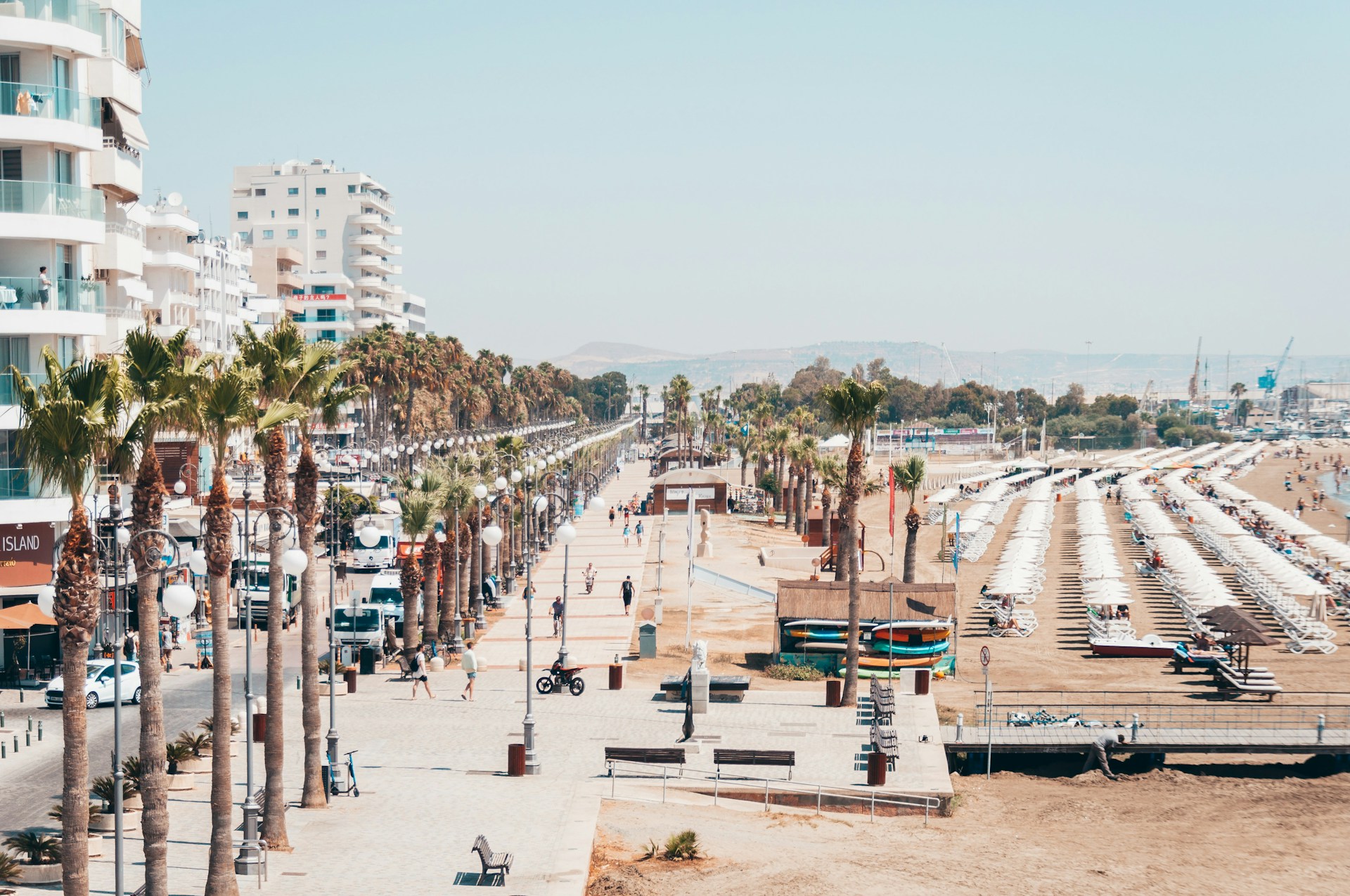

City view of Larnaca, Cyprus

Larnaca

Larnaca is a coastal city in Cyprus, known for its palm-lined promenade and stunning beaches. The city has a laid-back atmosphere, making it a great spot for relaxation and beach activities. One of the main attractions is the Church of Saint Lazarus, a beautiful 9th-century church located in the city center. Larnaca Salt Lake, just outside the city, attracts flocks of flamingos during the winter months, providing a spectacular sight for nature lovers. Larnaca also offers excellent diving spots, including the famous Zenobia wreck. With its mix of history, natural beauty, and coastal charm, Larnaca is a must-visit.

Top attractions & things to do in Larnaca

If you’re searching for the best things to do in Larnaca, this guide brings together the top attractions and must-see places to visit in Larnaca. The top picks below highlight the most visited sights for first-time visitors, plus a few local favorites worth adding.

Finikoudes Beach in Larnaca, Cyprus

Finikoudes Beach

Finikoudes Beach stretches for 600 meters of golden sands along a shaded palm-lined promenade dotted with restaurants, cafes, and shops. The sheltered bay’s calm, shallow waters create an ideal playground for families and children, while thrill-seekers zoom across the surface on jet skis or parasail above the horizon. Each summer, vibrant festivals and open-air concerts transform the shoreline into a cultural stage, drawing crowds from dawn till dusk. Just steps from Larnaca’s city center, Finikoudes offers modern public amenities—including sunbeds, showers, and wheelchair ramps—making it one of Cyprus’s most accessible urban beaches. Early risers gather for sunrise yoga sessions, and fitness enthusiasts jog the coastline as seabirds wheel overhead. As day turns to night, the area’s nightlife springs to life with neon-lit bars and seaside night markets under swaying fronds. Finikoudes seamlessly blends a laid-back daytime vibe with spirited evening entertainment, securing its reputation as Larnaca’s premier beachfront destination.
Ads place
Ads place
Ads place
Ads place
Ads place
Hala Sultan Tekke in Larnaca, Cyprus

Hala Sultan Tekke

Hala Sultan Tekke perches on the southern shore of Larnaca Salt Lake as a revered 18th-century mosque built to enshrine the tomb of Umm Haram, a companion of the Prophet Muhammad. The complex showcases a graceful Ottoman-style minaret, marble-lined courtyards, and reflective pools that mirror its elegant domes. Pilgrims walk shaded pathways beneath cypress and eucalyptus trees to the ornate mausoleum adorned with centuries-old silver and marble work. In winter, thousands of flamingos flock to the adjacent salt flats, painting the landscape in soft pink hues. A nearby visitor center provides historical exhibits and guided tours in multiple languages. At sunset, golden light bathes the mosque façade against the shimmering lake, creating a photographer’s dream. Annual pilgrimage festivals draw crowds for communal prayers and traditional Sufi chants, reinforcing the site’s role as both a spiritual sanctuary and a living monument of Cyprus’s multicultural heritage.
Ads place
Ads place
Ads place
Ads place
Ads place
Larnaca Medieval Castle in Larnaca, Cyprus

Larnaca Medieval Castle

Larnaca Medieval Castle stands at the western edge of Finikoudes Beach as a formidable coastal fortress with origins in the 14th century. Its thick limestone walls were later augmented with Ottoman battlements and British-era artillery emplacements, reflecting its strategic importance. Inside, the castle houses a maritime museum exhibiting chain mail, crossbows, ceramic amphorae, and relics recovered from ancient shipwrecks off the coast. Visitors ascend spiral staircases to the ramparts for panoramic sea views and vistas of the palm-fringed promenade below. Courtyard plaques recount tales of pirate raids, Ottoman sieges, and Larnaca’s vital salt trade. Seasonal historical reenactments bring medieval life to the walls with costumed knights and authentic cannon drills. A dimly lit dungeon cell evokes echoes of past prisoners, while rotating special exhibitions explore Cyprus’s crusader legacy and maritime folklore. As dusk falls, floodlights dramatize the castle silhouette against the night sky, capping any Larnaca visit with a blend of history and romance.
Ads place
Ads place
Ads place
Ads place
Ads place
Larnaca Salt Lake in Larnaca, Cyprus

Larnaca Salt Lake

Larnaca Salt Lake comprises four interconnected salt lakes covering over 2 km² near the city’s edge. In winter, the shallow basins host over 20,000 migratory flamingos and myriad wading birds, creating a breathtaking pink spectacle. Summer’s sun evaporates the waters, leaving brilliant salt crusts that locals once harvested by hand. A network of guided walking trails and cycle paths encircles the lakes, revealing scenic overlooks and interpretive panels on the area’s unique biodiversity. Salt-tolerant shrubs and vibrant wildflowers flourish along the banks, while reed beds shelter rare warblers. At dawn and dusk, photographers line the causeways to capture fiery reflections across the waters. The nearby Salt Museum presents historic salt-production tools alongside modern conservation efforts to protect this Ramsar-designated wetland. Organized birdwatching tours depart daily, binoculars in hand, inviting visitors to connect with Cyprus’s natural heritage.
Ads place
Ads place
Ads place
Ads place
Ads place
St. Lazarus Church in Larnaca, Cyprus

St. Lazarus Church

St. Lazarus Church, erected in the early 9th century by Byzantine governor Lazarus himself, ranks among the island’s oldest Orthodox sanctuaries. Its Byzantine architecture features a triple-nave floor plan supported by sturdy columns and elegant arches, all crowned by a tiled dome. Behind a carved marble iconostasis lies the crypt housing the tomb of Saint Lazarus, illuminated by flickering candles. The interior dazzles with gold-gilded frescos and hand-painted icons depicting saints and Gospel scenes created over many generations. During Holy Week, the church fills with solemn processions and chanted liturgies that resonate under ancient stone vaults. An onsite museum displays silver chalices, embroidered vestments, and 16th-century liturgical manuscripts. Outside, a charming square lined with cafes offers views of the richly decorated façade, while hidden chapels and medieval graffiti invite quiet exploration. St. Lazarus remains both a living place of worship and a timeless testament to Larnaca’s deep spiritual roots.
Ads place
Ads place
Ads place
Ads place
Ads place