
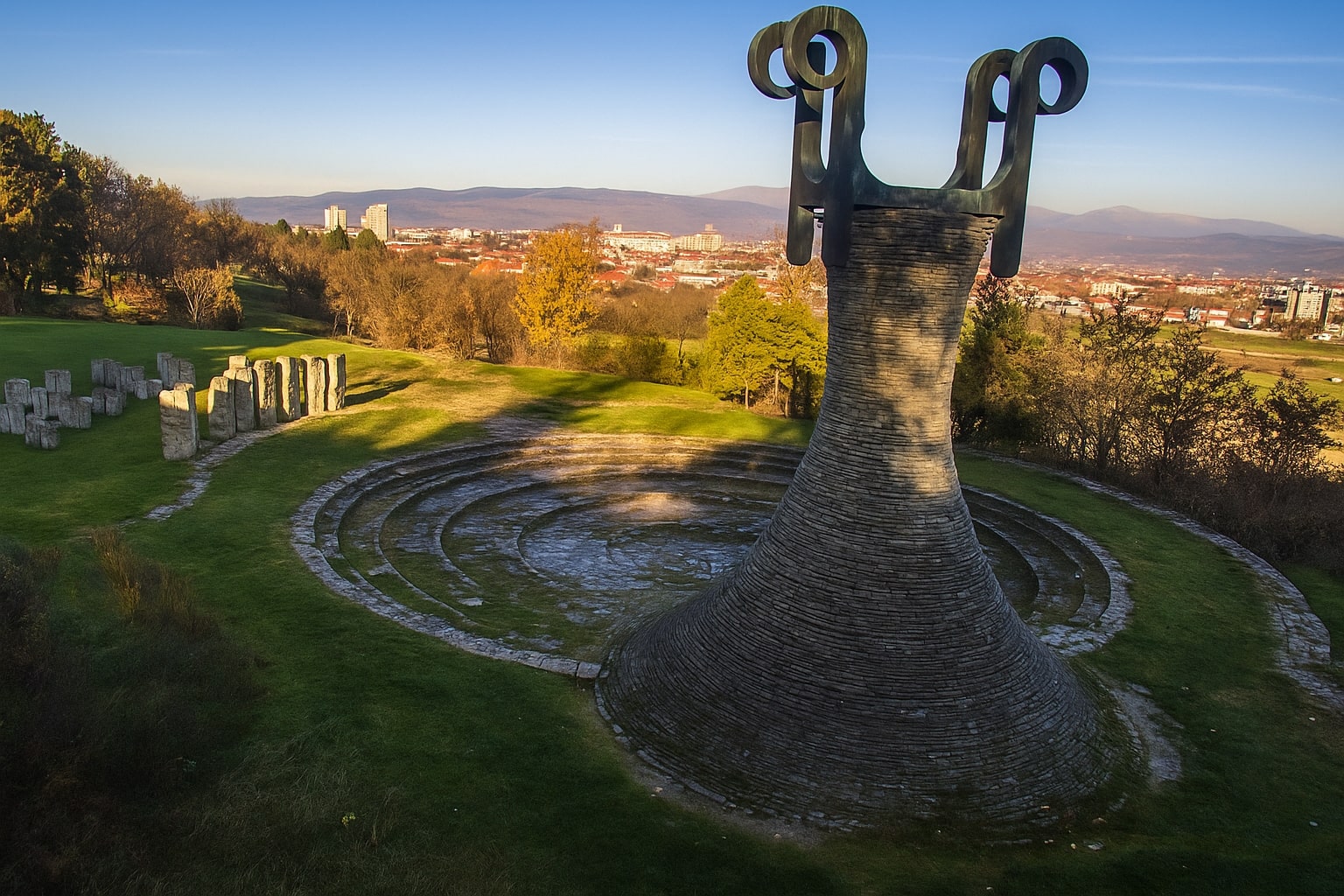
City view of Leskovac, Serbia

Leskovac

Leskovac treats the grill like an institution with peer review. Pljeskavica is calibrated by diameter, smoke, and onion mathematics, celebrated each September when boulevards turn into laboratories of charcoal and applause. Between tastings, the National Museum explores textiles and industry, and a side room documents the city’s once-famous film studio with posters that refuse to fade. Tailors on small streets measure by eye and never miss; markets glow with peppers destined for monumental batches of ajvar. People argue politely about the exact fat ratio and which bakery still does krempita the old way. An underappreciated joy is homemade sladoled scooped from stainless bins, quietly perfect. Leskovac is straightforward about pleasure: eat well, talk plainly, work steadily, and reward success with another skewer. Visitors learn quickly that moderation is a negotiation, not a rule.

Top attractions & things to do in Leskovac

If you’re searching for the best things to do in Leskovac, this guide brings together the top attractions and must-see places to visit in Leskovac. The top picks below highlight the most visited sights for first-time visitors, plus a few local favorites worth adding.

Hisar Hill and Viewpoint in Leskovac, Serbia

Hisar Hill and Viewpoint

A short climb delivers you to a grassy crown where the town arranges itself in careful handwriting and the South Morava draws a steady underline. Pottery and wall traces point to settlement layers from the antique and medieval eras, when this spur watched traffic along the corridor that tied Thessaloniki to the Danube. Folklore remembers earthworks renewed in the Ottoman period, and later enthusiasts raised modest monuments to local heroes of the 19th century. On clear days the panorama edits factories, steeples, and bridges into a single sentence about geography choosing winners. Evening hikers arrive with thermos cups and stories while runners use the switchbacks like a practical metronome. Information boards read briefly about archaeology so the view keeps most of the speaking. You descend with a calmer voice and the feeling that cities make their best sense from above, where streets become lines and history behaves like a readable map.
Ads place
Ads place
Ads place
Ads place
Ads place
Leskovac Green Market in Leskovac, Serbia

Leskovac Green Market

Morning begins here with measured bustle and the scent of peppers, plums, and fresh cheese, a choreography the city knows by heart. Traders arrive from villages that ring the South Morava plain and the stalls repeat a rhythm older than rail yet sharpened by the 20th century canning and textile industries. You hear prices in several accents because the market has always been a school in coexistence, from Ottoman times through the Kingdom of Yugoslavia into today. Look closely and you will read ethnography in aprons, baskets, and knives as clearly as in any museum case. Recipes swap without ceremony and old measures survive in jokes and gestures that keep trust faster than receipts. By noon, crates empty and gossip finishes the circuit, leaving the square to shade and pigeons. The market proves that cities keep their memory in mouths and hands and that supply chains can still feel like family ties when distances are short.
Ads place
Ads place
Ads place
Ads place
Ads place
Leskovac National Museum in Leskovac, Serbia

Leskovac National Museum

Rooms unfold like chapters and the city tells on itself with objects that prefer evidence to spectacle. Founded in the 20th century to steward finds from the South Morava valley, the museum anchors its story in Neolithic shards and Roman coins before turning to the textile boom that once branded Leskovac as the Serbian Manchester. Cases track guild seals and factory labels from the 19th century, while photographs remember the electric tempo of looms and rail. A sober gallery addresses 1944, when Allied bombing cut deeply into streets and memory, and letters let visitors read that day in first person. Curators favor context so ethnography sits beside ledgers and a map restores each artifact to its original address. Temporary shows bring contemporary artists into conversation with the archive, keeping the building alert to fresh questions. You step back outside with dates arranged and a sense that industry, migration, and resilience share the same family album here.
Ads place
Ads place
Ads place
Ads place
Ads place
Odzaklija Church in Leskovac, Serbia

Odzaklija Church

At first glance it looks like a house, low and discreet, and only when you step closer do windows and icons reveal a church that learned caution. Built during the Ottoman era when permits constrained design, tradition says townspeople hid its purpose by omitting a chimney and naming it Odzaklija, the house without a chimney. Inside, a carved iconostasis and smoke darkened beams preserve a mood of stubborn faith, while fragments of painting recall workshops that kept the Byzantine vocabulary alive in local accents. The legend is charming, but the architecture matters more because it shows how communities negotiated worship under pressure. Parish records from the 19th century document baptisms and repairs and each entry feels like a handshake across time. Step back outside and market noise resumes, reminding you that sacred places often thrive best when they look like neighbors. The lesson is ingenuity in service of continuity, carried lightly and well.
Ads place
Ads place
Ads place
Ads place
Ads place
Rostiljijada Grill Festival in Leskovac, Serbia

Rostiljijada Grill Festival

As evening falls the boulevard turns into a glowing kitchen and smoke writes cursive above rows of grills while music keeps the pace friendly. The festival grew from the city’s craft in meat and spice, a tradition rooted in Ottoman street food and perfected during the 20th century when Leskovac supplied recipes to half the country. Chefs flip patties the size of plates and measure heat by instinct, then brag gently about records set in Leskovac pljeskavica and the longest kebab. Panels and hosts frame the event as heritage rather than spectacle and visitors learn that hospitality here is a disciplined art. Local producers showcase paprika, ajvar, and breads, turning the feast into a syllabus of the South Morava pantry. Bands bridge folk and pop so grandmothers and students share the same beat and strangers become tablemates in a minute. You leave perfumed with charcoal and convinced that cuisine can function as civic identity without phrases on a wall.
Ads place
Ads place
Ads place
Ads place
Ads place