
City view of Lillehammer, Norway

Lillehammer

Lillehammer carries the legacy of hosting the 1994 Winter Olympics, but its appeal stretches well beyond sports. The city’s pedestrian street is lined with wooden buildings housing boutiques and cafes, while the Maihaugen open-air museum brings centuries of Norwegian rural life to vivid detail. In winter, ski slopes and cross-country trails are minutes from the center; in summer, hiking and cycling take over. Local cuisine celebrates hearty mountain fare, with lamb and game meats prepared in traditional ways. The art museum adds a layer of refinement, showcasing both national masters and contemporary talent. A fun twist: Lillehammer’s bobsleigh track is open to the public, offering high-speed thrills under expert guidance. This mix of culture, sport, and scenic backdrop makes it a destination that delivers in every season.

Top attractions & things to do in Lillehammer

If you’re searching for the best things to do in Lillehammer, this guide brings together the top attractions and must-see places to visit in Lillehammer. The top picks below highlight the most visited sights for first-time visitors, plus a few local favorites worth adding.

Bjerkebek (Sigrid Undset Home) in Lillehammer, Norway

Bjerkebek (Sigrid Undset Home)

On a hillside of birch and quiet paths stands the house where an author balanced domestic routine with medieval dreams. Here Sigrid Undset wrote and revised the trilogy that earned the Nobel Prize in Literature 1928, drawing on Norse sagas to craft characters who still feel startlingly modern. Rooms preserve pens, shawls, and the strong desk lamp that kept winter afternoons working after dark. Curators trace her outspoken opposition during World War II, when she fled Norway and then returned to a world altered by loss. Shelves hold first editions and manuscripts annotated with fierce marginalia; the garden remembers family breakfasts and long conversations. Built as a cluster beginning in 1919, the home is modest in scale yet grand in attention, with textiles and painted furniture that echo rural craft. Standing in the study, you hear not just sentences forming but a century negotiating with conscience, faith, and the stubborn hope of renewal.
Ads place
Ads place
Ads place
Ads place
Ads place
Hunderfossen Adventure Park in Lillehammer, Norway

Hunderfossen Adventure Park

Beyond the river bends rises a fairy tale made practical, where engineering hides beneath folklore and laughter. The park opened in 1984 and now welcomes families into rides and theaters shaped by the storytelling of Ivo Caprino, whose puppetry and films taught generations to trust imagination. A colossal 14 meter troll reclines above the hillside, blinking at dusk as if the mountain itself had a face. Winter returns as a separate Snow and Ice park, with sculpted halls that glow like frozen cathedrals. Craftsmen favor stone, timber, and turf so attractions feel rooted in Gudbrandsdalen rather than imported from elsewhere. Between coasters and calm pools, staff talk about safety with the same friendliness they bring to fairy tales, and the result is a place where thrill and story keep shaking hands. When you leave, the troll watches the road, a gentle reminder that play can be as local as geology and as durable as myth.
Ads place
Ads place
Ads place
Ads place
Ads place
Lysgaardsbakken Ski Jump in Lillehammer, Norway

Lysgaardsbakken Ski Jump

At the edge of town, terraces curve around two immaculate landing hills, and the grandstand remembers a February when the world leaned forward in unison. The venue gained global fame during the 1994 Winter Olympics, when Crown Prince Haakon lit the cauldron and the air itself seemed to hold its breath. Engineers keep the profiles tuned for HS138 and HS100, while a public stair of 936 steps lets anyone feel the gradient in their calves. In summer, plastic matting and wind nets extend the season; in winter, floodlights turn snow into stagecraft. Coaches brief athletes in a hum of radios and wax, but the view steals the scene, sweeping across the valley toward the slow ribbon of the river. Stand beneath the inrun and the structure reads like sculpture; stand atop and the town becomes a tiny promise waiting to be met. Few sports venues explain courage with such clear geometry.
Ads place
Ads place
Ads place
Ads place
Ads place
Maihaugen Open Air Museum in Lillehammer, Norway

Maihaugen Open Air Museum

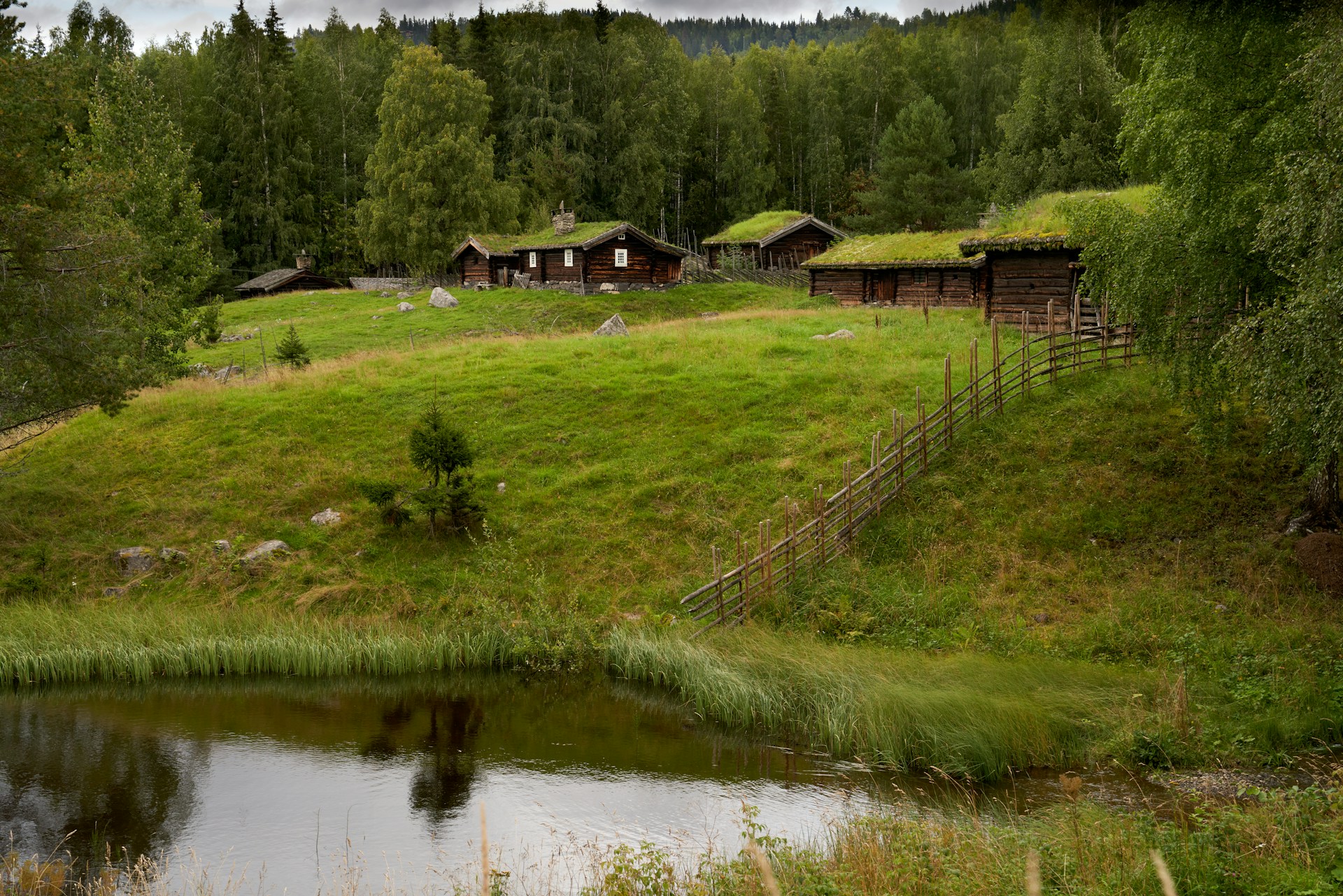
Across meadows and pine slopes, whole neighborhoods have been carefully reassembled so that doors creak, chimneys breathe, and the day moves at the rhythm of farm work and town errands. The collection began with the doctor and folklorist Anders Sandvig, whose passion for everyday objects grew into one of Norway's largest open air museums. Visitors wander among over 200 buildings, from valley farms to a recreated 1900s town with shopfronts, a post office, and tram rails. In the grove above, the transplanted Garmo Stave Church anchors the hill with tarred timber and dragon heads. Guides open thresholds into postwar homes of the 1940s–60s, where radios hum and cupboards hold the optimism of modern design. Summer craft demonstrations reach back to the 1890s, while winter snow turns the lanes into a soft archive of footprints. The museum never treats history like a glass case; it lets weather, animals, and human voices finish the story.
Ads place
Ads place
Ads place
Ads place
Ads place
Norwegian Olympic Museum in Lillehammer, Norway

Norwegian Olympic Museum

Inside a bright, low building, winter stories line up like starting gates and then break into a sprint across decades. Touchscreens and film loops trace Oslo 1952 to Lillehammer 1994, placing medals beside mittens and ticket stubs so pageantry meets weathered reality. Curators worked with the IOC to gather torches, uniforms, and design sketches, while the reimagined galleries that opened in 2016 turn spectators into participants with smart interactives. Children test reflexes on timing walls; historians linger over the evolution of pictograms and graphic identity. A display on sustainability examines how venues find second lives, and another room profiles athletes whose training diaries read like novels of patience. The result is less shrine than workshop, a place where Olympic ideals are discussed as choices rather than slogans. Step outside and the hills that hosted ski jumping and cross-country sit within walking distance, as if the museum merely paused the race to think.
Ads place
Ads place
Ads place
Ads place
Ads place