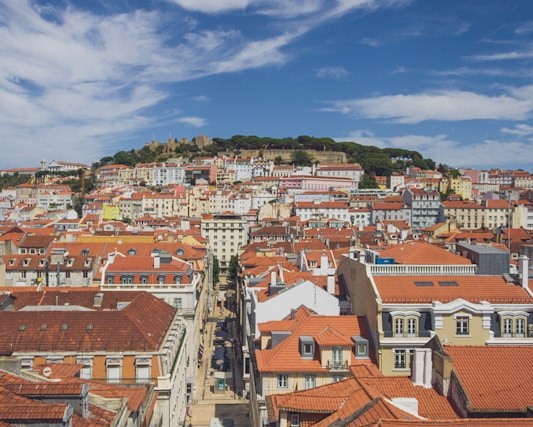
City view of Lisbon, Portugal

Lisbon

Lisbon moves with Atlantic rhythms and tram bells, a city where tiled facades hold sun like a memory. Moorish walls, the quake of 1755, and the rebuilding that followed shaped boulevards and steep alleys into a confident maze. In Alfama, fado seeps from doorways while fishermen argue gently over sardines. Belem serves custard tarts still warm, then turns you toward maritime halls that celebrate caravels and Vasco da Gama. Street art sprawls under the 25 de Abril Bridge, and warehouses morph into studios where designers test ideas against sea light. Ride Tram 28, because creaks and corners teach the topography better than maps. For dinner, order clams in garlic and cilantro, then chase it with a shot of ginjinha. A quirk worth knowing: the city keeps one of Europe's smallest bookshops hidden in a doorway barely wider than a coat rack.

Top attractions & things to do in Lisbon

If you’re searching for the best things to do in Lisbon, this guide brings together the top attractions and must-see places to visit in Lisbon. The top picks below highlight the most visited sights for first-time visitors, plus a few local favorites worth adding.

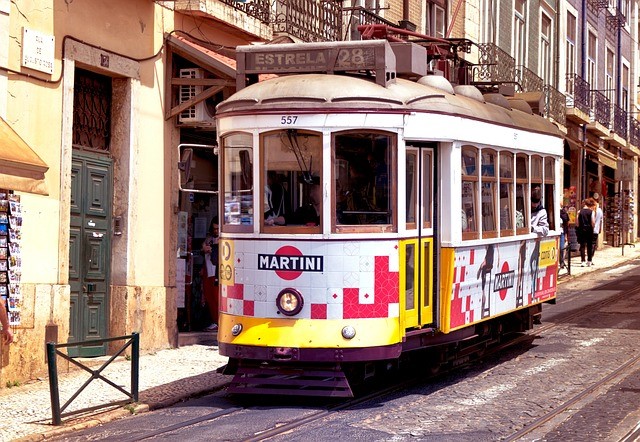
Alfama Tram 28 Ride in Lisbon, Portugal

Alfama Tram 28 Ride

A yellow carriage winds through Alfama like a thread through embroidery, squealing at corners older than motorcars. The route predates modern traffic plans, connecting hills with an electric lifeline since the early 20th century. Elderly riders, tourists, and students share wooden benches as the tram brushes azulejos, laundries, and grocers that ignore the century outside. Conductors manage doors with choreography learned from slope and habit. You will pass Se Cathedral, viewpoints that promise the Tagus, and alleys where fado rehearses behind shutters. Critics call it crowded; the city calls it proof that infrastructure can be heritage without becoming brittle. Step off to walk a stop or two, then hop back on—the best map is the noise the wheels make. At dawn, bakers wave flour-dusted hellos through open windows. Late at night, the carriage hums like a lullaby for cobbles.
Ads place
Ads place
Ads place
Ads place
Ads place
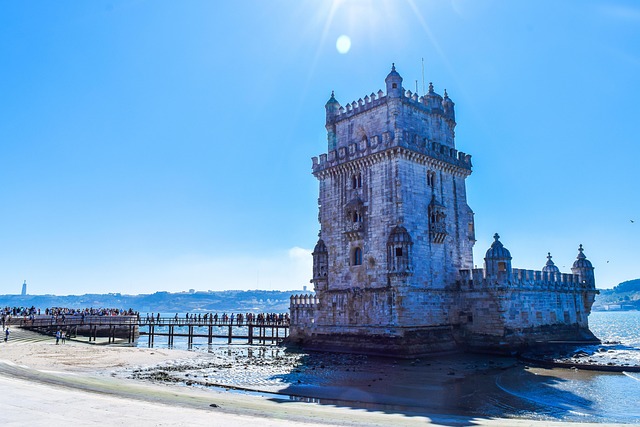
Belem Tower in Lisbon, Portugal

Belem Tower

At the mouth of the Tagus, a riverside fort once greeted caravels and tax collectors with stone lacework and watchful bartizans. Raised in the early 16th century under King Manuel I, it folds Manueline motifs—ropes, spheres, armillary signs—into a compact masterpiece of defense and display. Cannons once faced the channel, while a delicate loggia entertained dignitaries who measured power by ship and spice. Restoration after the 1755 earthquake kept the silhouette crisp, and today gulls stand in for sentries. Climb the spiral stair and Lisbon unfolds in ribbons of water and quays. Across the promenade, a whiff of pasteis hints that empire also left a legacy of sugar. A small chapel upstairs, quiet as a page-turn, reminds visitors that navigation was part prayer, part math, and all appetite for the unknown. Notice the odd stone rhinoceros, a wink to a royal beast shipped here in 1515. At low tide, the old artillery platform peeks from the shallows like a footnote.
Ads place
Ads place
Ads place
Ads place
Ads place
Carmo Convent in Lisbon, Portugal

Carmo Convent

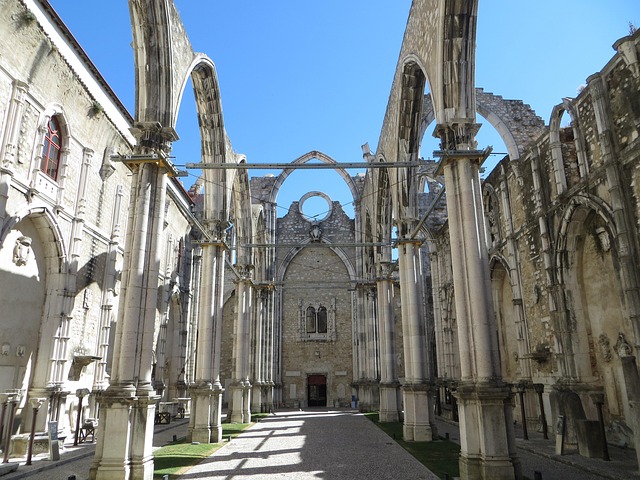
Roofless after the 1755 earthquake, the nave keeps its pointed arches like ribs against the sky, a ruin that edits tragedy into clarity. Founded in the 14th century by Nuno Alvares Pereira, the monastery once rivaled any in Lisbon for influence. Today the archaeological museum inhabits side chapels, staging Roman inscriptions, medieval tombs, and oddities like South American mummies collected during imperial circuits. Sun strips the floor in clean bands, and swallows handle the choir. From the terrace, roofs tumble toward the Tagus while the Santa Justa lift peeks in from the edge. The place proves that absence can be eloquent: the missing vault becomes the city's most patient window, and visitors leave speaking just a little quieter than when they entered. In June, festival balloons drift through the arches like bright punctuation. The ruins turn Lisbon’s summer into a slow, open-air psalm.
Ads place
Ads place
Ads place
Ads place
Ads place
Castelo de Sao Jorge in Lisbon, Portugal

Castelo de Sao Jorge

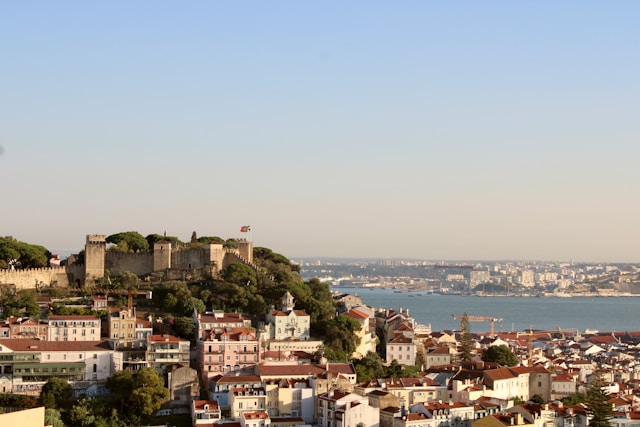
A hilltop wall sketches a crown over rooftops the color of warm clay, and peacocks parade like they own the ramparts. The fortress took shape across centuries, with Moors fortifying the ridge until the 1147 conquest transferred the keys to Christian kings. Later palaces hosted courts, feasts, and councils, then the 1755 earthquake battered stone and memory alike. Restorations in the 20th century reopened towers and walks that now trade arrows for views. From the miradouro, the 25 de Abril Bridge threads the Tagus while ferries play shuttle beneath. Archaeology on-site reveals Islamic quarters and medieval kitchens, proof that the castle was a neighborhood as much as a symbol. Buy a coffee, lean on a merlon, and let the city explain itself in roofs and river. Listen for the camera obscura demo that sweeps live panoramas across a screen. It is Lisbon’s weather and traffic, retold as moving light.
Ads place
Ads place
Ads place
Ads place
Ads place
Elevador de Santa Justa in Lisbon, Portugal

Elevador de Santa Justa

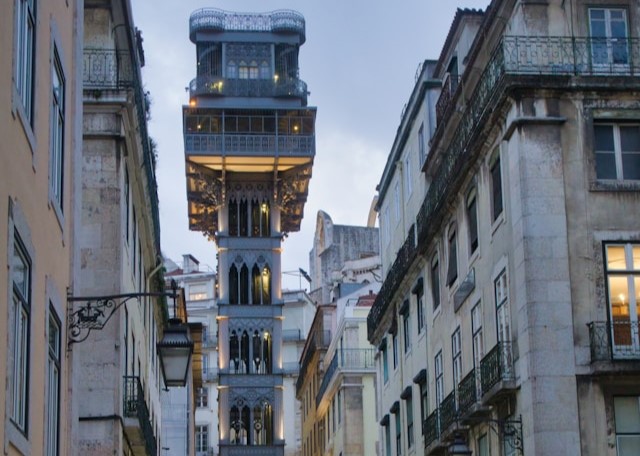
An iron filigree lifts passengers from Baixa to Carmo with theatrical calm, its cage gliding through a shaft patterned like lacework. Completed in 1902 by engineer Raul Mesnier, a disciple of Gustave Eiffel, the elevator originally ran on steam power before converting to electricity. Observation platforms deliver a chessboard of rooftops, towers, and the Tagus answering in silver. The cabin's wooden benches and brass fittings make time decelerate, and even the queue learns patience. Up top, a footbridge links to the ruined Carmo Convent, turning infrastructure into itinerary. The machine is small, the idea large: connect neighborhoods without flattening hills, and do it beautifully. Night lighting underlines the geometry so precisely that the structure feels like drawing turned three dimensional. Look for the discreet rivet stamps from a French foundry. They are the elevator’s maker’s mark, hiding in plain sight.
Ads place
Ads place
Ads place
Ads place
Ads place
Jeronimos Monastery in Lisbon, Portugal

Jeronimos Monastery

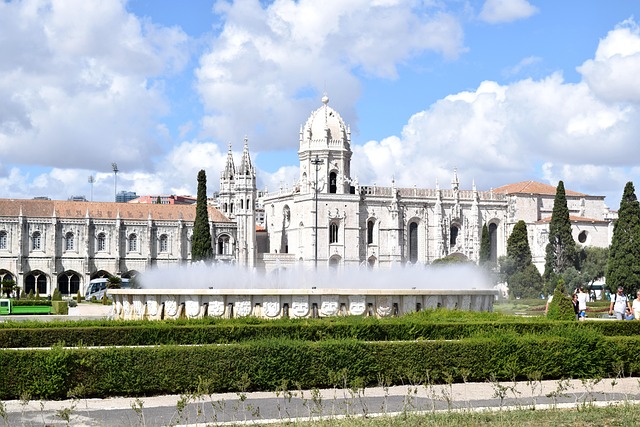
A cloister like carved honey traps sunlight in perfect squares, and columns sprout ropes, leaves, and maritime symbols as if stone could bloom. Commissioned by King Manuel I in the early 16th century, the monastery celebrated voyages financed by pepper, gold, and nerve. Here rest Vasco da Gama and poet Luis de Camoes, national myths archived in limestone. The church vaults leap with late Gothic daring; the cloister teaches silence as a discipline. Monks once offered sailors prayers and biscuits before departure; today, visitors trade whispers beneath arches that have survived the 1755 earthquake and politics of every stripe. Look closely and the armillary sphere repeats like a refrain, a reminder that Portugal drew its compass on the sky before carving it in stone. Exit to the river and the maritime story resumes in the breeze. Seek the refectory tiles telling Jonah’s tale in blues. In spring, orange blossoms scent the arcades like a soft benediction.
Ads place
Ads place
Ads place
Ads place
Ads place
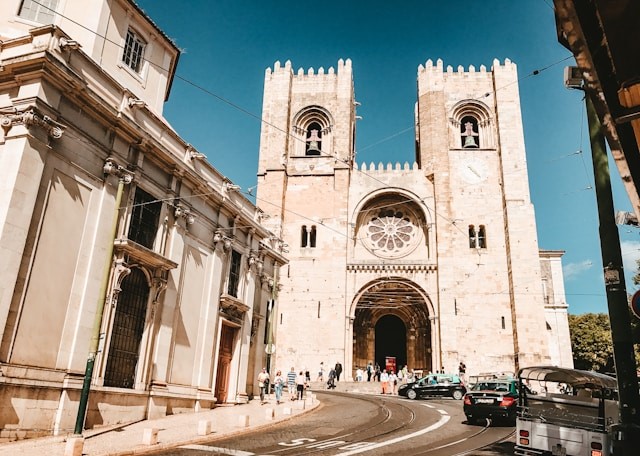
Lisbon Cathedral (Se de Lisboa) in Lisbon, Portugal

Lisbon Cathedral (Se de Lisboa)

Rising at the edge of Alfama, the cathedral greets visitors with fortress-like towers that have watched the city since 1147. Built on the site of a former Mosque after Afonso Henriques took Lisbon from Moorish control, the structure blends Romanesque gravity with later Gothic and Baroque interventions. Inside, stained glass filters light across relics of Saint Anthony, Lisbon’s beloved patron, and the cloisters reveal layers of history, including Roman and Islamic foundations. The rose window above the portal radiates symmetry that has survived earthquakes and sieges, proof of the cathedral’s stubborn resilience. Pilgrims, tourists, and locals all cross its threshold, some chasing faith, others chasing perspective. Oddly enough, the Se once housed Portugal’s royal archives, reminding visitors that power trusted stone more than parchment. Today, tram 28 rattles by its facade, and the bells still carry across Alfama like an unbroken note from the Middle Ages. In Advent, a nativity scene fills a side chapel with quiet theatre.
Ads place
Ads place
Ads place
Ads place
Ads place
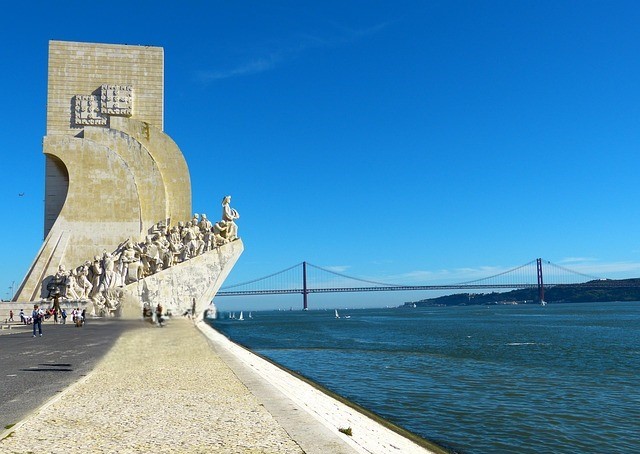
Padrao dos Descobrimentos (Monument to the Discoveries) in Lisbon, Portugal

Padrao dos Descobrimentos (Monument to the Discoveries)

Shaped like a caravel ready to launch, this monument rises from Belem’s waterfront as a stone chronicle of ambition. First erected in 1940 for the Portuguese World Exhibition and rebuilt in 1960, it marks the 500th anniversary of Prince Henry the Navigator and the fever for routes that redrew maps. Thirty-three figures climb the prow—among them Vasco da Gama and poet Luis de Camoes—gazing toward seas once charted on fragile parchment. At the base, a compass rose gifted by South Africa spreads across marble, its inlaid world map tracing voyages and returns. Inside, exhibitions weigh triumph against cost, while a lift carries you to views of the river, the bridge, and Jeronimos. Sailors once met here to bless departures; now families meet to race shadows at sunset. The monument keeps Belem’s complicated story legible without raising its voice.
Ads place
Ads place
Ads place
Ads place
Ads place
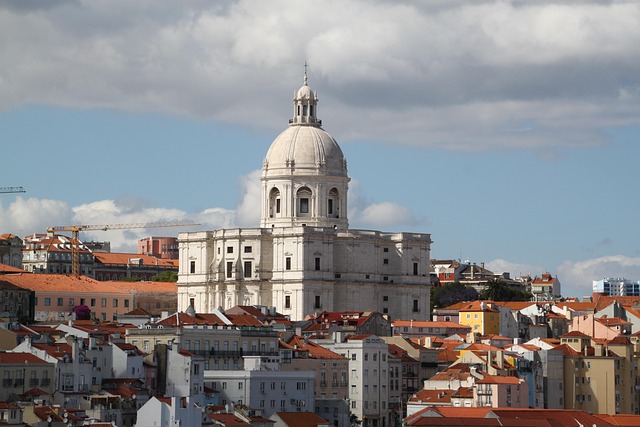
Panteao Nacional in Lisbon, Portugal

Panteao Nacional

A long gestation—begun in the 17th century, finished in the 20th—gave Lisbon a temple to memory whose dome now commands the riverside. Originally the church of Santa Engracia, it became the National Pantheon housing cenotaphs and tombs of presidents, writers, and fado's queen, Amalia Rodrigues. The interior floor lays a marble rosette so precise it feels digital despite its chisel. Climb to the terrace and the city arranges itself in arcs of tile and water. Sailors once swore the dome weathered storms by sheer presence; architects credit geometry and good stone. Either way, the building turns reverence into a public service: a quiet place to think big thoughts about a small country with a long wake. On weekends, a flea market bustles just outside in Campo de Santa Clara. The contrast—hushed marble and lively bargaining—suits Lisbon perfectly.
Ads place
Ads place
Ads place
Ads place
Ads place
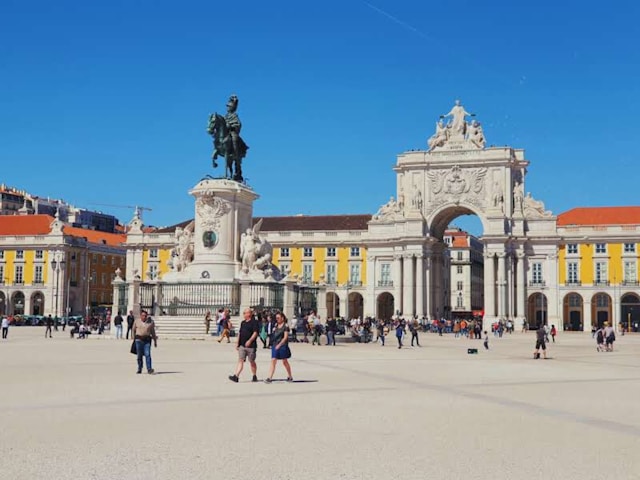
Praca do Comercio in Lisbon, Portugal

Praca do Comercio

Space and sky meet the river in a monumental embrace framed by yellow arcades and the Arco da Rua Augusta that loves a parade. Rebuilt after the 1755 earthquake under Marques de Pombal, the square announced a new Lisbon—rational, mercantile, and open to the Tagus. Offices once processed customs and empire; today, cafes and galleries aerate the colonnades. The equestrian statue of King Jose I stands mid-scene, hooves steady over crushed serpents, a metaphor not known for subtlety. Ferries slide by as trams ding, and the mosaic paving manages to charm without tripping tourists. At dusk, the arch's attic figures glow while the river mirrors pinks you could swear were invented in a studio. It is a civic room that breathes salt air and history in equal measure. Climb the arch for a grid of Baixa drawn with light. Street hawkers still sell roasted chestnuts, perfuming the plaza in winter.
Ads place
Ads place
Ads place
Ads place
Ads place