
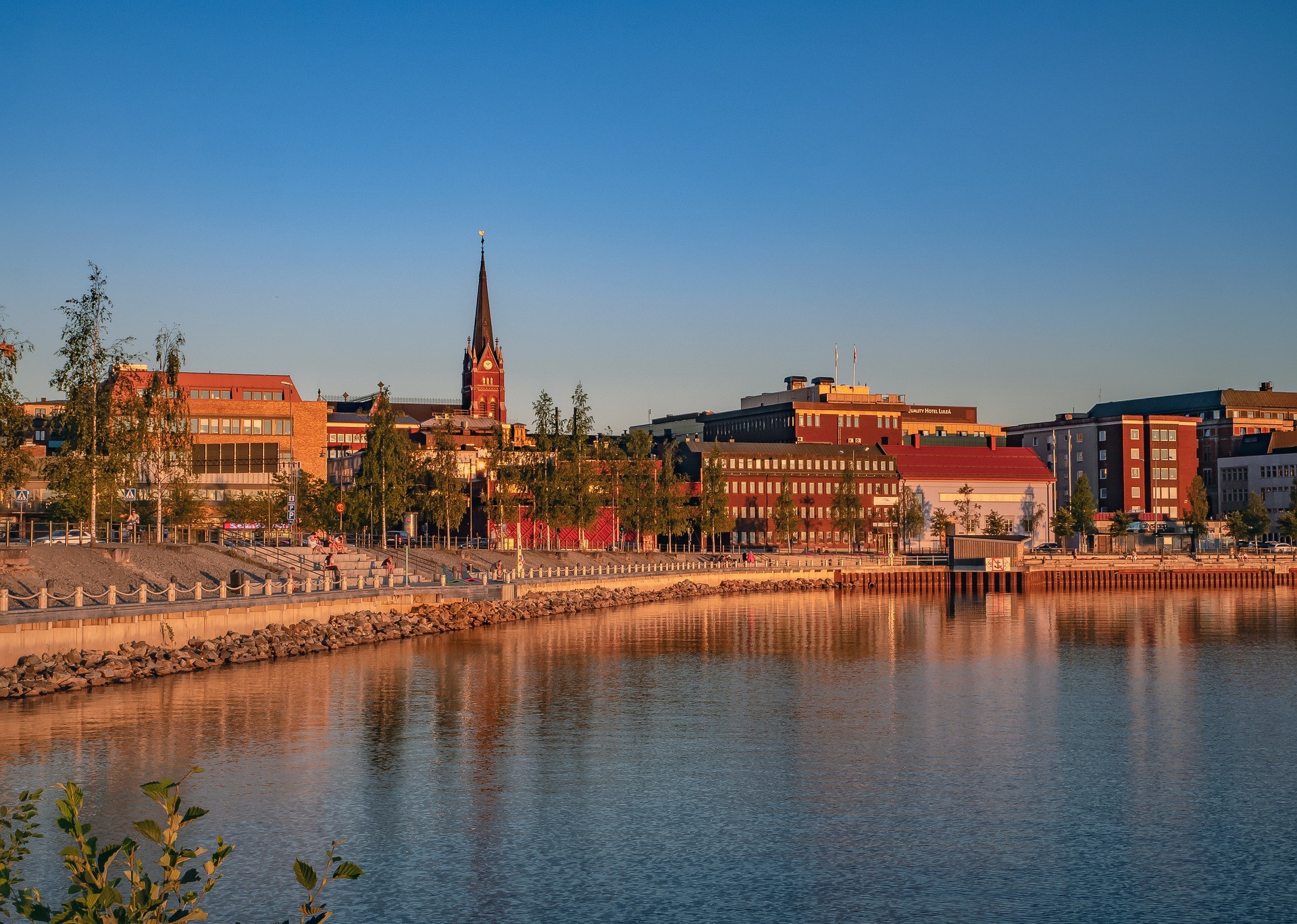
City view of Lulea, Sweden

Lulea

Lulea's harbor curls around the Bay of Bothnia, yet the soul sits inland at Gammelstad Church Town, a UNESCO site of wooden cottages built for worshippers who once traveled far by boat or sled. Winter locks the sea and, some seasons, an ice road opens for skaters and cautious drivers. Restaurants plate Arctic char, Kalix roe on toast, and cloudberries over vanilla custard. The university brings student pubs and tech festivals; the cathedral steeple catches the last light over the old quarter. Summer means kayaks, bicycles, and pier jumping. Icebreaker tours crunch through pack ice in midwinter, while summer brings late sun that refuses to set. During the darkest weeks, community radio sometimes reads forecasts in rhyme, a tradition said to brighten commutes.

Top attractions & things to do in Lulea

If you’re searching for the best things to do in Lulea, this guide brings together the top attractions and must-see places to visit in Lulea. The top picks below highlight the most visited sights for first-time visitors, plus a few local favorites worth adding.

Gammelstad Church Town in Lulea, Sweden

Gammelstad Church Town

A few kilometers inland from modern Lulea, Gammelstad Church Town feels like the city’s earlier draft written in timber and fieldstone. More than 400 red cottages cluster around Nederlulea Church, a late 15th century stone building whose vaults still carry faint medieval paintings. UNESCO added the site to the World Heritage List in 1996, recognizing how farmers once slept in these “church cabins” on weekends when services and markets drew them from the countryside. Narrow lanes lead past simple doorways numbered for families that still use them on festival days, especially at Midsummer and Christmas. Exhibitions explain how changing water levels in the Lule river shifted trade toward the coast and left Gammelstad inland. Guided walks often mention early Lutheran reformer Olaus Petri, whose ideas reached congregations here through printed catechisms and traveling priests. Come in late evening when smoke from saunas hangs low and the pale northern light turns every cottage wall into a soft reflector for the church tower.
Ads place
Ads place
Ads place
Ads place
Ads place
Kulturens Hus and North Harbor Waterfront in Lulea, Sweden

Kulturens Hus and North Harbor Waterfront

By the North Harbor basin, Kulturens Hus shows how Lulea thinks about culture as an everyday utility rather than a separate temple. Opened in 2007 and designed by Tengbom architects, the building combines a concert hall, city library, and exhibition spaces under one sloping roof of glass and wood. The main auditorium seats about 1,000 and moves between symphony orchestras, touring bands, and local school performances with the same calm staging. Upstairs galleries host contemporary art, often highlighting artists from Norrbotten alongside guests from the Barents region and the wider Arctic. The library’s big windows look directly over the harbor, where icebreakers and ferries moor in different seasons. Outside, a broad promenade loops around the water past sculptures, outdoor seating, and a long pier that points straight toward the islands. In summer people sit on the steps with takeaway coffee, while in winter they cross packed snow between light installations and the glow from the foyer. Kulturens Hus works best when you treat it as both living room and lighthouse for the city.
Ads place
Ads place
Ads place
Ads place
Ads place
Lulea Archipelago and Winter Ice Roads in Lulea, Sweden

Lulea Archipelago and Winter Ice Roads

From the city quay, the Lulea archipelago stretches out as a low horizon of forested islands that change character with the season. In summer more than 1,300 islands lie in front of you, with scheduled boats linking places like Hinderso, Junkon, and Kluntarna where old fishing villages and pilot stations still mark safe channels. Come winter, the Bothnian Bay often freezes so firmly that the municipality plows official ice roads across the bay, sometimes measuring 10 kilometers or more and thickened by careful monitoring teams. Locals cycle, skate, and walk between islands while cars creep along marked lanes under strict rules. Small huts dot the ice for angling festivals, and guides offer kick sled tours or Northern Lights walks far from city glow. In shoulder seasons the archipelago is quieter, with birdlife and shifting ice floes providing the drama. Whether you visit by boat or on frozen sea, the experience underlines how Lulea lives with water in all its states and treats the coastline as a shared outdoor room.
Ads place
Ads place
Ads place
Ads place
Ads place
Lulea Cathedral in Lulea, Sweden

Lulea Cathedral

Walk up from the harbor and the neo Gothic tower of Lulea Cathedral suddenly lifts above shops and apartment blocks like a ship’s mast on land. The present church was completed in 1893, replacing an earlier wooden structure, and architect Adolf Emil Melander used light brick, pointed arches, and a spire that rises to roughly 67 meters. Inside, tall windows and pale plaster give the nave an airy clarity that suits the northern light, while the main altar painting by Nils Asplund anchors the chancel in deep color. An organ with around 7,000 pipes supports regular concerts that often feature choral works linked to the long Advent and Christmas season. Small maritime details, including model ships and memorial plaques, reflect the city’s relationship with sea ice and shipping lanes. Outside, the square around the cathedral becomes a natural meeting point during summer festivals and winter markets. Step in for a few minutes and you feel how the building is tuned more toward community life than grand ceremony.
Ads place
Ads place
Ads place
Ads place
Ads place
Teknikens Hus Science Center in Lulea, Sweden

Teknikens Hus Science Center

Next to the university campus on Porson, Teknikens Hus turns northern industry into hands on experiments that feel more like play than instruction. The center opened in 1988 with support from LKAB, SSAB, and other regional companies, and many exhibits still draw directly on mining, steel production, and space research carried out in northern Sweden. A large model of the Kiruna iron ore mine lets children drive small trains and elevators through tunnels, while a full dome theater and planetarium project data from the nearby Esrange Space Center. Interactive stations explain hydropower, paper machines, and wind turbines using levers, wheels, and real water rather than only screens. Families often spend several hours letting kids climb into cockpits, launch mini rockets, or tinker with robotics kits tied to Lulea University of Technology projects. The cafe and shop keep prices reasonable, which helps locals treat the center as a repeat destination on dark winter weekends. Teknikens Hus makes it clear that high tech stories in the north are built from very tangible materials.
Ads place
Ads place
Ads place
Ads place
Ads place