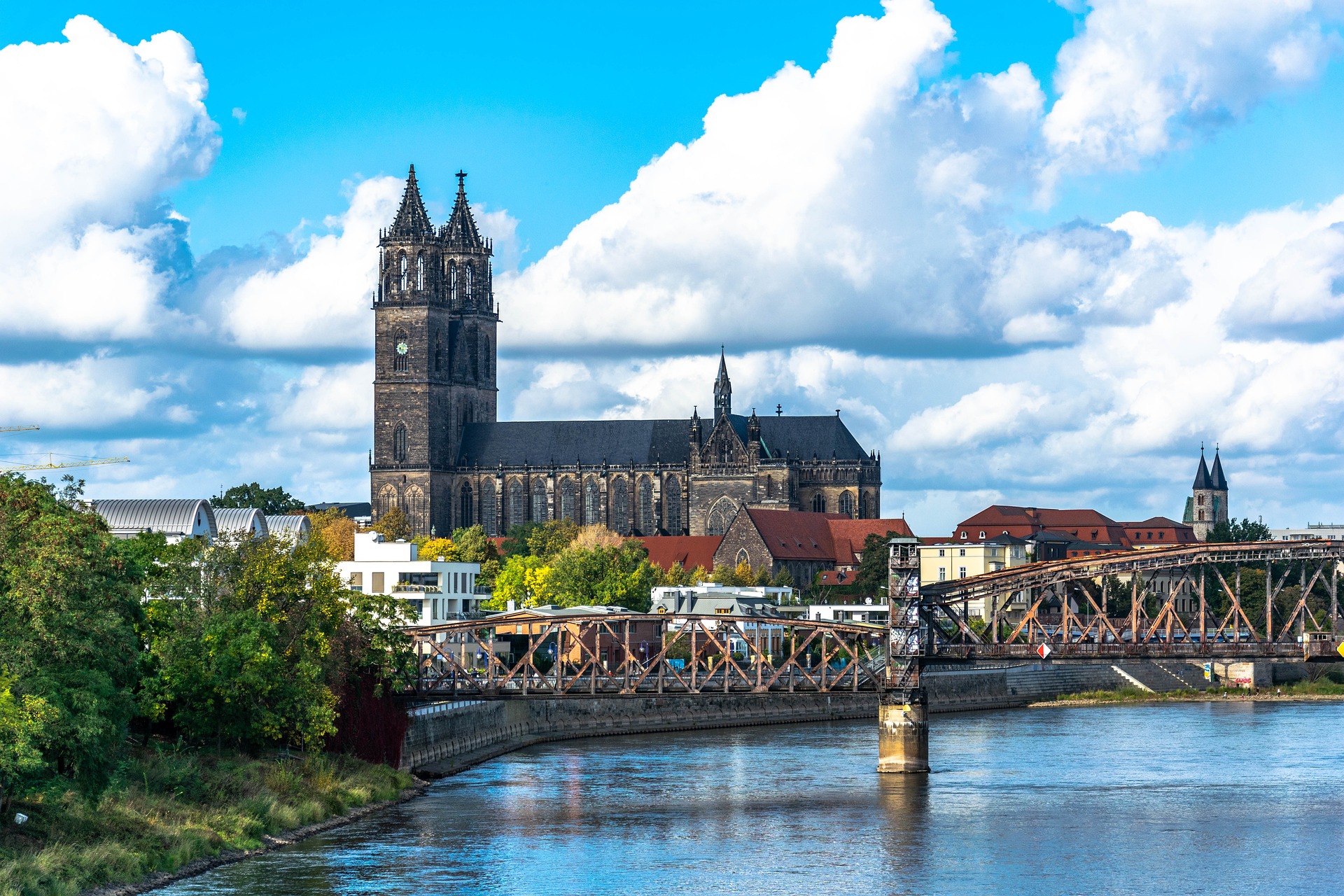

City view of Magdeburg, Germany

Magdeburg

Magdeburg, the capital of Saxony-Anhalt, is a city steeped in history along the Elbe River. The Magdeburg Cathedral, the first Gothic cathedral in Germany, is a highlight of the city's skyline. The city also features the Green Citadel, an architectural marvel designed by Friedensreich Hundertwasser, which contrasts modernity with historical structures. Magdeburg's parks, including the Elbauenpark with its famous Millennium Tower, provide recreational space for residents and visitors. The city's rich history includes its role as a center during the Holy Roman Empire. Magdeburg's cultural festivals and vibrant arts scene contribute to its dynamic appeal.

Top attractions & things to do in Magdeburg

If you’re searching for the best things to do in Magdeburg, this guide brings together the top attractions and must-see places to visit in Magdeburg. The top picks below highlight the most visited sights for first-time visitors, plus a few local favorites worth adding.

Elbauenpark in Magdeburg, Germany

Elbauenpark

Elbauenpark, created for the 1999 Federal Garden Show, transforms a WWII ammunition depot into 100 hectares of ecological wonder. The Jahrtausendturm (Millennium Tower), a 60-meter wooden helix, chronicles 6,000 years of human innovation across five floors—from Egyptian papyrus to quantum computing. The Butterfly House shelters 200 tropical species, including the electric-blue Morpho peleides, while the Alpine Garden blooms with edelweiss and glacier buttercups. The park's Solar Shuttle ferries visitors across Lake Hegel, passing floating islands that filter water naturally. In July, the Elbauen Summer festival features open-air opera on the Great Meadow. Don't miss the Insect Hotel, a 12-meter structure housing 30,000 pollinators, or the Medieval Herb Garden with plants from Hildegard von Bingen's pharmacopeia. Winter brings a cross-country ski trail and ice sculptures illuminated by renewable energy. A green phoenix risen from military ruins.
Ads place
Ads place
Ads place
Ads place
Ads place
Green Citadel of Magdeburg in Magdeburg, Germany

Green Citadel of Magdeburg

Friedensreich Hundertwasser's Green Citadel (2005), the artist's final architectural project, rebels against "straight-line tyranny" with undulating floors, golden onion domes, and 105 uniquely shaped windows. The complex's "Tree Tenants"—400 trees and shrubs growing from facades—filter air pollution, while recycled bricks from GDR-era ruins form its base. The Inner Courtyard, paved with colorful mosaics, hosts summer jazz festivals beneath a glass-roofed atrium. Explore the Hundertwasser Museum showcasing his "Five Skins" philosophy, or stay in the Rainbow Suite Hotel where no two rooms share the same layout. The Organic Bakery uses wheat from the rooftop garden, and the Fairy Tale Fountain cycles rainwater through ceramic fish sculptures. At night, LED projections animate the facade with Hundertwasser's paintings. A manifesto of ecological harmony and artistic freedom.
Ads place
Ads place
Ads place
Ads place
Ads place
Magdeburg Cathedral in Magdeburg, Germany

Magdeburg Cathedral

Magdeburg Cathedral (Dom St. Mauritius und Katharina), Germany's oldest Gothic cathedral, began construction in 1209 under Archbishop Albrecht II. Its twin spires, soaring to 104 meters, frame a Romanesque crypt housing Emperor Otto I's 10th-century porphyry tomb. The stained-glass choir windows (1363) depict the life of St. Maurice, while the Magdeburg Rider (1240)—Europe's oldest free-standing equestrian statue—symbolizes imperial authority. The cathedral's Gothic hall choir (1363) features acoustics perfect for Bach cantatas during the annual Magdeburg Music Nights. Firebombed in 1945, restoration revealed Carolingian foundations from Otto's original 937 AD church. Climb the 452 steps to the south tower for views of the Elbe River and Hubbrücke bascule bridge. The Chapter House displays medieval manuscripts, including a 12th-century Codex Wittekindeus. A living chronicle in stone, the cathedral embodies Saxony-Anhalt's spiritual and political legacy.
Ads place
Ads place
Ads place
Ads place
Ads place
Magdeburg Zoo in Magdeburg, Germany

Magdeburg Zoo

Magdeburg Zoo, founded in 1950, spans 16 hectares with 1,200 animals representing 200 species. The Afrika Panorama immerses visitors in savanna habitats where giraffes graze alongside zebras and ostriches. The Tropical House recreates Amazonian humidity for sloths, tamarins, and poison dart frogs, while the Polar World's chilled pools host playful Humboldt penguins. The zoo breeds endangered Przewalski's horses and Amur leopards, part of European conservation programs. Kids adore the Petting Barn with pygmy goats and the Nocturnal Animal House where bushbabies leap under red moonlight. The Aquarium Tunnel reveals piranhas and electric eels gliding past coral reefs. Daily feedings showcase natural behaviors—watch gray wolves hunt meat-filled piñatas! In December, the Zoo Lights trail illuminates enclosures with animal-shaped lanterns. A leader in ethical wildlife education.
Ads place
Ads place
Ads place
Ads place
Ads place
Rotehorn Park in Magdeburg, Germany

Rotehorn Park

Rotehorn Park, laid out in 1871 on Elbe River floodplains, offers 200 hectares of English landscape design. The Stadtparksee lake, spanning 12 hectares, is circled by a 3km jogging path passing Art Nouveau bridges (1907) and a willow-shaded Poets' Corner with Goethe quotations. Rent a solar-powered paddleboat to reach the lake's island, home to the Café am Wasser serving organic plum cake. The Open-Air Stage hosts Shakespeare plays in summer, while winter's Ice Magic festival features curling on frozen canals. The park's Elbe Pavilion details flood prevention engineering, critical during 2013's "Flood of the Century." Hidden gems include the Rosengarten (500 rose varieties) and a WWII flak tower converted into a climbing wall. Cyclists follow the Elbe Cycle Path through the park, part of a 1,200km transnational route. Urban tranquility meets ecological innovation.
Ads place
Ads place
Ads place
Ads place
Ads place