
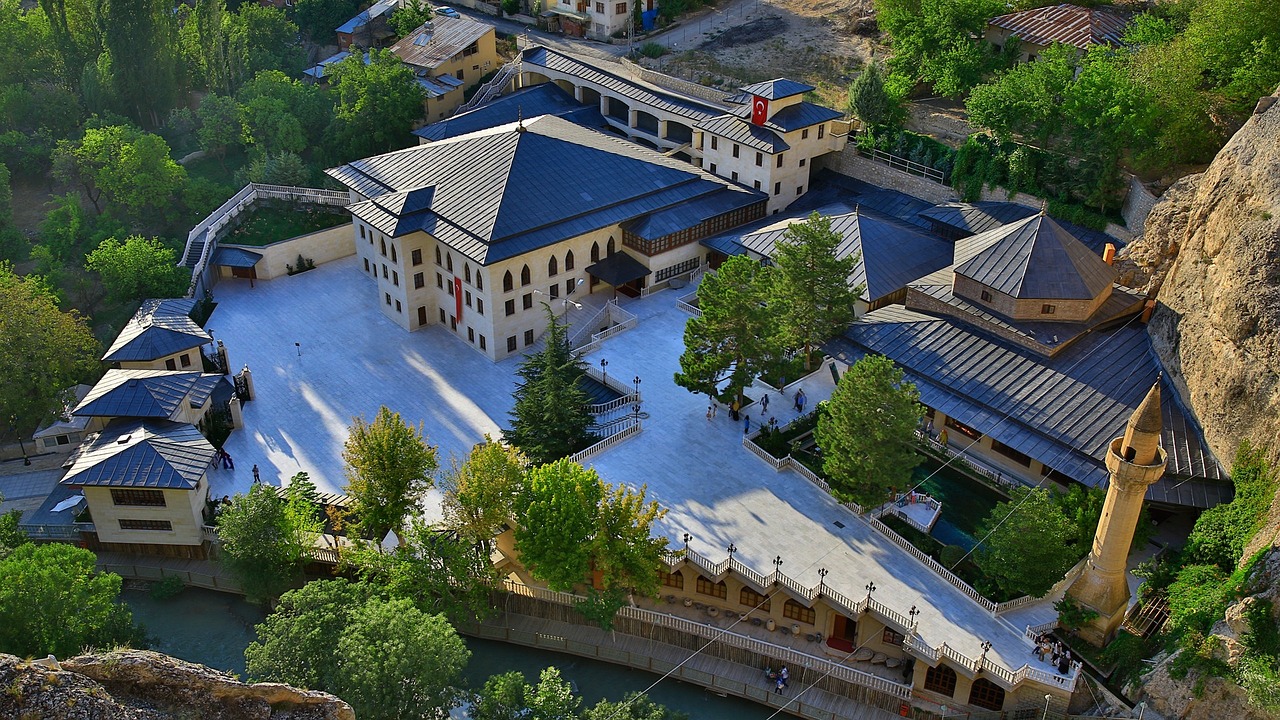
City view of Malatya, Turkey

Malatya

Malatya, renowned worldwide as the “Apricot City,” lies in a fertile valley along the Euphrates tributaries, its orchards producing fruit prized for their sweetness and hue. Every August, the Malatya Apricot Festival transforms city squares into open-air markets where tourists sample dried apricots, pistachios and apricot brandy under azure skies. The Malatya Museum houses artifacts from Commagene and Hittite civilizations, including rock reliefs and funerary stelae unearthed in nearby archaeological sites. Ottoman-era hans and mosques with intricately carved wooden minbars dot the old town’s winding streets. Local delicacies such as kaymak-drenched pancakes, walnut baklava and apricot-stuffed pastries tempt passersby at patisseries along Uzun Çarsi. A short drive south leads to the Levent Valley, where earthenware cave dwellings carved into soft tufa cliffs recall early Anatolian habitation. As the sun dips, the skyline is pierced by minarets silhouetted against apricot-lotus-toned clouds, and riverside cafés fill with conversation over strong coffee and fruit tea. Malatya’s blend of agricultural heritage, archaeological intrigue and festive spirit offers a sensory-rich journey into eastern Turkey’s heartland.

Top attractions & things to do in Malatya

If you’re searching for the best things to do in Malatya, this guide brings together the top attractions and must-see places to visit in Malatya. The top picks below highlight the most visited sights for first-time visitors, plus a few local favorites worth adding.

Aslantepe Mound in Malatya, Turkey

Aslantepe Mound

Aslantepe Mound, a UNESCO World Heritage Site, reveals a 5,000-year-old city-state that pioneered early governance. The site's crown jewel is the world's oldest known palace complex (3350 BC), featuring advanced administrative tools like 2,200 cuneiform tablets recording trade and taxes. Excavations uncovered a temple with vivid wall paintings depicting ritual processions and a treasury containing nine ceremonial swords - the earliest examples of prestige weaponry. The palace's innovative architecture includes a columned hall for public audiences and a network of clay pipes for running water. Archaeologists recently discovered a bronze age archive with cylinder seals from distant Mesopotamia, proving Aslantepe's role as a trade hub. The onsite museum displays reconstructions of the palace's vibrant frescoes and a scale model showing how the complex dominated the ancient Malatya plain. Ongoing digs continue to reveal workshops for copper production and large granaries that fed the city's 5,000 inhabitants.
Ads place
Ads place
Ads place
Ads place
Ads place
Battalgazi Ulu Mosque in Malatya, Turkey

Battalgazi Ulu Mosque

The Battalgazi Ulu Mosque, commissioned in 1224 by Seljuk Sultan Alaeddin Keykubad I, exemplifies the golden age of Anatolian Islamic architecture. Its imposing stone structure features a unique double portal adorned with Kufic calligraphy and geometric patterns symbolizing cosmic harmony. The 38-meter minaret retains original turquoise tiles from medieval Kashan workshops. Inside, twelve massive basalt columns support a vaulted ceiling designed to amplify the imam's voice acoustically. The mihrab contains rare 13th-century lusterware tiles depicting celestial constellations used for prayer timing. During Mongol sieges, the mosque served as a fortified sanctuary - arrow grooves still visible in its walls testify to this martial history. Recent restorations uncovered hidden frescoes of the "Tree of Life" beneath Ottoman plaster layers. The walnut minbar, added in 1345, showcases interlocking star patterns carved without nails. Archaeologists have identified a subterranean chamber believed to host Sufi rituals. Today, the mosque remains an active house of worship while preserving eight centuries of architectural evolution.
Ads place
Ads place
Ads place
Ads place
Ads place
Gunpinar Waterfall in Malatya, Turkey

Gunpinar Waterfall

Gunpinar Waterfall, plunging 40 meters into a travertine canyon, creates a mesmerizing natural amphitheater. The falls freeze spectacularly in winter, forming massive ice columns that attract climbers. Geologists have identified marine fossils in the canyon walls from when the area lay beneath the Tethys Sea. Local legends speak of Armenian monks using a hidden cave behind the cascade to safeguard manuscripts during invasions. The mist-fed ecosystem hosts 17 endemic plants, including a rare orchid species that blooms only in this microclimate. Natural travertine pools at the base maintain a constant 12°C temperature year-round. An Ottoman bridge nearby bears caravan inscriptions from Silk Road merchants who rested here. Recent LiDAR scans revealed ancient rock-cut chambers possibly used as shelters or hermitages. The waterfall's unique acoustics amplify sound, creating natural echoes that inspired local musical traditions. At sunrise, light refracting through spray paints rainbows across the canyon, while evening brings out bioluminescent algae in the pools.
Ads place
Ads place
Ads place
Ads place
Ads place
Malatya Museum in Malatya, Turkey

Malatya Museum

The Malatya Museum chronicles 8,000 years of history through artifacts from Aslantepe, Arslantepe, and Roman Melitene. Its centerpiece is a Hittite lion statue (1200 BC) weighing 1.5 tons, originally guarding a city gate. The cuneiform tablet collection includes administrative records from the world's earliest known bureaucracy. A reconstructed Urartian tomb displays intricate bronze belts and ceremonial weapons with animal motifs. The coin gallery features 2,300-year-old drachmae minted by local satraps under Persian rule. Rare Byzantine surgical tools evidence advanced medical practices, while Ottoman-era exhibits showcase Malatya's famed apricot trade. The ethnographic section presents a complete 19th-century merchant's house with apricot-wood furniture and traditional copperware. Interactive displays explain how the region's apricot cultivation began in antiquity. Recent acquisitions include a Roman mosaic depicting the myth of Dionysus and a Seljuk-era astrolabe used for navigation and timekeeping.
Ads place
Ads place
Ads place
Ads place
Ads place
Nemrut Crater Lake in Malatya, Turkey

Nemrut Crater Lake

Nemrut Crater Lake, formed in a dormant volcano at 2,250 meters altitude, showcases nature's dramatic artistry. The lake's turquoise waters shift colors seasonally due to unique algae blooms and mineral concentrations. Scientists have mapped 12 active fumaroles on the lakebed releasing gases at 60°C, creating surreal ice sculptures in winter. The crater shelters the endemic Nemrut trout, a species found nowhere else, adapted to the mineral-rich waters. Hiking trails wind through obsidian fields - volcanic glass used since prehistoric times for tools and trade. The eastern shore features the "Witch's Cauldron", a perpetually bubbling hot spring surrounded by rare thermophile moss colonies. Geologists have identified seven distinct lava layers from eruptions between 300,000 and 1441 AD. At dawn, sunlight refracting through mist creates rainbows visible from the panoramic viewpoint. The lake's microclimate supports over 60 plant species, including medicinal herbs used in traditional Armenian medicine.
Ads place
Ads place
Ads place
Ads place
Ads place