
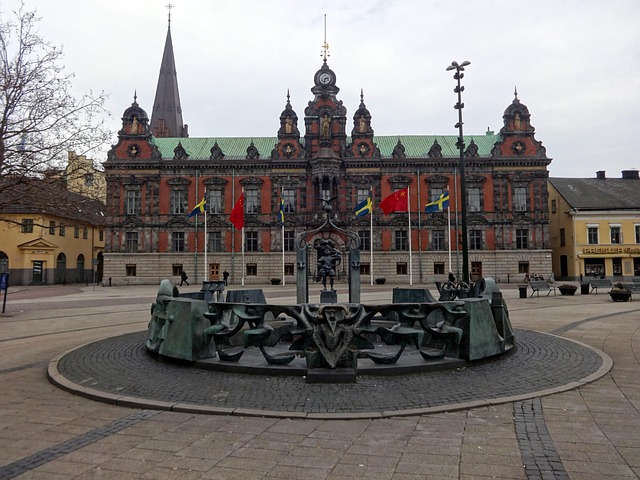
Stortorget and City Hall
In Malmo, Sweden .
More places to visit in Malmo
Discover more attractions and things to do in Malmo.
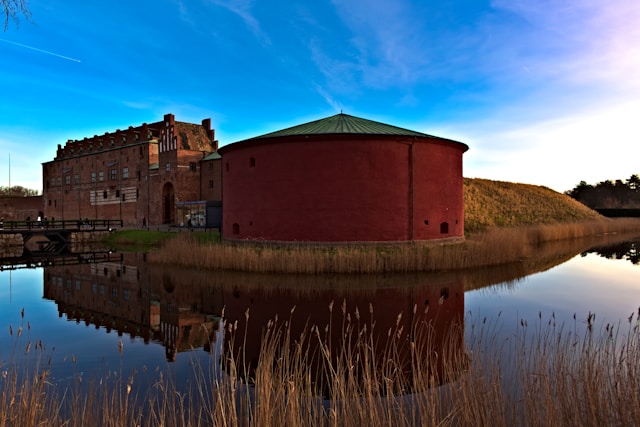
Malmo Castle (Malmohus) and Museums
Moats and red brick signal purpose before any labels do, and Malmohus answers with centuries of adjustments. The present fortress dates to the 1540s under Christian III , replacing an earlier stronghold and adopting sober Renaissance lines around a compact courtyard. A drawbridge crosses water stocked for birds rather than defense; within, the City Museum, Natural History, and Aquarium share vaulted rooms that once stored powder. Exhibitions rotate through ship models, coins, and a timeline that dwells on the 1658 transfer from Denmark to Sweden. Brickwork shows repairs after a 19th-century prison phase, when cells crept into casemates. Numbers are modest but telling: bastions at four corners, walls over 2 meters thick, and a keep that keeps cool in July. From the ramparts, the park and canal system read like a diagram; swans patrol with veteran entitlement. The castle persuades by reuse rather than nostalgia, a plain statement that a working city can thread museums into a fortress without either side losing face or function.
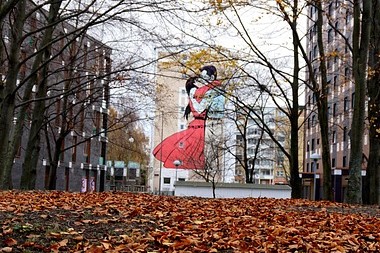
Malmo Street Art
Across Mollevangen, Seved, and the harbor walks, Malmo Street Art reads like an open-air archive of ideas layered onto brick, concrete, and corrugated gates. The city’s big leap came with 2014 when the festival Artscape invited international and local painters to take walls that commuters knew by heart. Among the most photographed is Last Embrace Before Departure , often attributed to D*Face, a bittersweet farewell that turns a gable into a narrative panel. Count 50+ large murals today, with smaller stencils and paste-ups multiplying down alleys; several pieces climb to roughly 20 meters , scaled to cranes and careful weather windows. ROA’s fauna, M-City’s engineering fantasies, and Hop Louie’s witty characters trade styles without crowding one another. The municipality and property owners quietly maintain the gallery, adding anti-UV coatings and notes about consent where needed. Best practice is to start at Sodra Skolgatan and loop by foot or bike, letting corners surprise you; early or late light pulls texture from old brick and fresh pigment alike, and the city feels briefly like a sketchbook left open on a generous table.
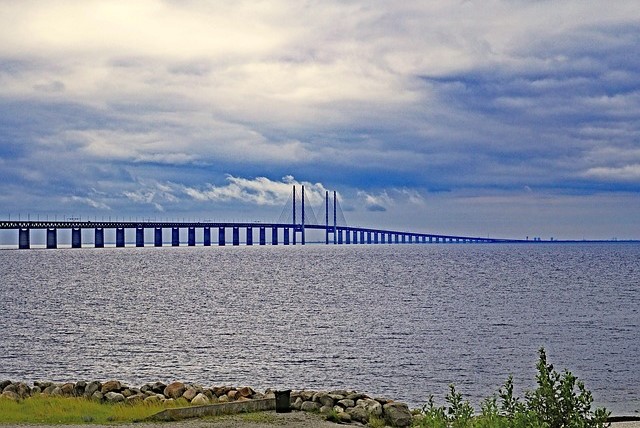
Oresund Bridge and Link
Stand at Ribersborg and the horizon carries a line that is both road and narrative. The Oresund fixed link opened in 2000 , combining a cable-stayed bridge to the artificial island Peberholm and a tunnel into Denmark. The main span reaches 490 meters between pylons; clearance sits near 57 meters for shipping, and traffic runs on two levels: rail below, motorway above. Engineers chose a bridge–island–tunnel sequence to keep flight paths clear for Kastrup and to avoid blocking the Drogden channel. Peberholm became an unintended reserve, its flora and fauna monitored with scientific patience. At night, the pylons draw thin diagrams in light; by day, the deck’s rhythm makes speed legible. Weather writes the rest—fog that shortens the world to meters , sun that pulls Copenhagen forward like a promise. Whether you cross by train in 35 minutes or watch from shore, the link behaves like infrastructure should: decisive, understated, and capable of turning two cities into neighbors more convincingly than any slogan ever managed.
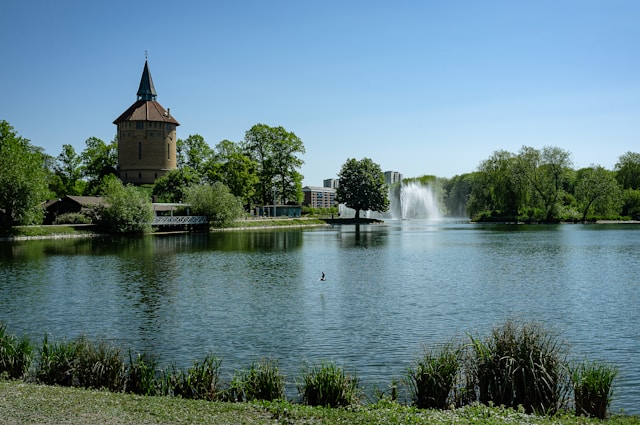
Pildammsparken
Paths slip between water and beech as Pildammsparken opens like a quiet stage on the city's south side. Laid out for the Baltic Exhibition of 1914 and expanded afterward, the park now covers around 45 hectares , a scale that swallows joggers, prams, and lunchtime detours without fuss. The great pond, Stora Dammen , carries coots and reflections; a perimeter loop of roughly 1.6 kilometers keeps an easy cadence for walkers. The circular lawn called Tallriken acts as amphitheater and picnic diagram, a leftover geometry from exhibition planning smoothed by decades of civic use. Tree allees were formalized by the city gardener’s office in the 1920s , and you can read their intent in straight shadows at evening. Look for the Margaretapaviljongen and for stone-edged beds that trade tulips for perennials as seasons turn. Benches face wind or shelter with equal thought; lighting is low and regular, polite to moths and late cyclists. The park’s argument is simple and persuasive: give water, lawn, and shade room to work, and a weekday will quietly repair itself by the time you reach the gate.
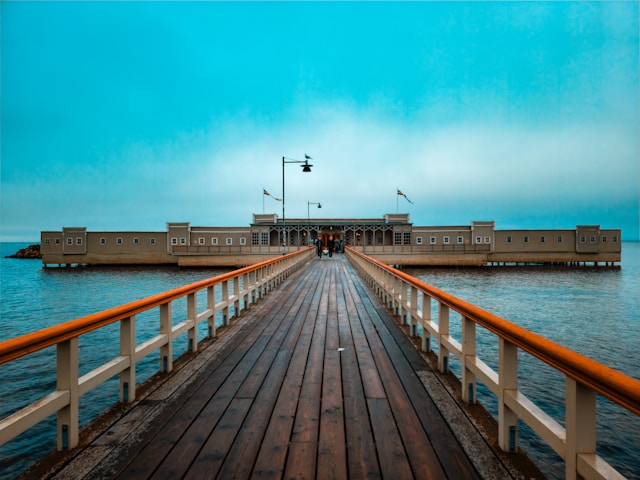
Ribersborgs Kallbadhus
At the end of a long pier the Baltic becomes a bathhouse, and Malmo remembers that winter is for swimming, too. The cold-bath facility opened in 1898 , rebuilt after storms in the 1920s , and still divides men's and women's sections with a central cafe. Wooden wings enclose wind while admitting horizon; saunas heat to the familiar 80–90 C and ladders drop into water that can sit at 2–4 C in February. Lifeguards keep routines calm; regulars argue loyally about plunge technique. Photographs show frost tracing railings; summer finds sunbathers along the pier’s hundreds of meters, with the Oresund Bridge etched to the west. The ritual holds: heat, cold, sky, and a conversation that makes strangers peers for ten minutes. Architecture serves habit here, not spectacle, which is why the place endures better than wellness trends and looks right at dusk when lamps pull the wooden geometry forward against a patient sea.
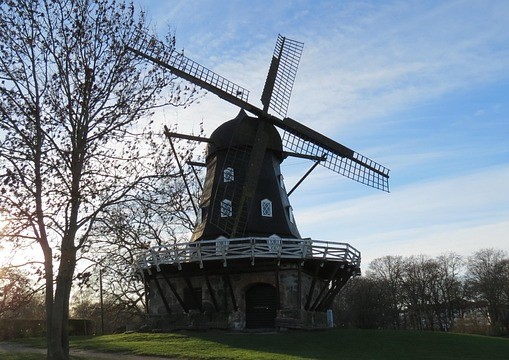
Slottstradgarden (Castle Garden)
Between canals a volunteer-tended garden stitches vegetables, perennials, and bees into an urban classroom. The project took root in the 1990s beside Malmohus, and its hectare-plus of beds includes heritage apple rows, dye plants, and a café that counts hours by crumb and conversation. A small windmill turns like punctuation; compost bays demonstrate soil as a civic responsibility. Numbers keep it honest: plots laid in rectangles about 1.2 meters wide, paths wide enough for wheelbarrows, and a seed library that tracks varieties across seasons. Workshops teach grafting and pruning; a pollinator hotel quietly fills vacancies. From the bridge the geometry reads like a quilt; at ground level you notice labels done in a neat hand, and the particular smell of thyme when ankles brush past. The garden argues that sustainability is simply care extended over time—pleasant, useful, and perfectly scaled to an afternoon.
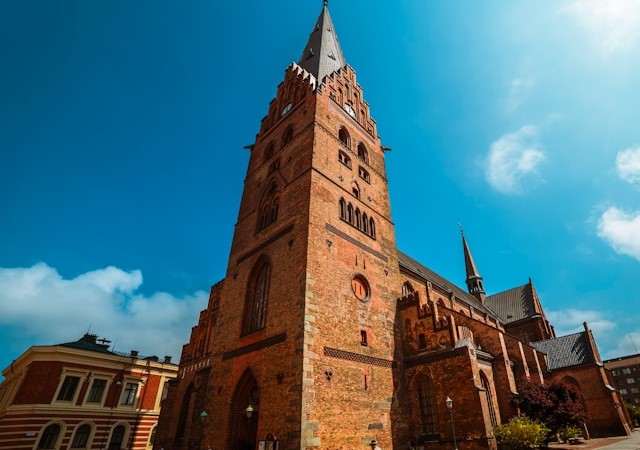
St Petri Church
Brick gathers into height and shadow at St Petri, Malmo’s great parish church. Begun in the early 14th century , it is a cool Gothic interior where ribs meet at bosses and the nave runs a measured 105 meters . A tall tower—often listed just under 105 meters as well—keeps time over the trades quarter. Fresco fragments appear in chapels like voices recovered from plaster; a carved altar from the 1600s reads like a book opened to the middle. The plan is basilican, aisles catching side light that flattens brick into cloth. Organs breathe confidently; chairs replace pews with Scandinavian restraint. Restoration in the 1900s preferred lime and patience, leaving tool marks that tell the truth about repair. Step outside and the surrounding streets return to errands; step back in and the building insists on slower verbs—stand, look, listen—until the day shrinks to a tolerable size.
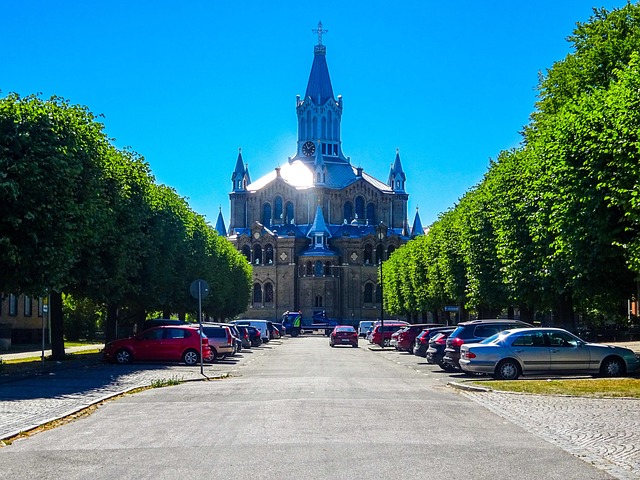
St. Paul's Church (Sankt Pauli kyrka)
Set back from the traffic on Sankt Pauli kyrkogata, this red-brick parish church gathers light with tall lancets and a tower that locals say serves as a weather report for the whole district. Consecration is usually given as 1882 , with plans shaped by late Neo-Gothic taste and a Malmo fondness for practical detailing. The nave is three-aisled , its ribs landing on slim shafts that keep the interior readable even on winter afternoons. A copper-clad spire—often quoted around 60 meters —anchors the silhouette without bullying the neighborhood. Records from the 1890s note new pews and heating, while restoration in the 20th century favored limewash and careful repointing over showy replacements. The organ, rebuilt in stages and now counted at roughly 3000 pipes , folds a mellow sound through transepts where candle soot still traces festivals past. Outside, a tidy forecourt collects bicycles and conversation; inside, polished wood and patterned brick explain how craft and devotion once shared the same timetable. Arrive at blue hour and stained glass answers the streetlights; arrive at noon and the nave reads like a calm, well-measured room.
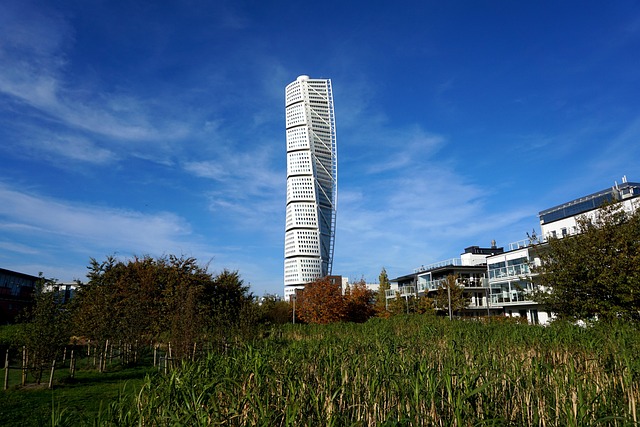
Turning Torso
From the quays you feel the building twist before you count floors: a white helix that turned Malmo's skyline contemporary. Completed in 2005 to a design by Santiago Calatrava , the residential tower rises about 190 meters in nine stacked cubes that rotate a full 90 degrees from base to crown. The plan repeats a pentagonal core; outriggers tie the skin to the structure so window corners stay crisp in wind. Elevators step the height in neat stages and service floors hide quietly between apartments. Early brochures spoke of 147 units; later refurbishments tuned lobby and glazing for Baltic weather without altering the sculptural ambition. Stand on the plaza and the torque reads in shadows; step back to Daniaparken and the tower aligns with cranes like a new species of mast. Even people who resist superlatives admit the mathematics is persuasive: rotation made livable, engineering turned to choreography. In summer the white cladding throws sun onto the water; in winter it holds the sky's dull light like a careful lantern for the harbor district.