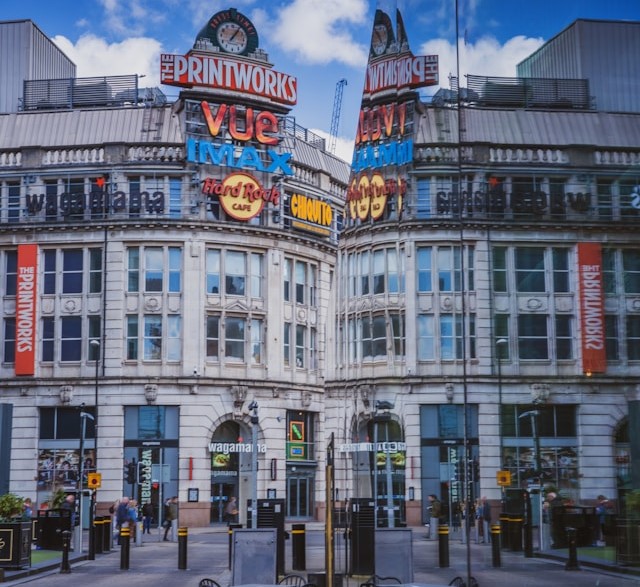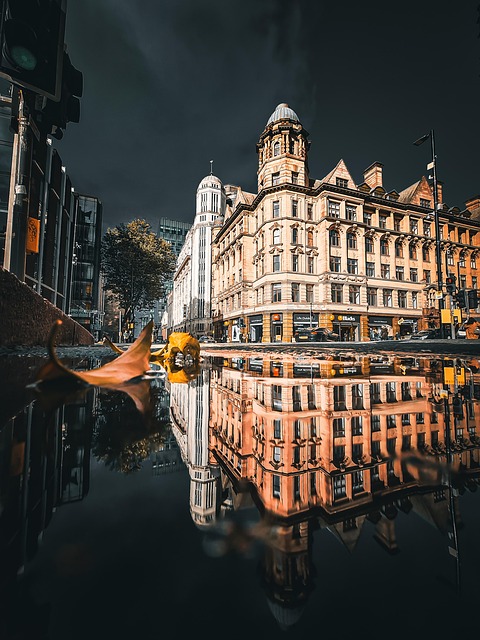
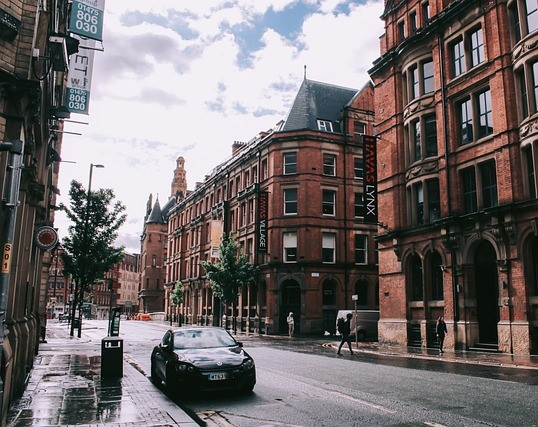
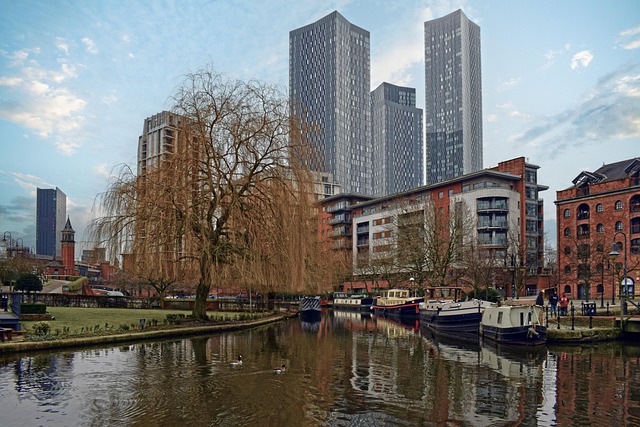
City view of Manchester, United Kingdom

Manchester

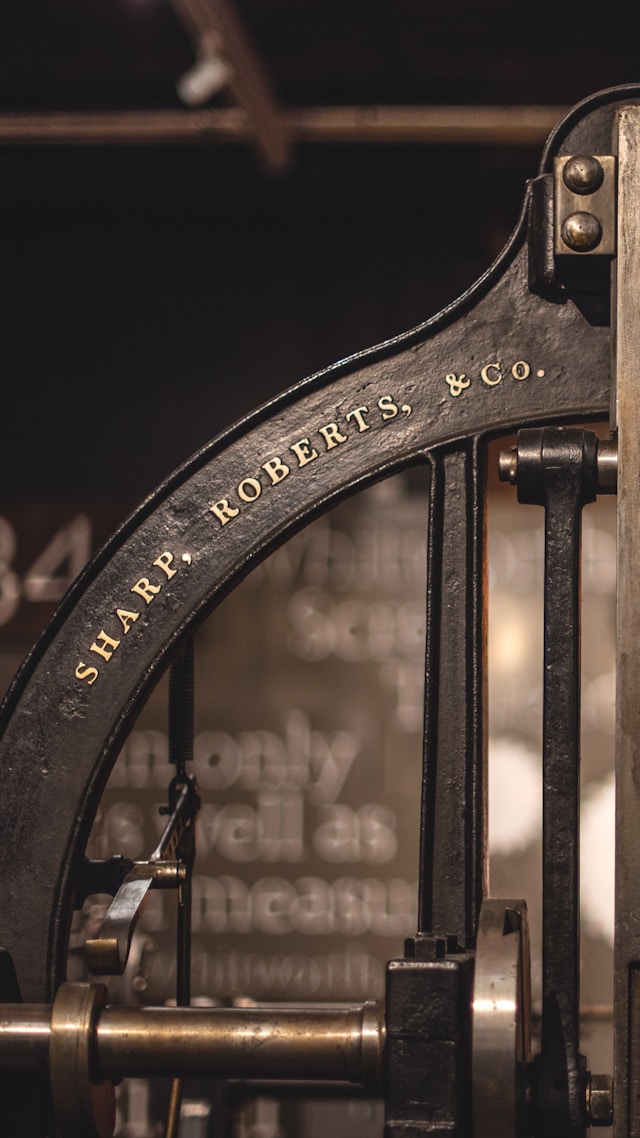
Manchester, a city in northwest England, is renowned for its industrial heritage and vibrant cultural scene. The city played a pivotal role in the Industrial Revolution and was the world's first industrialized city. Today, Manchester is known for its music, with bands like Oasis and The Smiths hailing from the city. The Manchester United and Manchester City football clubs are global icons, and Old Trafford Stadium is a must-see for sports enthusiasts. The city's Northern Quarter is a hub for independent shops, street art, and trendy cafes. Manchester's museums, such as the Science and Industry Museum, offer insights into its innovative past. The Manchester Ship Canal, once the lifeblood of the city's trade, is now a scenic waterway.

Top attractions & things to do in Manchester

If you’re searching for the best things to do in Manchester, this guide brings together the top attractions and must-see places to visit in Manchester. The top picks below highlight the most visited sights for first-time visitors, plus a few local favorites worth adding.

Castlefield Urban Heritage Park in Manchester, United Kingdom

Castlefield Urban Heritage Park

A Roman fort (AD 79) turned Victorian industrial hub, Castlefield blends ancient history with post-industrial chic. The reconstructed Liverpool Road Railway Station (1830) houses the Science & Industry Museum, while the Bridgewater Canal—the world's first industrial waterway—is flanked by converted warehouses like Dukes 92, a pub serving ale in former stables. The Castlefield Bowl, an amphitheater beneath railway viaducts, hosts summer concerts by the Hallé Orchestra, and walking trails pass Roman excavation pits and workers' cottages. Winter brings a canal-side ice rink, framed by illuminated brick arches, while the Deansgate Locks nightlife complex buzzes in restored cargo sheds. Archaeologists recently uncovered a Saxon-era palisade, adding layers to the park's 2,000-year narrative as a crossroads of trade and industry.
Ads place
Ads place
Ads place
Ads place
Ads place
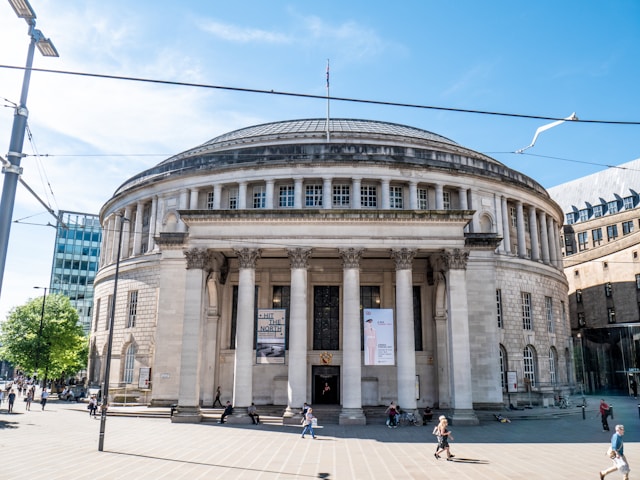
Central Library in Manchester, United Kingdom

Central Library

A neoclassical icon opened in 1934, Manchester Central Library is crowned by a Pantheon-inspired dome and designed by architect E. Vincent Harris. The Shakespeare Memorial Room, relocated from the 1856 original library, boasts oak-paneled walls and a stained-glass ceiling depicting scenes from the Bard's plays. The 2014 £50M renovation unveiled hidden gems like the Wolfson Reading Room, housing rare texts such as a 1476 Caxton printing of Chaucer. The Archives+ section safeguards the Peterloo Massacre handbills and suffrage-era posters, while the Henry Watson Music Library preserves 19th-century opera scores. The Basement Studio hosts coding workshops, and the rooftop terrace offers panoramic views of St. Peter's Square. Don't miss the Deansgate Facade, where Ionic columns frame a 1930s bronze door depicting Manchester's industrial triumphs. Free tours decode symbols like the bees in the mosaic floors, representing the city's resilience.
Ads place
Ads place
Ads place
Ads place
Ads place
Heaton Park in Manchester, United Kingdom

Heaton Park

Europe's largest municipal park sprawls over 600 acres, anchored by Heaton Hall (1772), a neoclassical mansion with restored Wedgwood plasterwork and a working 18th-century kitchen. The Temple Garden blooms with heritage roses, while the Animal Centre houses rare breeds like Bagot goats. The Treetop Trek offers zip lines over boating lakes, and the Tramway Museum runs vintage rides to Bury on original 1901 tracks. Summer's Parklife Festival draws 80,000 music fans, while winter transforms the hall into a Victorian Christmas market with artisanal crafts and carolers. Recent excavations revealed a Roman farming settlement, and the Heaton Park Run, a weekly 5K, loops past the Grade I-listed Dower House and ornamental gardens.
Ads place
Ads place
Ads place
Ads place
Ads place
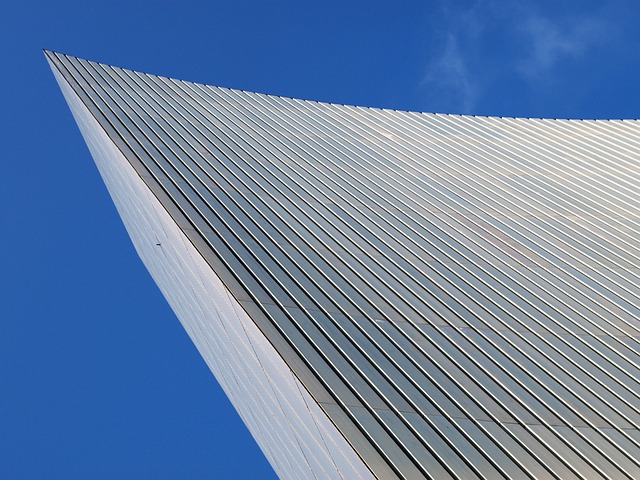
Imperial War Museum North in Manchester, United Kingdom

Imperial War Museum North

Daniel Libeskind's 2002 architectural allegory—three interlocking shards symbolizing land, air, and sea conflict—houses visceral exhibits like the Trench Experience, recreating WWI's Western Front with artillery soundscapes. The 9/11 Gallery displays twisted steel from the Twin Towers, while the Big Picture Show projects wartime films onto 360-degree screens. The Air Shard suspends a Harrier jet above the atrium, and oral histories from Syrian refugees and Ukraine War diaries ensure contemporary relevance. Temporary exhibits explore topics like drone warfare ethics, and the waterfront café offers views of Salford Quays' regeneration. Free guided tours decode Libeskind's design, such as the tilted floor representing societal disruption, while the Shadow Wall casts silhouettes of soldiers at dusk, a haunting tribute to lost lives.
Ads place
Ads place
Ads place
Ads place
Ads place
John Rylands Library in Manchester, United Kingdom

John Rylands Library

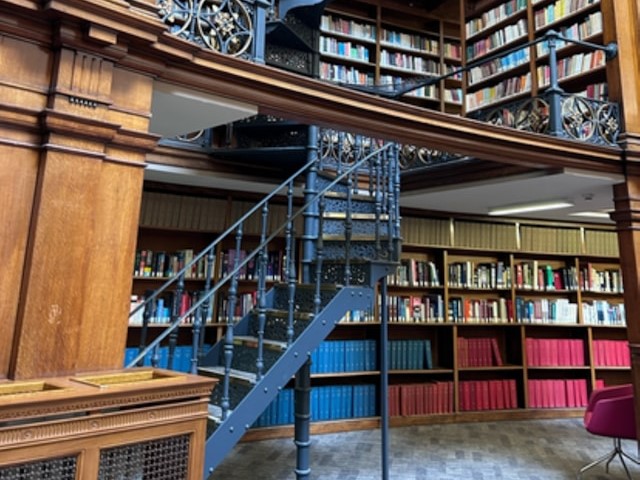
A Victorian neo-Gothic marvel commissioned by Enriqueta Rylands in 1900, this Deansgate institution safeguards treasures like the St. John Fragment (c. 125–175 CE), the oldest New Testament text. The Historic Reading Room, with its vaulted ceilings and oak galleries, inspired Hogwarts' aesthetics, while the Spencer Collection includes a first-edition Shakespeare Folio and Elizabeth Gaskell's handwritten letters. The Crypt Gallery hosts poetry readings beneath mosaics of medieval scholars, and temporary exhibits explore themes like alchemical manuscripts or the Renaissance book trade. Free tours decode hidden symbols in the stonework, such as Masonic compasses and Lancashire roses, while the Rylands Gallery showcases medieval illuminated gospels. The 2016 renovation added a glass-encased Dante Alighieri exhibit, featuring a 1481 Divine Comedy edition, and a café serving literary-themed pastries beneath original 1900s stained glass.
Ads place
Ads place
Ads place
Ads place
Ads place
Manchester Cathedral in Manchester, United Kingdom

Manchester Cathedral

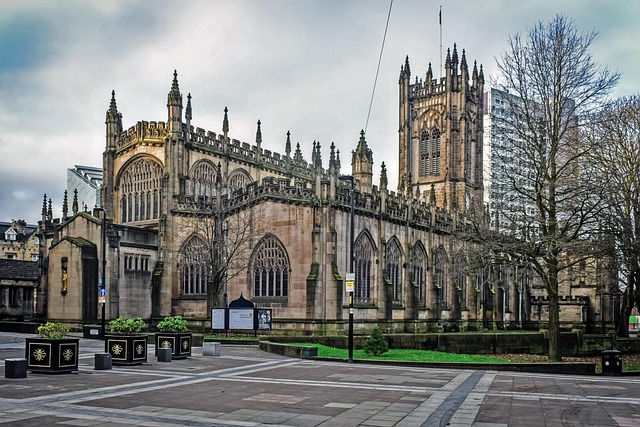
A UNESCO World Heritage Site and spiritual heart of Anglicanism, Manchester Cathedral's Gothic perpendicular architecture dates to 1421, though its roots stretch to a 7th-century Saxon church. The angel roof, carved with 30 oak angels wielding medieval instruments, is a 15th-century masterpiece, while the Huddleston Screen (1506) showcases pre-Reformation Catholic artistry with intricate tracery. The medieval misericords (choir stalls) depict mythical beasts like manticores, a rare survival in Protestant England. After surviving the 1940 Manchester Blitz, the cathedral now hosts exhibitions on the Peterloo Massacre, linking its spiritual role to social justice, and annual Christmas Carol Concerts beneath its 41-meter vaulted nave. Recent excavations revealed Saxon-era foundations and a Viking-era grave, deepening its legacy as a site of continuous worship for 1,400 years. The St. John's Chapel houses the 1815 Binns Organ, still used for recitals, while the Manchester Window (1956) commemorates WWII resistance fighters with stained-glass symbolism.
Ads place
Ads place
Ads place
Ads place
Ads place
Manchester Town Hall in Manchester, United Kingdom

Manchester Town Hall

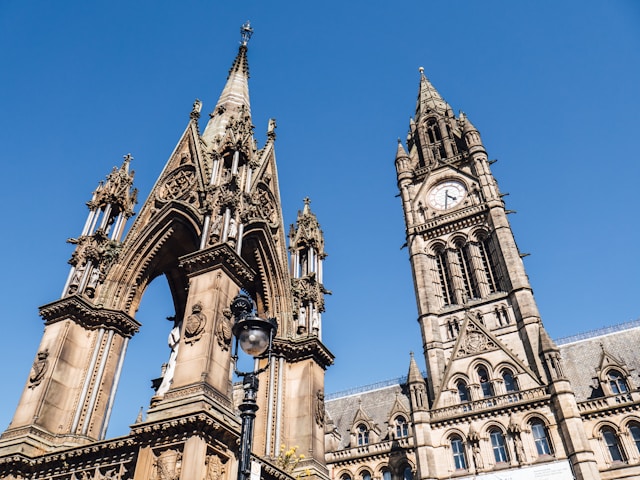
Alfred Waterhouse's 1877 Gothic Revival masterpiece, crowned by an 87-meter Clock Tower, dominates Albert Square with its terracotta façade. The Great Hall's Ford Madox Brown murals depict Manchester's history from Roman times to the Peterloo Massacre, while the Vestibule's Minton floor tiles feature Lancashire bees symbolizing industry. The Whispering Gallery, where voices carry 30 meters, and the Lord Mayor's Suite's crystal chandeliers dazzle on guided tours. The 2024 renovation will expose original Victorian gaslight fittings and add a time capsule exhibit with 19th-century civic documents. Seasonal highlights include the Christmas Markets in Albert Square, where mulled wine stalls cluster beneath the tower's illuminated spire, and the Manchester Flower Festival, transforming the Great Hall into a botanical wonderland.
Ads place
Ads place
Ads place
Ads place
Ads place
Northern Quarter in Manchester, United Kingdom

Northern Quarter

Manchester's bohemian epicenter, the Northern Quarter thrives in Victorian textile warehouses repurposed into indie record shops, street art canvases, and specialty coffee roasteries. The Stevenson Square murals, refreshed annually by artists like Akse P19, juxtapose political satire with pop-culture homages, while Afflecks Palace (1982) spans four floors of vintage fashion, tattoo parlors, and retro gaming stalls. The Ancoats Coffee Trail connects third-wave cafes like Grindsmiths, set in a former mill, while Hatch offers global street food in upcycled shipping containers. Nightlife hubs like Band on the Wall host jazz improvisation nights, continuing the area's 1970s punk legacy, and the Manchester Craft & Design Centre showcases local ceramicists in a renovated fish market. Seasonal Independent's Day Markets and the Manchester International Festival's guerrilla art installations cement the NQ's status as the city's creative core.
Ads place
Ads place
Ads place
Ads place
Ads place
Quay Street in Manchester, United Kingdom

Quay Street

Once the heart of Manchester's 19th-century textile warehouses, Quay Street now thrums with cultural and judicial significance. The street's crown jewel is the People's History Museum (covered earlier), but its architectural stars include the Manchester Crown Court, a 1960s Brutalist landmark with a tessellated concrete façade, and the Opera House (1912), a Edwardian Baroque gem hosting West End musicals. The Former Granada Studios (1954), now ITV's base, pioneered TV production with shows like Coronation Street, its façade retains original Art Deco reliefs of film reels. The street's Cotton Heritage Trail plaques detail its past as a global cotton exchange, while the annual Manchester International Festival transforms abandoned warehouses into avant-garde art spaces.
Ads place
Ads place
Ads place
Ads place
Ads place
Science and Industry Museum in Manchester, United Kingdom

Science and Industry Museum

Housed in the 1830 Liverpool Road Station—the world's first intercity railway terminus—this museum immerses visitors in Manchester's Industrial Revolution legacy. The Power Hall roars with working steam engines like the 1894 “Princess,” while the Textiles Gallery demonstrates how Lancashire's cotton mills clothed the British Empire. The Baby computer (1948), the first stored-program machine, anchors tech exhibits alongside displays on the city's groundbreaking graphene discovery. The 1830 Warehouse hosts rotating exhibits on AI ethics and sustainable manufacturing, while the Sewer Gallery explores Joseph Bazalgette's Victorian sanitation innovations. Interactive workshops let visitors weave cotton or code simple programs, and the Experiment Gallery explains atomic splitting via cloud chamber displays. Don't miss the Air & Space Hall, housing a replica Avro Vulcan bomber and a WWII Spitfire engine, tying Manchester's industrial might to aerospace innovation.
Ads place
Ads place
Ads place
Ads place
Ads place