
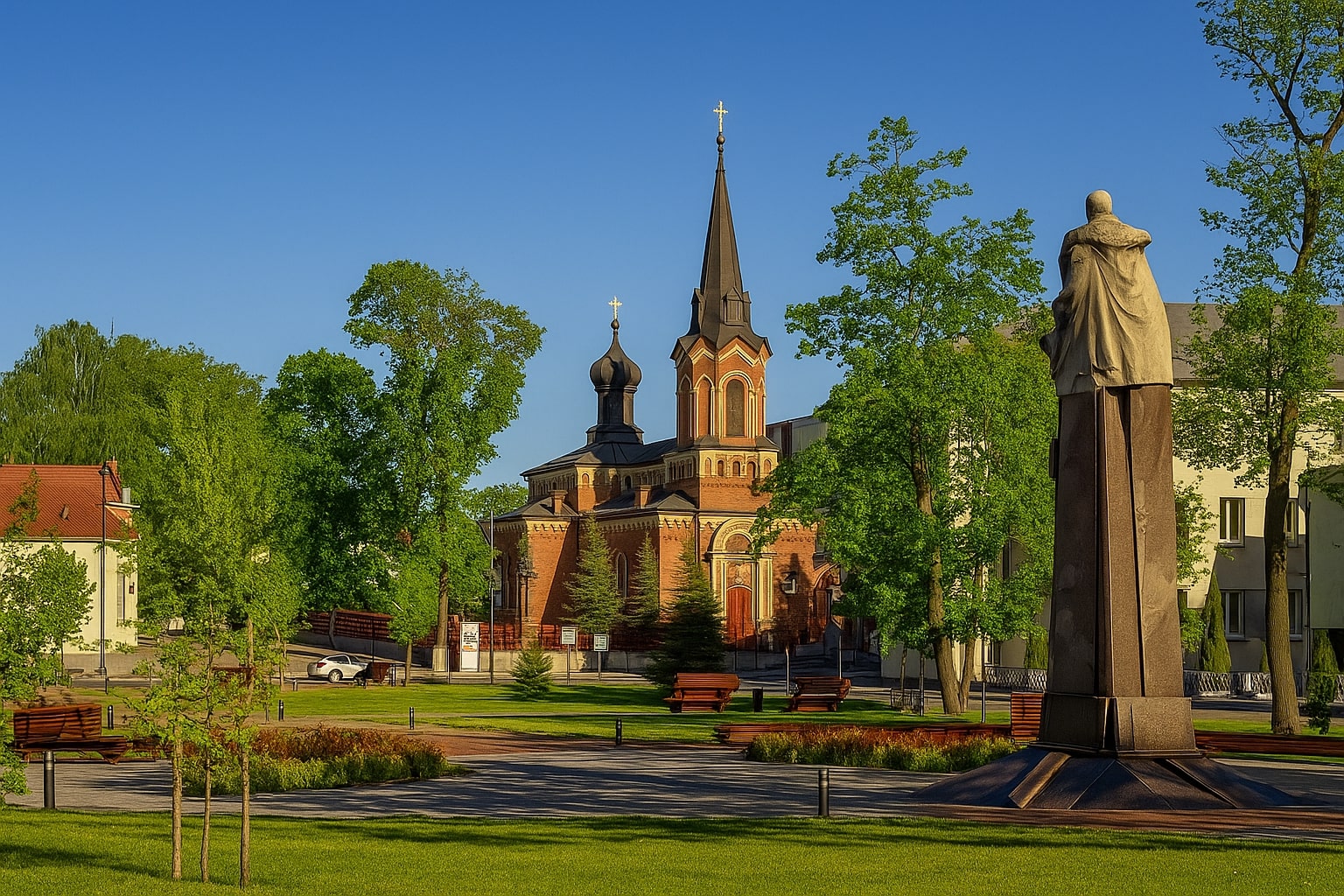
City view of Marijampole, Lithuania

Marijampole

Marijampole is the vibrant heart of southern Lithuania, where tradition meets modern flair and art finds its voice on every wall. Widely known as the country’s street art capital, Marijampole boasts a kaleidoscope of colorful murals—some witty, some profound—that turn even ordinary walks into a gallery tour. The Sesupe River winds through lush parks and sports grounds, offering locals and visitors a place to unwind, jog, or simply watch ducks floating by. Festivals and open-air concerts electrify the city each summer, filling the air with music and the aromas of local delicacies from street stalls. Marijampole’s Samogitian roots are celebrated with lively folklore events, hearty potato dishes, and plenty of laughter. Churches with soaring towers watch over markets where farmers and artisans sell everything from honey to hand-knitted socks.

Top attractions & things to do in Marijampole

If you’re searching for the best things to do in Marijampole, this guide brings together the top attractions and must-see places to visit in Marijampole. The top picks below highlight the most visited sights for first-time visitors, plus a few local favorites worth adding.

Basilica of St. Michael the Archangel in Marijampole, Lithuania

Basilica of St. Michael the Archangel

The Basilica of St. Michael the Archangel dominates the Marijampole skyline with its majestic twin towers and neo-Baroque façade. Completed in 1824, it stands as one of Lithuania’s most significant religious landmarks. Inside, visitors encounter elaborate altarpieces, frescoes, and marble columns that exemplify the finest traditions of ecclesiastical art. The basilica’s historic pipe organ, crafted in Germany, is still used for sacred music performances and grand liturgies. During Soviet occupation, the basilica became a beacon of faith and resistance, hosting clandestine gatherings and community prayer. Pilgrims arrive year-round for the Feast of St. Michael, filling the church with spiritual energy and song. In 2018, Pope Francis visited Marijampole, highlighting the basilica’s significance to both the city and the nation. The church’s enduring role in the region’s spiritual life marks it as an essential destination for seekers of art, history, and inspiration.
Ads place
Ads place
Ads place
Ads place
Ads place
Marijampole Central Park in Marijampole, Lithuania

Marijampole Central Park

Marijampole Central Park is the city’s lush sanctuary, designed for recreation and relaxation amidst vibrant greenery. Established in 1960, the park features tree-lined walkways, ornate flowerbeds, and several tranquil ponds. At its heart stands a graceful rotunda that hosts open-air concerts and community gatherings, especially during City Days celebrations. The park is dotted with sculptures commemorating local artists and historical figures, reflecting Marijampole’s strong cultural identity. In spring and summer, families flock to playgrounds and picnic lawns, while cyclists and joggers enjoy scenic routes along the river. Restored in 2018, the park’s layout now incorporates modern lighting and accessible pathways for all visitors. Seasonal festivals transform the park into a lively hub for art, music, and food, creating cherished memories for generations. Its thoughtful landscape design sets a benchmark for urban green spaces in the region, blending ecological stewardship with community vitality.
Ads place
Ads place
Ads place
Ads place
Ads place
Marijampole Synagogue in Marijampole, Lithuania

Marijampole Synagogue

The Marijampole Synagogue stands as a poignant reminder of the city’s once-thriving Jewish community. Built in 1870, this historic building features elegant brickwork, arched windows, and intricate interior frescoes. Before World War II, Marijampole was known as “Little Jerusalem,” with a vibrant Jewish population and numerous cultural institutions. The synagogue survived the Holocaust and Soviet era—a rare feat in the region—and has since been partially restored as a cultural center. Memorial plaques honor community members lost during the war, and educational exhibits share stories of local families, traditions, and resilience. Each year, the synagogue hosts events for European Days of Jewish Culture, fostering intercultural dialogue and remembrance. It remains an essential stop for visitors seeking to understand the city’s diverse heritage. Its quiet dignity and restored beauty invite reflection and respect, marking a vital link to Marijampole’s multicultural past.
Ads place
Ads place
Ads place
Ads place
Ads place
Paezeriai Manor in Marijampole, Lithuania

Paezeriai Manor

Paezeriai Manor, located on the outskirts of Marijampole, is a splendid example of classical Lithuanian estate architecture. Built in the late 18th century, the manor features a stately façade, grand portico, and a beautifully landscaped park overlooking Lake Paezeriai. Over the centuries, the estate was home to several noble families who contributed to the region’s cultural and economic development. After years of decline during the Soviet period, restoration efforts have revived the manor’s interior halls, complete with ornate ceilings and antique furnishings. Today, Paezeriai Manor is a lively venue for classical concerts, art exhibitions, and heritage festivals. Guided tours reveal fascinating details about the estate’s history, architecture, and gardens. The manor’s blend of history, elegance, and artistic activity ensures its continued relevance and appeal in modern Marijampole. As a cornerstone of regional heritage tourism, Paezeriai Manor continues to attract scholars, artists, and visitors who seek inspiration from Lithuania’s storied past.
Ads place
Ads place
Ads place
Ads place
Ads place
Vytautas Park in Marijampole, Lithuania

Vytautas Park

Vytautas Park is a cherished retreat in Marijampole, named after Grand Duke Vytautas the Great, a legendary figure in Lithuanian history. The park’s meandering paths wind through ancient oaks and scenic meadows, creating an atmosphere of calm and beauty. At the park’s center stands a monument to Vytautas, erected in 1930 to commemorate the 500th anniversary of his reign. Locals and visitors enjoy outdoor sports courts, children’s playgrounds, and peaceful picnic spots by the river. The park hosts an annual folk music festival and regular art workshops for families. During World War II, the site served as a refuge for residents, and the park’s oldest trees bear silent witness to Marijampole’s turbulent past. Vytautas Park is not just a green space—it is a living chronicle of the city’s resilience, heritage, and ongoing creativity. Seasonal blooms and cultural programming ensure its vibrancy in every season.
Ads place
Ads place
Ads place
Ads place
Ads place