
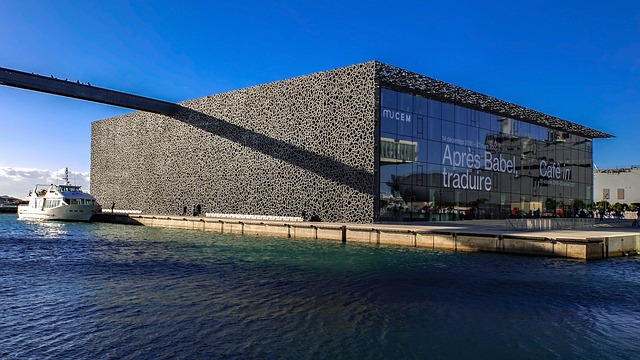
MuCEM (Museum of European and Mediterranean Civilisations)
In Marseille, France .
More places to visit in Marseille
Discover more attractions and things to do in Marseille.
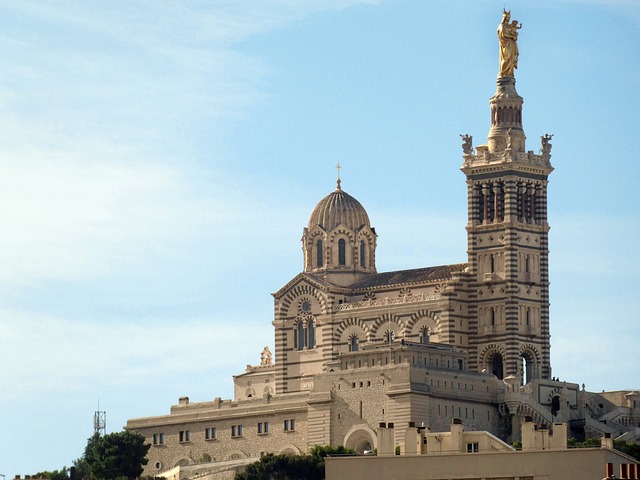
Basilique Notre-Dame de la Garde
The Basilique Notre-Dame de la Garde is an iconic symbol of Marseille, perched on a hill overlooking the city and the Mediterranean Sea . Built in the 19th century , this basilica is known for its stunning Roman-Byzantine architecture , intricate mosaics, and impressive statue of the Virgin Mary . It offers breathtaking panoramic views of Marseille and is a beloved pilgrimage site for locals and visitors. The interior's beautiful detailing and the serene atmosphere make it a must-visit landmark. Hidden in the crypt lies a 17th-century ex-voto painting of a ship surviving a storm, donated by grateful sailors. During WWII, Resistance fighters hid coded messages in the basilica's gold-leaf votive offerings , now displayed in a small museum annex. The basilica's bell tower houses a 4.5-ton bourdon bell cast in 1845, only rung on major religious holidays. Recent restoration work uncovered hidden medieval frescoes beneath layers of plaster in the side chapels, depicting scenes from Marseille's maritime history.
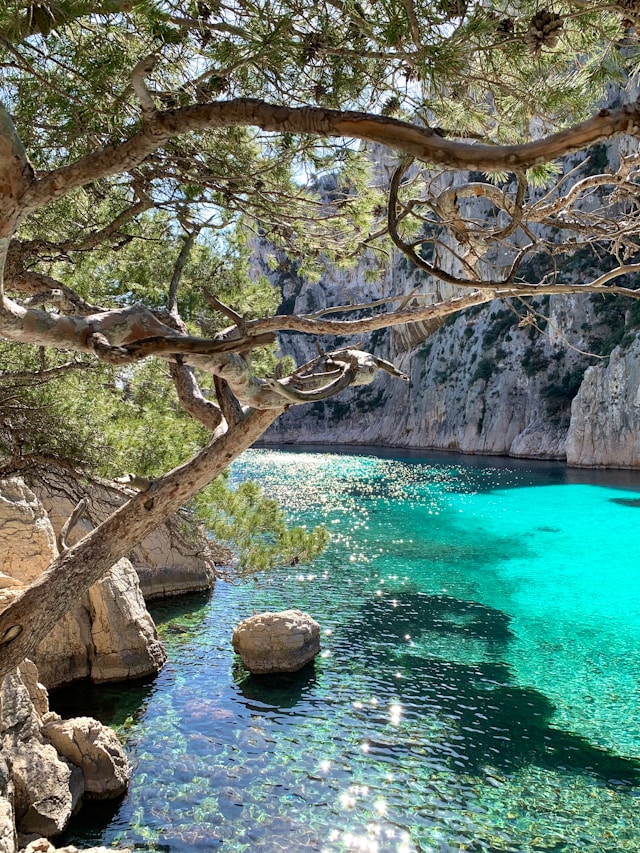
Calanques National Park
Calanques National Park is a natural wonder located between Marseille and Cassis, known for its dramatic limestone cliffs , turquoise waters, and rugged trails. This protected area is a haven for outdoor enthusiasts who enjoy hiking, rock climbing, and kayaking. The park's breathtaking scenery and unique ecosystems make it one of the most scenic places to visit in Marseille. The Calanque de Sugiton hides a natural stone arch called "Le Torpilleur," shaped by millennia of wind erosion. Rare Eleonora's falcons nest on remote cliffs—spot them via guided eco-tours in spring. The park's underwater caves contain Neolithic cave paintings only accessible to experienced divers. Botanists recently discovered a new species of orchid (Ophrys massiliensis) growing exclusively on the park's coastal cliffs.
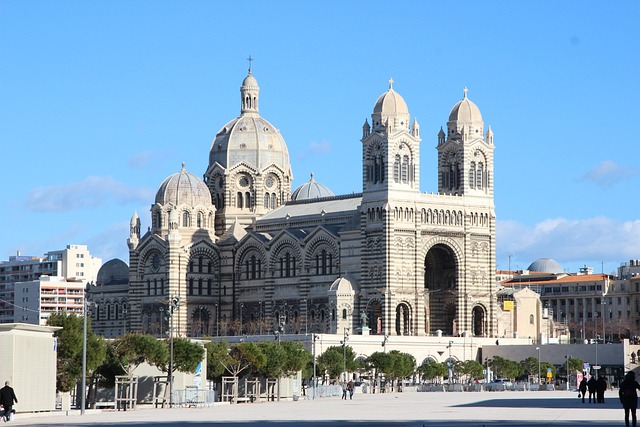
Cathédrale de la Major
Cathédrale de la Major is an impressive neo-Byzantine cathedral located near the port of Marseille. Constructed in the 19th century , it stands out for its grandeur, with a striking facade of white and green stone and beautiful interior mosaics. The cathedral's onion domes were inspired by Istanbul's Hagia Sophia, while its crypt holds the tomb of Bishop Eugène de Mazenod , founder of the Oblates missionary order. During construction, workers discovered a Roman necropolis beneath the nave—its artifacts are displayed in the adjacent museum. The cathedral's pipe organ contains 7,000 pipes, including some crafted from Provençal oak in 1854. Restoration work in 2023 revealed hidden Arabic inscriptions on foundation stones, evidence of medieval cultural exchange.

Château d'If
Château d'If, famously known from Alexandre Dumas' novel "The Count of Monte Cristo" , is a fortress-turned-prison located on a small island off the coast of Marseille. Built in the 16th century , this historic site offers guided tours that reveal its intriguing past and the stories of prisoners who were once held here. The dungeon's walls bear 17th-century graffiti carved by Huguenot prisoners, including poetic verses in Occitan. Night tours reveal how guards used echoing corridors to eavesdrop on inmates' plots. Archaeologists recently uncovered a secret escape tunnel dug by a 17th-century nobleman prisoner. The island's lighthouse keeper's cottage now houses an exhibition about the real-life prisoners who inspired Dumas' characters.
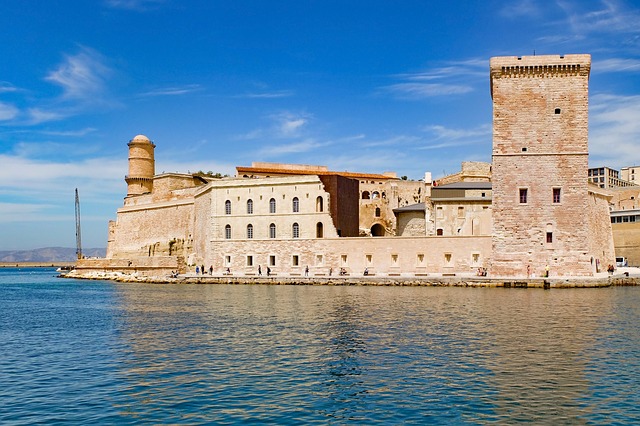
Fort Saint-Jean
Fort Saint-Jean is a historic fortress at the entrance of the Vieux-Port, dating back to the 17th century . Now part of the MuCEM complex , it offers panoramic views of the port, sea, and city. The fort's Chapelle Saint-Jean retains 12th-century frescoes of sailing ships, hidden under plaster until 2013. During renovations, workers found a Visigoth sarcophagus beneath the courtyard—now displayed in the museum's archaeological wing. The King René Tower contains a spiral staircase with 147 steps, each carved from a single block of limestone. Moonlight tours reveal how the fort's ancient sundial was used to coordinate naval maneuvers.
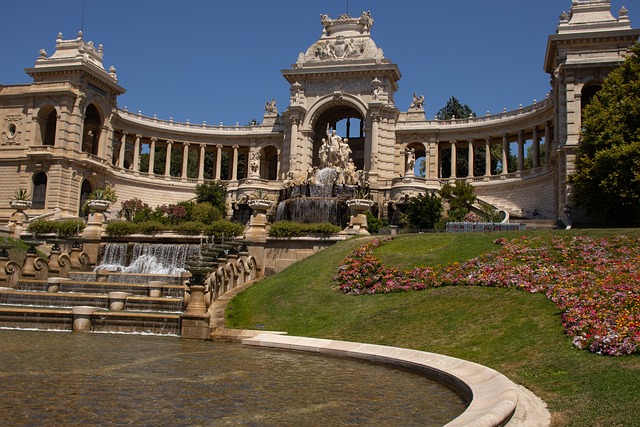
Palais Longchamp
Palais Longchamp is an architectural masterpiece in Marseille, home to both the Museum of Fine Arts and the Natural History Museum . Built in the 19th century , this grand structure is surrounded by beautifully landscaped gardens and fountains. The water tower's hidden cistern still supplies the park's fountains via gravity alone. Look for the carved lions flanking the staircase—their fierce expressions symbolize Marseille's resistance during the 1720 plague. The museum's zodiac mosaic floor , salvaged from a Roman villa, aligns perfectly with the summer solstice sunrise. The observatory dome contains Marseille's first astronomical telescope, installed in 1864 and still operational for special viewings.
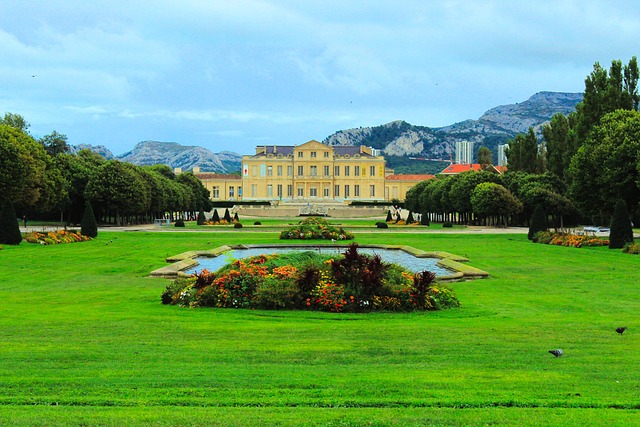
Parc Borély
Parc Borély is a vast public park in Marseille that offers a blend of French and English garden landscapes. It features manicured lawns, botanical gardens, and a serene lake where visitors can rent paddle boats. The park's Rose Garden cultivates 1,200 varieties, including a rare black rose bred for Napoleon's wife Joséphine. The Jardin Botanique shelters a 300-year-old olive tree transplanted from the Calanques. Don't miss the sundial near the lake, calibrated to Marseille's longitude. The park's hidden grotto contains a 19th-century fresco depicting Neptune, recently restored using traditional pigments. Every spring, the Butterfly Conservatory releases hundreds of native species into the Mediterranean garden.
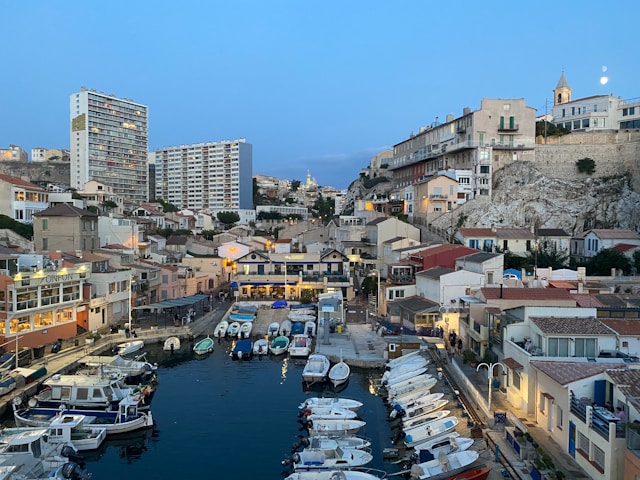
Vallon des Auffes
Vallon des Auffes is a charming fishing port located just outside the center of Marseille. This hidden gem is known for its traditional pointu boats , seafood restaurants, and picturesque setting. The inlet's stone washhouses , used by fishermen's wives until the 1950s, now serve as picnic spots. Local legend claims the port's name comes from a medieval herb ( auffa ) that cured sailors' scurvy. At Chez Fonfon, try the bouillabaisse recipe unchanged since 1952. The tiny Chapelle Saint-Pierre displays ex-votos of sailors rescued from storms, including a 1920s submarine crew. Fishermen still use the ancient "gangui" net technique passed down through generations, visible at dawn.
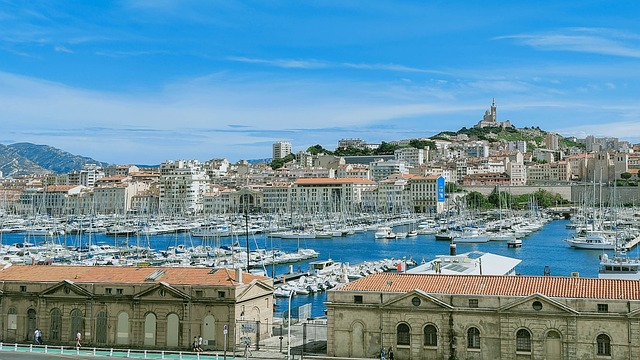
Vieux-Port
The Vieux-Port, or Old Port, is the historic heart of Marseille and a lively gathering place for locals and tourists. Surrounded by cafes, seafood restaurants, and bustling markets, the port has been central to the city's maritime heritage for centuries. Visitors can watch the fishing boats and yachts, or take a boat ride to nearby attractions like Château d'If . Its vibrant atmosphere makes the Vieux-Port a perfect starting point for exploring Marseille. Beneath Quai des Belges, archaeologists found Greek-era shipwrecks from 600 BC, preserved in anaerobic mud. Every morning at 7 AM, the "Criée" fish auction sees chefs bid on the day's catch using hand signals unchanged since the 1800s. The port's ancient lighthouse , now a museum, contains the original 17th-century Fresnel lens that guided ships through treacherous waters. Local fishermen still practice the traditional "pointu" boat-building technique in hidden workshops along the Quai de Rive Neuve.