
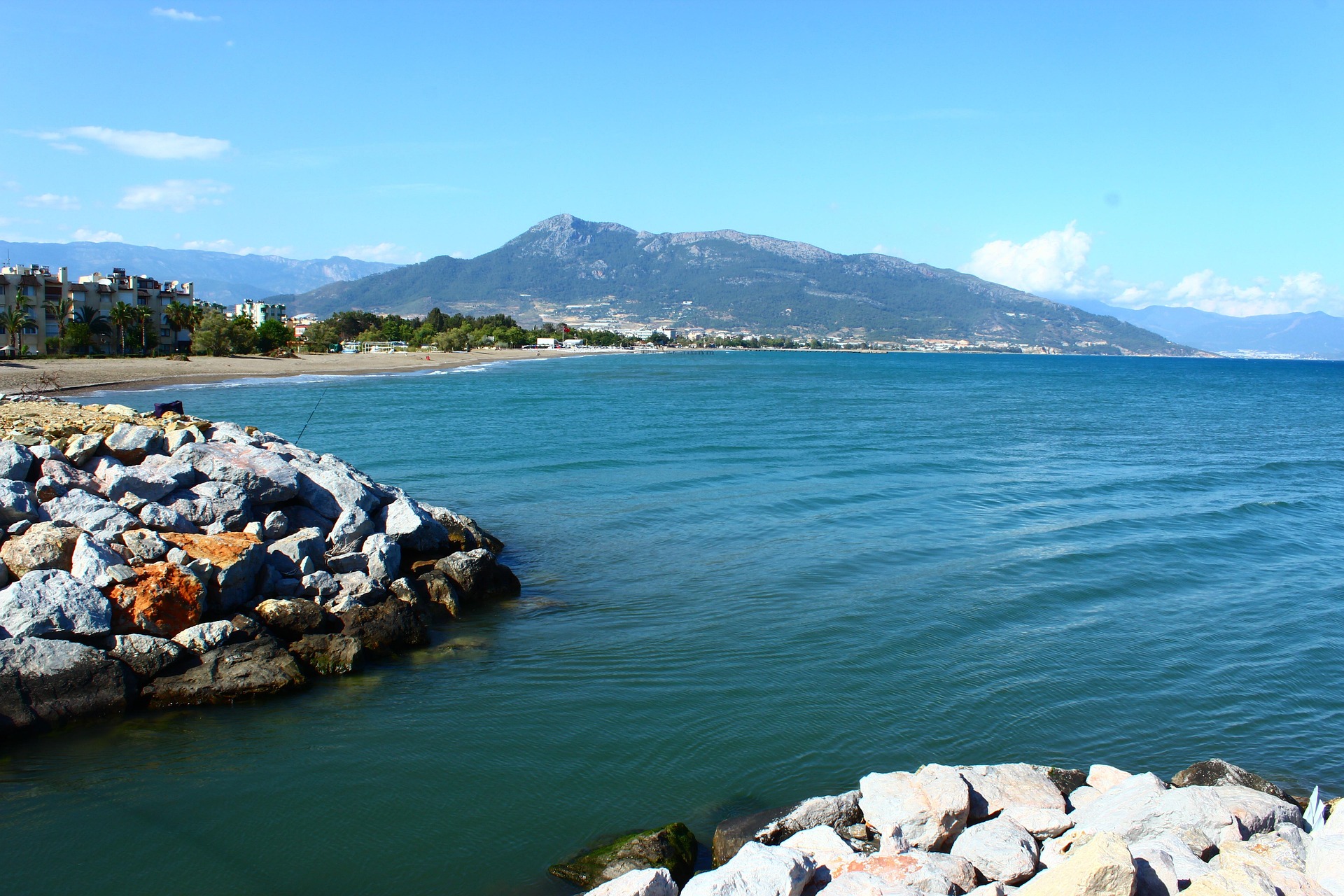
City view of Mersin, Turkey

Mersin

Mersin, stretching along Turkey’s southeastern Mediterranean shore, thrives as a dynamic port city and regional crossroads. Its waterfront promenade, flanked by palm trees and modern sculptures, invites leisurely strolls at sunrise when fishermen haul nets of red mullet and sea bass from glassy waters. Atop a gentle hill, the 19th-century Mersin Castle offers commanding views of container ships and fishing boats navigating the bustling harbor below. In the city’s core, vibrant bazaars spill into narrow streets where spice merchants display cumin, sumac and Aleppo pepper in towering pyramids. Culinary culture centers on tantuni—finely chopped beef sautéed with tomatoes and spices in sizzling tava pans—and yatir kebabi, slowly roasted lamb marinated in regional herbs. The nearby Çamliyayla plateau provides a refreshing escape, with pine forests, mountain springs and ethnographic villages preserving local crafts such as weaving and kilim making. Mersin’s annual Orange Blossom Carnival every April erupts in music, dance and agricultural exhibitions, celebrating the city’s orange groves that extend inland. By night, rooftop terraces overlooking the Mediterranean buzz with laughter and live music, offering a taste of Mersin’s warm hospitality and coastal allure.

Top attractions & things to do in Mersin

If you’re searching for the best things to do in Mersin, this guide brings together the top attractions and must-see places to visit in Mersin. The top picks below highlight the most visited sights for first-time visitors, plus a few local favorites worth adding.

Cennet and Cehennem Sinkholes in Mersin, Turkey

Cennet and Cehennem Sinkholes

Cennet and Cehennem—"Heaven and Hell"—are two dramatic limestone sinkholes carved into the rocky Taurus foothills. Cennet’s 52-step staircase descends to a secluded Virgin Mary chapel at the bottom of its cavernous pit, while Cehennem’s deeper, jagged abyss looms with rugged beauty. Both sinkholes feature stalactite formations, lush vegetation, and bronze-era relics suggesting ancient ritual use. Informational panels explain karst geology and local mythology, tracing human interactions from Paleolithic hunters to modern pilgrims. Steel walkways and wooden bridges guide adventurers across chasms, offering breathtaking photo opportunities. Guided eco-tours emphasize conservation of rare flora and fauna endemic to these sinkholes. Uncommonly, the site hosts nocturnal wildlife surveys, revealing bats and cave-dwelling species seldom seen elsewhere. Accessible by road and foot trails, Cennet and Cehennem blend natural wonder with cultural storytelling in Mersin’s hinterland.
Ads place
Ads place
Ads place
Ads place
Ads place
Kizkalesi (Maiden's Castle) in Mersin, Turkey

Kizkalesi (Maiden's Castle)

Perched on a 200-meter islet just off the shore, Kizkalesi—known as Maiden's Castle—was erected in the Byzantine era to guard the harbor of ancient Corycus. This fortress features four square stone towers, thick curtain walls, and arched gateways that exemplify medieval military engineering. Local legends speak of a princess confined here to thwart a dire prophecy, adding romantic allure to its history. Accessible only by a short boat ride, visitors explore underground chambers, cisterns, and walk the battlements for sweeping views of the turquoise Mediterranean. Archaeological surveys have uncovered Byzantine mosaics and Crusader-era inscriptions, while preservation efforts stabilize the structure against erosion. At sunset, the castle silhouette against the horizon evokes centuries of strategic significance and timeless myth. Recently, marine archaeologists discovered submerged ruins nearby, hinting at an ancient harbor complex that expanded the castle’s maritime importance.
Ads place
Ads place
Ads place
Ads place
Ads place
Mersin Museum in Mersin, Turkey

Mersin Museum

Established in 1978, the Mersin Museum offers a comprehensive journey through the region’s past—from Neolithic settlements to Ottoman rule. Its archaeological galleries showcase Neolithic pottery, Hellenistic sculptures, and Byzantine mosaics unearthed at Soloi-Pompeiopolis and Tarsus. Ethnographic halls feature traditional handwoven textiles, copper kitchenware, and everyday tools that illuminate local customs and culinary traditions. A dedicated section explores the ancient Cilicia region, displaying inscribed stelae and reliefs that document civic decrees. Interactive digital exhibits allow visitors to rotate 3D reconstructions of burial chambers and public baths. The museum’s courtyard hosts seasonal cultural events, including folk music performances and artisanal workshops. The museum also preserves rare manuscripts chronicling the diverse linguistic heritage of the region, reflecting Mersin's role as a crossroads of cultures. Modern amenities and multilingual guides ensure an engaging, educational experience for all ages.
Ads place
Ads place
Ads place
Ads place
Ads place
Soloi-Pompeiopolis in Mersin, Turkey

Soloi-Pompeiopolis

Soloi-Pompeiopolis, located a few kilometers west of modern Mersin, was founded around the 8th century BC as a thriving Greek colony in the historic Cilicia region. Later renamed Pompeipolis during Roman rule, its extensive ruins include a restored Theater with tiered seating, a central Agora where merchants once traded silk and spices, and an elaborate Necropolis of carved limestone sarcophagi. Archaeological digs have revealed intact hypocaust systems beneath public baths, intricate mosaic floors depicting mythological scenes, and a network of paved streets framed by column fragments. An on-site interpretive center displays pottery, coins, and inscriptions that chronicle the city’s evolution through Hellenistic, Roman, and Byzantine eras. Olive groves and rolling orchards surround the site, offering panoramic views that connect past and present. Intriguingly, some ruins show early Christian influence, with fresco fragments suggesting a vibrant Byzantine community before the city's decline. Visitors can follow guided tours that weave together Soloi’s architectural marvels with the geopolitical significance that guided empires to this Mediterranean crossroads.
Ads place
Ads place
Ads place
Ads place
Ads place
Yumuktepe Neolithic Mound in Mersin, Turkey

Yumuktepe Neolithic Mound

Yumuktepe is a 25-meter-high mound that preserves over 9,000 years of continuous human habitation on the Mediterranean coast. Excavations since the 1950s have revealed superimposed layers of circular mudbrick huts, defensive walls, and storage pits used by early farmers. Artifacts include flint tools, pottery fragments, and evidence of ancient salt pans that point to early trade in preserved foodstuffs. Bronze Age fortifications and Hellenistic-era tombs reflect successive cultural influences. A small on-site museum displays key finds and interactive panels explain archaeological methods. Visitors traverse shaded pathways through excavation trenches, connecting with the dawn of agriculture and urbanism. Recent studies revealed traces of early textile production at the site, underscoring Yumuktepe's significance in Neolithic industry. From its summit, the mound offers panoramic views of modern Mersin’s port and skyline, bridging millennia of regional development.
Ads place
Ads place
Ads place
Ads place
Ads place