
City view of Meteora, Greece

Meteora

Meteora, in the heart of Thessaly, derives its name from the Greek for “suspended in air”, and its six remaining monasteries perch atop towering sandstone pillars sculpted by millions of years of wind and rain. First settled by hermit monks in the 11th century, the Great Meteoron Monastery—founded in 1382—emerged as a center of Orthodox scholarship, its walls now adorned with vibrant 16th-century frescoes depicting Byzantine saints. Pilgrims originally accessed these sky-high sanctuaries via retractable wooden ladders and nets; today, carved stairways and stone bridges allow safe passage between summits. Visitors can explore the Monastery of Varlaam, which houses a museum of religious artifacts and manuscripts, and the 15th-century Rousanou Monastery, known for its delicate iconostasis. The surrounding Peneios valley echoes with eagles’ cries and spring wildflowers—such as the endemic Kandili poppy—bloom in cliffside crevices. UNESCO inscribed Meteora in 1988, praising its fusion of natural wonder and monastic architecture. As dusk falls, the setting sun bathes the pillars in golden light, creating an otherworldly panorama that lingers long after departure.

Top attractions & things to do in Meteora

If you’re searching for the best things to do in Meteora, this guide brings together the top attractions and must-see places to visit in Meteora. The top picks below highlight the most visited sights for first-time visitors, plus a few local favorites worth adding.

Great Meteoron Monastery in Meteora, Greece

Great Meteoron Monastery

Perched atop the tallest sandstone pinnacle at 613 meters, the Great Meteoron Monastery was founded in the 14th century by the hermit monk St. Athanasios the Meteorite. As the largest and oldest of the six active monasteries, its complex includes a fortified tower, katholikon church, and a historic library housing precious Byzantine manuscripts and icons. The katholikon’s interior walls are adorned with rich 17th-century frescoes depicting Christological scenes, while vaulted refectories echo centuries of monastic chant. Pilgrims ascend narrow stone steps carved directly into the rock, traversing steep footpaths built by monks to maintain seclusion. UNESCO inscribed Meteora as a World Heritage Site in 1988, recognizing its harmony of natural geology and spiritual architecture. Visitors today explore hidden chapels, olive groves cultivated by monks, and panoramic vistas across the Thessalian plain, experiencing the austere beauty and devotional legacy that define Great Meteoron.
Ads place
Ads place
Ads place
Ads place
Ads place
Holy Trinity Monastery in Meteora, Greece

Holy Trinity Monastery

Perched on a slender, pillar-like rock at 600 meters, the Holy Trinity Monastery was consecrated in 1475 by the monk Dometius following years of hermitage. Its remote location required monks to use rope baskets to transport materials and visitors until a carved staircase was built in the 1920s. The compact church interior is lavishly decorated with 16th-century frescoes illustrating Apocalypse iconography and the lives of saints. A small museum exhibits wooden crates that once ferried vessels and provisions up the cliff face. Filmmakers famously used its dramatic silhouette in the James Bond film “For Your Eyes Only” (1981). Today’s pilgrims navigate 195 stone steps hewn into solid rock, rewarded with sweeping panoramas of the Pindus Mountains and Kalambaka town below. Holy Trinity exemplifies the blend of daring architecture, deep devotion, and cinematic allure intrinsic to Meteora’s spiritual heritage.
Ads place
Ads place
Ads place
Ads place
Ads place
Rousanou Monastery in Meteora, Greece

Rousanou Monastery

Suspended between twin rock pillars at 507 meters height, Rousanou Monastery was founded in 1545 by the noble Melodos family and later dedicated as a nunnery. The charming katholikon features delicate 17th-century frescoes portraying scenes from the Virgin Mary’s life, attributed to prominent iconographers of the Post-Byzantine era. Its stone arcades open onto narrow terraces overlooking the lush Pineios River valley. Monastic ledgers record clandestine meetings during Ottoman occupation, when sisters sheltered fugitives and preserved sacred relics. Although the original wooden bridge was lost to time, a reconstructed footbridge now connects Rousanou to the cliff face. Visitors admire antique crosses and a modest collection of icons in the onsite museum, gaining insight into the resilient spirit of Meteora’s female monastic community.
Ads place
Ads place
Ads place
Ads place
Ads place
Saint Nicholas Anapafsas Monastery in Meteora, Greece

Saint Nicholas Anapafsas Monastery

Nestled on a narrow cliff ledge at 500 meters, Saint Nicholas Anapafsas Monastery was founded circa 1360 by hermits seeking quiet contemplation. Its intimate katholikon houses a masterful Theophanes the Cretan fresco cycle from 1527, depicting the Transfiguration and Passion with vivid colors and emotive figures. The monastery’s original wooden bridge was replaced in 1930 by a stone walkway, providing safer access while preserving austere charm. An adjacent hermits’ cell, carved directly into the rock, features primitive iconography and simple furnishings. Deep within the chapel, visitors encounter centuries-old oil lamps and a modest iconostasis of painted wood. From the terrace, watch falcons soar among the pinnacles and survey other monasteries dotted across the valley floor. Saint Nicholas Anapafsas invites reflection on solitude, artistry, and the enduring bond between nature and faith.
Ads place
Ads place
Ads place
Ads place
Ads place
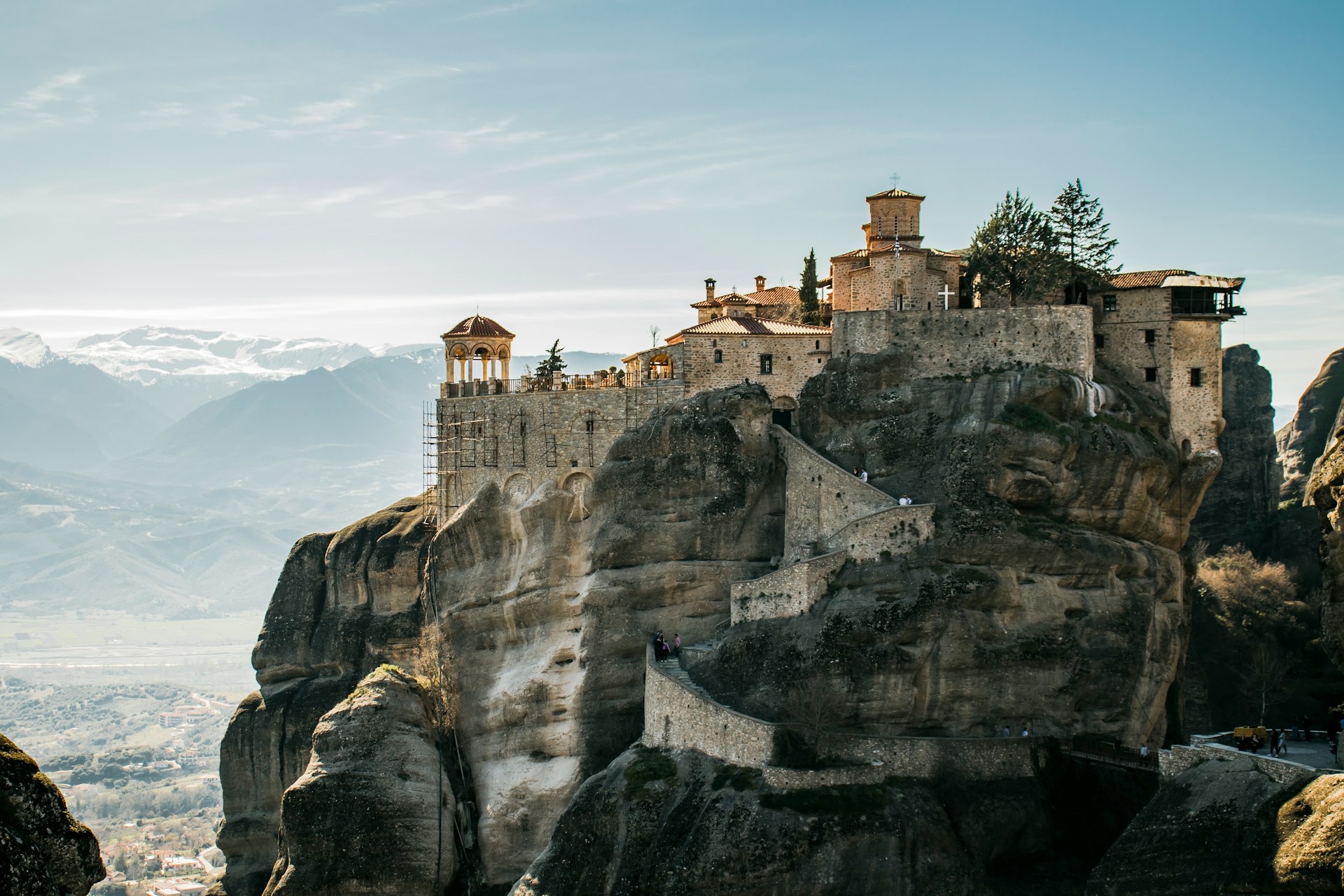
Varlaam Monastery in Meteora, Greece

Varlaam Monastery

Carved into a rocky spur at 590 meters elevation, Varlaam Monastery was established in 1517 by the monk Varlaam after he received a vision of the Archangel Michael. Accessed via a steep stairway of 195 stone steps, the monastery preserves an octagonal katholikon adorned with exquisitely detailed 16th-century frescoes by Theophanes the Cretan and his workshop. The refectory features a rare wooden iconostasis intricately carved with vine motifs, while the small museum displays ecclesiastical vestments and ancient Gospel manuscripts. Pilgrims once reached the summit by rope ladders and nets, emphasizing the monks’ ascetic detachment. The monastery underwent significant restoration in 1681, blending Renaissance architectural elements with Byzantine tradition. Today, panoramic terraces offer sweeping views of neighboring monasteries and verdant valleys, making Varlaam a vivid testament to monastic ingenuity and spiritual solitude.
Ads place
Ads place
Ads place
Ads place
Ads place