
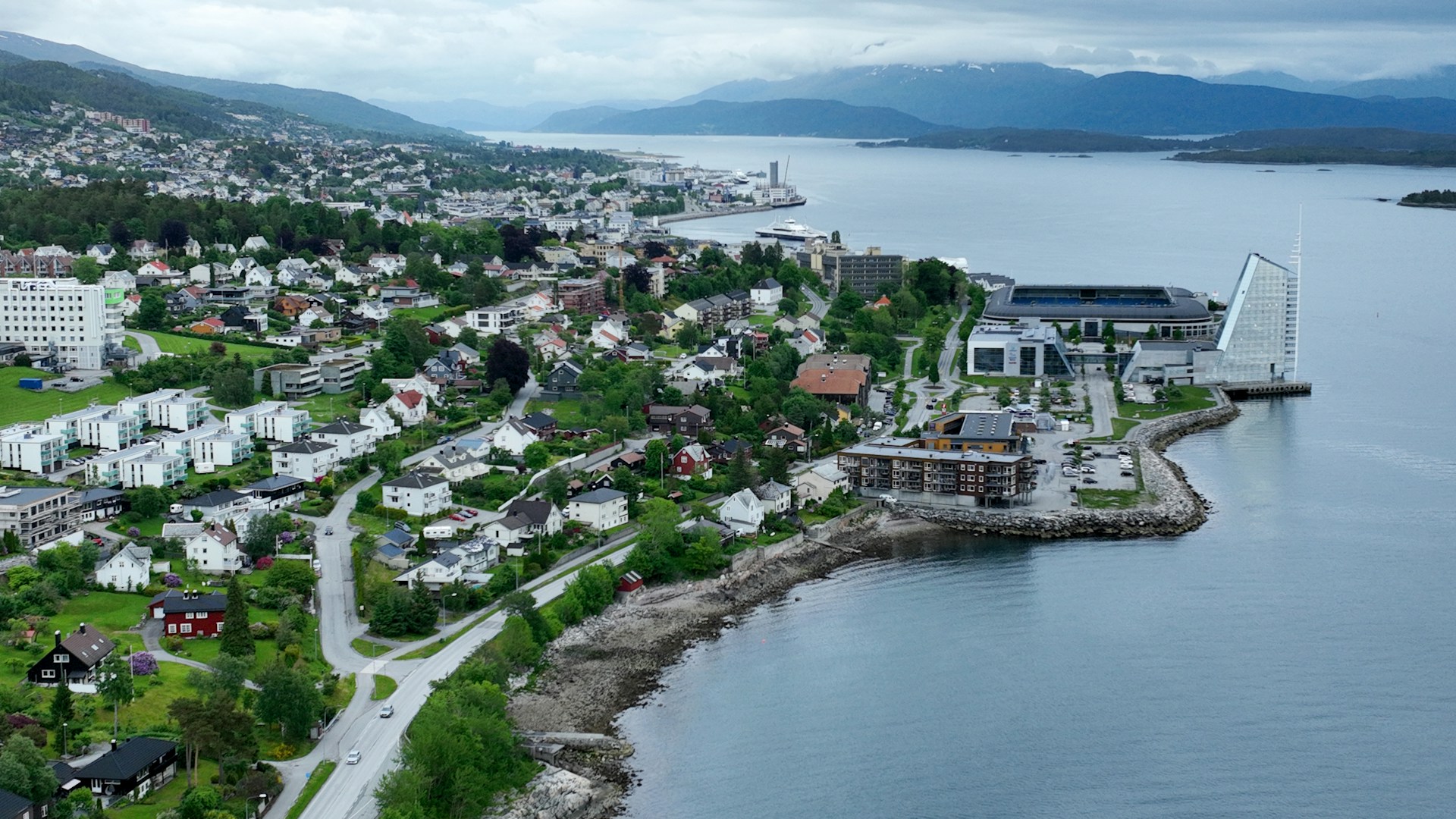
City view of Molde, Norway

Molde

Molde, often called the “City of Roses,” enjoys a mild climate that allows its famous gardens to flourish. Overlooking the Romsdalsfjord, it offers views of more than 200 mountain peaks, a panorama best taken in from the Varden viewpoint. Jazz has a special place here, with the Molde International Jazz Festival drawing global stars each summer. The town’s history is tied to fishing and shipping, yet modern Molde embraces tourism without losing its relaxed pace. Cafes spill onto sidewalks during sunny days, and ferries connect to nearby islands for day trips. A quirky fact: Molde’s football stadium boasts one of the most scenic backdrops in Europe, with fjords and mountains framing the pitch. The combination of floral beauty, cultural energy, and natural spectacle makes Molde a place that quietly impresses and rewards repeat visits.

Top attractions & things to do in Molde

If you’re searching for the best things to do in Molde, this guide brings together the top attractions and must-see places to visit in Molde. The top picks below highlight the most visited sights for first-time visitors, plus a few local favorites worth adding.

Aker Stadium in Molde, Norway

Aker Stadium

Aker Stadium, opened in 1998, is not only the home ground of Molde FK but also one of Norway’s most beautiful football arenas. Designed by Kjell Kosberg and financed by businessman Kjell Inge Rokke, the stadium sits directly on the fjord’s edge, offering spectators views of both matches and mountains. With a capacity of over 11,000 seats, it has hosted domestic league games as well as European competitions that brought international clubs to Molde’s doorstep. The architecture combines modern steel and glass with maritime inspiration, echoing shipbuilding traditions of the region. Locals recall the excitement of its opening, when Molde faced Lillestrom in front of a sold-out crowd, cementing the stadium’s role as a community hub. Beyond sports, Aker Stadium also serves as a venue for concerts and cultural events, making it a landmark that unites passion, pride, and panorama. Few stadiums anywhere in the world can boast such a dramatic setting.
Ads place
Ads place
Ads place
Ads place
Ads place
Jazz Festival (Moldejazz) in Molde, Norway

Jazz Festival (Moldejazz)

The Molde International Jazz Festival, known simply as Moldejazz, is the oldest jazz festival in Europe, first held in 1961. Every July, the city transforms into a stage where world-renowned musicians share programs with local talents. Past lineups have included legends such as Miles Davis, Chick Corea, and Herbie Hancock, placing Molde firmly on the global jazz map. The festival sprawls across town, from intimate clubs to outdoor arenas, with the fjord and mountains as natural scenery. More than concerts, Moldejazz fosters workshops, jam sessions, and collaborations that nurture young musicians. The atmosphere is electric, blending professional excellence with spontaneous improvisation. A fascinating fact is that the event attracts over 100,000 visitors annually, a staggering number for a small city. For locals, it is a celebration of identity; for visitors, it is proof that great art thrives even at high latitudes. Moldejazz remains a meeting point where music, nature, and community converge.
Ads place
Ads place
Ads place
Ads place
Ads place
Molde Cathedral in Molde, Norway

Molde Cathedral

Molde Cathedral stands as a beacon of resilience, consecrated in 1957 after the previous church was destroyed during World War II bombings. Architect Finn Bryn designed the cathedral in a modernist style, featuring clean lines, a free-standing 50-meter tower, and striking stained-glass windows. Inside, the soaring nave is filled with light, casting colorful reflections that shift with the hours. The cathedral is also home to an impressive pipe organ with over 50 registers, often featured in concerts that attract musicians from across Norway. One of its most remarkable aspects is its role as a symbol of renewal—Molde rebuilt not only its church but also its spirit after wartime devastation. The cathedral square remains a gathering place for festivals, ceremonies, and daily life. Visitors often remark on the serene atmosphere, where simplicity and grandeur merge seamlessly. Molde Cathedral is both a house of worship and a reminder of endurance against adversity.
Ads place
Ads place
Ads place
Ads place
Ads place
Molde Panorama Viewpoint in Molde, Norway

Molde Panorama Viewpoint

The Molde Panorama is a breathtaking sight that has inspired poets, painters, and travelers for centuries. From the city’s elevated viewpoints, visitors can see more than 222 snow-capped peaks stretching across the horizon on a clear day. This natural spectacle earned Molde the nickname “Town of Roses and Panoramas,” a phrase first popularized in the 19th century when travelers on steamships stopped to marvel at the view. The panorama is particularly dramatic in winter, when the sharp silhouettes of the Romsdal Alps stand stark against the low Arctic sun. Locals often pair the experience with a walk along Varden, the hill that rises 407 meters above sea level and provides the best vantage point. Interestingly, the view has been immortalized in countless works of literature, including writings by Bjornstjerne Bjornson, Norway’s Nobel laureate. Standing here, it feels as though geography itself has staged a theater, with mountains as actors and fjords as the shifting backdrop.
Ads place
Ads place
Ads place
Ads place
Ads place
Romsdal Museum in Molde, Norway

Romsdal Museum

The Romsdal Museum, founded in 1912, is one of Norway’s largest folk museums, preserving the region’s culture through architecture, crafts, and storytelling. The open-air section includes more than 40 traditional buildings, from log houses and farmsteads to fishing cabins relocated from across Romsdal. Walking its pathways feels like stepping into a timeline where wooden structures reveal how people adapted to harsh landscapes with ingenuity. Costumed interpreters demonstrate spinning, cooking, and seasonal festivities, creating a lively sense of continuity. A fascinating highlight is the Kvam Farm, which tells the story of families uprooted by World War II when German forces burned their homes. The museum also features exhibitions on coastal trade, weaving techniques, and regional art, bridging past with present. Seasonal concerts bring folk music into the courtyards, and festivals animate the grounds with dance and laughter. The Romsdal Museum is both archive and stage, where heritage is kept alive through lived experience.
Ads place
Ads place
Ads place
Ads place
Ads place