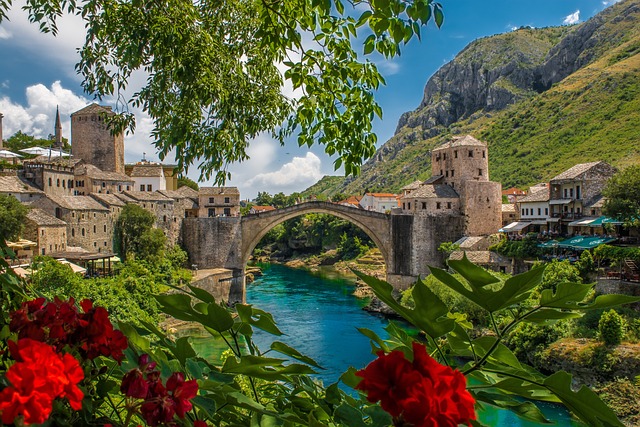
Stari Most
In Mostar, Bosnia and Herzegovina .
More places to visit in Mostar
Discover more attractions and things to do in Mostar.
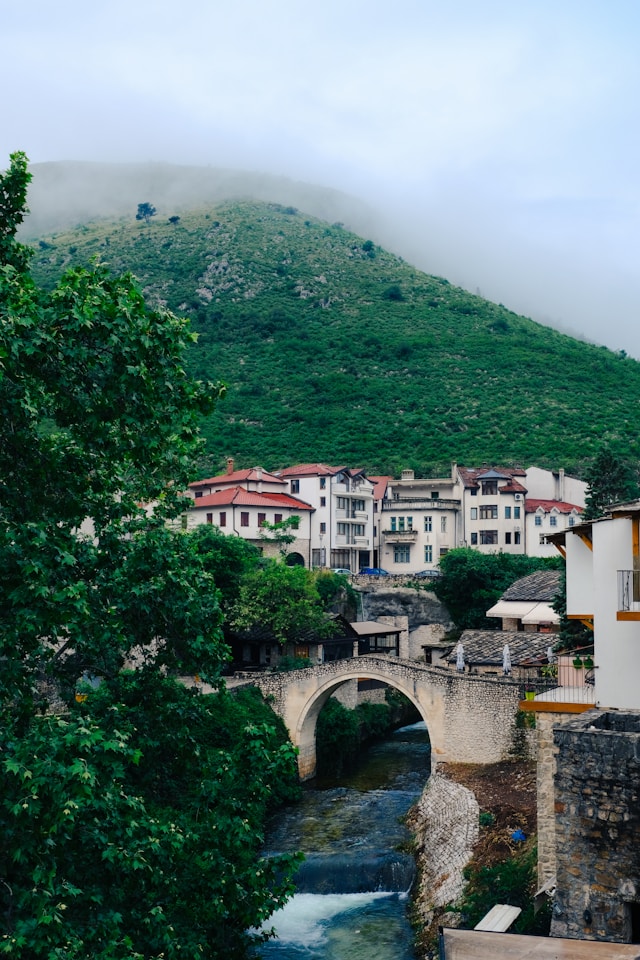
Crooked Bridge
The Crooked Bridge, or Kriva Cuprija, is a smaller, less-known cousin of the famous Stari Most. Built in the 16th century , it is one of the oldest structures in Mostar and is located just a short walk from the Old Bridge. The Crooked Bridge crosses the Radobolja River, offering a quieter and more intimate experience compared to Stari Most. The bridge has a charming, rustic appeal, and its surrounding area is filled with cozy cafes and restaurants. It's a perfect spot for taking photos and enjoying a peaceful moment away from the crowds of the main tourist areas. Legend claims its curve was designed by a 16th-century stonemason who built it as a "practice run" for Stari Most. The bridge survived the 1990s war unscathed, earning it the nickname " Lucky Kriva ." Every spring, locals hang flower baskets from its arches during the Mostar Bridge Festival , creating a floral masterpiece.

Franciscan Church of Sts. Peter and Paul
The Franciscan Church of Sts. Peter and Paul is one of the most significant religious sites in Mostar, reflecting the city's Catholic heritage. The church, with its modern design and tall bell tower, stands as a symbol of faith and resilience. It was rebuilt after being heavily damaged during the Bosnian War and has since become an important part of the local community. Visitors can admire the church's contemporary architecture, visit the nearby Peace Bell Tower, and learn about the role of the Franciscan community in Mostar's history. The church offers a serene place for reflection and spiritual contemplation. The bell tower’s concrete blends post-war rubble with new materials, symbolizing rebirth. Its 47-meter height makes it the tallest structure in Mostar, visible from all districts. The church’s 16th-century pipe organ , salvaged from ruins, still accompanies Sunday Mass with Baroque hymns.
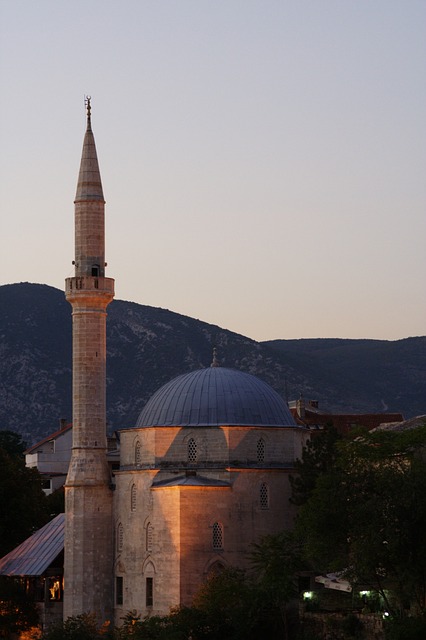
Koski Mehmed Pasha Mosque
The Koski Mehmed Pasha Mosque is one of the most beautiful and well-preserved mosques in Mostar, dating back to the 17th century . Located close to Stari Most, it offers stunning views of the Old Bridge and the Neretva River from its minaret. Visitors can explore the mosque's interior, which features intricate Ottoman designs, and learn about its historical significance. The mosque remains an active place of worship and an important cultural landmark, representing the deep Islamic heritage of Mostar. The peaceful garden surrounding the mosque offers a quiet retreat for reflection. Its hand-painted domes were restored in 2016 using pigments made from crushed pomegranate and lapis lazuli, as in Ottoman times. The mosque’s library houses a 500-year-old Quran , handwritten on deer parchment with gold-leaf calligraphy. During Ramadan, the courtyard transforms into a communal iftar space, serving bosanski lonac stew to hundreds nightly.
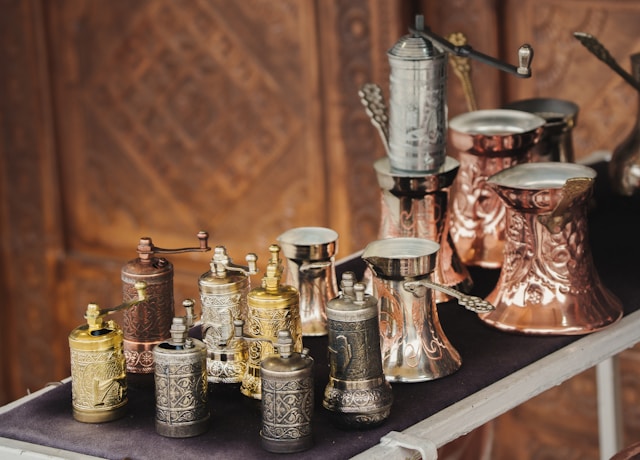
Kujundziluk Old Bazaar
Kujundziluk Old Bazaar is a vibrant and colorful market street in Mostar's old town, known for its traditional crafts and souvenirs. The cobblestone street is lined with small shops selling handmade jewelry, rugs, copperware, and other artisan goods. Walking through the bazaar feels like stepping back in time, with its Ottoman-era charm and lively atmosphere. It's a great place to explore local culture and purchase unique gifts. Visitors can also find small cafes and restaurants offering traditional Bosnian food, making it a perfect spot to experience the local flavor and hospitality of Mostar. The bazaar follows the Ottoman guild system , with silversmiths, coppersmiths, and carpet-weavers operating under centuries-old codes. Hidden courtyards reveal family workshops where artisans still forge damascene steel using 16th-century techniques. Every Friday, the street hosts a Night Market illuminated by lanterns, reviving the medieval trading spirit.
Mostar City Museum
The Mostar City Museum offers a deep dive into the history and culture of the city, with exhibits that cover everything from ancient times to the modern era. Housed in a beautifully restored building, the museum displays artifacts, photographs, and documents that tell the story of Mostar's rich and diverse past. Special attention is given to the city's Ottoman heritage, as well as the more recent history of the Bosnian War. A visit to the museum provides valuable context for understanding the cultural and historical significance of Mostar, making it an essential stop for history enthusiasts. The museum’s prized exhibit is a 1577 Ottoman firman (decree) protecting Stari Most builders from conscription. Interactive screens overlay wartime footage onto current cityscapes, showing post-war reconstruction efforts. Don’t miss the 19th-century "Bridge Keeper’s Journal," detailing fines for crossing Stari Most with unshod horses.
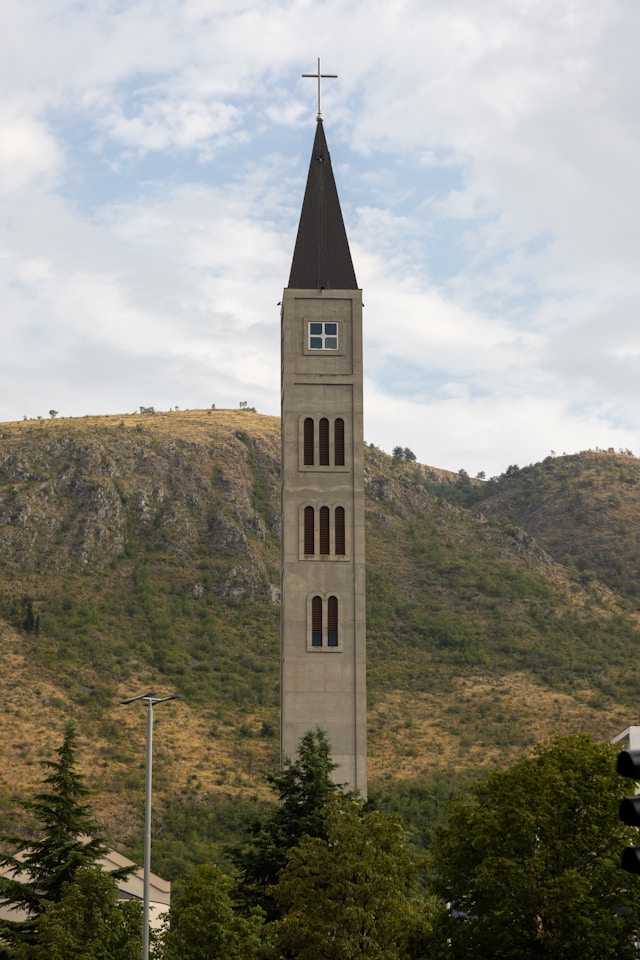
Mostar Peace Bell Tower
The Mostar Peace Bell Tower is a symbol of hope and reconciliation in a city that has experienced its share of conflict. Located near the Franciscan Church of Sts. Peter and Paul, the tower offers breathtaking views of Mostar and the surrounding countryside. Visitors can climb the tower to take in panoramic views and reflect on the city's journey towards peace. The Peace Bell itself is rung on special occasions to promote harmony and unity among Mostar's diverse communities. A visit to the Peace Bell Tower offers both a stunning view and a powerful message of hope for the future. Cast from melted-down war ammunition , the 1.5-ton bell contains copper from Catholic, Orthodox, and Muslim homes destroyed in the 1990s. The 107-step climb passes a glass-floored exhibit showing pre-war photos of unified neighborhoods. On New Year’s Eve, the bell chimes 12 times, each ring representing a month of healing in Mostar’s calendar.
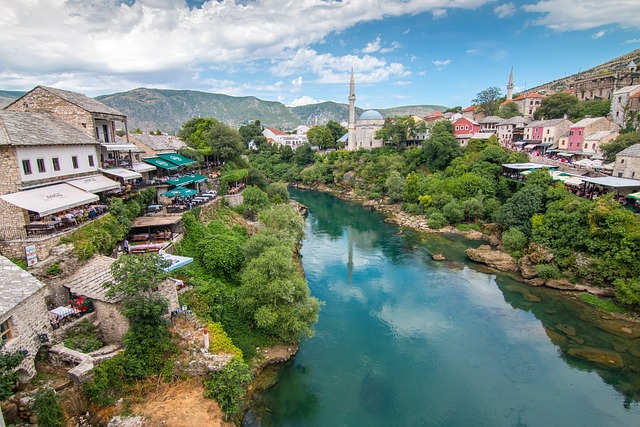
Neretva River
The Neretva River is the lifeblood of Mostar, flowing through the city and providing breathtaking views from various vantage points. Known for its striking turquoise waters , the river is popular for swimming, rafting, and kayaking, especially in the warmer months. Its banks are lined with cafes and restaurants, offering scenic spots to relax and enjoy the natural beauty of the region. The river also plays a key role in the city's history, with the iconic Stari Most spanning its width. A walk along the Neretva River is an essential part of any visit to Mostar, combining natural splendor with historical significance. The river’s unique color comes from dissolved limestone minerals , creating Europe’s clearest freshwater habitat for the endangered softmouth trout . Underwater archaeologists recently discovered Roman bridge ruins near Stari Most, visible when water levels drop in August. In winter, brave locals practice "zimsko kupanje" ( ice swimming ) in its 7°C currents for vitality.
Old Bridge Museum
The Old Bridge Museum is located near Stari Most and is dedicated to preserving the history and significance of the iconic bridge. The museum offers exhibits that explore the bridge's construction, destruction during the Bosnian War, and subsequent reconstruction. Visitors can learn about the architectural techniques used in building the original 16th-century structure and see artifacts related to the bridge's history. The museum also provides insight into the cultural and symbolic importance of Stari Most, not only to Mostar but to Bosnia and Herzegovina as a whole. A visit to the Old Bridge Museum deepens the appreciation of this historic landmark. The museum displays the original 1566 builders' contract , specifying payment in gold ducats and mutton. A 3D model shows how wooden scaffolding was used to shape the arch without modern tools. The top floor’s virtual reality station lets visitors "experience" the 1993 destruction and 2004 reopening, narrated by survivors.
Partisan Memorial Cemetery
The Partisan Memorial Cemetery is a striking monument located on the slopes of Hum Hill in Mostar, dedicated to the Yugoslav Partisans who fought in World War II. Designed by renowned architect Bogdan Bogdanovic, the cemetery is an impressive piece of modernist architecture , with geometric shapes and terraces leading up the hillside. It's both a place of remembrance and a work of art, reflecting the historical significance of the Partisan movement in the region. Though neglected for some time, the cemetery remains an important historical site and offers visitors a peaceful, contemplative space with views over the city. Bogdanovic embedded ancient Slavic symbols into the concrete, including sun wheels and tree-of-life motifs, to honor pre-Christian heritage. In 2021, volunteers uncovered hidden bronze plaques listing 800 resistance fighters’ names under overgrowth. The site now hosts open-air theater performances of anti-fascist plays during summer solstice.