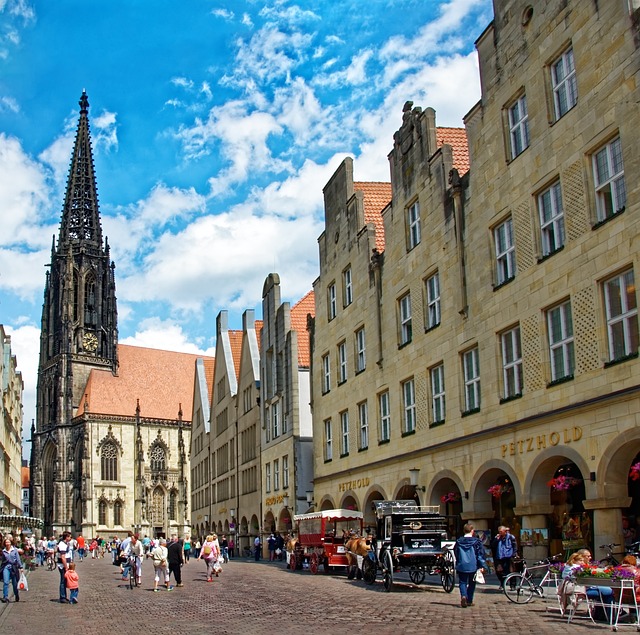
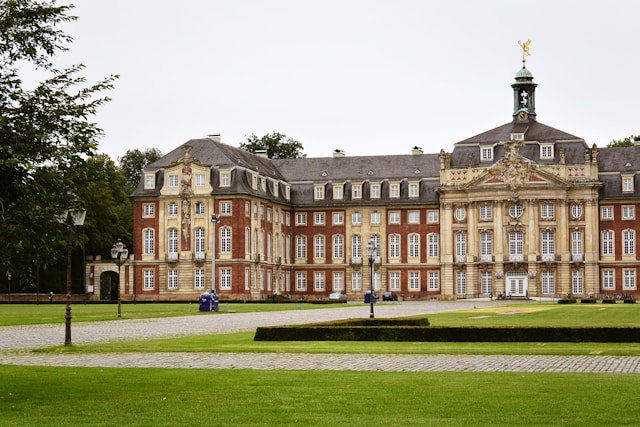
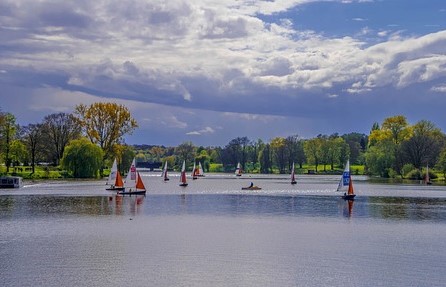
City view of Münster, Germany

Münster

Münster, located in the northwest of Germany, is known for its significant historical and cultural heritage. The city's old town has been carefully restored to reflect its medieval origins. The Prinzipalmarkt, with its gabled buildings and arcades, is a focal point for shopping and dining. St. Paul's Cathedral stands as a testament to Münster's religious and architectural history. The city is also famous for the Peace of Westphalia, which ended the Thirty Years' War. Münster's many parks and bike paths make it a cycling-friendly city, attracting visitors who enjoy outdoor activities. The Aasee lake is a popular spot for picnics and boating, contributing to the city's vibrant atmosphere.

Top attractions & things to do in Münster

If you’re searching for the best things to do in Münster, this guide brings together the top attractions and must-see places to visit in Münster. The top picks below highlight the most visited sights for first-time visitors, plus a few local favorites worth adding.

Aasee in Münster, Germany

Aasee

Aasee, Münster's 40-hectare artificial lake created in 1934, is an engineering marvel with 12km of shoreline paths. The lake's floating islands (2015) provide habitat for 167 bird species including rare black-necked grebes. Rent a solar-powered boat to explore the lake's three interconnected basins. The LWL Museum lakeside showcases a 4,500-year-old dugout canoe found nearby. Summer brings open-air cinema on pontoons and regattas with historic wooden sailboats. The 5km sculpture trail features works by Henry Moore and Ulrich Rückriem. Winter transforms the lake into Germany's largest urban ice skating rink (when frozen for 7+ days).

Ads place
Ads place
Ads place
Ads place
Ads place
Allwetterzoo Münster in Münster, Germany

Allwetterzoo Münster

Allwetterzoo Münster, opened in 1974, pioneered Germany's first fully covered walkway system spanning 5km. Its Elephant Park houses Europe's oldest breeding Asian elephant (born 1965). The Aquarium recreates Amazonian blackwater conditions to breed endangered cardinal tetras. Don't miss the Polar Bear Enclosure with underwater viewing tunnels and -15°C microclimate. The zoo coordinates international breeding programs for Przewalski's horses and Sumatran tigers. Unique experiences include night tours using infrared goggles and behind-the-scenes feedings of the giant otters. The Westphalian Horse Museum on-site displays 500 years of equestrian history with interactive exhibits.
Ads place
Ads place
Ads place
Ads place
Ads place
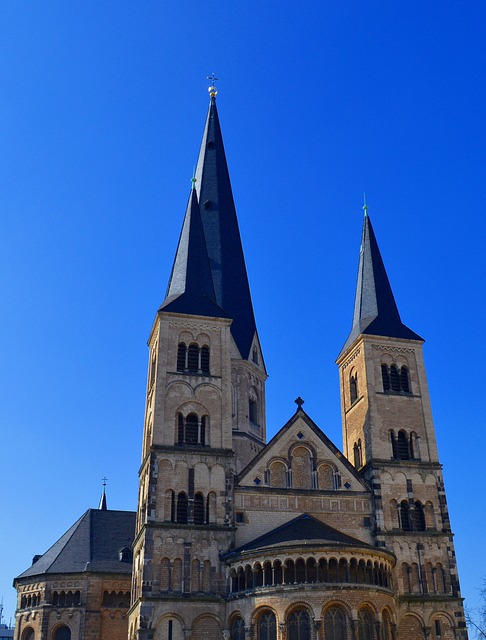
Bonner Münster in Münster, Germany

Bonner Münster

The Bonner Münster, founded in 1065 on a Roman cemetery, is a unique five-towered basilica blending Romanesque and Gothic styles. Its crypt contains the tombs of martyrs Cassius and Florentius, Roman legionnaires executed in 303 AD. The 13th-century cloister preserves 48 medieval frescoes uncovered during 2018 restorations. The treasury displays a 10th-century Byzantine silk chasuble gifted by Emperor Otto III. Don't miss the astronomical clock (1550) showing planetary positions and tide tables for Rhine shipping. Summer organ concerts feature the 74-stop Klais organ (1934) with 5,500 pipes ranging from 10cm to 5m tall.
Ads place
Ads place
Ads place
Ads place
Ads place
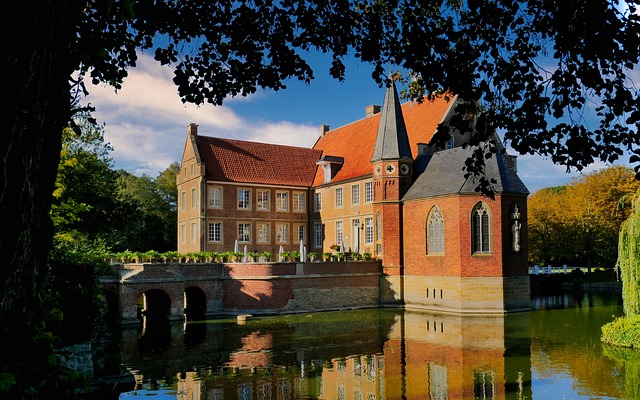
Burg Hülshoff in Münster, Germany

Burg Hülshoff

Burg Hülshoff, ancestral home of poet Annette von Droste-Hülshoff (1797-1848), is a perfectly preserved moated castle from 1410. The Poet's Room displays her original writing desk and the inkwell used for "The Jew's Beech". The castle's 17th-century baroque garden grows 42 medicinal herbs mentioned in her works. Summer literary festivals feature readings in the castle courtyard by Nobel laureates. The Droste Museum exhibits her travel diaries and a lock of hair analyzed for arsenic (used in 19th-century medicines). Don't miss the castle chapel with 15th-century frescoes of local saints.
Ads place
Ads place
Ads place
Ads place
Ads place
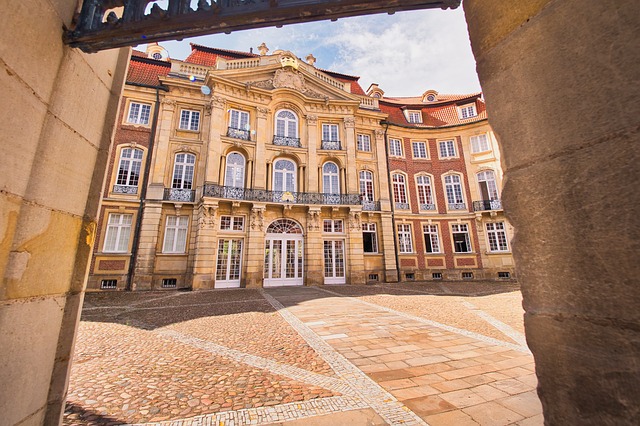
Erbdrostenhof in Münster, Germany

Erbdrostenhof

The Erbdrostenhof (1757) is Johann Conrad Schlaun's Baroque masterpiece, built for the hereditary stewards of Münster's prince-bishops. Its concave-convex facade creates optical illusions that change with daylight. The Grand Staircase features 32 different marble types from across Europe. During WWII, the palace sheltered the city's art treasures in its bomb-proof cellars. Today it houses the State Music Council and hosts chamber concerts on original 18th-century flooring. The Mirror Cabinet uses 300-year-old mercury-glass techniques to create infinite reflections. Free tours reveal hidden details like the "whispering window" where servants eavesdropped on guests.
Ads place
Ads place
Ads place
Ads place
Ads place
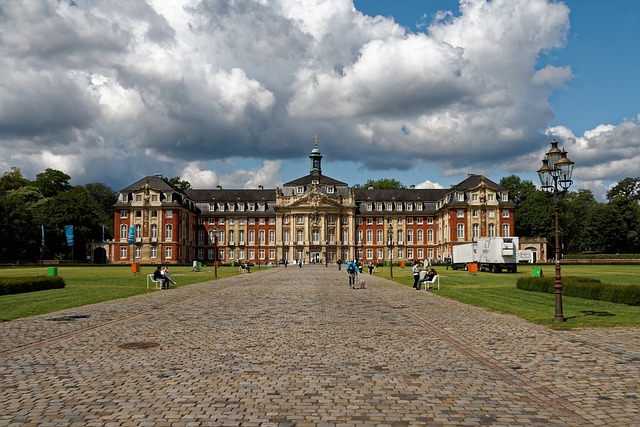
Münster Castle in Münster, Germany

Münster Castle

Münster Castle, built 1767-87 for Prince-Bishop Maximilian Friedrich, showcases Westphalian Baroque at its finest. Architect Johann Conrad Schlaun designed the 53m central tower to align with four city gates during solstices. Today housing the university administration, its State Hall features a trompe-l'oeil ceiling fresco depicting the Four Continents. The gardens contain 18th-century ornamental canals that once supplied the castle's fountains. During WWII, the castle served as a Nazi document archive - bullet marks remain on the east facade. The Botanical Garden behind the castle grows 8,000 species including plants from Alexander von Humboldt's expeditions. Free guided tours reveal hidden details like the bishop's secret staircase and original 1780 parquet floors.
Ads place
Ads place
Ads place
Ads place
Ads place
Prinzipalmarkt in Münster, Germany

Prinzipalmarkt

The Prinzipalmarkt, Münster's iconic arcaded street, dates to the 12th century when merchants built uniform gabled houses to impress trading partners. After WWII bombing, the 33 step-gabled facades were meticulously reconstructed using medieval techniques. Look for the Stadtweinhaus's 1580 wine merchant symbols and the Historic Town Hall where the 1648 Peace of Westphalia was negotiated. The arcades conceal 16th-century trading cellars now housing artisan workshops. December transforms the street with 1,200 Christmas lights modeled on 18th-century oil lamps. Free walking tours reveal hidden details like the "swindlers' stones" marking medieval fraudsters' punishment sites.
Ads place
Ads place
Ads place
Ads place
Ads place
St. Paul's Cathedral in Münster, Germany

St. Paul's Cathedral

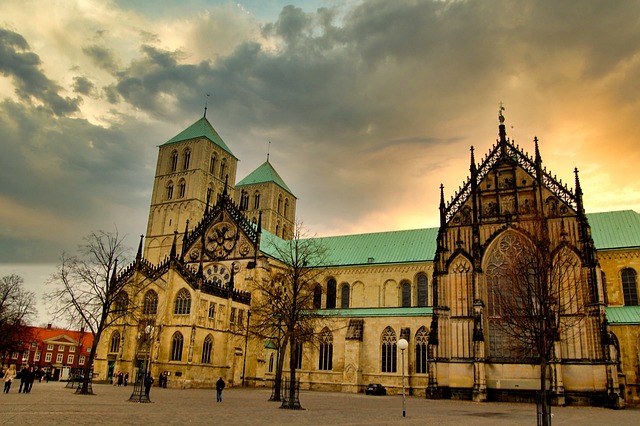
The St. Paul's Cathedral in Münster, consecrated in 1264, is a masterpiece blending Romanesque and Gothic architecture. Its 16th-century astronomical clock performs a daily mechanical theater show at noon, featuring 12 moving figures including Death striking the hour. The cathedral survived the 1534-35 Anabaptist rebellion when radicals whitewashed its frescoes - some now carefully restored. The 7.5-ton Peace Bell in the south tower was cast from melted-down cannons after the Thirty Years' War. Don't miss the Triumphal Cross (1220), one of Germany's oldest surviving wooden sculptures. The crypt contains relics of St. Ludgerus who founded Münster's first church in 793. Recent laser scans revealed hidden masons' marks proving French architects worked on the Gothic choir.
Ads place
Ads place
Ads place
Ads place
Ads place
Stadtweinhaus in Münster, Germany

Stadtweinhaus

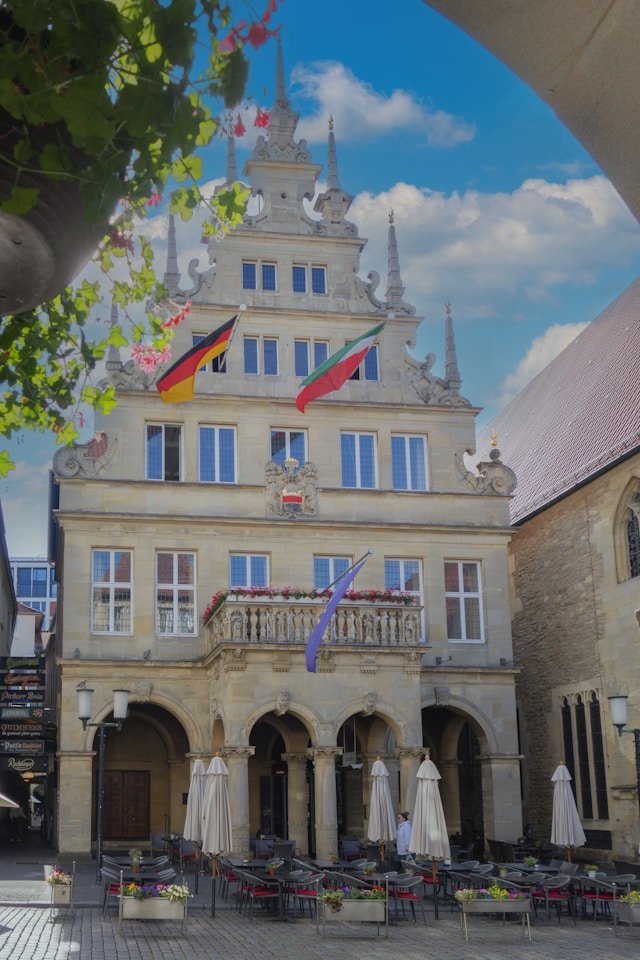
The Stadtweinhaus (1542) is Germany's last surviving medieval wine trading hall, built when Münster was Europe's largest wine market north of the Alps. Its Gothic facade displays 86 carved figures representing wine guild members and biblical scenes. Inside, the Great Hall's oak ceiling (1550) was constructed without nails using medieval joinery techniques. The cellar preserves 16th-century wine measures carved into stone walls. After WWII damage, restorers discovered 300-year-old wine stains helping recreate original paint colors. Today it hosts the Tourist Information center and a wine bar serving regional vintages from traditional "Stövchen" warmers.
Ads place
Ads place
Ads place
Ads place
Ads place
Ulmer Münster in Münster, Germany

Ulmer Münster

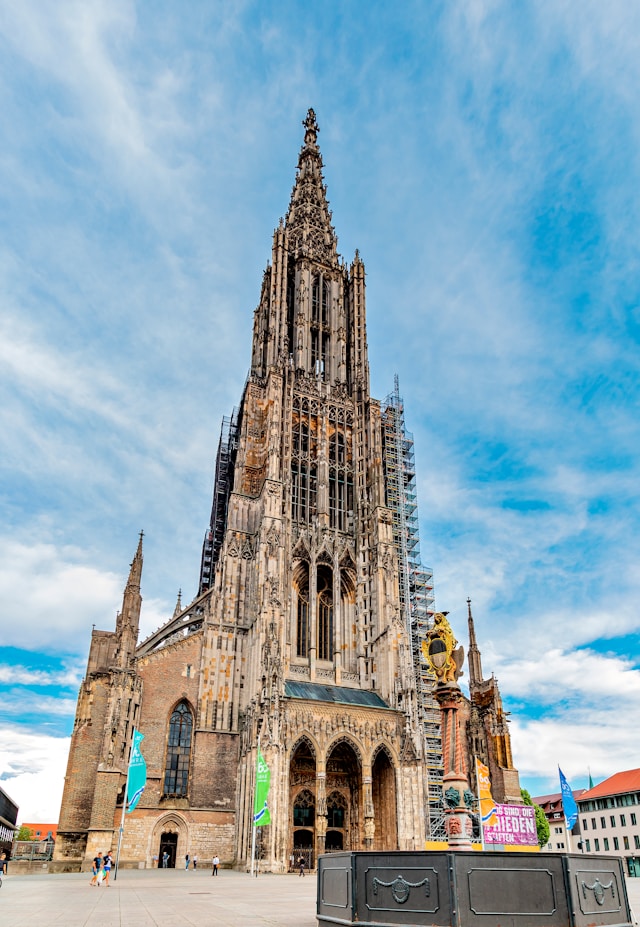
Ulmer Münster boasts the world's tallest church spire (161.5m), completed in 1890 after 513 years of construction. Climb 768 steps to the viewing platform (143m) for Alpine views on clear days. The nave's 41m vault was Europe's widest unsupported span when built in 1471. The choir stalls (1471) feature 89 carved figures including a self-portrait of the sculptor. The 15th-century astronomical clock tracks moon phases and eclipses until 2099. Don't miss the Man of Sorrows altar (1425) with movable parts for Lenten rituals. Recent laser scans revealed masons' jokes - a carved monkey stealing tools hidden high in the triforium.
Ads place
Ads place
Ads place
Ads place
Ads place