
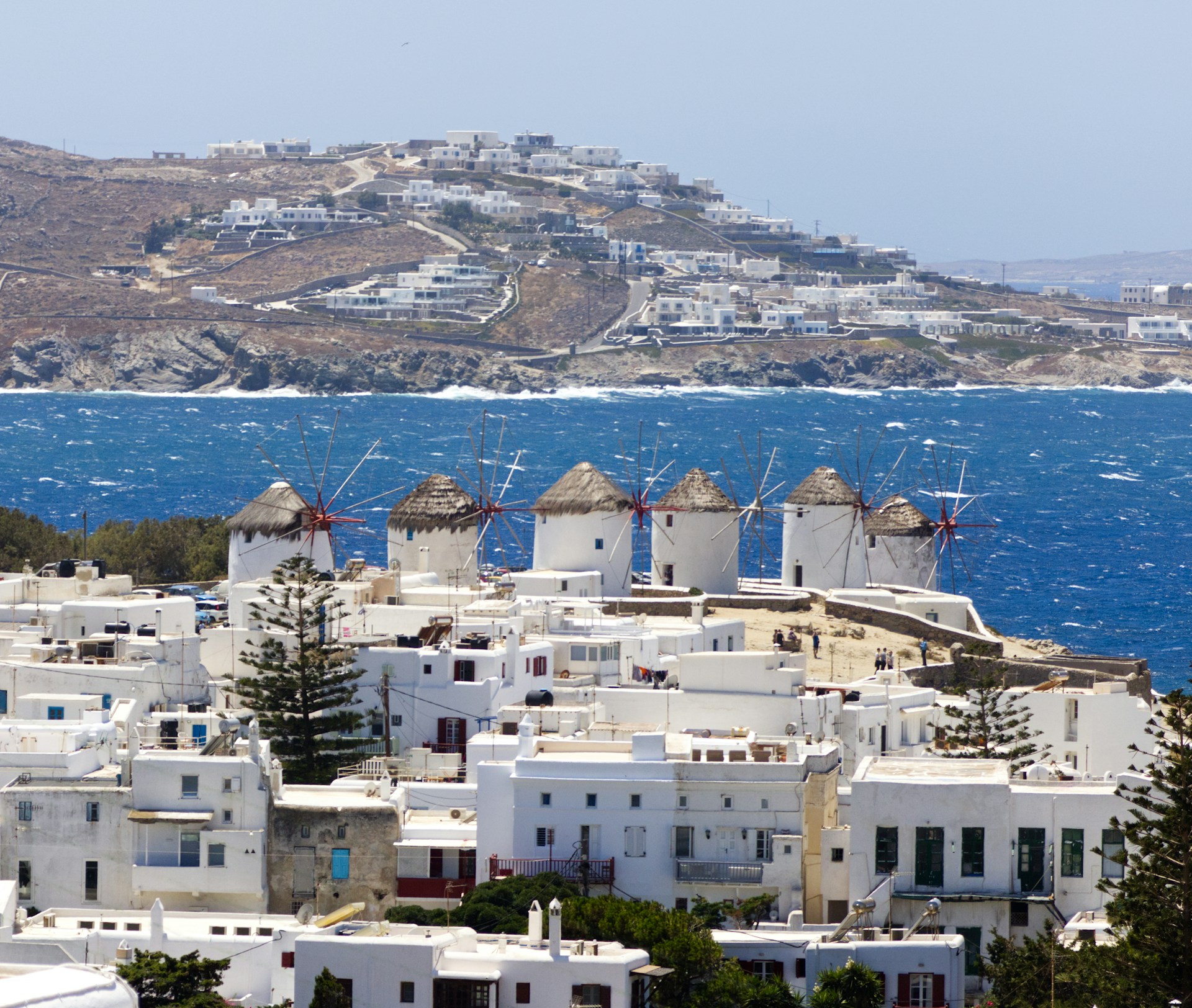
City view of Mykonos, Greece

Mykonos

Mykonos, the Cycladic isle famed for its cosmopolitan energy, unfolds in Chora’s labyrinth of dazzling whitewashed houses and cobalt-blue accents. Above Little Venice’s waterfront cafés, the iconic Kato Mili windmills—built in the 16th century—turn slowly against azure skies. Meandering alleyways lead past Panagia Paraportiani, a 15th-century chapel whose sculpted façade appears to float above the sea. Beyond town, golden sands at Psarou and Super Paradise draw world-class DJs and yacht-toting crowds, while quieter bays like Agios Sostis offer secluded coves lined with tamarisk trees. A short boat ride to nearby Delos—UNESCO-listed as Apollo’s mythical birthplace—reveals marble lion statues, an ancient theater and the Terrace of the Lions. Culinary adventures await at family-run tavernas serving kopanisti cheese and louza cured pork, paired with local souma spirit. By night, buzzing bars and beachfront clubs come alive under starlit skies, making Mykonos a seamless fusion of Aegean tradition and contemporary vibrancy.

Top attractions & things to do in Mykonos

If you’re searching for the best things to do in Mykonos, this guide brings together the top attractions and must-see places to visit in Mykonos. The top picks below highlight the most visited sights for first-time visitors, plus a few local favorites worth adding.

Delos Island Archaeological Site in Mykonos, Greece

Delos Island Archaeological Site

Just a short boat ride from Mykonos, Delos Island is one of the most important mythological and archaeological sites in Greece. Revered as the birthplace of Apollo and Artemis, Delos was a UNESCO World Heritage Site designated in 1990. The island’s sprawling ruins include the Terrace of the Lions (6th century BC), the grand Sanctuary of Apollo, and a well-preserved Roman mosaic floor in the House of Dionysus. Systematic excavations since the 1870s by the French School at Athens uncovered marble statues and inscribed stelae charting Pan-Hellenic pilgrimages. Visitors traverse ancient marble quays, marketplaces, and temple platforms while guided tours evoke Delos’s role as a vibrant mercantile and religious hub. Exhibits in the island museum display pottery, jewelry, and offerings that illuminate daily life in antiquity. Delos Island offers Mykonos travelers a rare glimpse into classical civilization where gods and commerce intertwined.
Ads place
Ads place
Ads place
Ads place
Ads place
Little Venice in Mykonos, Greece

Little Venice

Perched on the western edge of Mykonos Town, Little Venice emerged in the 18th century when affluent Venetian sea captains built multi-storey waterfront houses with storied balconies over the Aegean Sea. Known locally as “Ala Nisi” or “Pink Island,” its colorful façades reflect off shimmering waves beneath vibrant fishing boats. Architectural details such as slim columns and shuttered windows testify to Mykonos’s blend of Cycladic simplicity and maritime opulence. Over centuries, these houses served as storage for wine and tar, later evolving into intimate cafés and bars. Each evening, travelers gather to watch the sun set behind the 16th-century Panagia Paraportiani spire, while live jazz and bouzouki performances drift across narrow alleys. Film directors have favored Little Venice’s authentic charm, featuring it in international movies since the 1950s. Today, a handful of boutique hotels occupy restored mansions, preserving original stone staircases and hand-carved doorways. Little Venice remains a living tableau where history, culture, and modern nightlife converge.
Ads place
Ads place
Ads place
Ads place
Ads place
Panagia Paraportiani Church in Mykonos, Greece

Panagia Paraportiani Church

Nestled at the junction of four narrow lanes in Mykonos Town, the Panagia Paraportiani Church is a masterpiece of Cycladic architecture comprising five individual chapels built from the 14th to 17th centuries. Originally part of the Monastery of Saint Nicholas, its asymmetrical whitewashed façade appears almost sculptural against azure skies. Legend says the church earned its name—meaning “Our Lady of the Side Gate”—because worshippers accessed it through the monastery’s side entrance. Intricate stonework and minimal ornamentation highlight the seamless union of multiple structures, while the upper chapel’s simple dome crowns the entire complex. Photographers and painters have immortalized the church’s stark beauty since the 1960s. Restoration in 2008 preserved the original narthex mosaics and collapsed roofs, ensuring structural integrity. Today, Panagia Paraportiani remains one of the most photographed landmarks in Greece, symbolizing Mykonos’s spiritual heritage and artistic minimalism.
Ads place
Ads place
Ads place
Ads place
Ads place
Paradise Beach in Mykonos, Greece

Paradise Beach

Renowned for its energetic atmosphere and golden sands, Paradise Beach first gained fame in the 1970s when DJs introduced rave culture to Mykonos. Today, it hosts world-class beach clubs and daily sunset parties, drawing international crowds to dance beside the turquoise sea. The shallow lagoon area attracts snorkelers and windsurfers who ride the steady Meltemi breeze. Sleek sunbeds and cabanas line the shoreline, where seaside bars serve signature cocktails and fresh seafood mezes. Annual electronic music festivals spotlight top global DJs, reinforcing Paradise Beach’s status as an Aegean hotspot. Conservation efforts preserve nearby Posidonia seagrass meadows, ensuring the bay’s ecological health. Paradise Beach encapsulates Mykonos’s fusion of sun-soaked leisure, aquatic adventure, and vibrant nightlife in a single spectacular cove.
Ads place
Ads place
Ads place
Ads place
Ads place
Windmills of Kato Mili in Mykonos, Greece

Windmills of Kato Mili

On a gentle hillock overlooking Mykonos Town’s harbor, the iconic Windmills of Kato Mili stand as symbols of the island’s agrarian past and Cycladic heritage. Erected by the Venetian Republic during the 16th century, this cluster of seven stone windmills harnessed the Meltemi winds to grind locally grown grain into flour for export. Crafted in the traditional Cycladic style, with conical roofs and whitewashed walls, they commanded panoramic views across the strait to Tinos. The largest mill, Bonis Mill, was converted into a museum showcasing original milling machinery and archival photographs. Archaeological digs uncovered a hidden underground windshaft mechanism beneath its floor, revealing early engineering prowess. Each summer at sunset, visitors flock to capture the windmills’ silhouette against pastel skies. Guided tours by local historians explain how wind power sustained Mykonos’s economy until the dawn of the 20th century. Today, Kato Mili evokes rural foundations while framing the island’s blend of history and architectural innovation.
Ads place
Ads place
Ads place
Ads place
Ads place