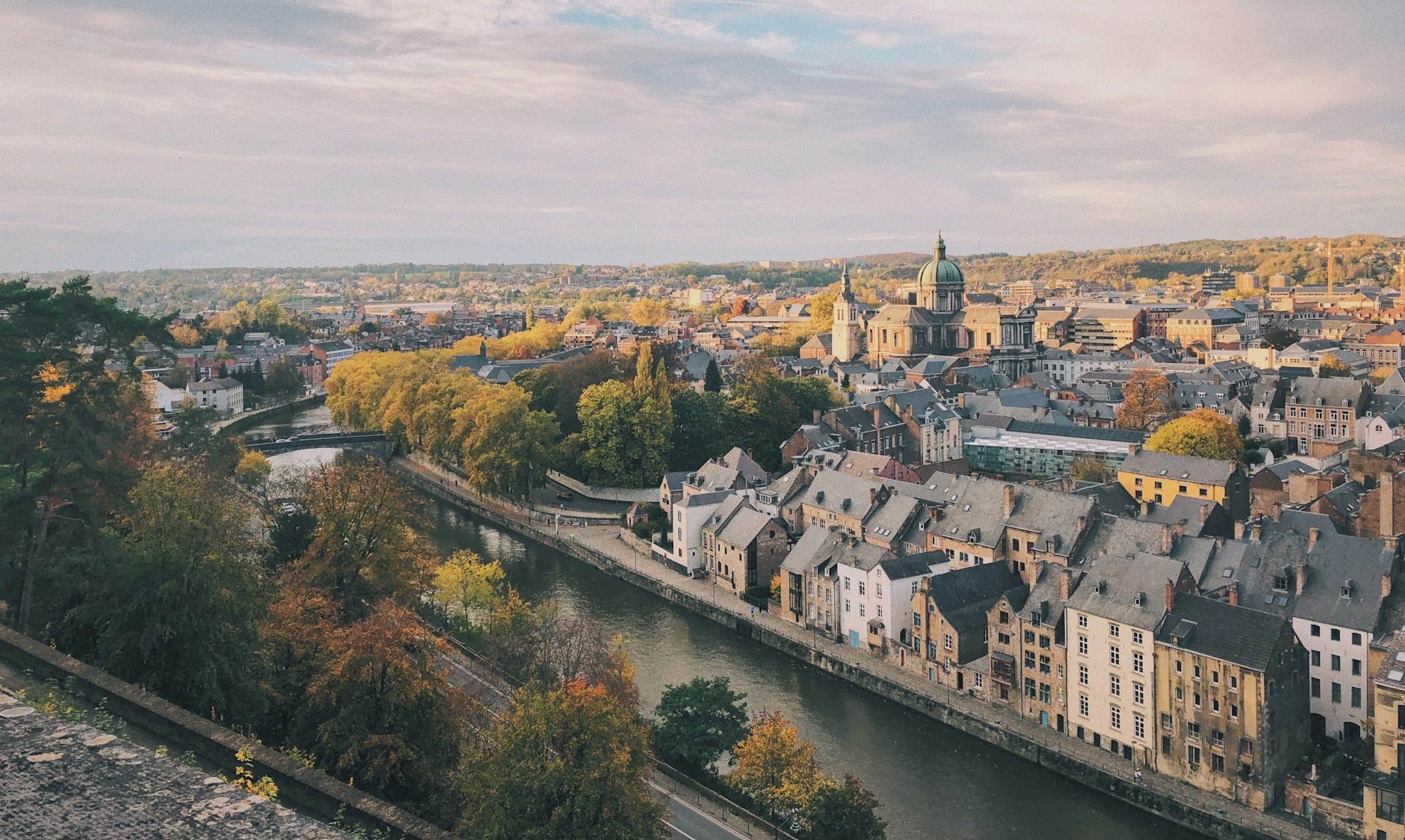

City view of Namur, Belgium

Namur

Namur is the capital of Wallonia, strategically located at the confluence of the Meuse and Sambre rivers. The city's Citadel, perched on a hilltop, offers sweeping views of the surroundings and has played a significant role in Belgian military history. St. Aubin's Cathedral and Église Saint-Loup are two architectural highlights. Namur is also known for its thriving cultural scene, with several theaters, art galleries, and festivals. The Festival International du Film Francophone de Namur draws cinema enthusiasts from around the world. The city is also a gateway to the Ardennes, offering outdoor activities like hiking and kayaking.

Top attractions & things to do in Namur

If you’re searching for the best things to do in Namur, this guide brings together the top attractions and must-see places to visit in Namur. The top picks below highlight the most visited sights for first-time visitors, plus a few local favorites worth adding.

Citadel of Namur in Namur, Belgium

Citadel of Namur

The Citadel of Namur is the city’s most iconic landmark, perched atop a hill where the Sambre and Meuse rivers meet. Originally a medieval fortress, it was expanded over centuries into a sprawling complex of defensive structures, tunnels, and bastions. Visitors can explore its well-preserved ramparts, learn about its military history at the on-site museum, and enjoy panoramic views of the city and surrounding countryside. The citadel also hosts events, such as medieval reenactments and light shows, making it a dynamic attraction for both history buffs and casual tourists. A guided tour through the underground tunnels offers insight into how soldiers once defended the city from various invaders, including during both World Wars. Today, the Citadel is a symbol of Namur's resilience and an excellent starting point for exploring the city's rich heritage. Archaeologists recently uncovered a hidden chamber believed to have stored gunpowder during the 17th-century sieges. In summer, the citadel’s terraces host open-air cinema nights, projecting classic films against the backdrop of the city lights.
Ads place
Ads place
Ads place
Ads place
Ads place
Eglise Saint-Loup in Namur, Belgium

Eglise Saint-Loup

The Eglise Saint-Loup is one of the finest examples of Baroque architecture in Belgium, located in the heart of Namur. Built between 1621 and 1645, the church's exterior might appear austere, but the interior is stunning, filled with red marble columns, intricate wood carvings, and a richly adorned ceiling. Its lavish decorations make it a masterpiece of religious art. The church was originally built for the Jesuits and today remains a historical monument rather than a place of active worship. Concerts and cultural events are often held within its grand acoustics. Eglise Saint-Loup's peaceful ambiance and beautiful craftsmanship make it a popular site for both tourists and locals looking for quiet reflection. The church’s altarpiece, carved from a single block of walnut, depicts the martyrdom of Saint Lupus in dramatic detail. During restoration work, artisans discovered fragments of original 17th-century polychrome paint hidden beneath later layers, now partially displayed.
Ads place
Ads place
Ads place
Ads place
Ads place
Felicien Rops Museum in Namur, Belgium

Felicien Rops Museum

The Felicien Rops Museum is dedicated to the life and work of Felicien Rops, a 19th-century Belgian artist known for his provocative and often controversial art. Located in a charming historic building, the museum showcases Rops’ diverse body of work, including drawings, engravings, and paintings. His art often features bold themes like eroticism, death, and social criticism, which were quite groundbreaking for his time. The museum provides insight into his techniques, influences, and personal life, making it a must-visit for art lovers interested in Symbolism and modern art movements. Regular temporary exhibitions also showcase works from other artists of the same era, enhancing the cultural offering. The museum’s intimate setting allows visitors to closely engage with Rops’ unique artistic vision and his impact on Belgian and European art. A recently acquired sketchbook reveals Rops’ meticulous preparatory work for his infamous series "Les Sataniques." The museum’s garden features a bronze statue of Rops, capturing his rebellious spirit with a cigar in hand.
Ads place
Ads place
Ads place
Ads place
Ads place
Parliament of Wallonia (Palais des Congrès) in Namur, Belgium

Parliament of Wallonia (Palais des Congrès)

The Parliament of Wallonia, also known as the Palais des Congrès, is an important political and cultural landmark in Namur. Housed in a historic palace, it is the seat of Wallonia's regional government. Visitors can take guided tours to learn about the political workings of Wallonia, as well as the history and architecture of the building itself. The palace features elegant interiors, including grand halls and conference rooms adorned with artwork. In addition to its political functions, the Parliament building often hosts public events, exhibitions, and debates that focus on the region’s cultural and social development. The Parliament's location, near the Citadel and the banks of the Meuse River, makes it an essential part of any comprehensive tour of Namur’s landmarks. It offers a fascinating glimpse into the governance of the region and how Wallonia’s identity is shaped. The building’s stained-glass windows depict scenes from Walloon folklore, created by local artisans in the 1980s. On select days, visitors can observe parliamentary sessions from a public gallery, offering a rare look at regional democracy in action.
Ads place
Ads place
Ads place
Ads place
Ads place
St. Aubin’s Cathedral in Namur, Belgium

St. Aubin’s Cathedral

Namur’s St. Aubin’s Cathedral, built in the 18th century, is the only cathedral in Belgium with a true Baroque-style architecture. The cathedral’s façade stands out with its striking curves, large dome, and detailed ornamentation. Inside, visitors are greeted by high ceilings, intricate frescoes, and a sense of grandeur typical of the Baroque period. The cathedral is home to a variety of religious art, including sculptures and paintings by prominent artists from the 18th and 19th centuries. One of the cathedral’s main treasures is the reliquary of St. Aubin, which draws pilgrims from around the region. Its organ, dating from the 17th century, is another highlight, and organ concerts are often held there. St. Aubin’s Cathedral offers not just a glimpse into religious life in Namur but also a reflection of the city’s artistic and architectural history. The dome’s interior frescoes, depicting the Ascension, were painstakingly restored in 2019 using traditional pigments. A little-known crypt beneath the altar houses the tombs of Namur’s medieval bishops, accessible during guided tours.
Ads place
Ads place
Ads place
Ads place
Ads place