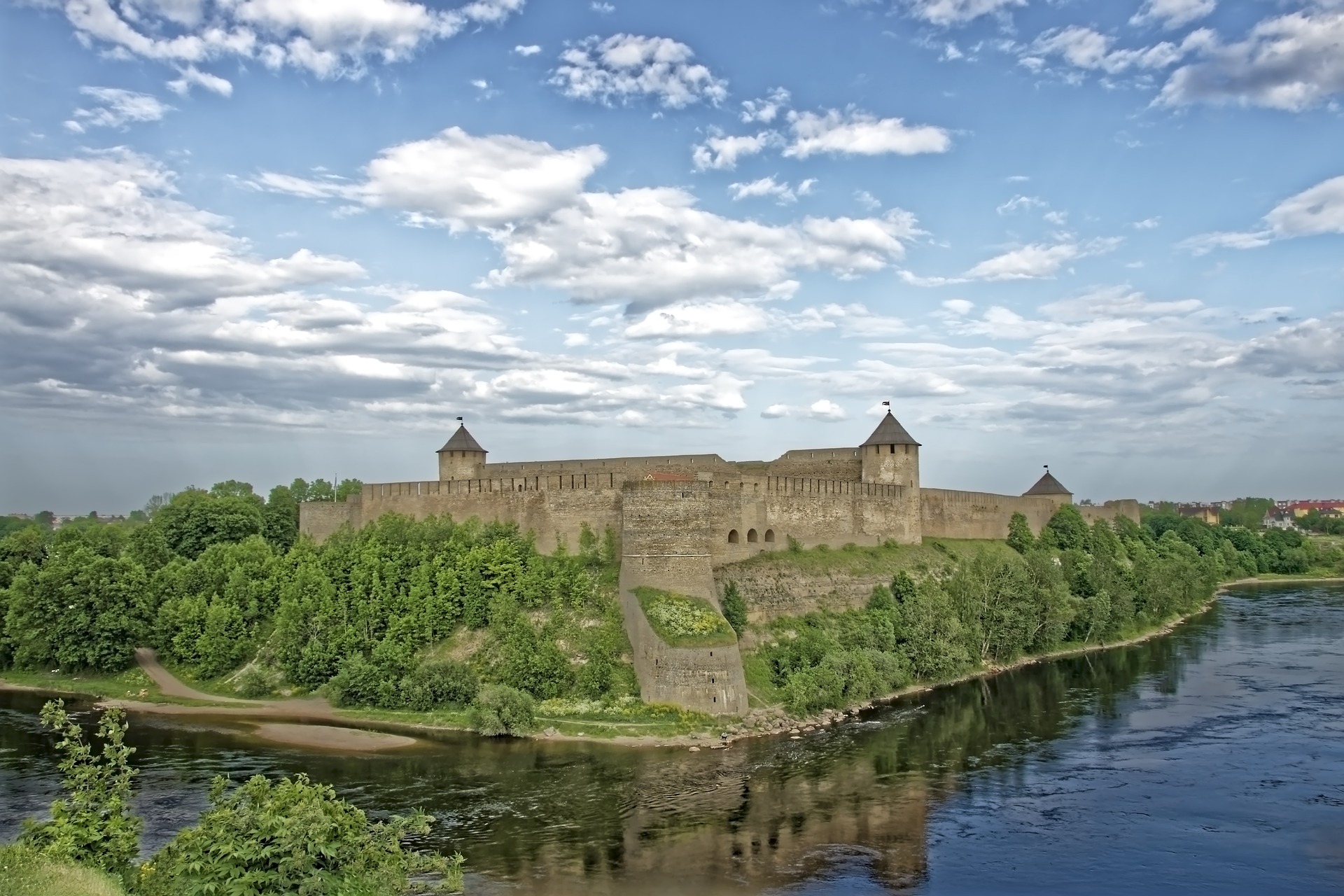

City view of Narva, Estonia

Narva

Narva is Estonia's easternmost city, lying right on the border with Russia. It's famous for the iconic Narva Castle, also known as Hermann Castle, which stands on the banks of the Narva River, facing the Ivangorod Fortress in Russia. This historical stronghold has a museum that showcases the city's history and offers stunning views from its towers. Narva's architecture has a unique Soviet-era influence, evident in its cityscape. The promenade along the Narva River provides a picturesque walk with a view of the neighboring country. The city also celebrates its cultural diversity with events like the Narva Opera Days and a variety of festivals.

Top attractions & things to do in Narva

If you’re searching for the best things to do in Narva, this guide brings together the top attractions and must-see places to visit in Narva. The top picks below highlight the most visited sights for first-time visitors, plus a few local favorites worth adding.

Narva Alexander's Cathedral in Narva, Estonia

Narva Alexander's Cathedral

Dominating Toompea Hill in Narva, this Neo-Gothic cathedral was completed in the late 19th century and dedicated to Tsar Alexander II. Its five-aisled nave rises beneath frescoed vaults, while a gilded iconostasis of oak and bronze separates choir from sanctuary. War damage during World War II shattered stained glass, but restorers have revived dazzling rose windows and the soaring pipe organ whose weekly recitals fill the stone interior with thunderous harmony. Guides point out preserved shrapnel scars and a crypt that sheltered townsfolk during bombardments. From the belfry platform, visitors enjoy panoramic views of the river frontier and distant Lake Peipus. Evening candlelight vespers and visiting choir concerts reveal a space that now bridges cultures and faiths, transforming an imperial monument into a treasured symbol of resilience.
Ads place
Ads place
Ads place
Ads place
Ads place
Narva Bastions in Narva, Estonia

Narva Bastions

The city’s colossal 17th-century bastions—Victoria, Gloria, and Pax—were engineered by Swedish military genius Erik Dahlbergh in a star-shaped design meant to deflect cannon fire. Grass-clad ramparts soar 13 meters high, concealing cool underground passages where holograms and soundscapes recreate the thunder of muskets. Guided tours explore hidden escape tunnels, powder magazines, and colonies of wintering bats. On sun-drenched crowns, locals picnic while tracing the outlines of gun-emplacements that once repelled armies during the Great Northern War. Exhibits also chart later use as WWII command posts and Cold-War shelters. From Bastion Victoria’s crest, photographers capture sunset silhouettes of twin castles flanking the river—an enduring tableau of Baltic geopolitics. Today these earthworks double as a family park and open-air lesson in military architecture, blending recreation with heritage on Estonia’s once-contested border.
Ads place
Ads place
Ads place
Ads place
Ads place
Narva Castle (Hermann Castle) in Narva, Estonia

Narva Castle (Hermann Castle)

Rising on the eastern bank of the Narva River, Narva Castle—also called Hermann Castle—was founded in the 13th century by the Livonian Order to guard Denmark’s northern frontier. Over the centuries it withstood sieges from Teutonic knights, Muscovite cannon fire, and the thunder of the Northern War (1700-1721). Today visitors climb the 50-meter Hermann Tower for sweeping views of Russia’s Ivangorod Fortress just 150 m across the water, a rare face-to-face meeting of two medieval citadels. Inside, vaulted halls host exhibitions of chain-mail, merchant guild relics, and amber trade routes, while hands-on workshops teach black-smithing and calligraphy. The cobbled courtyard transforms into a living museum every August when costumed knights reenact swordplay and falconry during popular medieval festivals. Evening floodlights bathe limestone walls in amber hues, and a riverside boardwalk links the castle to cafés serving local kama desserts. Equal parts border sentinel, museum, and cultural stage, Narva Castle offers an immersive journey through Estonia’s turbulent frontier history.
Ads place
Ads place
Ads place
Ads place
Ads place
Narva River Promenade in Narva, Estonia

Narva River Promenade

The riverfront Promenade unfurls for nearly four kilometres along Estonia’s eastern border, offering unparalleled vistas of Narva Castle and Russia’s Ivangorod Fortress locked in silent stone dialogue. A 2014 renovation funded by the EU added cycling lanes, LED night lighting, and sculptural benches fashioned like Viking ships. Interpretive panels tell of ice roads, Soviet checkpoints, and the roaring Kreenholm textile mills whose red-brick chimneys still punctuate the skyline. Locals jog past wildflowers in summer, while winter sees cross-country skiers gliding beside drifting ice floes. A floating stage hosts jazz concerts and folklore festivals, and an amphitheatre carved into the riverbank screens open-air films at dusk. Binocular stations let bird-watchers spot grey herons, and sunset paints twin castles in copper light, creating an unforgettable border panorama. Blending recreation, heritage, and dramatic scenery, the Narva River Promenade is the city’s most photogenic front porch.
Ads place
Ads place
Ads place
Ads place
Ads place
Narva Town Hall in Narva, Estonia

Narva Town Hall

Completed in the 17th century during Narva’s prosperous Swedish era, this graceful building embodies Baltic Baroque with a rust-red sandstone portal, pilasters, and a graceful clock tower. Designed by architect Georg Teuffel, it once hosted guild banquets for Hanseatic merchants trading flax and tar. Stone steps guarded by twin bronze lions lead to arcaded loggias where proclamations were read aloud. Although the interior is seldom open, evening architectural lighting outlines pediments and dormers, and information plaques recount fire damage and post-war restorations. The adjoining square fills with farmers’ markets and folk-dance troupes each summer, while December sees a Scandinavian craft fair beneath twinkling fir garlands. Even from the outside, Narva Town Hall remains a proud testament to mercantile ambition and civic grace on Estonia’s frontier.
Ads place
Ads place
Ads place
Ads place
Ads place