
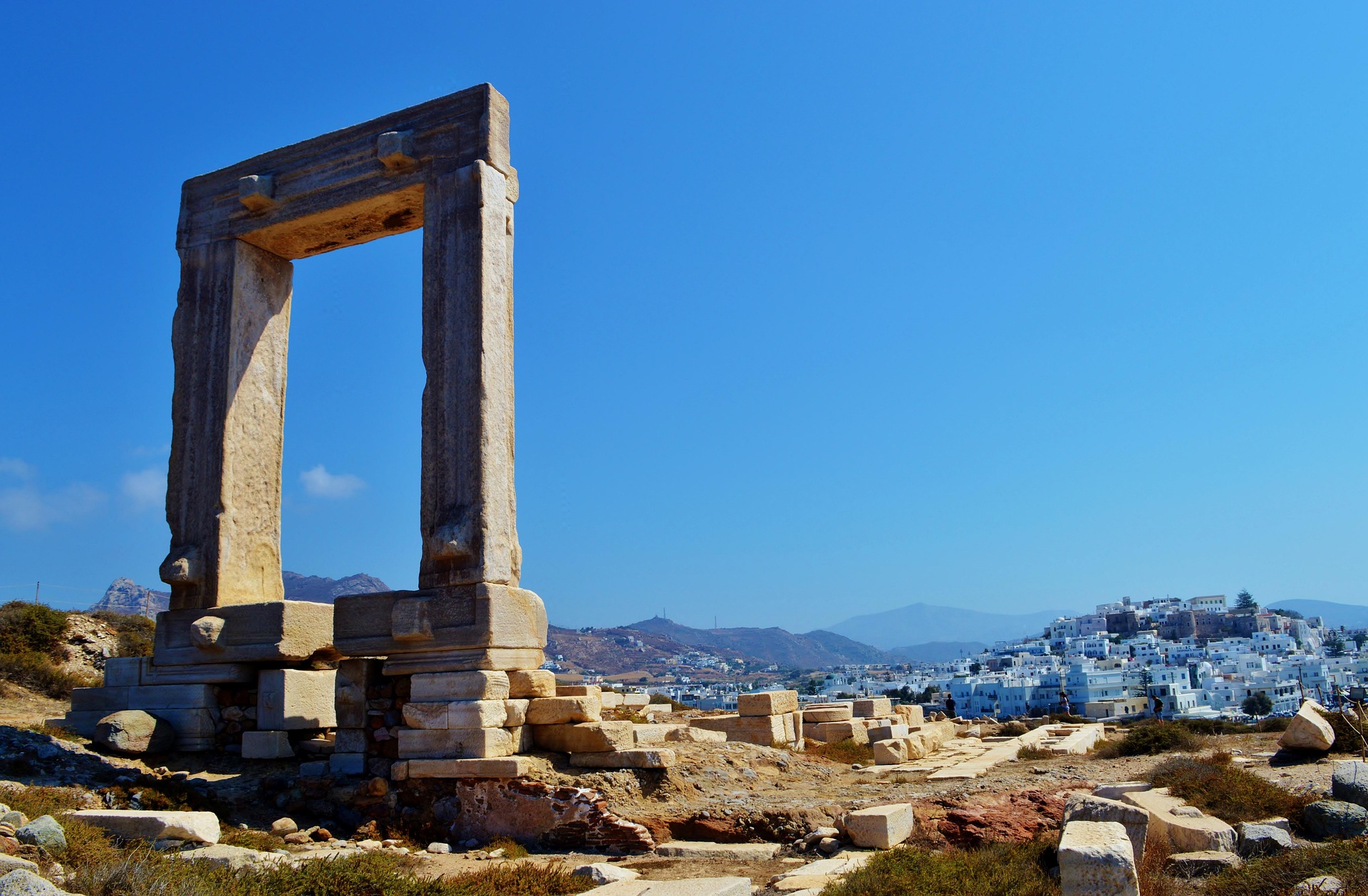
City view of Naxos, Greece

Naxos

Naxos, the largest of the Cyclades, marries fertile valleys and marble peaks with sun-drenched beaches. The Portara—a massive marble doorway from a 6th-century BC Temple of Apollo—frames the harbor at dawn, its weathered columns glowing in early light. Above the old town, the Venetian Castle (13th century) crowns narrow alleys where cafés serve kitron liqueur and artisanal cheese pies. Inland, Mount Zas—mythic birthplace of Zeus—rises to 1,005 m, offering panoramic views over olive groves and ancient marble quarries still worked by local stonemasons. Sandy stretches like Agios Prokopios and Plaka provide crystalline waters for wind-surfing and kite-surfing in the summer meltemi winds. Traditional panigyria (village festivals) in August celebrate patron saints with music, dance and communal feasts of goat stew and local cheeses. Under a star-filled sky, Naxos’s blend of classical lore, rural tradition and Aegean leisure feels timeless.

Top attractions & things to do in Naxos

If you’re searching for the best things to do in Naxos, this guide brings together the top attractions and must-see places to visit in Naxos. The top picks below highlight the most visited sights for first-time visitors, plus a few local favorites worth adding.

Apiranthos Village in Naxos, Greece

Apiranthos Village

Perched in the rugged highlands of Naxos, Apiranthos is affectionately dubbed the “Marble Village” for its streets and buildings fashioned entirely from gleaming marble. Founded by Cretan settlers in the 17th century, the village exhibits unique cultural fusion in its dialect and customs. Apiranthos boasts five distinct museums, including the esteemed Geological Museum, showcasing rare fossils unearthed in local quarries, and the Archaeological Museum, home to Cycladic figurines dating back to 2700 BC. Visitors explore workshops dedicated to weaving and pottery, preserving ancestral skills passed through generations. Seasonal festivals animate the village square with music and folk dances honoring local heritage. Culinary delights like “patoudo” lamb slow-cooked in clay pots and honey-roasted chestnuts attract food lovers. Scenic hiking trails radiate to hidden chapels and olive groves. Each spring, the Chestnut Festival transforms Apiranthos into a vibrant gathering with tastings of wines and chestnut treats. Scholars visit to study its unique dialect and oral histories preserved in this marble-walled enclave.
Ads place
Ads place
Ads place
Ads place
Ads place
Kastro (Old Town) in Naxos, Greece

Kastro (Old Town)

Kastro, the medieval fortress of Naxos Town, towers atop the hill where Venetian noble Marco Sanudo established the Duchy of the Aegean in 1207. Built with massive stone walls and bastions, this fortified citadel displays a striking example of Venetian architecture. Winding through narrow lanes, visitors discover the 13th-century Catholic Cathedral, home to rare Byzantine frescoes and carved altars. Beneath the cobblestones lies a hidden network of secret tunnels historically used for defense during pirate raids. The on-site Archaeological Museum showcases Cycladic artifacts, including marble figurines dating back to 2500 BC. Each spring, the historic ramparts host the Feast of Saint George, drawing locals and tourists to partake in processions and communal feasts. Architectural restoration projects in the early 20th century stabilized crumbling walls, preserving original masonry techniques. Guided tours reveal tales of Venetian commanders and Ionian merchants who shaped the island’s fortunes. Pathways lined with vibrant bougainvillea lead to hidden vantage points ideal for photography. Kastro’s blend of myth, medieval craft, and sweeping island vistas makes it an essential experience for history enthusiasts and cultural explorers alike.
Ads place
Ads place
Ads place
Ads place
Ads place
Mount Zas in Naxos, Greece

Mount Zas

Rising to 1,004 meters as the loftiest summit in the Cyclades, Mount Zas is steeped in legend as the mythical childhood home of Zeus. The nearby Zas Cave preserves archaeological remains dated to around 1000 BC, including bronze votive offerings and ancient inscriptions. Trails winding through fragrant fields of wild thyme and scattered stone shelters once used by shepherds lead adventurers to the summit, offering challenging yet rewarding hikes. Upon reaching the crest, hikers are rewarded with sweeping panoramic views encompassing islands such as Paros, Mykonos, and Santorini framed by the Aegean Sea. Enthusiasts often overnight to admire starlit skies unmarred by light pollution, while spring blooms add bursts of color to the rocky slopes. Scholars and mythology fans descend to study epigraphic evidence and oral traditions linking Zas to pan-Hellenic worship. The mountain’s biodiversity, including rare butterfly species, makes it an ecological haven as well.
Ads place
Ads place
Ads place
Ads place
Ads place
Portara (Temple of Apollo) in Naxos, Greece

Portara (Temple of Apollo)

Portara, the grand marble gateway of Naxos, was commissioned around 530 BC by the tyrant Lygdamis as the main portal to a temple honoring Apollo. Although construction halted after Lygdamis' exile, the colossal lintel block, weighing over twenty tons, remains suspended on a rocky islet. According to classical myth, Theseus is said to have abandoned princess Ariadne here, infusing the site with legendary allure. Modern excavations in the 1970s uncovered original foundation blocks and a network of Hellenistic pathways surrounding the islet. At dusk, the Portara glows with rose-gold hues reflecting upon the shimmering sea, drawing photographers and historians alike. Visitors can reach the site via a narrow stone causeway, offering panoramic views of Naxos Town and the nearby islands of Paros and Mykonos. Art historians note that 19th-century painters depicted Portara in their works, highlighting its inspiration across centuries. Today, cultural festivals like open-air theater performances occasionally take place near the site, blending ancient ambiance with modern creativity. UNESCO recognizes Portara as an outstanding example of Archaic Greek architecture, cementing its status as a must-see landmark.
Ads place
Ads place
Ads place
Ads place
Ads place
Temple of Demeter in Naxos, Greece

Temple of Demeter

Nestled in the verdant Sangri Valley, the Temple of Demeter dates to approximately 530 BC, dedicated to the goddess of fertility and harvest. Its elegantly carved columns represent one of the earliest examples of Ionic architecture, predating Athens’s Parthenon by decades. Archaeological excavations in the 1940s unearthed sophisticated drainage channels and preserved votive offerings, evidence of solemn fertility rites performed by ancient Naxian farmers. Artifacts, including marble statues and clay votive figures, attest to the temple’s role in the Cycladic civilization. Meticulous restoration efforts have stabilized eroded foundations, allowing visitors to marvel at the harmonious proportions of the colonnade. Surrounded by terraced fields still used for olive and grape cultivation, the site conveys the enduring connection between agriculture and spirituality. Each September, a harvest festival reenacts ancient ceremonies with traditional music and communal feasts of olive oil and wine. Scholars consider Sangri Valley’s temple one of the best-preserved rural sanctuaries in Greece, offering a unique window into early agrarian society.
Ads place
Ads place
Ads place
Ads place
Ads place