
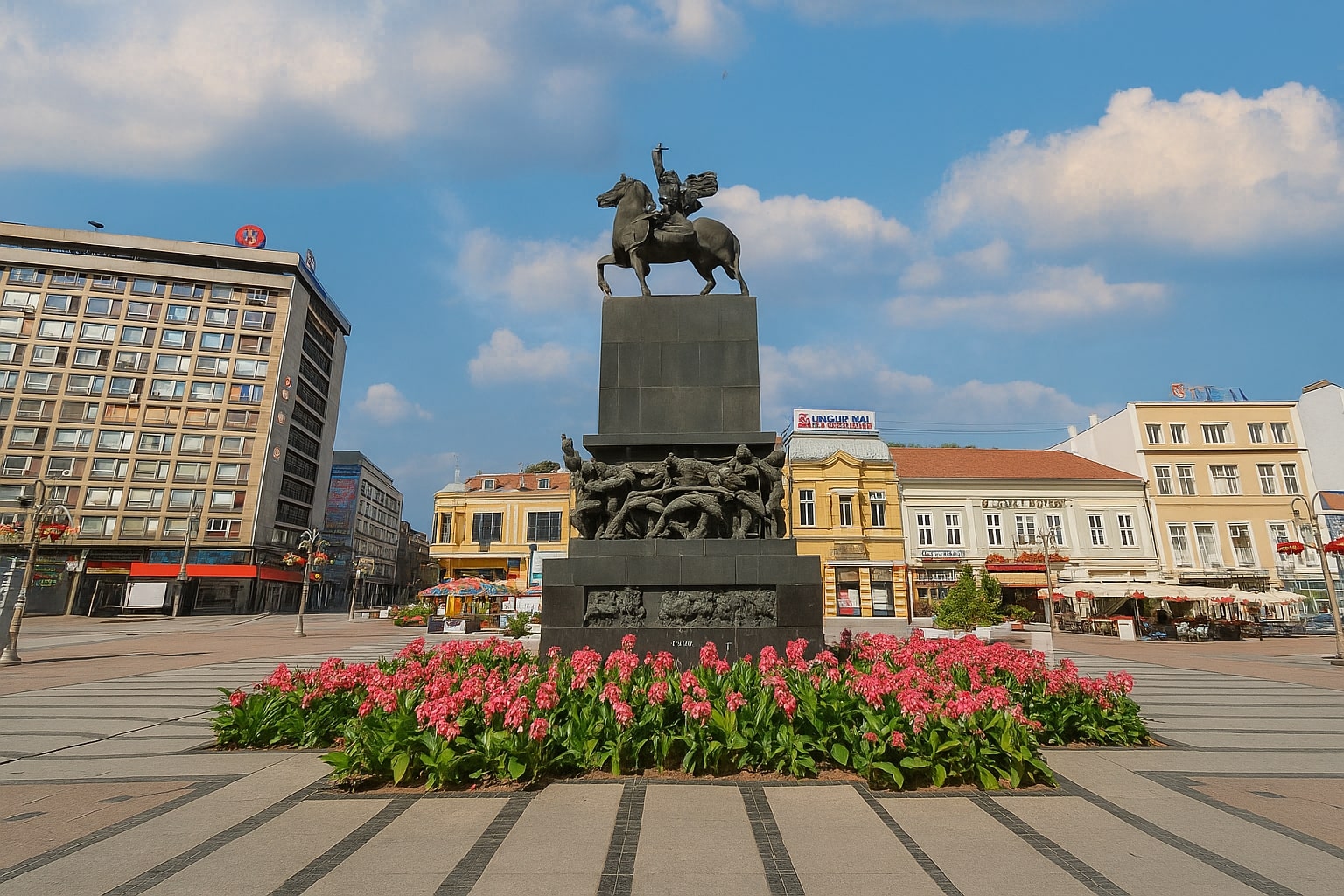
City view of Nis, Serbia

Nis

Nis layers Roman, Ottoman, and twentieth-century chapters without fuss, letting the fortress keep the river cool while the Archaeological Hall sketches Naissus and its emperors. Constantine the Great’s shadow falls softly here, more footnote than headline, as students fill cafes and order grilled meats with kajmak that defeats restraint. The Skull Tower is sober and specific; guides choose their words carefully and leave room for silence. Across town, a memorial at the Red Cross camp narrows attention in a way that lasts for days. Market stalls glow with peppers, garlic braids, and soft pears, the smell of burek leading you like an arrow. A tramway once crossed the city; older residents can still map its route with a fingertip on a table. Evenings end with boza or rakija depending on mood, and the river path returns you to your hotel slower, fuller, and slightly better at history.

Top attractions & things to do in Nis

If you’re searching for the best things to do in Nis, this guide brings together the top attractions and must-see places to visit in Nis. The top picks below highlight the most visited sights for first-time visitors, plus a few local favorites worth adding.

Bubanj Memorial Park in Nis, Serbia

Bubanj Memorial Park

A meadow at the city edge rises toward three clenched concrete fists that seem to breathe with the wind. The sculpture by Ivan Sabolic was unveiled in 1963 to mark executions carried out between 1941–1944 when prisoners from the Crveni Krst camp were marched here. Each fist differs in size to represent men women and children and the silence around them is curated as carefully as any museum label. Pine woods encircle the clearing and pathways guide visitors past low earth forms where names and numbers have thinned under rain yet remain legible. School groups learn how memory can be designed while families pause with the same instinct that brings hands to hearts at an anthem. The site asks for attention rather than applause and Niš answers with steady upkeep and modest ceremonies. You leave with the sense that remembrance can be muscular without anger and tender without weakness.
Ads place
Ads place
Ads place
Ads place
Ads place
Mediana Archaeological Site in Nis, Serbia

Mediana Archaeological Site

In a quiet suburb the ground opens onto mosaics that once cushioned imperial footsteps. Mediana flourished in the 4th century when Constantine the Great governed from nearby Naissus and imperial villas organized fields into orderly wealth. Geometric floors ripple with vines and dolphins and a nymphaeum lines up water with ceremony so engineering meets pleasure in a single gesture. Kilns and storehouses tell the other side of the story the economy that fed legions and court while roadside fragments trace the Roman habit of leaving instructions in stone. Excavations begun in the 20th century continue to refine the plan of baths audience halls and porticoes and each season adds a patient footnote to the textbook. Standing above the mosaics you sense that the empire communicated in materials as fluently as in Latin. Mediana is less a ruin than a conversation in progress where artistry accounts for power and the countryside still remembers the grid of its former master.
Ads place
Ads place
Ads place
Ads place
Ads place
Nis Fortress in Nis, Serbia

Nis Fortress

Stone ramparts rest above the Nisava and the city slips past with the same patient tempo that once measured patrols. The present fortification rose under the Ottoman Empire in 1719–1723, after a turbulent century of wars with the Habsburg army reshaped borders and plans. Craftsmen quarried limestone from nearby hills and folded in Roman blocks, a quiet reuse that links the site to ancient Naissus. Passing through the Stambol Gate you read layers of authority in the bevels of its arch while gunpowder magazines and hammams hint at the daily logistics of an imperial garrison. Evening brings music from summer stages and the smell of roasted peppers from stalls along the moat so the place works as both museum and living square. Maps at the bastions point toward bridges where traders once counted loads of salt and wool and the clock of the river still keeps them honest. The fortress endures as a practical lesson in endurance and adaptation.
Ads place
Ads place
Ads place
Ads place
Ads place
Skull Tower in Nis, Serbia

Skull Tower

A small chapel holds a startling relic that Europe once discussed in whispers. After the uprising of 1809 Ottoman authorities built a wall of skulls taken from Serbian rebels led by Stevan Sindjelic, creating the grim monument later called Cele Kula. Originally set with hundreds of remains along the Constantinople road the structure warned travelers that rebellion would be met with iron certainty. Over time families retrieved some ancestors and the tower was enclosed to protect what remained which lends today’s visit the stillness of an archive rather than a spectacle. Labels explain the battle at Cegar Hill and the decision by Sindjelic to ignite his powder magazine when encircled a deed recounted across the region. The chapel invites reflection without theatrics and you leave sensing how memorials can be both accusation and promise. History here is tangible enough to weigh in the hand yet light enough to pass to the next generation intact.
Ads place
Ads place
Ads place
Ads place
Ads place
Tinkers Alley in Nis, Serbia

Tinkers Alley

Cobbles narrow into a lane where shop signs once jingled like coins and copper bowls flashed from doorways. Known locally as Kazandzijsko Sokace the street grew in the 18th century when craft guilds serviced caravans on the old Balkan routes between Belgrade and Sofia. Surviving houses with deep eaves and timber frames outline how merchants combined living quarters with workshops and courtyards for cooling metal. Today cafes and small bakeries inherit the rhythm and the scent of pastry travels faster than conversation which feels appropriate for a place built on quick hands. Music and festival banners appear often yet the proportions remain domestic and kind and the night lighting keeps details legible without theatrics. Plaques recall masters who could raise a flawless pot from a single sheet and apprentices who later signed city ledgers as respected citizens. Walking here turns shopping into ethnography a gentle lesson in how tools become culture and streets become stories.
Ads place
Ads place
Ads place
Ads place
Ads place