
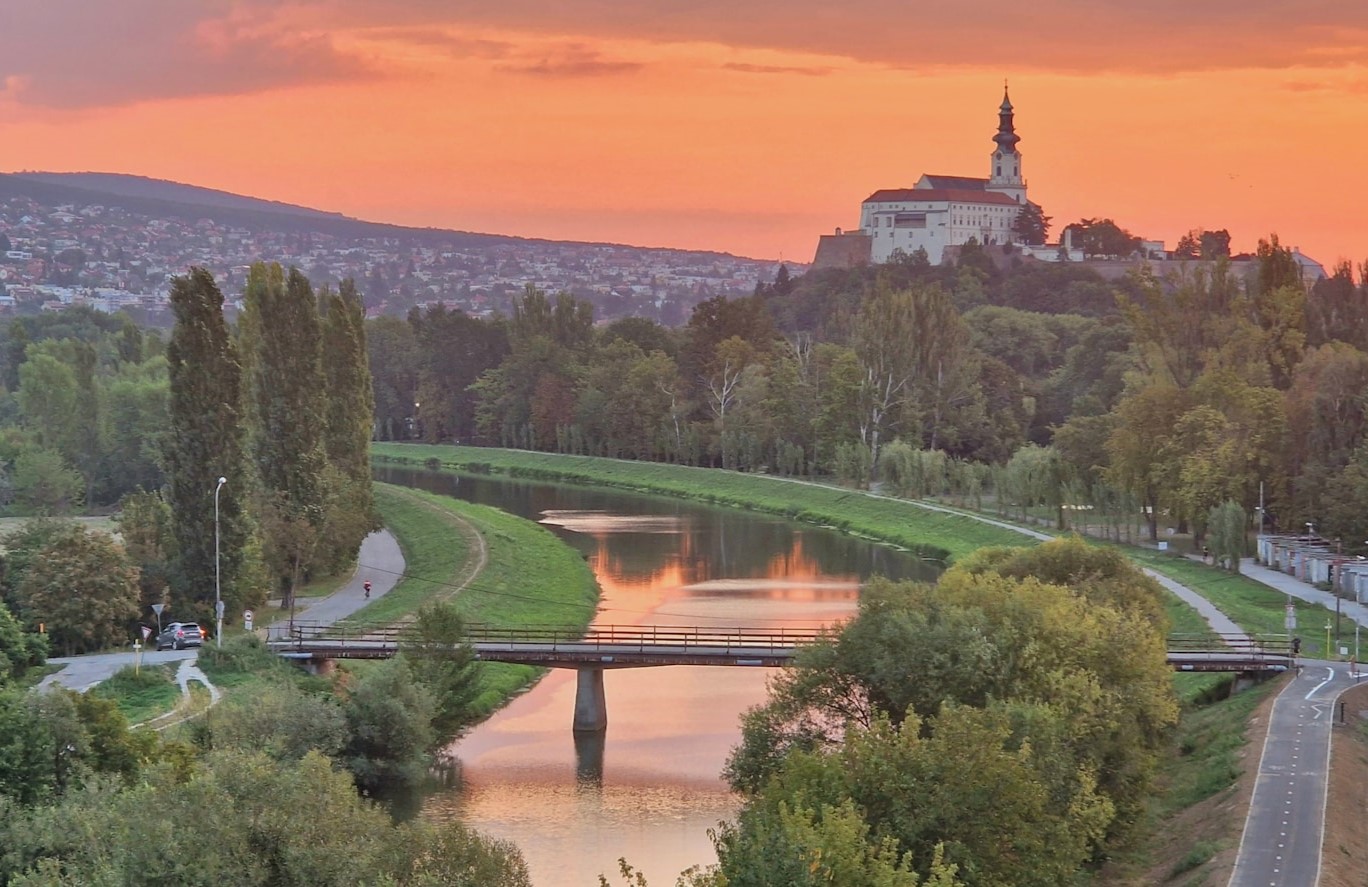
City view of Nitra, Slovakia

Nitra

Nitra rises in calm terraces around a castle hill where early Slovak Christianity took firm root. Archaeology exhibits at the hilltop museum make seventh century life feel close enough to borrow a cloak. Down below, students animate cafes with a mix of biology notes and indie playlists. Order lokse pancakes stuffed with duck or poppy seeds and watch the cathedral towers change color with the sun. Vineyards on the slopes confirm the pleasant microclimate, and cellars pour whites that pair with gossip as well as cheese. Theater here enjoys satire, and local puppeteers steal shows across the country. Do not skip the agricultural fair, it turns tractors into family entertainment and proves that food systems can be fascinating. Unexpected trivia to take home, Nitra hosts a statue of the alphabet letters, a nod to sacred scripts, and children climb those shapes as if learning were a playground by design.

Top attractions & things to do in Nitra

If you’re searching for the best things to do in Nitra, this guide brings together the top attractions and must-see places to visit in Nitra. The top picks below highlight the most visited sights for first-time visitors, plus a few local favorites worth adding.

Cathedral of St Emmeram in Nitra, Slovakia

Cathedral of St Emmeram

Inside the castle complex, the Cathedral of St Emmeram reads like a palimpsest, three churches woven into one composition. Step from a Romanesque base into late Gothic ribs and then into a Baroque nave that understands drama without excess. The episcopal seat is documented from the 11th century, and the site absorbed renewals after earthquakes and fires with stubborn grace. Portraits of bishops hang like a civic archive, while the crypt keeps the temperature and the tone appropriately cool. The organ loft occasionally hosts recitals whose sustained chords reveal the geometry of sound. Notice the pairing of chapels and the careful staging of light at morning mass, a quietly theatrical plan. Conservation notes mention fragments from a Romanesque portal and tracery restored to a Gothic profile; the choir stalls carry local carpentry signatures. A reliquary linked to St Emmeram draws pilgrims who prefer history to spectacle. Step outside and the courtyard suddenly feels like a balcony over the city; it is a fine place to consider how architecture edits memory.
Ads place
Ads place
Ads place
Ads place
Ads place
Nitra Castle in Nitra, Slovakia

Nitra Castle

The fort on a limestone spur feels both watchful and hospitable. Nitra Castle gathers layers rather than eras, so a visitor moves from quiet courtyards to walls that once faced real danger without theatrics. The Upper Church, rebuilt after fires, shelters a treasury where reliquaries and chalices turn metal into stories. Records point to a 11th century bishopric here, while the fortifications took a modern outline in the 17th century bastion era. Beneath the pavement, archaeologists traced earlier settlement horizons including a Great Moravian chapter, giving the hill a longer memory than the view suggests. In calm weather, the ramparts read like a notebook of military engineering details, from cannon embrasures to sloped earthworks. A statue honoring Prince Pribina anchors the story of early Christianity in the region. Come late afternoon and the stone warms to gold; stay a moment longer and the bells mark the hour like a gentle metronome for the city! Look for a weathered Romanesque portal fragment near the sacristy, a small survivor with big character.
Ads place
Ads place
Ads place
Ads place
Ads place
Nitra Synagogue in Nitra, Slovakia

Nitra Synagogue

A handsome brick landmark near the center, the Nitra Synagogue combines decorative restraint with theatrical volume. Completed in 1911 and widely credited to architect Lipot Baumhorn, it blends Moorish and Byzantine suggestions into a hall that carries the voice beautifully. The women's gallery floats on cast iron like a balcony in a quiet opera house, while a central dome collects daylight in a soft pool. Wartime disruption emptied the building, but careful restoration returned the interior to dignified service as a concert and exhibition space. Acoustic tests often surprise performers with how kindly the room treats strings and human voice. Plaques frame the story of the community with frank economy, and a small display explains the architect's regional network of synagogues. Look up at the geometric stars and the calligraphic details; they are ornaments that choose conversation over spectacle. Step outside and the brick glows warmly even on cold days, a reminder that civic memory can be hospitable. The facade is often described as a measured response to Art Nouveau, adopting rhythm without surrendering symmetry.
Ads place
Ads place
Ads place
Ads place
Ads place
Slovak Agricultural Museum in Nitra, Slovakia

Slovak Agricultural Museum

At the edge of the fairgrounds, the Slovak Agricultural Museum turns practical labor into clear storytelling. Collections range from hand plows to threshers that once measured harvests in long afternoons rather than spreadsheets. Outside, a narrow-gauge line circles workshops and sheds; on event days a steam engine or careful diesel pulls carriages past demonstrations. Labels explain how soil, rotation, and 19th century innovations changed yields, while a barn of engines smells faintly of oil and solved problems. A section on cooperative farming tackles politics as method, letting visitors compare ideals with outcomes. Instruments for weighing grain stand beside a ledger that turns numbers into memory. Children gravitate to belts and flywheels; parents notice how standardization made food systems scalable. In summer, field plots display heritage varieties, and guides talk about seed banks with an archivist's calm pride. The museum is more than nostalgia; it is a workshop for understanding how landscape, machines, and people learned to work together, one season at a time.
Ads place
Ads place
Ads place
Ads place
Ads place
Zobor Hill and Monastery Ruins in Nitra, Slovakia

Zobor Hill and Monastery Ruins

When locals say they are going up the hill, they almost always mean Zobor, the green backrest of the city. Trails step from vineyards into pine and scrub, and after a steady pull you arrive on a bald shoulder with bright air. The summit sits around 587 meters, high enough for wind to tidy thoughts without turning them cold. Near the top lie the low walls of a Benedictine house; charters mention a monastery here in the 12th century, later abandoned and patiently mapped by archaeologists. Waymarkers point to the ruins of the early spa at Zobor and to overlooks where thermals carry gliders on calm weekends. Locals time the climb for sunset when the river and castle flatten into silhouettes. In spring, conservation boards ask visitors to respect the National Nature Reserve status that protects steppe plants and nesting birds. A small hermitage is linked in tradition to St Svorad, and the story lingers like a footnote in the breeze. Bring water, a camera, and an appetite; the descent passes vineyards that pour their own explanations later.
Ads place
Ads place
Ads place
Ads place
Ads place