
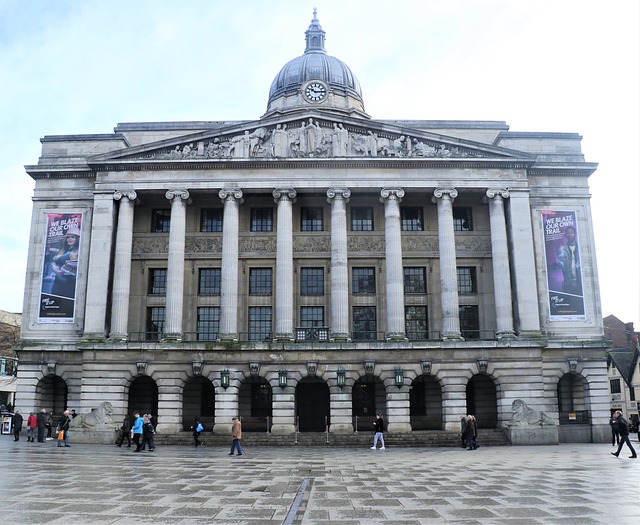
Nottingham Council House
In Nottingham, United Kingdom .
More places to visit in Nottingham
Discover more attractions and things to do in Nottingham.
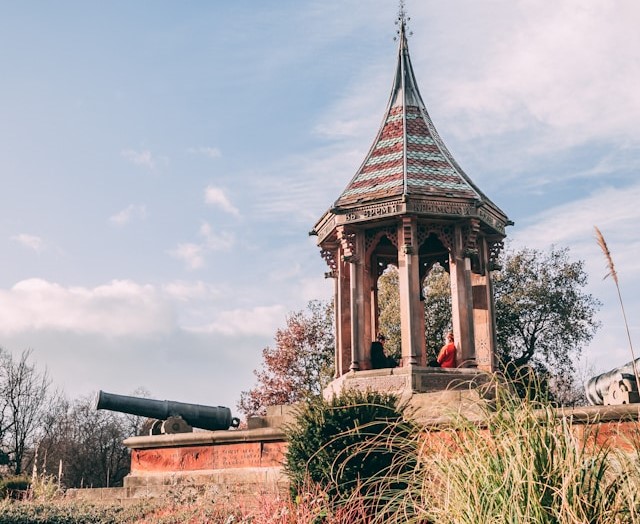
Nottingham Arboretum
The Nottingham Arboretum is one of the city's oldest public parks and a verdant sanctuary that offers visitors a quiet retreat amid centuries of horticultural tradition. Established in the mid-19th century , the arboretum features a diverse collection of tree species, ornamental flowerbeds, and meandering pathways that have been meticulously landscaped over generations. The park's historical significance is evident in its carefully preserved Victorian pavilions and statues, many of which were donated by local philanthropists. A hidden gem within the arboretum is the small lake, where a centuries-old weeping willow creates a picturesque scene that captures the essence of natural beauty. Visitors can learn about the history of the collection through subtle engravings on stone benches and plaques, which document the origins of various tree species introduced during the industrial boom. The tranquil setting has made it a favored spot for community events and quiet contemplation. Architectural accents such as wrought iron gates and vintage lampposts add to the park's timeless charm.
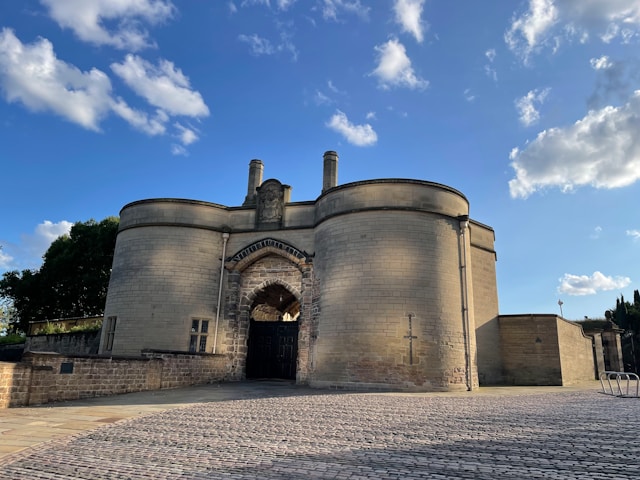
Nottingham Castle
Nottingham Castle is a historic fortress that has played a central role in the city's turbulent past and evolving cultural landscape. Originally established as a medieval stronghold , the castle has been rebuilt several times since its founding in the 11th century, and today it stands as a symbol of Nottingham's resilience and transformation. Visitors exploring its extensive grounds discover remnants of secret tunnels and hidden passages that were once used by royalty and rebels alike. The castle's grand exhibition spaces house a wealth of artifacts ranging from ancient weaponry to meticulously preserved documents that offer rare insights into the city's evolution during periods of conflict and renaissance. Architectural details such as intricately carved stonework and the remains of original defensive towers underscore the strategic importance of the site in historic battles. A little-known detail is that during the Victorian era , parts of the castle were repurposed as a museum, preserving many objects that reveal daily life in medieval Nottingham. The blend of ancient heritage with modern restoration techniques has made Nottingham Castle an enduring landmark that encapsulates the city's dynamic history.
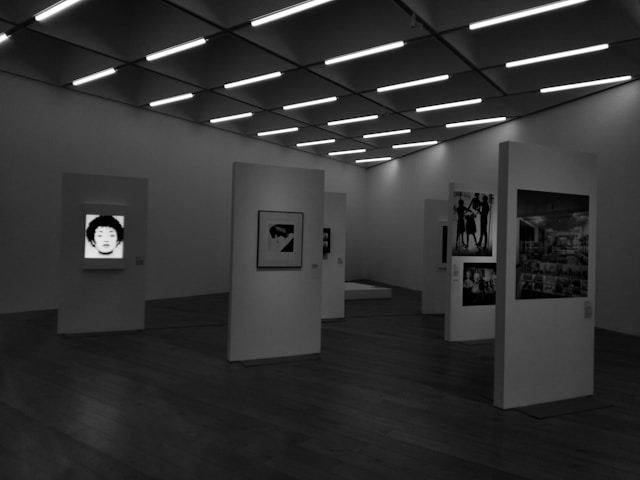
Nottingham Contemporary
Nottingham Contemporary is a leading modern art gallery that has redefined the city's cultural landscape . Housed in a striking converted warehouse , the gallery presents an ever-changing roster of exhibitions that span across various genres of contemporary art. Its innovative use of space and cutting-edge installations challenge traditional perceptions of art and provoke thoughtful dialogue among its diverse audience. One of the gallery's intriguing features is its dedicated interactive studio , where local artists collaborate with visitors to create new works in real time. Behind the scenes, the gallery's archive holds rare documents and personal artifacts from influential artists who have contributed to the global art scene. A notable detail is that the building itself was once part of Nottingham's industrial revolution and retains subtle elements of its former use, such as exposed brickwork and original steel beams, which add an authentic historical layer to the modern exhibitions. The fusion of past and present is evident in every corner, with carefully curated artworks that reflect the city's dynamic evolution.
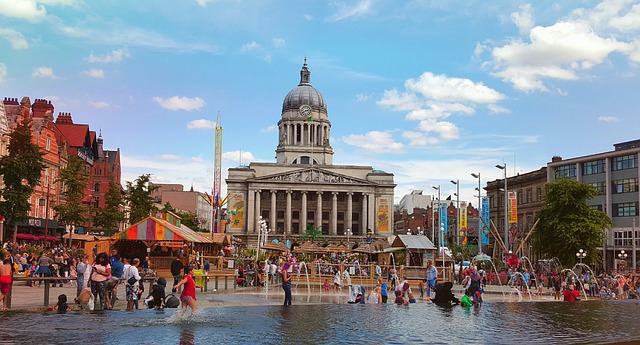
Old Market Square
Old Market Square is the historical nucleus of Nottingham, where centuries of urban evolution converge in a vibrant public space. This expansive square, which dates back to medieval times , has witnessed everything from lively markets and public gatherings to important civic events that have shaped the city. The square's architecture is a blend of medieval , Georgian , and modern elements, offering a living timeline of Nottingham's development. Beneath the surface, archaeological excavations have revealed layers of Roman and Saxon settlements , underscoring its long-standing importance. Today, the square bustles with local vendors, open-air performances, and seasonal festivals, providing a dynamic atmosphere that encapsulates the city's cultural diversity. Intricate details, such as original historic cobblestones and carefully preserved inscriptions on stone archways, provide tangible links to the past. A lesser-known aspect is that a network of underground tunnels once ran beneath the square, facilitating trade and shelter during turbulent periods. These hidden relics, although rarely seen, contribute to the enduring mystique of the area.
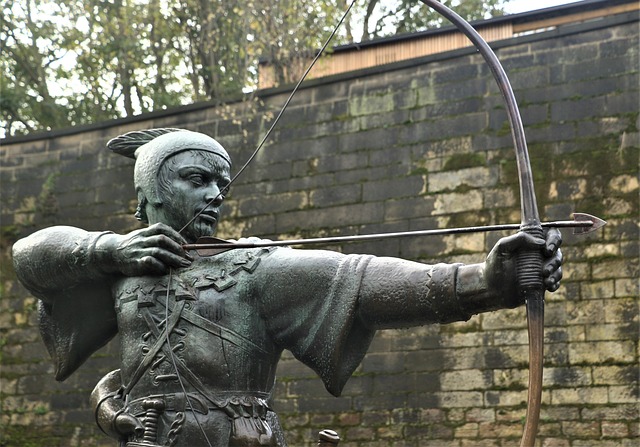
Robin Hood Legacy
Nottingham's identity is inextricably linked to the legendary medieval outlaw Robin Hood, whose tales of robbing the rich to feed the poor have captivated imaginations for centuries. The Sherwood Forest , a sprawling ancient woodland just north of the city, serves as the mythic heart of his story, home to the Major Oak —a 1,000-year-old tree said to have sheltered Robin and his Merry Men. Nottingham Castle, perched atop a sandstone outcrop, is often depicted as the seat of the Sheriff of Nottingham , Robin's notorious adversary in ballads dating to the 14th century. The city's galleries and museums showcase medieval manuscripts like the Gest of Robyn Hode , while the Nottingham Caves hint at clandestine hideouts used by outlaws. Annual events like the Robin Hood Festival bring the legend to life with archery tournaments, medieval markets, and reenactments in Sherwood Forest. The Statue of Robin Hood near Castle Gate, crafted by James Woodford in 1952, has become a beloved photo spot, depicting the outlaw with his iconic longbow. Historians debate Robin's historical authenticity, but his cultural impact is undeniable: the legend shaped Nottingham's tourism, place names, and even the green-clad uniforms of the city's Nottinghamshire Police .
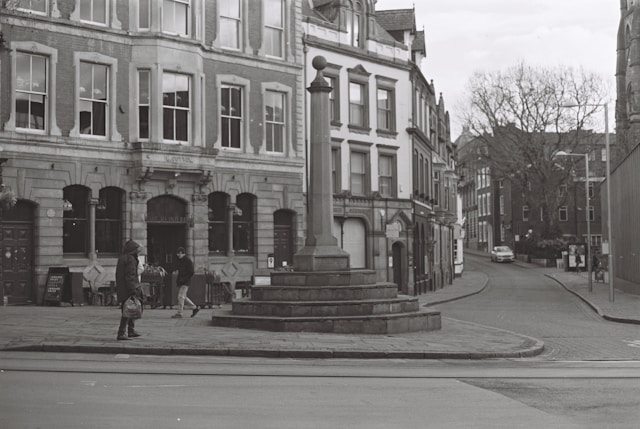
The Lace Market
The Lace Market is a historic district in Nottingham that was once the epicenter of the city's thriving lace industry . During the 19th century , this area was renowned for its innovative production techniques and high-quality lace, which were exported around the globe. Today, the Lace Market is a vibrant urban area where old industrial buildings have been transformed into creative spaces, trendy cafés, and boutique shops. The cobblestone streets and preserved brick facades evoke a sense of nostalgia, while subtle hints of the past, such as original lace patterns embedded in decorative details, can still be found. One particularly interesting aspect is the area's hidden archives , where records of lace production and business transactions from the Victorian era remain accessible to researchers. The district's transformation from a bustling industrial hub to a modern creative quarter has been carefully managed to preserve its rich heritage while fostering new artistic endeavors. The interplay of history and innovation is evident in every corner of the Lace Market, offering a unique perspective on Nottingham's industrial legacy .
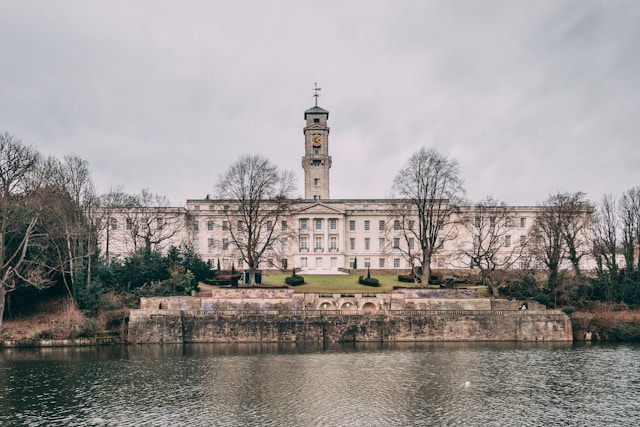
Trent Building
The Trent Building, an iconic neo-classical landmark at the heart of the University of Nottingham, stands as a symbol of academic excellence and architectural grandeur. Completed in 1928, the building was designed by Sir Morley Horder and features a majestic Portland stone façade, Corinthian columns, and a central clock tower that has become synonymous with the university's identity. Its Great Hall , adorned with oak paneling and stained-glass windows depicting allegorical scenes of knowledge, hosts graduation ceremonies and prestigious lectures, echoing the building's role in shaping generations of scholars. During World War II , the Trent Building served as a regional headquarters for air raid precautions, with its underground tunnels repurposed for emergency communications—a little-known chapter in its history. Today, the building houses the Manuscripts and Special Collections archive, safeguarding rare texts like 15th-century illuminated manuscripts and letters from D.H. Lawrence , a Nottinghamshire native. The South Entrance 's stone carvings, depicting figures from literature and science, reflect the university's interdisciplinary ethos.
Wollaton Hall
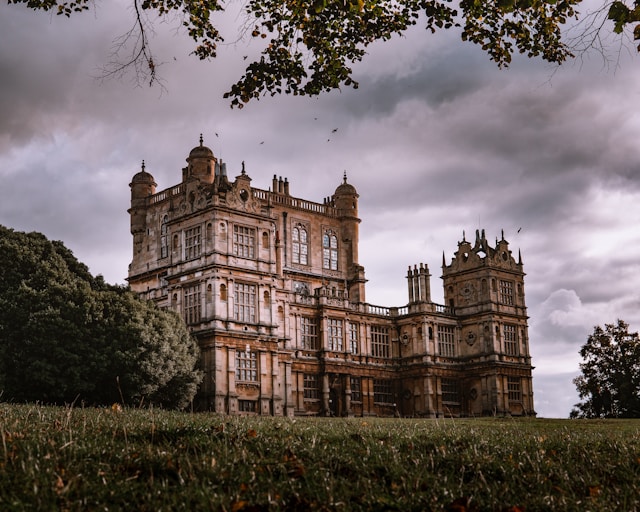
Wollaton Hall is an exquisite example of Elizabethan architecture set amid sprawling parkland on the outskirts of Nottingham. Built in the late 16th century, this grand country house is renowned not only for its imposing structure and beautiful landscaped gardens but also for its cinematic fame as the filming location for the exterior shots of Batman's Batcave in The Dark Knight Rises. The Hall's impressive facade, intricate stone carvings, and lavish interiors reflect the opulence of its original owners, who were influential figures in England's industrial and political history . Visitors can wander through opulent rooms filled with historic artifacts and portraits, and explore the extensive grounds which include a working farm and ornamental lakes. An interesting fact is that Wollaton Hall has a secret chamber once used for covert meetings during the tumultuous periods of the English Civil War , a detail that adds to its enigmatic charm. With original features meticulously preserved, the estate offers unique insights into Elizabethan life and the evolution of British aristocracy.
Ye Olde Trip to Jerusalem
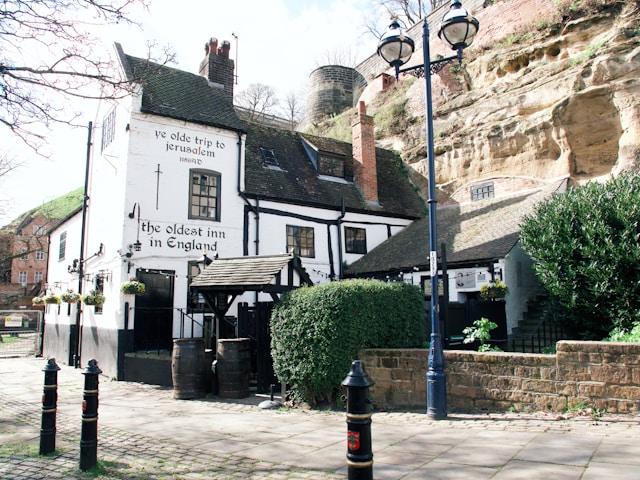
Ye Olde Trip to Jerusalem is reputedly one of the oldest public houses in England, with a history that stretches back to the 12th century. Carved into the rock beneath Nottingham Castle, the pub boasts a unique blend of myth and history that has captivated locals and visitors for centuries. Its narrow corridors and low ceilings create an intimate, almost secretive atmosphere that reflects its storied past. Legend has it that crusaders once frequented this establishment on their journeys to the Holy Land, leaving behind whispers of ancient traditions and mysterious rituals. The pub's collection of medieval artifacts , including aged wooden beams and original stonework, provides a tangible connection to the past. Its historic charm is enhanced by traditional ales and hearty fare that remain true to its long-standing heritage. The ambiance is enriched by periodic live music performances that evoke the spirit of old England. Interestingly, some claim that hidden passages beneath the pub were once used to smuggle treasures out of the city during times of conflict.