
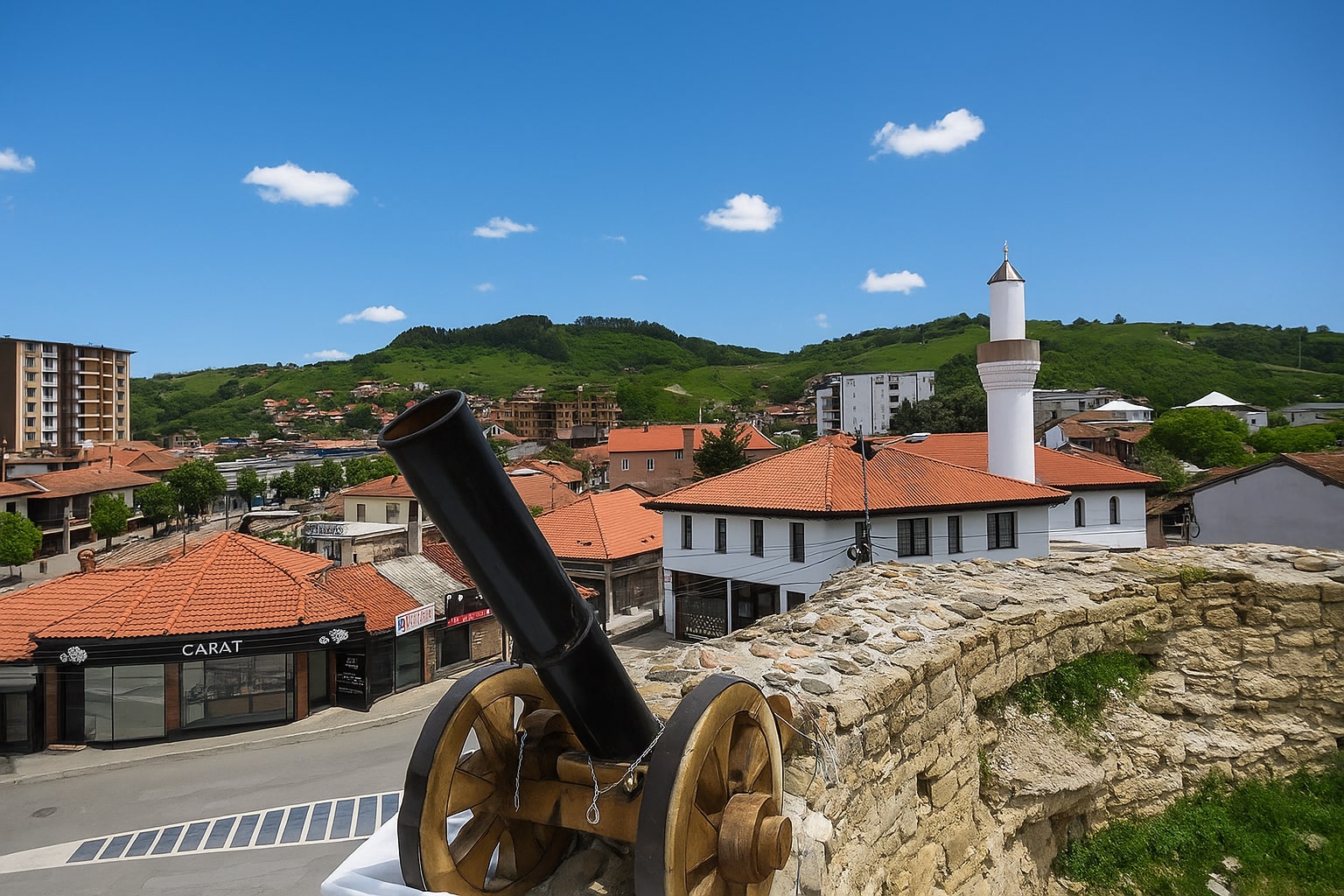
City view of Novi Pazar, Serbia

Novi Pazar

Novi Pazar runs on barter, pastry, and a talent for tailoring, with minarets and church towers sharing the skyline like colleagues. Out in the hills, Stari Ras and Sopocani hold frescoes that look recently spoken, a reminder that medieval voices travel well. In town, goldsmiths polish until reflections become tiny planets, and textile shops measure suits by instinct. Bakeries send out burek trays at dawn; kebabs land with chopped onion and a little theater. Coffee comes thick and persuasive, best negotiated in street-side armchairs. Markets stack dates, peppers, and socks with equal seriousness. A lesser-known delight: a tiny workshop where felt slippers are shaped by hand on wooden lasts, then stitched as if time were elastic. The city’s music is a mix of sevdah and laughter, and evening promenades deliver both. Novi Pazar’s welcome is practical—eat, talk, choose fabric—then philosophical: keep what fits and return for the rest.

Top attractions & things to do in Novi Pazar

If you’re searching for the best things to do in Novi Pazar, this guide brings together the top attractions and must-see places to visit in Novi Pazar. The top picks below highlight the most visited sights for first-time visitors, plus a few local favorites worth adding.

Altun Alem Mosque in Novi Pazar, Serbia

Altun Alem Mosque

Market streets open to a courtyard where a slender minaret writes a clean line against the sky and stone cools the noon air. Built in the early 16th century during the confident expansion of the Ottoman town, the mosque blends regional craft with classical proportions. The prayer hall gathers light under a dome whose geometry feels effortless and the carved portal shows the patience of local masters. Inscriptions recall benefactors and the name Altun Alem whispers of gilded ornament that once caught the sun. Through the 19th century restorers kept the building steady as neighborhoods changed around it and Friday sermons continued to anchor the week. Today its call mingles with traffic and shop talk and the coexistence feels natural rather than staged. Step back to the street and you will notice how the minaret aligns with alleys like a compass, a quiet urban design lesson delivered in a single elegant stroke.
Ads place
Ads place
Ads place
Ads place
Ads place
Church of St Peter and St Paul in Novi Pazar, Serbia

Church of St Peter and St Paul

A ring of grass sets apart one of the oldest Christian buildings in the Balkans and the round nave holds a cool, attentive light. Scholars date parts of the church to the 9th century with earlier layers hinted by reused stone, making it a rare survivor of pre Nemanji times. Here Saint Sava was likely baptized before guiding the church to autocephaly in 1219, and chronicles tie the site to assemblies where rulers heard counsel. The plan blends late antique habits with early medieval experiment, proving architecture can negotiate change without anxiety. Excavations revealed burials and fragments that now inform careful conservation and the altar still serves a parish that treats heritage as daily life rather than display. With Stari Ras and Sopocani it forms a UNESCO triad that maps beginnings across a small, generous landscape. Stand by the doorway and the breeze turns pages in nearby trees as if the past were reading along with you.
Ads place
Ads place
Ads place
Ads place
Ads place
Djurdjevi Stupovi Monastery in Novi Pazar, Serbia

Djurdjevi Stupovi Monastery

Pine and wind share the ridge and two proud towers lift above the trees like punctuation on a long sentence. Tradition credits Stefan Nemanja with founding the monastery in the late 12th century, dedicating it to Saint George while consolidating authority in the Ras heartland. Fresco fragments still glow with that early confidence and later repairs testify to endurance through fires and frontier pressure from the Ottoman march. From the terrace the view gathers valleys and roads so clearly that strategy feels self evident. Monks returned in the 21st century and the rhythm of prayer restored the building's intended voice. The complex is part of the UNESCO listed Ras and Sopocani ensemble, which frames it not as an isolated monument but as a partner in a living landscape. Visitors climb down more slowly than they came up because the towers keep company in the mind long after the pines close around the path.
Ads place
Ads place
Ads place
Ads place
Ads place
Sopocani Monastery in Novi Pazar, Serbia

Sopocani Monastery

White walls rest in a meadow where swallows edit the air and silence seems to have rehearsed for centuries. Founded under King Stefan Uros I around the 1260s, Sopocani carries one of Europe's great fresco cycles, a mature Byzantine language translated into gentle local color. The Dormition scene is often singled out by art historians for its composure, a work that can quiet even busy minds. Despite damage in hard centuries the monastery returned to life and was honored with UNESCO status alongside Stari Ras, a recognition of continuity as much as of beauty. Tombs of the Nemanji house rest here, tying prayer to dynasty and reminding visitors that policy once depended on liturgy. Afternoon shadows lengthen across the arcade and the hills accept them without drama which feels exactly right. Sopocani teaches that authority can be serene and that paint, stone, and ritual together can hold memory more tenderly than any speech.
Ads place
Ads place
Ads place
Ads place
Ads place
Stari Ras Archaeological Site in Novi Pazar, Serbia

Stari Ras Archaeological Site

Low hills fold into a quiet valley where traces of walls and churches outline the first Serbian capital in patient lines of stone. Here rulers of the Nemanji lineage shaped power in the 12th century, linking mountain routes to markets along the Ibar and beyond. Excavations reveal princely courts, early monasteries, and a town plan that learned quickly from both Byzantine and western neighbors. The wider ensemble joined the world register in 1979 when UNESCO recognized Stari Ras with nearby foundations as a rare snapshot of state building. Standing by the earthworks you can imagine messengers carrying charters that later Saint Sava would copy into a national grammar. Afternoon light warms the rubble and sheep paths keep the site untheatrical which suits a place that worked more than it posed. Ras remains a landscape of beginnings where geography taught administration and stones remember the first confident sentences of a country's story.
Ads place
Ads place
Ads place
Ads place
Ads place