
City view of Novo Mesto, Slovenia

Novo Mesto

Novo Mesto loops around a bend of the Krka like a patient thought that refuses to hurry. Archaeologists found Hallstatt era graves here, and the museum turns bronze into sentences that even kids can read without yawning. The Franciscan monastery church sets the skyline; the river below invites swimmers when summer behaves and kayak clubs when it does not. Order belokranjska pogaca still warm from the oven and a glass of cvicek, the local blend that tastes brighter than its color and loves sausage. Car factories shaped wages in the 20th century; today, the old town hosts festivals that remember both engines and violins with equal respect. Lesser known: a riverside rowing course once shared space with otters that learned the schedule and watched like officials from the reeds. Walk to Kandija Bridge for reflections that cut perfectly at dusk, then drift back through lanes where balconies whisper about laundry and radios from another decade.

Top attractions & things to do in Novo Mesto

If you’re searching for the best things to do in Novo Mesto, this guide brings together the top attractions and must-see places to visit in Novo Mesto. The top picks below highlight the most visited sights for first-time visitors, plus a few local favorites worth adding.

Dolenjska Museum in Novo Mesto, Slovenia

Dolenjska Museum

Housed in a Baroque town house near the river, the Dolenjska Museum turns the region's deep timeline into rooms that feel brisk rather than dusty. Founded in 1950, it is best known for Iron Age finds from Novo Mesto's burial fields, especially the decorated bronze situla tradition that puts the city on European maps. One gallery presents a reconstructed grave with over 100 catalogued items and careful labels; another introduces painter Bozidar Jakac with prints, palettes, and photographs. Elsewhere, a case of guild marks explains tools that shaped barrels, bells, and boots, while a panoramic model shows the town's growth across bends of the Krka. In the cellars, Roman glass shares shelves with amphora fragments, and upstairs a modest room charts local photography from plate cameras to holiday snapshots. The museum's courtyard hosts concerts in summer, and the stair's handrail is worn smooth by decades of school groups. Allow time to read the captions; the tone is measured, and the result is a narrative that treats archaeology and daily life as partners rather than rivals.
Ads place
Ads place
Ads place
Ads place
Ads place
Kandija Bridge in Novo Mesto, Slovenia

Kandija Bridge

Southwest of the core, the Kandija Bridge spans the Krka in a single confident arc, tying the Breg riverside to neighborhoods long defined by workshops and gardens. Completed in 1938, the structure belongs to the pragmatic Modernist era, its reinforced concrete concealed beneath clean profiles and low parapets. Engineers often cite a main span near 75 meters, enough to clear seasonal rises while keeping the deck close to the water's quiet. Walk the sidewalks—about 1.5 meters wide—and watch reflections smear like brushstrokes under foot. From midspan, the cathedral's tower sits neatly on the skyline and the river's bends read like commas in a paragraph of roofs. Tiles and railings show careful maintenance, with expansion joints replaced after late 20th century floods and fitted to move without noise. At dusk, joggers share space with anglers leaning on parapets where children count swans. The bridge was built as infrastructure, not icon, yet its restraint and economy have turned it into a quiet emblem of Novo Mesto's pace—direct, sturdy, and unexpectedly graceful when the river turns to mercury after rain.
Ads place
Ads place
Ads place
Ads place
Ads place
Otocec Castle in Novo Mesto, Slovenia

Otocec Castle

Downstream from the center, Otocec Castle sits on a river island in the Krka, its walls mirrored so cleanly that stone seems to float. Charters from the 13th century mention a stronghold here, later reshaped with Renaissance comforts and a park that stages long views. The place is often described as Slovenia's only castle on a river island, a claim that feels right the moment you cross the footbridge and hear water on both sides. Guides sometimes note the island's length at roughly 200 meters, a scale that keeps lawns intimate and parapets close to the river's hush. Inside, timber ceilings and tiled stoves civilize thick masonry; outside, paths loop lawns where herons work the shallows. Notice pragmatic details: low sills for hauling trunks, iron rings for mooring boats, and gun slits turned to swallow holes. At dusk the current writes a line around stone, and lamps pull the facade forward without drowning trees. The result is a meeting of defense and hospitality, a building that admits its martial past while greeting guests with the ease of a country house.
Ads place
Ads place
Ads place
Ads place
Ads place
Ragov Log Nature Reserve in Novo Mesto, Slovenia

Ragov Log Nature Reserve

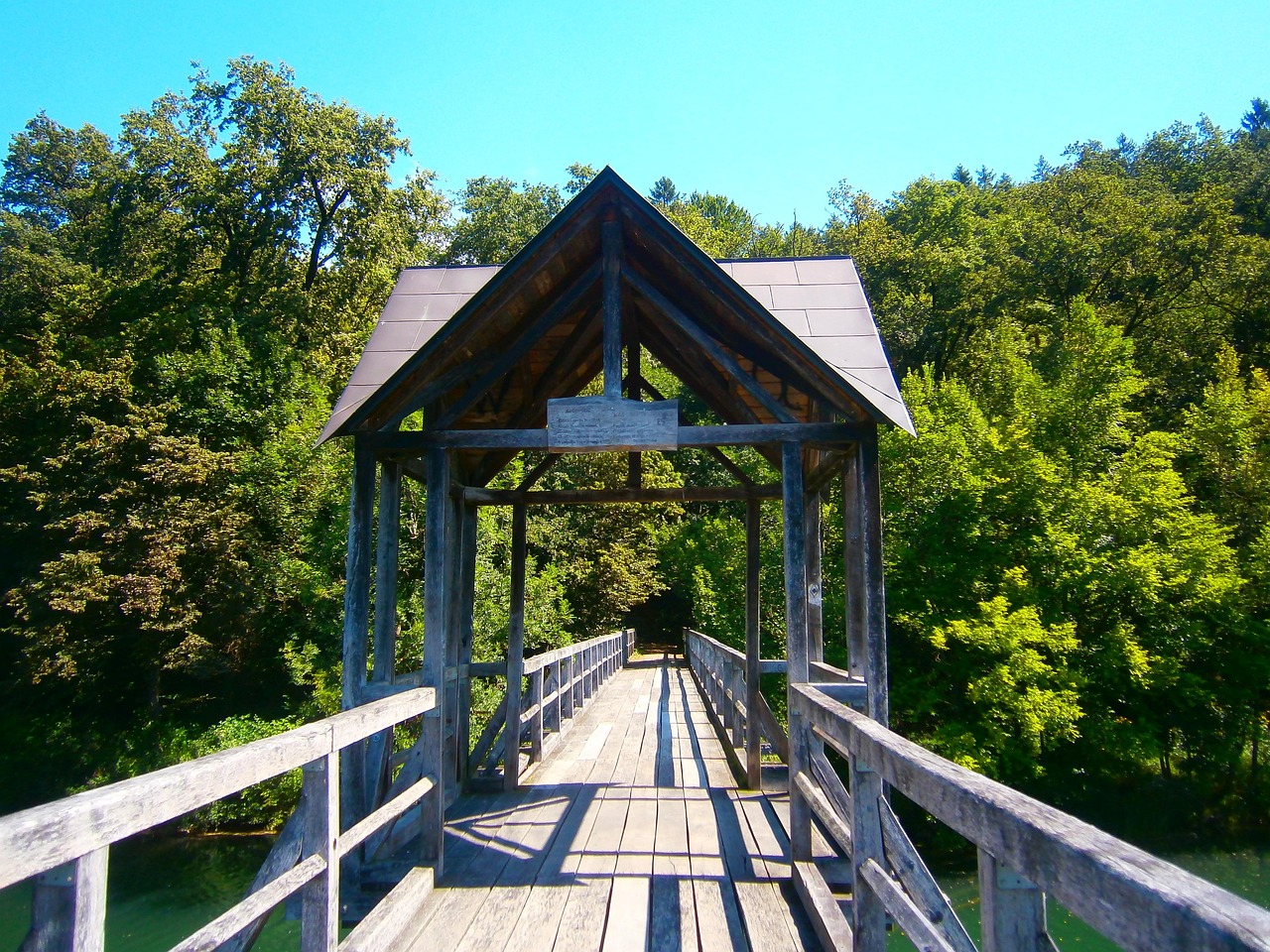
A short walk from the center, Ragov Log is a pocket of lowland forest threaded by old river channels that let Novo Mesto breathe between errands. Designated as a protected area in the 20th century, it shelters oak, hornbeam, and ash alongside damp meadows where orchids mark spring. A boardwalk loop of about 2 kilometers keeps feet dry after rain, and discreet signs note how the Krka once braided here before engineers straightened its reach. Look for a small wooden bridge rebuilt in the 1990s and for bat boxes mounted by volunteers to revive evening flights. On still mornings, the path's gravel records a soft metronome of footsteps, and the smell turns from leaf mold to river as you near the edge. Birders count dozens of species in a season; families count minutes, finding that the loop takes roughly 30 when you stop for photos. The reserve's value lies in modesty: no playgrounds or kiosks, only shade, water, and a reminder that a town's best rooms are sometimes outside, furnished by wind and the occasional fox flicking past a fern.
Ads place
Ads place
Ads place
Ads place
Ads place
St Nicholas Cathedral in Novo Mesto, Slovenia

St Nicholas Cathedral

Set above the Krka's bend, the cathedral dedicated to St Nicholas gathers nave, tower, and hillside terrace into a quiet composition that orients the old town. Parish records trace a first church to the 15th century, with a calm Baroque refit smoothing earlier Gothic lines in the 17th century. The high altar is often attributed to Andrea Pozzo, its illusionistic framing teaching the eye to accept more height than stone allows. Chapels carry marble rails that still show candle scorch, and the organ loft projects a precise, silvery tone at vespers. Look for floor slabs inset with small brass crosses marking burials, and window glass repaired in the 20th century with care for wavy panes. Step outside to the terrace and the view knits roofs, river, and vineyards into one sentence. On feast days, bells scatter gulls off the Krka and pull voices uphill; at dusk, the facade reads warmer, and the tower's shadow slides down the stair like a metronome for the town's unhurried evening.
Ads place
Ads place
Ads place
Ads place
Ads place