
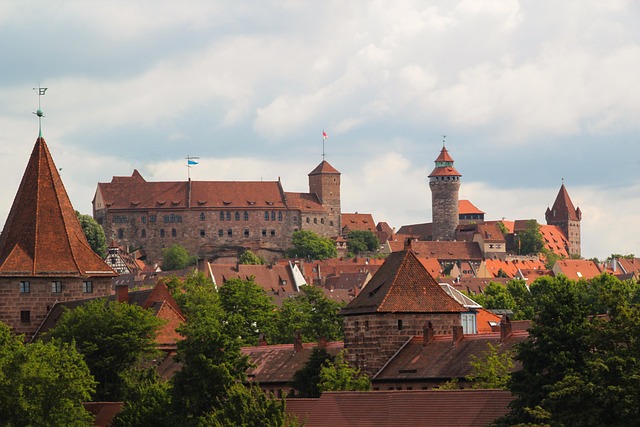
Nuremberg Castle
In Nuremberg, Germany .
More places to visit in Nuremberg
Discover more attractions and things to do in Nuremberg.
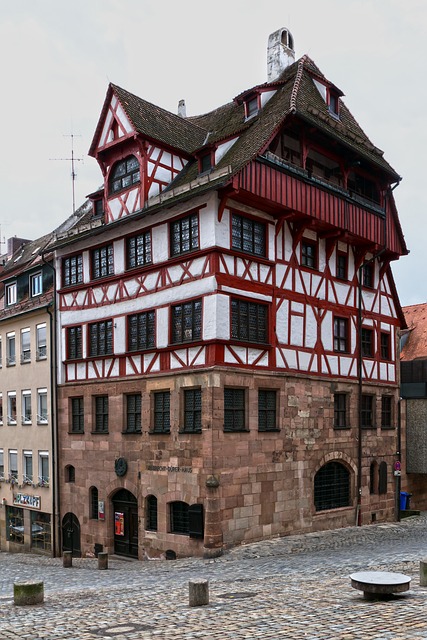
Albrecht Dürer's House
Albrecht Dürer's half-timbered home (1509–1528), a Renaissance gem , offers insights into the artist's life. The printmaking studio displays replica presses used for his Apocalypse woodcuts (1498). Costumed interpreters as Agnes Dürer demonstrate pigment grinding using lapis lazuli and malachite. The attic "Secret Chamber" recreates Dürer's perspective machine for perfect proportions. Original artifacts include his monogrammed goblet and a 1515 rhinoceros sketch based on hearsay. Interactive screens overlay infrared scans revealing hidden sketches beneath paintings. The Dürer Garden grows plants from his botanical studies, like the Turk's cap lily in "Madonna of the Iris." Temporary exhibits showcase contemporaries like Lucas Cranach. A 3D film in the cellar dramatizes Dürer's 1520 Netherlands journey. A portal to Nuremberg's artistic golden age.
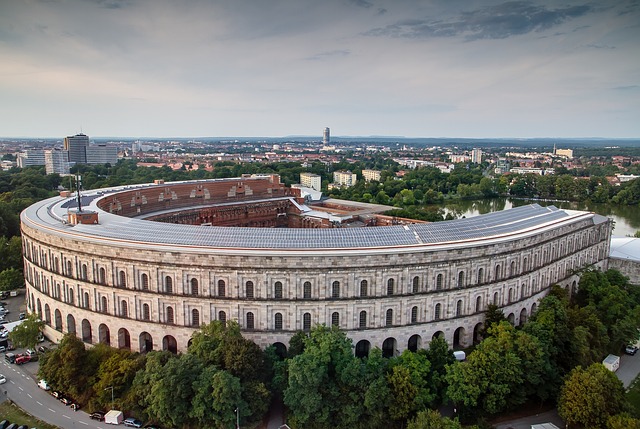
Documentation Center Nazi Party Rally Grounds
The Documentation Center, housed in the unfinished Congress Hall (1935), exposes Nuremberg's role as the "City of Nazi Rallies." The hall's U-shaped design, meant to seat 50,000, now hosts the "Fascination and Terror" exhibit with 1,900 artifacts. Original Leni Riefenstahl films show the 1934 rally's choreographed spectacle, while Albert Speer's Lichtdom (Cathedral of Light) is recreated via VR. The Zeppelin Field grandstand, where Hitler addressed 200,000, lies eroded but intact. The center's glass dagger pierces the hall's north wing, symbolizing democratic transparency. Audio testimonies from Nuremberg Trials prosecutors contrast Nazi propaganda. The Silbersee , a flooded quarry where SS dumped looted art, now serves as a memorial. Guided walks trace the 11km rally route , revealing megalomaniacal urban plans.
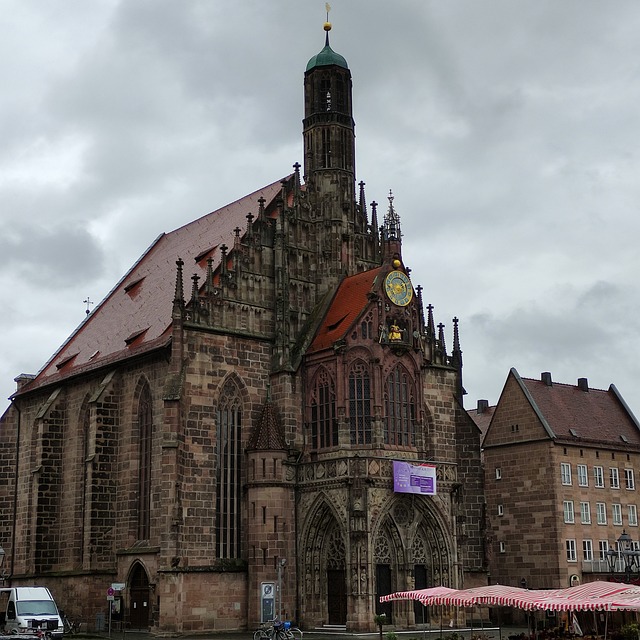
Frauenkirche
The Frauenkirche in Nuremberg, a Gothic masterpiece completed in 1361 , stands on the site of a synagogue destroyed during the 1349 pogrom ordered by Emperor Charles IV. Built as an imperial chapel, it hosted displays of the Holy Roman Empire's regalia from 1423 to 1796. The church's west facade features a Männleinlaufen clock (1509), where mechanical figures of the emperor and seven electors parade daily at noon, commemorating the Golden Bull of 1356 . Inside, the Tucher Altar (1440) showcases pre-Dürer panel paintings, while the nave's star-ribbed vaulting frames stained-glass windows from 1519 depicting saints and heraldry. The St. Michael's Tribune , a raised loft, allowed royalty to attend mass privately. Severely damaged in WWII, the church was rebuilt by 1953, with a Star of David embedded in the choir floor as a memorial to the Jewish community. Today, it hosts the annual opening of Nuremberg's Christkindlesmarkt from its balcony, blending sacred tradition with civic festivity. Visitors can admire Adam Kraft's Annunciation sculpture (1518) and attend organ concerts on the 1988 Klais organ, which echoes through the hall's Gothic acoustics. A symbol of resilience, the Frauenkirche bridges medieval splendor and modern remembrance.
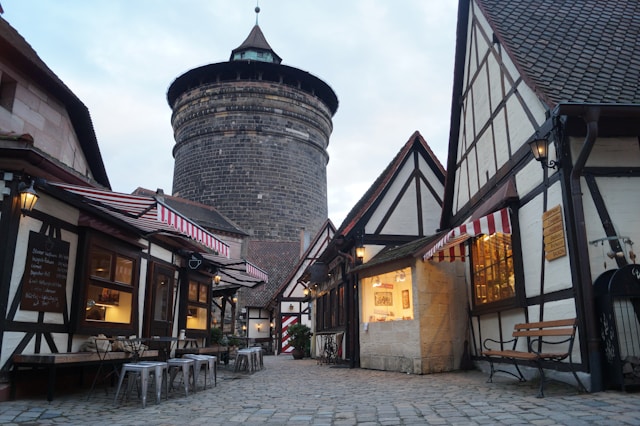
Handwerkerhof
Handwerkerhof, established in 1971 within medieval city walls , revives Nuremberg's artisan traditions. At Glockenschmiede , blacksmiths forge bells using 15th-century techniques, while Zinngiesserei pours pewter steins. The Gingerbread Bakery shapes Elisenlebkuchen with hazelnuts and honey, following a 1553 guild recipe. The Christmas Workshop carves wooden ornaments year-round, including Schwibbogen candle arches. The Puppet Theater stages Hans Sachs farces with 18th-century marionettes. Summer Craft Days feature live chainmail weaving and stained-glass soldering. The courtyard's Half-Timbered Houses (1430) survived WWII bombs, now sheltering a Medieval Tavern serving smoked beer. A living museum of Franconian craftsmanship.
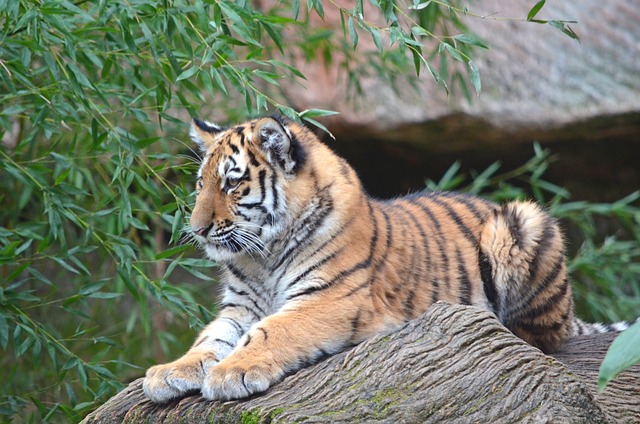
Nuremberg Zoo
Nuremberg Zoo, founded in 1912 , spans 67 hectares with 300 species in naturalistic habitats. The Dolphin Lagoon (2011) hosts daily shows with bottlenose dolphins trained via positive reinforcement . The Manatee House (2010), Europe's largest, replicates Florida springs with 26°C waters for rescued sea cows. The Gorilla Mountain enclosure features a 15-meter climbing structure, while the Snow Leopard Canyon breeds this endangered species using infrared cameras. The zoo pioneered bee-friendly landscaping , maintaining 45 hives since 1999. Kids interact with pygmy goats at the Bauernhof petting farm and explore the Fossil Cave with animatronic dinosaurs. The Aqua Park's underwater tunnel passes penguins and South American otters. Winter's Zoo Lights illuminate habitats with 500,000 LEDs. A leader in ethical animal care and conservation education.
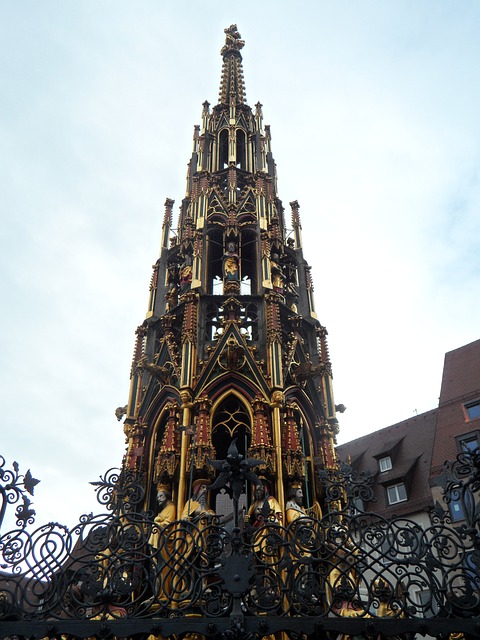
Schöner Brunnen
The Schöner Brunnen (1385–1396), a 19-meter Gothic spire mistaken for stone, is actually limestone-coated sandstone . Its 40 statues represent the Holy Roman Empire's hierarchy —electors, prophets, and the Nine Worthies. The Golden Ring , secretly added in 1902, spins on polished brass bearings for "good luck." Original 14th-century figures, damaged by pollution, reside in the Germanic National Museum ; the fountain's are 1912 replicas. The Iron Fence (1587) features 42 allegorical reliefs of virtues and vices. During WWII, the fountain was encased in concrete; its 1950 restoration used fragments found in rubble. December transforms it into a Christmas pyramid with 1,200 lights. The fountain's astronomical clock (1509) mechanism, now inoperable, once tracked planetary movements. A stone poem encircles the base: "I am called the beautiful fountain..."
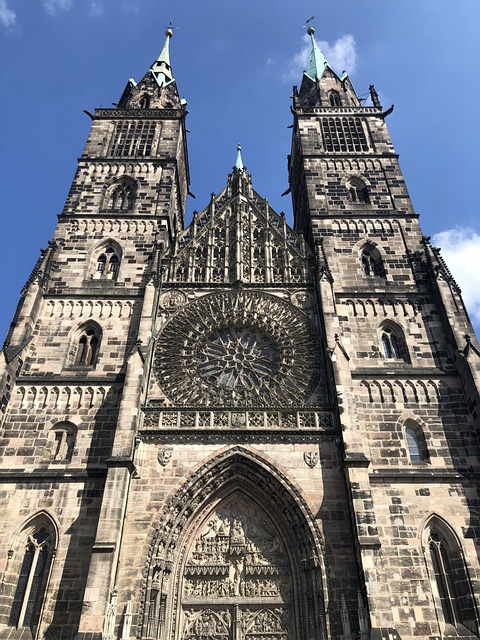
St. Lorenz Church
St. Lorenz Church, a Gothic masterpiece completed in 1477 , towers over Nuremberg with its 81-meter spire. The Angelic Salutation (1518) by Veit Stoss—a suspended wooden rosary with 49 gilded roses—miraculously survived WWII bombing in 13 crates. The Tabernacle (1496), a 20-meter stone pinnacle by Adam Kraft, depicts the Passion via 100 carved figures. The church's stained-glass windows (1440) include the Dürer Window honoring the artist's 1526 donation. The Nazarene frescoes (1818) in the choir blend medieval and Romantic styles. During the Reformation, the church became Lutheran overnight in 1525 , its Tucher Altar (1440) veiled to avoid iconoclasm. The Lorenzer Organ (2017) with 12,000 pipes performs Bach cantatas weekly. A 1945 fire destroyed the roof, but meticulous restoration using medieval blueprints revived its splendor.
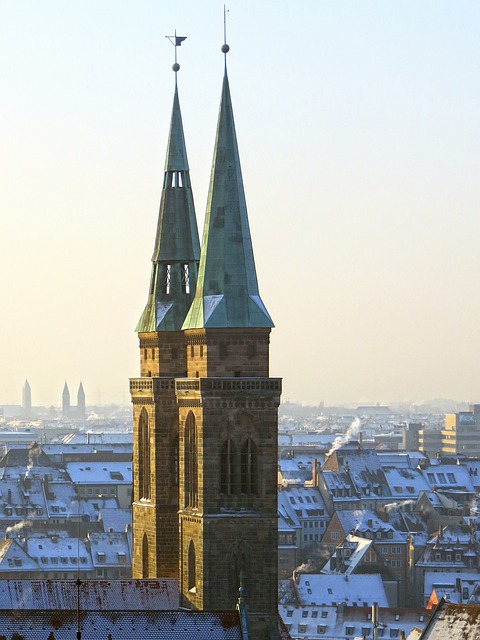
St. Sebaldus Church
St. Sebaldus Church, begun in 1225 , merges Romanesque crypts with Gothic vaults. Peter Vischer's Sebaldus Tomb (1519), a bronze shrine with 200 figures, took 11 years to cast. The Shrine of Relics (1397) holds the saint's skull fragment in a crystal orb. The church's Organ (1975) replicates a 1440 Gothic instrument, heard during Bach Cantata Weeks . The Krell Altar (1486) survived the 1945 firestorm, its charred panels displayed as a peace memorial. The St. Sebaldus Legend Windows (1379) depict miracles like ice-melting prayers. The south portal (1300) shows the Dance of Death , warning against plague. Climb the north tower (1275) for views of Dürer's neighborhood. A testament to faith's endurance through war and reformation.
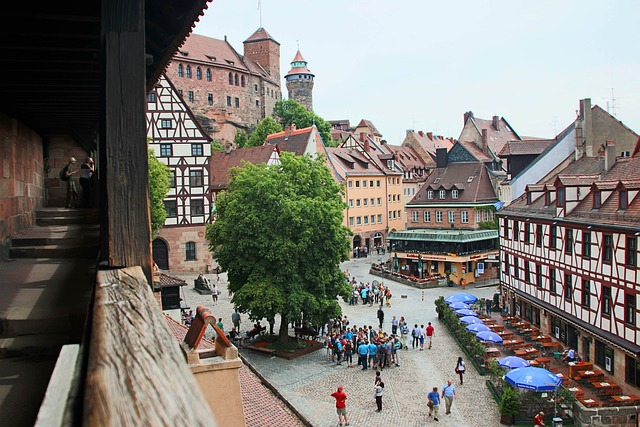
Tiergärtnertor Square
Tiergärtnertor Square, named after the medieval animal garden (1425), blends Renaissance and Gothic architecture. The Pilate House (1489), with its iconic oriel window, inspired Dürer's perspective studies. The square's Historical Mile plaque details Nuremberg's role in the Peace of Westphalia (1648). Summer Bardentreffen festival stages global folk music beside the Dürer Monument (1840). The Tiergärtnertor Tower (1516) houses a micro-museum on city defenses. Winter transforms the square with a Feuerzangenbowle stall, serving rum-soaked sugar cones. The Albrecht Dürer Society hosts plein-air painting workshops here, echoing the master's methods. A gateway to Nuremberg's creative legacy.