
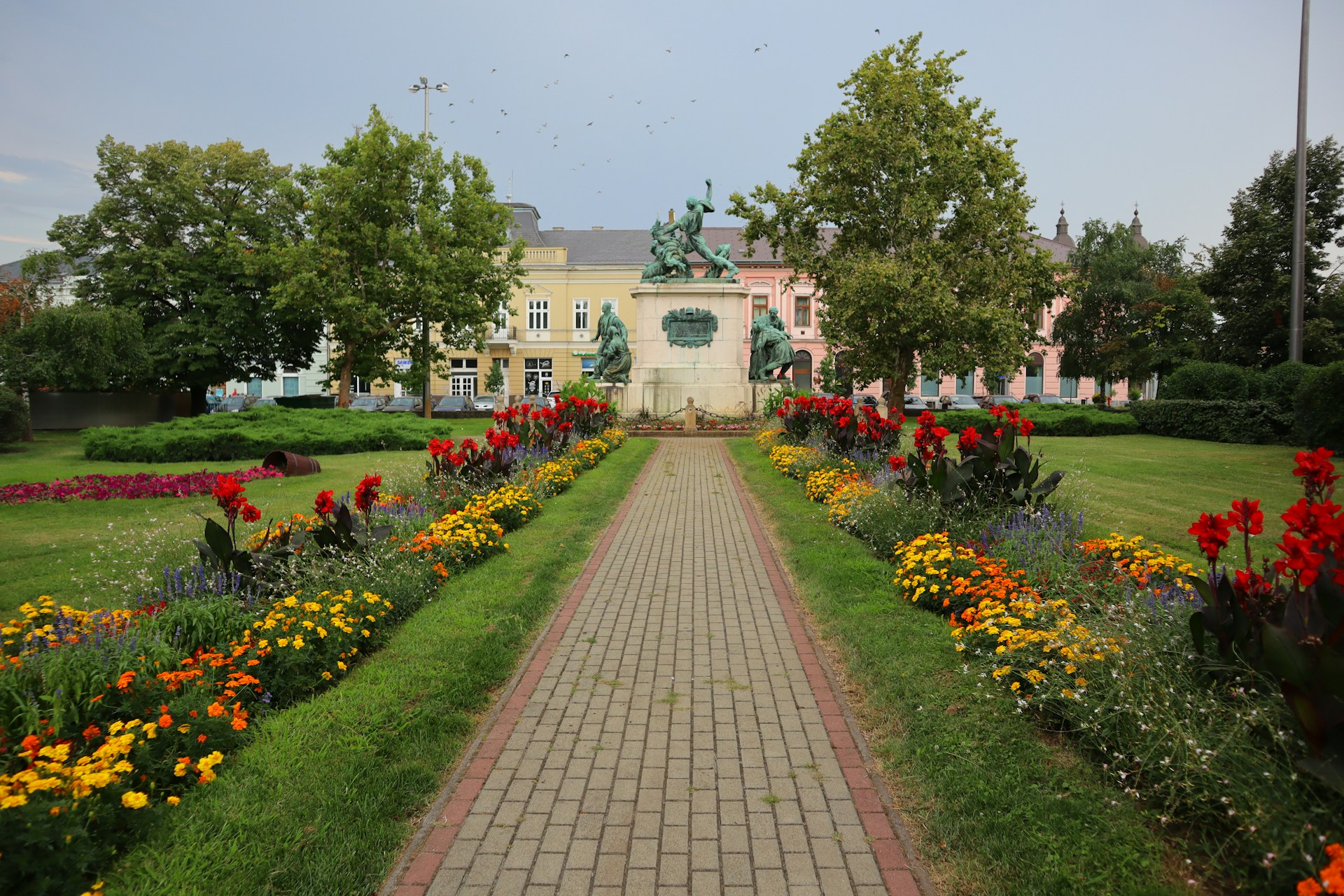
City view of Nyíregyháza, Hungary

Nyíregyháza

Nyíregyháza, a welcoming city in eastern Hungary, is a gateway to regional traditions and nature. Start in the leafy downtown, where the grand City Hall and imposing Greek Catholic Church overlook fountains and lively cafés. The acclaimed Nyíregyháza Zoo, one of the largest in Central Europe, features a tropical greenhouse, safari park, and rare species. Relax at Sóstógyógyfürdo Spa’s thermal lakes and forest trails, then visit the Open-Air Museum to explore historic farmhouses and folk traditions from the region. Summer’s Vidor Festival transforms the city with street theater and concerts, while markets brim with fresh produce and Szabolcs apples. Hearty goulash, plum pálinka and chimney cake warm winter evenings. Whether for family fun, cultural events, or natural retreats, Nyíregyháza offers something for every traveler in Hungary’s east. For a dose of adventure, try the Sóstó Adventure Park’s treetop obstacle courses and ziplines among the pines.

Top attractions & things to do in Nyíregyháza

If you’re searching for the best things to do in Nyíregyháza, this guide brings together the top attractions and must-see places to visit in Nyíregyháza. The top picks below highlight the most visited sights for first-time visitors, plus a few local favorites worth adding.

Andras Josa Museum in Nyíregyháza, Hungary

Andras Josa Museum

Founded in 1868 and named for the pioneering physician and archaeologist Andras Josa, this museum is the cultural heart of Nyiregyhaza. Its archaeological collection includes treasures from the Bronze Age and fascinating finds from ancient Slavic and Magyar settlements. The ethnographic galleries highlight Hungarian folk costumes, artisanal crafts, and unique religious artifacts from the Szabolcs-Szatmar-Bereg region. In the natural history wing, visitors encounter a rare mammoth skeleton and learn about the area’s geological past. Temporary exhibitions regularly feature contemporary art and photography, while educational workshops make history accessible to all ages. The elegant neoclassical building is itself a landmark, and its archives preserve documents vital to regional research. A surprising gem is the museum’s garden, home to centuries-old trees and an open-air sculpture collection. This institution is truly a treasure trove for culture lovers.
Ads place
Ads place
Ads place
Ads place
Ads place
Greek Catholic Cathedral in Nyíregyháza, Hungary

Greek Catholic Cathedral

The Greek Catholic Cathedral, completed in 1912, is the spiritual home of Nyiregyhaza’s vibrant Greek Catholic community. Its remarkable Neo-Byzantine design stands out with soaring domes and golden mosaics, while the intricate iconostasis inside is a masterpiece of sacred art. The church’s origins date to 1792, when the congregation was first established; today, the cathedral holds relics of Bishop Miklos Orosz and rare icons brought from the Carpathian Mountains. Annual processions and feast days draw worshippers from all over eastern Hungary, and the cathedral’s choir is renowned for its moving liturgical music. One curious tradition is the blessing of medicinal herbs on the feast of the Dormition. The bell tower, visible from afar, houses bells that ring out for daily prayers and special events. The cathedral embodies both religious devotion and architectural splendor in the city’s historic heart.
Ads place
Ads place
Ads place
Ads place
Ads place
Nyiregyhaza Zoo in Nyíregyháza, Hungary

Nyiregyhaza Zoo

Set in the tranquil Sosto forest, Nyiregyhaza Zoo is renowned across Hungary for its exceptional diversity, hosting over 500 animal species on more than 30 hectares of wooded landscape. Since opening in 1974, the zoo has grown to include everything from majestic white Bengal tigers to playful ring-tailed lemurs and a thriving population of Komodo dragons. The innovative Green Pyramid houses tropical plants and animals in a massive, climate-controlled glass structure, and the Polar Region allows visitors to watch seals and penguins swim year-round. Conservation is central here, and the zoo regularly participates in European breeding programs for endangered species. Few know that the zoo’s aquarium is the largest in the country, featuring both freshwater and marine habitats. Children love the African Savannah playground, and the annual “Night at the Zoo” events bring guests closer to nocturnal creatures. It’s a rare blend of wildlife, adventure, and education.
Ads place
Ads place
Ads place
Ads place
Ads place
Sosto Lake in Nyíregyháza, Hungary

Sosto Lake

Sosto Lake has been the recreational soul of Nyiregyhaza since the 18th century, famed for its mineral-rich, slightly salty waters believed to have therapeutic effects. Surrounded by ancient oak woods and extensive walking trails, the lake is a haven for swimmers, rowers, and those seeking peaceful reflection. The lake’s banks are dotted with beach resorts, and in summer, open-air concerts and cultural festivals draw locals and tourists alike. Adjacent to the lake is the Sosto Bath, a historic spa complex with thermal pools dating back to 1911. Anglers can try their luck fishing, while birdwatchers often spot herons and rare waterfowl. Winter transforms the shoreline into a snowy retreat for ice skating and festive markets. Sosto Lake’s legend says its waters once healed wounded soldiers, a belief that still attracts visitors today. It remains one of the city’s most cherished gathering places, no matter the season.
Ads place
Ads place
Ads place
Ads place
Ads place
Sosto Open-Air Museum in Nyíregyháza, Hungary

Sosto Open-Air Museum

Opened in 1979, the Sosto Open-Air Museum showcases the rural heritage of northeastern Hungary, transporting visitors back to the 18th and 19th centuries. Over 30 traditional buildings—including farmhouses, windmills, wooden churches, and village schools—have been painstakingly relocated and restored. Craftsmen in period dress demonstrate age-old trades such as blacksmithing, weaving, and traditional bread baking. Festivals throughout the year feature folk music, dance, and food, recreating the bustling life of rural communities. A fascinating detail is the on-site wooden belfry, whose original bell was cast in 1806 and still rings during special events. Children enjoy the hands-on workshops, while adults appreciate the authentic interiors and detailed exhibitions on family life, seasonal customs, and religious traditions. The museum’s scenic grounds are especially popular in spring, when wildflowers bloom and guided tours unveil stories of local legends and superstitions.
Ads place
Ads place
Ads place
Ads place
Ads place