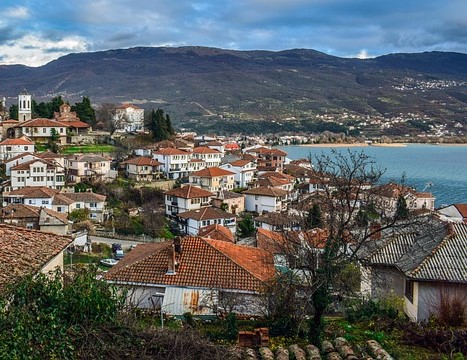
City view of Ohrid, North Macedonia

Ohrid

Ohrid is a lakeside classic where Byzantine domes lean toward water that looks hand polished. Climb to Samuels Fortress for a panorama of terracotta roofs and cypresses. Follow lanes to Saint John at Kaneo, perched above blue ripples that seem to hum. Fishermen land trout, grills answer with thyme and lemon, and bread appears that insists on olive oil. Artisans craft Ohrid pearls with steady patience and family lore. Take a boat to the Bay of Bones, a reconstructed stilt village that proves prehistory liked views. Swim at small beaches, rent bikes along the promenade, and search for frescoes that glow like banked embers. At dusk, the ancient theater hosts concerts, and alleys fill with music and soft laughter. Bakeries slide trays of kadaif, and cafes pour coffee that encourages long conversations. Ohrid is contemplative and social at once, a town where a quiet morning can end with a midnight toast by the quay.

Top attractions & things to do in Ohrid

If you’re searching for the best things to do in Ohrid, this guide brings together the top attractions and must-see places to visit in Ohrid. The top picks below highlight the most visited sights for first-time visitors, plus a few local favorites worth adding.

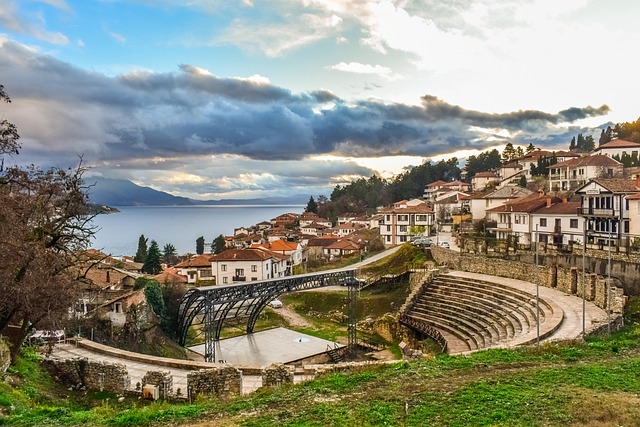
Ancient Theatre of Ohrid in Ohrid, North Macedonia

Ancient Theatre of Ohrid

Carved into the slope just below the upper gate, this semicircular bowl faces the lake breeze and gathers sound with effortless grace. Early builders understood acoustics instinctively; a whisper at center stage still rises to the back rows without strain. The first phase belongs to the Hellenistic era, when drama and civic ritual knit communities together, later adapted under Roman administration to new tastes. Centuries of neglect and burial preserved the outlines until modern excavations revealed the seats, passages, and stone inscriptions. Summer performances return living voices to the orchestra, proving that architecture can store memory as precisely as script. Set between the fortress and old neighborhoods recognized by UNESCO, the theater explains how topography shaped public life. Arrive before dusk and watch swallows loop in the glowing air; the city becomes a backdrop, and the stage turns into a lens on antiquity. A modest skene once framed actors against the sky, and that horizon still feels like part of the set.
Ads place
Ads place
Ads place
Ads place
Ads place
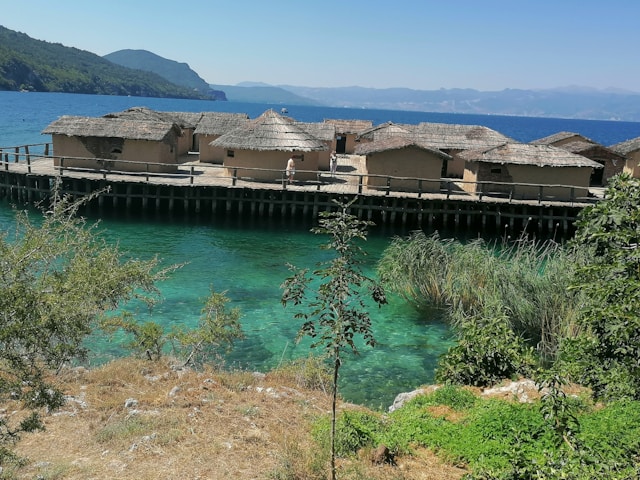
Bay of the Bones Museum in Ohrid, North Macedonia

Bay of the Bones Museum

A timber walkway crosses clear water to a ring of stilted huts, a careful reconstruction of a prehistoric lakeside settlement. Below, divers document hundreds of stakes and artifacts that once supported dwellings above winter waves and spring floods. Exhibits explain how families managed storage, fishing, and ritual on platforms engineered for resilience during the Bronze Age and Iron Age. Tools, ceramics, and bone ornaments echo gestures of daily life: grinding grain, mending nets, telling stories by firelight. The museum pairs experiential architecture with research, translating underwater archaeology into tangible space through experimental archaeology. Scholars compare the site to Alpine pile-dwellings, noting convergences in craft and climate. Step back onto the deck and the wind sounds like reeds, a reminder that innovation here began with water and wood. Core samples track the paleoenvironment, tying household rhythms to long changes in lake levels.
Ads place
Ads place
Ads place
Ads place
Ads place
Church of St John at Kaneo in Ohrid, North Macedonia

Church of St John at Kaneo

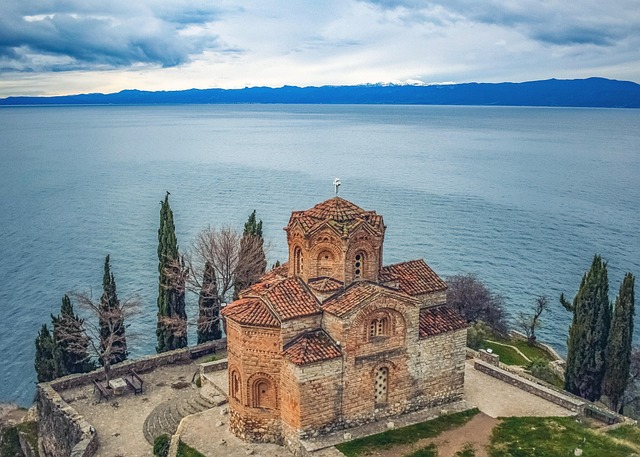
Perched on a rocky headland above the water, this cliffside church seems to float between lake and sky as fishing boats stitch quiet paths below. From the terrace, roofs and cypresses step down to the shore, and the evening light folds into the bricks with a gentle, burnished calm. Inside, fragments of painting recall a refined theological grammar shaped by artisans who traveled across the Balkans carrying pigments and stories. Scholars often link the plan and brickwork to the 13th century, when Ohrid was a crossroads for Byzantine culture and local monastic schools. The church's compact plan follows an inscribed-cross type adapted to the cliff, while its program of iconography reflects an Orthodox synthesis of text and image. Stand at the edge and follow the arc of headlands toward the national park; on clear days the high ridge of Galicica reads like a stone horizon. At sunset the lake mirrors the apse, and the bell's small cadence drifts over Kaneo's boats, tying prayer, landscape, and daily labor into a single line of memory. Even in winter, fishermen pause below to cross themselves, a gesture that binds work to worship.
Ads place
Ads place
Ads place
Ads place
Ads place
Church of St Panteleimon at Plaosnik in Ohrid, North Macedonia

Church of St Panteleimon at Plaosnik

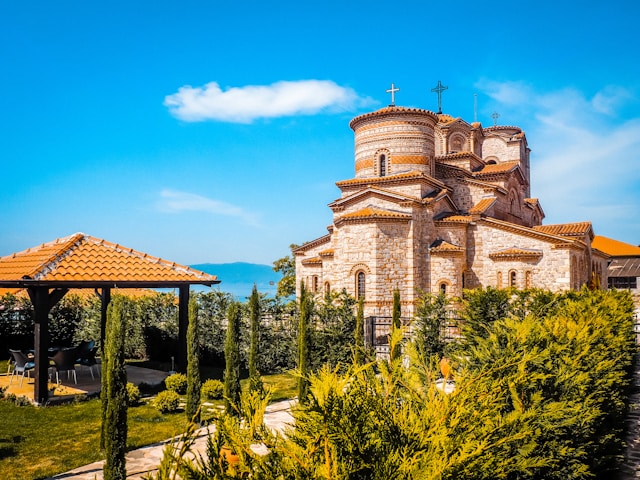
On a high terrace above the lake, a monastic complex rises where teaching once turned language into a tool for mission and community. Here St Clement, student of the apostles to the Slavs, trained clergy and scribes in the 9th century, giving literacy to a region on the edge of empires. Archaeology at Plaosnik reveals workshops, mosaic floors, and domestic spaces that tie study to daily craft. The present church incorporates evidence from earlier foundations, adopting Byzantine principles while using local stone in contemporary ways. Pilgrims linger along the colonnade reading inscriptions, and students debate alphabets that predate printing by centuries. Nearby finds reference early Glagolitic practice, stitching classrooms to missions that carried letters along the lakes. As evening falls, the terrace turns pink, and the bell marks time over classrooms that never fully closed.
Ads place
Ads place
Ads place
Ads place
Ads place
Church of St Sophia in Ohrid, North Macedonia

Church of St Sophia

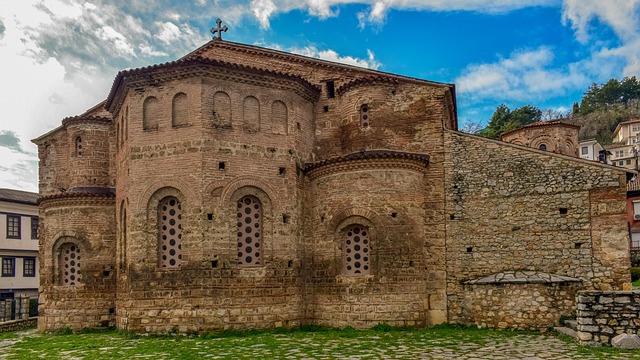
Behind a restrained brick exterior, a cool interior opens like a book of light, and frescoes slowly emerge as your eyes adjust to the nave. Iconographers layered blues, cinnabars, and golds to build a doctrinal cosmos that still feels intensely human in gesture and gaze. Many scholars date the core to the 11th century, a period when Ohrid served as a metropolitan see under Byzantine authority. Later conversion to a mosque during the Ottoman era altered use yet protected much of the structure, a paradox that history records with quiet irony. Conservation has stabilized wall paintings while preserving their patina, and the building's acoustics now host measured concerts that respect the space. A rare inscription notes the patron's office, a clue to the liturgical politics of the time. Pause beneath the dome and listen; the room seems to hold a breath taken a thousand years ago.
Ads place
Ads place
Ads place
Ads place
Ads place
Kaneo Cliff Path in Ohrid, North Macedonia

Kaneo Cliff Path

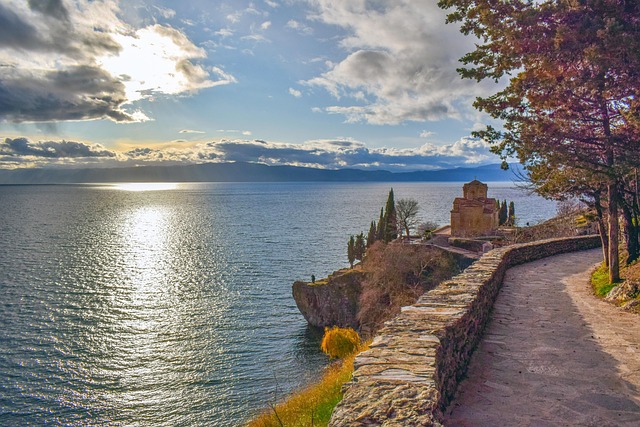
A narrow walkway traces the base of the cliffs between rock and water, linking tiny coves and overlooks with a steady, human scale. Engineers stabilized sections without scarring the stone, so the route feels organic, like a footpath that learned to float. Swallows swing beneath overhangs as fishermen idle past, and reflections fracture into moving geometry along the boards. The path connects neighborhoods to the church headland, turning shoreline into public room. Even at noon there is shade, and in late light the cliffs warm to copper. Look downslope for the layered colors of the lake, a quiet lesson in limnology; look upslope for old quarry cuts and patches of maquis scrub. Discrete cantilever frames and low boardwalk rails keep vistas open while protecting the flora. Walk unhurried and the route becomes a primer in landscape design as much as a promenade.
Ads place
Ads place
Ads place
Ads place
Ads place
Old Bazaar and Cinar Square in Ohrid, North Macedonia

Old Bazaar and Cinar Square

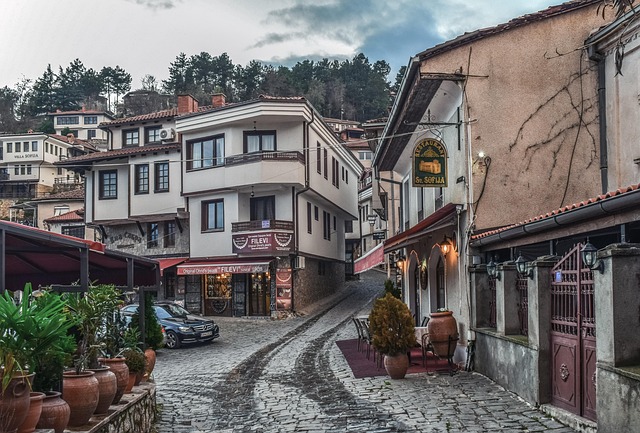
Under the broad plane tree known as the Cinar, market life radiates through lanes where goldsmiths, cobblers, and coffee share the shade. The square acts as both compass and stage: people meet, news circulates, and festivals spill into side streets. Ottoman-era proportions govern the storefront rhythm, while contemporary makers exchange techniques with inherited trades. Epigraphs and motifs reveal a long conversation between local craft and wider Ottoman markets, alive in small workshops and seasonal fairs. The tree itself is a veteran - likely a venerable Platanus - its crown pruned by time and weather, sheltering debates about football, fishing, and politics. Look closely at woodwork that borrows from Macedonian Revival houses, and at small courtyards that cool the summer heat. By evening the square hums with conviviality, a civic ritual that renews the city one conversation at a time. Inside the arcades, old guilds names still cling to signboards, stitching memory to daily trade.
Ads place
Ads place
Ads place
Ads place
Ads place
Robev House in Ohrid, North Macedonia

Robev House

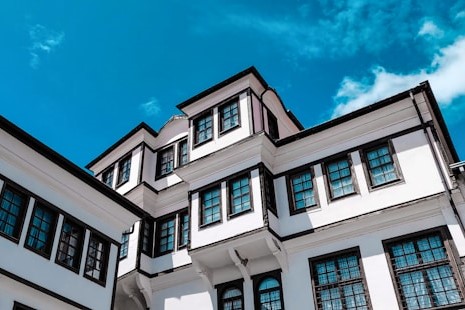
Two timbered wings step out above the lane, their overhanging windows surveying the slope with calm self-assurance. Built for a merchant family in the 19th century, the residence reflects Macedonian Revival taste: whitewashed walls, dark carved beams, and rooms arranged for trade and hospitality. Inside, ceilings flower into rosettes while cupboards hide secret niches for ledgers, letters, and heirlooms. Today the building serves as a museum, exhibiting jewelry, woodcarving, and epigraphy that map Ohrid's ties along Adriatic and Balkan routes. Look for inscriptions that link local workshops to wider Ottoman markets, and a staircase whose geometry demonstrates practical elegance. Curators also spotlight master carpentry - mortise joints, inlay, and delicate shutters that temper summer sun. Trade with coastal merchants financed many embellishments you see in paneling and floors. Stand at an upstairs window and the city unfolds like a ledger of lives balanced across generations. Even the courtyard well keeps a cool register of seasons.
Ads place
Ads place
Ads place
Ads place
Ads place
Samuel Fortress in Ohrid, North Macedonia

Samuel Fortress

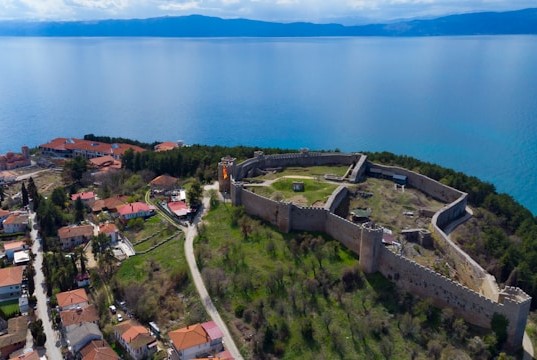
Stone ramparts stride over the ridge above Ohrid, their crenellations cutting the wind as the lake flashes far below. Paths follow the contours to gates and towers where sentries once read signals from smoke and fire. Archaeology shows earlier layers beneath the current walls, but the strongest imprint belongs to Tsar Samuel, whose realm challenged Constantinople in the 10th-11th century. From the highest tower the view is encyclopedic: city roofs, monasteries, and the long silver of the shore framed by Galicica. Masonry coursing reflects Byzantine techniques adapted to local limestone, a practical synthesis that kept the fortress serviceable for centuries. Today, restored walkways turn the military circuit into a public promenade, and wayfinding makes the hill read like an acropolis above the harbor. Stay for the shifting color of evening; the stones absorb warmth, and history feels briefly present enough to touch. After dark, discreet lighting traces the curtain-walls, mapping the geometry of defense in lines of amber.
Ads place
Ads place
Ads place
Ads place
Ads place
Springs of Saint Naum in Ohrid, North Macedonia

Springs of Saint Naum

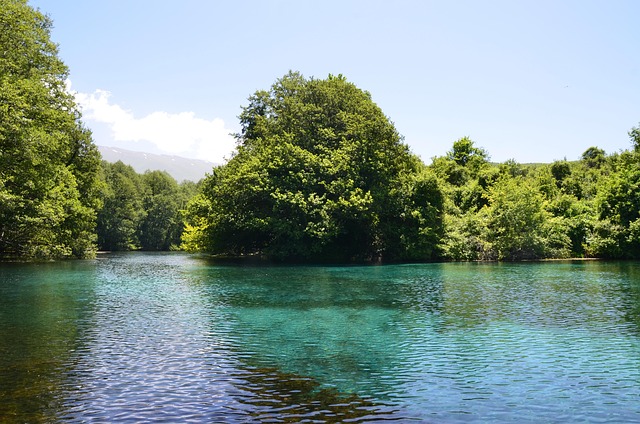
Beyond the monastery, a glassy lagoon gathers mountain water into channels so clear that boats seem to hover in air. Rowers use long poles to slide silently, and the lakebed moves in slow scrolls of pale sand. This source is a classic karst system, filtered through limestone under the massif of Galicica, which keeps the flow cold and remarkably transparent. Water plants write cursive lines beneath the hull, and kingfishers flash along the reed beds like chips of enamel. Guides point to places where sand boils in silver bursts, each bubble a tiny meter of subterranean pressure from the aquifer. Sit still, and the current carries your reflection downstream like a traveling thought. At dawn, suspended sediment glows softly in the first light, and every ripple reads like handwriting across the channel. Herons lift from the shallows with unhurried authority.
Ads place
Ads place
Ads place
Ads place
Ads place