
City view of Olympia, Greece

Olympia

Olympia, birthplace of the ancient Olympic Games, nestles amid the Alfeios and Kladeos rivers in the fertile plains of Elis. The Archaeological Site’s Temple of Zeus once housed Phidias’s colossal chryselephantine statue—one of the Seven Wonders of the Ancient World—now represented by its marble pedestal and museum fragments. The original stadium, with its stone starting blocks and tiered bleachers, still echoes the footfalls of ancient athletes. Excavations since 1875 have unearthed bronze votive offerings, the Nike of Paionios sculpture and carved sports equipment. Every four years, the Olympic flame is rekindled here in a ceremony honoring Hestia’s sacred hearth. Nearby olive orchards and citrus groves evoke the pastoral backdrop where ritual processions wreath laurel treasuries. Olympia’s blend of mythic athletic heritage, classical archaeology and bucolic surroundings offers visitors a profound link to Greece’s enduring legacy of sport and ritual.

Top attractions & things to do in Olympia

If you’re searching for the best things to do in Olympia, this guide brings together the top attractions and must-see places to visit in Olympia. The top picks below highlight the most visited sights for first-time visitors, plus a few local favorites worth adding.

Ancient Stadium in Olympia, Greece

Ancient Stadium

Carved into a gentle valley slope, the Ancient Stadium at Olympia hosted footraces and pentathlon events of the original Olympic Games starting in 776 BC. The stadium’s straight 192-meter track, measuring 600 Greek feet, was flanked by stone seating accommodating up to 45,000 spectators. At the starting line, well-preserved stone starting blocks reveal how athletes positioned their feet for explosive sprints. Roman Emperor Hadrian ordered restorations in the 2nd century AD, adding marble revetments and seating tiers. Archaeological surveys beginning in 1875 by the German Archaeological Institute unearthed ceramic oil lamps and commemorative statues of Olympic victors. Visitors today walk the length of the track and ascend vaulted tunnels beneath the stands, immersing themselves in the enduring spirit of athletic competition and sacred tradition that defined ancient Greece.
Ads place
Ads place
Ads place
Ads place
Ads place
Archaeological Museum of Olympia in Olympia, Greece

Archaeological Museum of Olympia

Inaugurated in 1982 and designed by architect Patroklos Karantinos, the Archaeological Museum of Olympia houses Greece’s richest collection of ancient artifacts. Its centerpiece, the marble Hermes of Praxiteles, attributed to the 4th-century BC sculptor Praxiteles, exemplifies classical grace. The museum also showcases the massive Pediment of the Temple of Zeus (c. 460 BC), depicting the battle of Lapiths and Centaurs in high relief. Climate-controlled galleries protect over 25,000 artifacts, including geometric pottery, bronze statues, and Roman mosaics. A major renovation in 2004 expanded exhibition halls and added interactive displays tracing the history of the Pythian Games. Visitors engage with multimedia presentations on the Olympic flame’s journey, gaining a comprehensive narrative of Olympia’s religious, athletic, and artistic legacy.
Ads place
Ads place
Ads place
Ads place
Ads place
Philippeion in Olympia, Greece

Philippeion

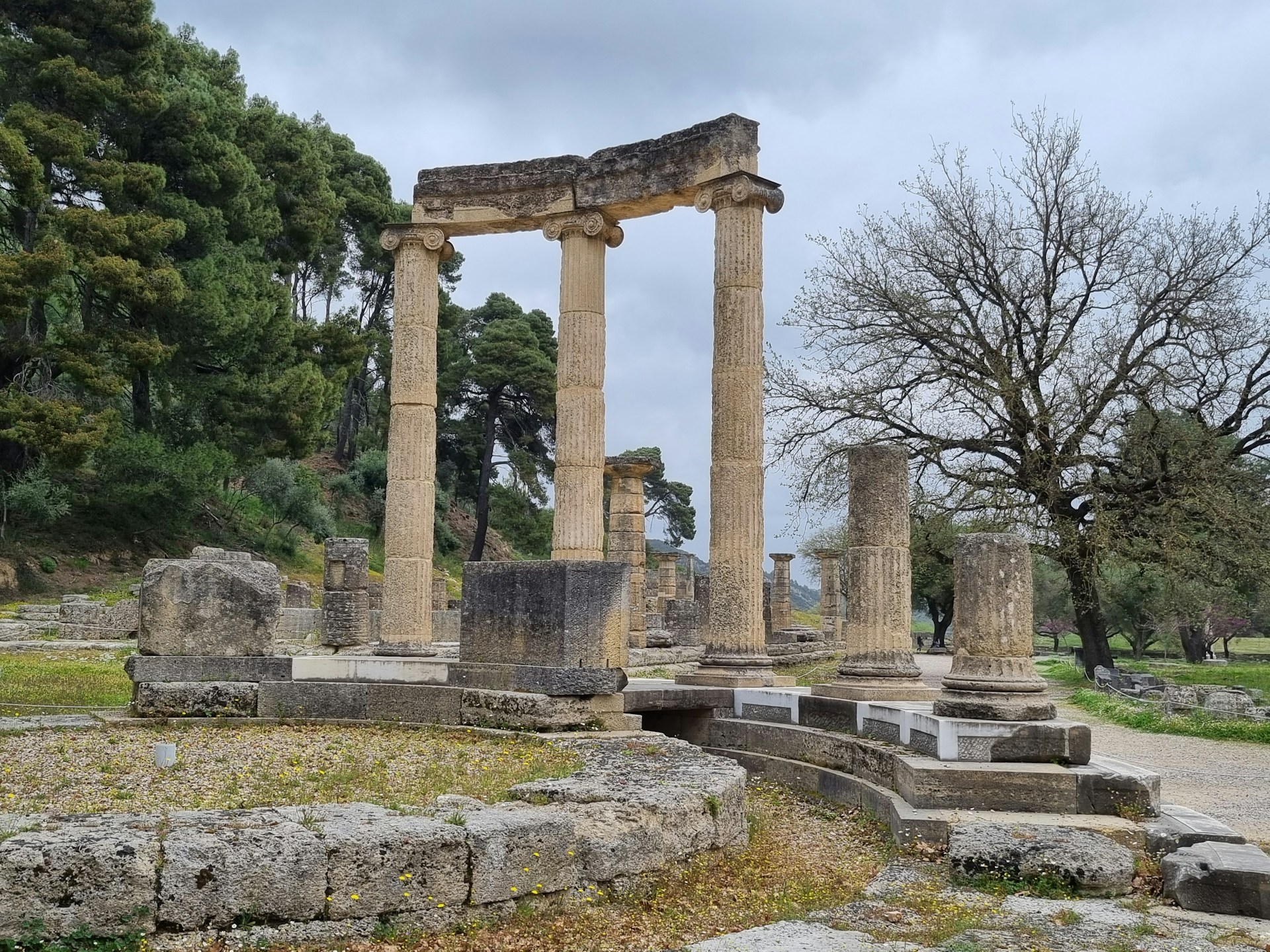
Located near the Temple of Hera, the Philippeion is a unique circular monument erected in 338 BC by Philip II of Macedon to commemorate his decisive victory at Chaeronea. This elegant tetrastyle Ionic memorial once housed gold and ivory statues of Philip’s family, including Alexander the Great and his relatives, symbolizing the unity of the Argead dynasty. The Philippeion stands on a terraced platform accessed via eight carved marble steps, oriented to align with the sanctuary’s axial plan. Excavations led by the Greek Archaeological Service in 1881 uncovered sculpted friezes and a finely preserved mosaic floor depicting laurel wreaths entwined with mythic imagery. Column drums retain traces of original polychrome paint, hinting at Hellenistic aesthetic innovation. Visitors traverse a raised walkway around its base, envisioning royal ceremonies beneath the open rotunda and appreciating its lasting testament to Macedonia’s cultural legacy.
Ads place
Ads place
Ads place
Ads place
Ads place
Sanctuary of Zeus & Temple of Zeus in Olympia, Greece

Sanctuary of Zeus & Temple of Zeus

Perched on the western bank of the Alpheios River, the Sanctuary of Zeus at Olympia comprised the monumental Temple of Zeus, erected between 472–456 BC under the master builder Libon of Elis. Dedicated to the king of gods, its colossal chryselephantine statue of Zeus by sculptor Phidias was counted among the Seven Wonders of the Ancient World. This hallowed precinct also hosted the inaugural Olympic Games in 776 BC under the sacred truce, with the temple marking the culmination of the Greek athletes’ procession along the Sacred Way. The Doric colonnade once soared with thirteen columns, some still standing at over six meters high, each decorated with sculpted metopes depicting the labors of Hercules. Roman Emperor Hadrian financed extensive repairs in the 2nd century AD, preserving its architectural integrity. Systematic excavations beginning in 1875 by the German Archaeological Institute revealed rich votive offerings at the altar. Beneath the temple, the massive altar platform remains visible, while adjacent structures such as the Palaestra and the Ancient Stadium stand as enduring witnesses to the athletic rituals that defined classical Greek identity.
Ads place
Ads place
Ads place
Ads place
Ads place
Temple of Hera in Olympia, Greece

Temple of Hera

Standing on a raised terrace north of the Sanctuary, the Temple of Hera (Heraion) dates to 590 BC and ranks among Greece’s oldest Doric temples. Dedicated to the goddess Hera, protector of marriage and queen of the gods, its six-column façade and sixteen flanking columns were sculpted from local Kladeos River marble. Excavations led by Ernst Curtius in 1877 unearthed dramatic terra cotta antefixes depicting floral and mythic motifs. According to ancient records, a symbolic olive crown was presented here to victors of the inaugural 776 BC Olympic Games. Recent restoration in 2004 stabilized column drums and replaced eroded capitals, ensuring structural integrity. Its east–west orientation aligns with the rising sun, reflecting themes of renewal and divine blessing. Nearby, protective shelters preserve the original altar and threshold stones, allowing visitors to imagine archaic rites where marriage vows and athletic triumphs once converged under Hera’s benevolent watch.
Ads place
Ads place
Ads place
Ads place
Ads place