
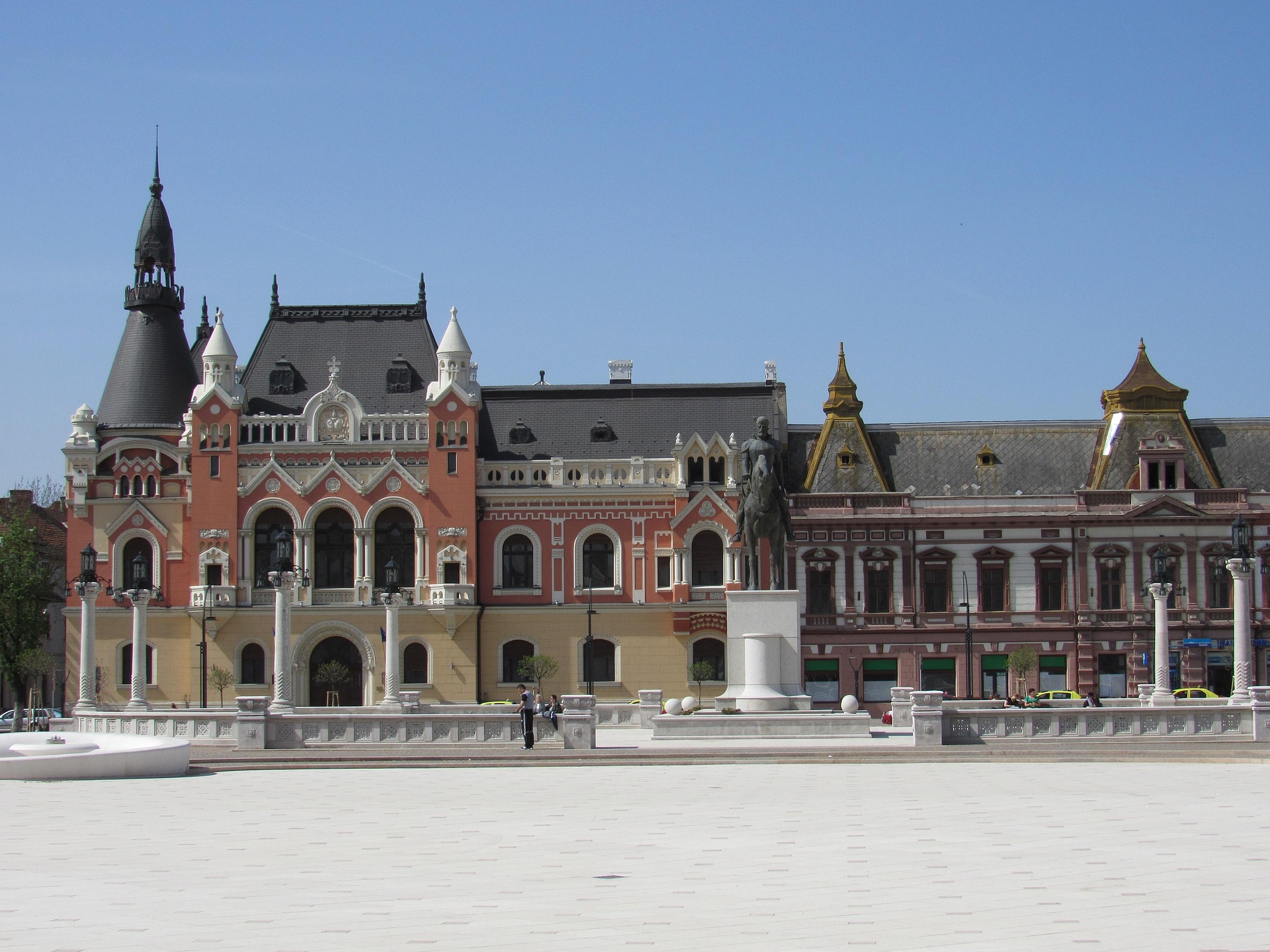
City view of Oradea, Romania

Oradea

Oradea wears Art Nouveau like a tailored suit, its palaces along the Crisul Repede river freshly pressed after careful restorations. Thermal waters warm hotel pools and local moods, a tradition that has drawn visitors since the Austro-Hungarian days. The fortress, a star-shaped citadel, now hosts galleries, concerts, and a weekend market where pickles argue politely with pastries. Cafes inhabit corners with stained glass and sinuous ironwork, proof that geometry can flirt. Dinner might be crispy pork knuckle, sour cabbage, and a dessert that takes caramel seriously. Pedestrians follow arcades that turn every shower into an excuse to linger. A curious flourish: the city’s astronomical calendar painted on a facade still keeps accurate track of seasons, a civic timepiece hidden in plain sight. Oradea feels like a place that respects maintenance as an art form, and the result is a steady, contented rhythm accented by steam curling over rooftops on cool mornings.

Top attractions & things to do in Oradea

If you’re searching for the best things to do in Oradea, this guide brings together the top attractions and must-see places to visit in Oradea. The top picks below highlight the most visited sights for first-time visitors, plus a few local favorites worth adding.

Black Eagle Palace in Oradea, Romania

Black Eagle Palace

Step under the arch and the city changes key as light filters through the famous glass canopy and footfalls echo in a passage designed for lingering. Raised during the 1908 boom, the complex channels Art Nouveau exuberance through Oradea’s confident merchants and cafe culture. Architects Komor and Jakab threaded shops, ballrooms, and apartments around a jewel of stained glass where an eagle spreads its wings above the crowd. The facade wears Secession curves yet the plan is pragmatic with cross breezes and daylight delivered like amenities. Sit with a coffee and you will notice ironwork that behaves like handwriting and mosaics that treat corridors as salons. In the early 20th century this was the indoor address for gossip and deals, and the habit persists as families pose for photos beneath the colored vault. The building proves that commerce and beauty can keep the same diary and that a shortcut can also be a destination.
Ads place
Ads place
Ads place
Ads place
Ads place
Darvas-La Roche House in Oradea, Romania

Darvas-La Roche House

Push the door and the vestibule answers with patterned light as colored glass and carved wood negotiate your attention. Completed in 1909 for businessman Imre Darvas, the townhouse translates Secession ideals into domestic comfort with help from architects Marcel Komor and Dezso Jakab. Balconies curl like handwriting while tiles bloom across fireplaces that seem eager to host conversation. Today it doubles as an Art Nouveau museum where period furniture sits as if the owner just stepped out for errands. Curators favor context so drawings and invoices sit beside finished ornament and the family story shares space with urban reform. Stand beneath the stairwell window and the house behaves like a sundial marking the hour with color instead of shadow. Out on the street the facade greets the Black Eagle passage like a cousin and the neighborhood becomes a syllabus in style. The building persuades you that modern life can be both efficient and ornamental without apology.
Ads place
Ads place
Ads place
Ads place
Ads place
Moon Church in Oradea, Romania

Moon Church

From the square you spot the clock that does more than keep hours as a small sphere above the dial displays the phases of the moon with quiet accuracy. Built in the late 18th century, the sanctuary blends Baroque rhythm with an Orthodox interior where gilded icons and candle smoke set a measured mood. The famed lunar mechanism was installed around 1790 and still rotates patiently, a civic reminder that calendars begin in the sky. Locals will tell you weddings pause so photographers can time a kiss to the crescent. Step inside and the nave tightens your focus while murmurs fall to whispers. Craftsmen carved the iconostasis like lace in wood and restorers recently refreshed pigments without flattening time. Outside, streetcar bells pass and the clock’s hand keeps going, a collaboration between faith and astronomy that never feels forced. Leave with the feeling that the building is watching the heavens on your behalf and reporting back in good faith.
Ads place
Ads place
Ads place
Ads place
Ads place
Oradea Fortress in Oradea, Romania

Oradea Fortress

Grass softens the angles but the geometry still instructs, a star on the ground that once organized fear into lines of sight. The present contours date to the 18th century when imperial engineers under Maria Theresa modernized defenses in a Vauban spirit and turned earlier walls toward new artillery. Yet the site remembers more with layers from the Renaissance and long confrontations with the Ottoman frontier. Today studios, chapels, and exhibition rooms inhabit casemates where soldiers counted rations and hours. Walk the ramp and the city spreads in a tidy grid while the moat reads like a calm parenthesis. Summer festivals return the place to its original function which was to gather people on purpose even if the purpose has changed. Archaeologists keep adding footnotes and archaeology is part of the visit as trenches reveal kitchens and kilns. The lesson is not only military, it is urban, because the fortress still choreographs how Oradea is approached and remembered.
Ads place
Ads place
Ads place
Ads place
Ads place
Roman Catholic Episcopal Palace and Park in Oradea, Romania

Roman Catholic Episcopal Palace and Park

A long facade gathers windows like a string of pearls and opens onto lawns where conversations learn to slow down. Commissioned by Bishop Adam Patachich and built from 1762 to the following decade, the residence carries the assured weight of Baroque taste shaped by architect Franz Anton Hillebrandt. Inside, staircases turn with theatrical grace toward salons now used by the Museum Tarii Crisurilor, which threads archaeology and fine art through polished rooms. Guides enjoy pointing out the Viennese echo because the plan nods to the Belvedere while remaining firmly local in materials and temperament. Step onto the terrace and the garden edits city noise to a murmur. Exhibits change but the building’s thesis remains stable that power once expressed itself in ceilings and symmetry. On bright afternoons students sketch cornices while grandparents weigh the merits of shade. The palace keeps its manners and invites the city to borrow a little dignity for an hour.
Ads place
Ads place
Ads place
Ads place
Ads place