
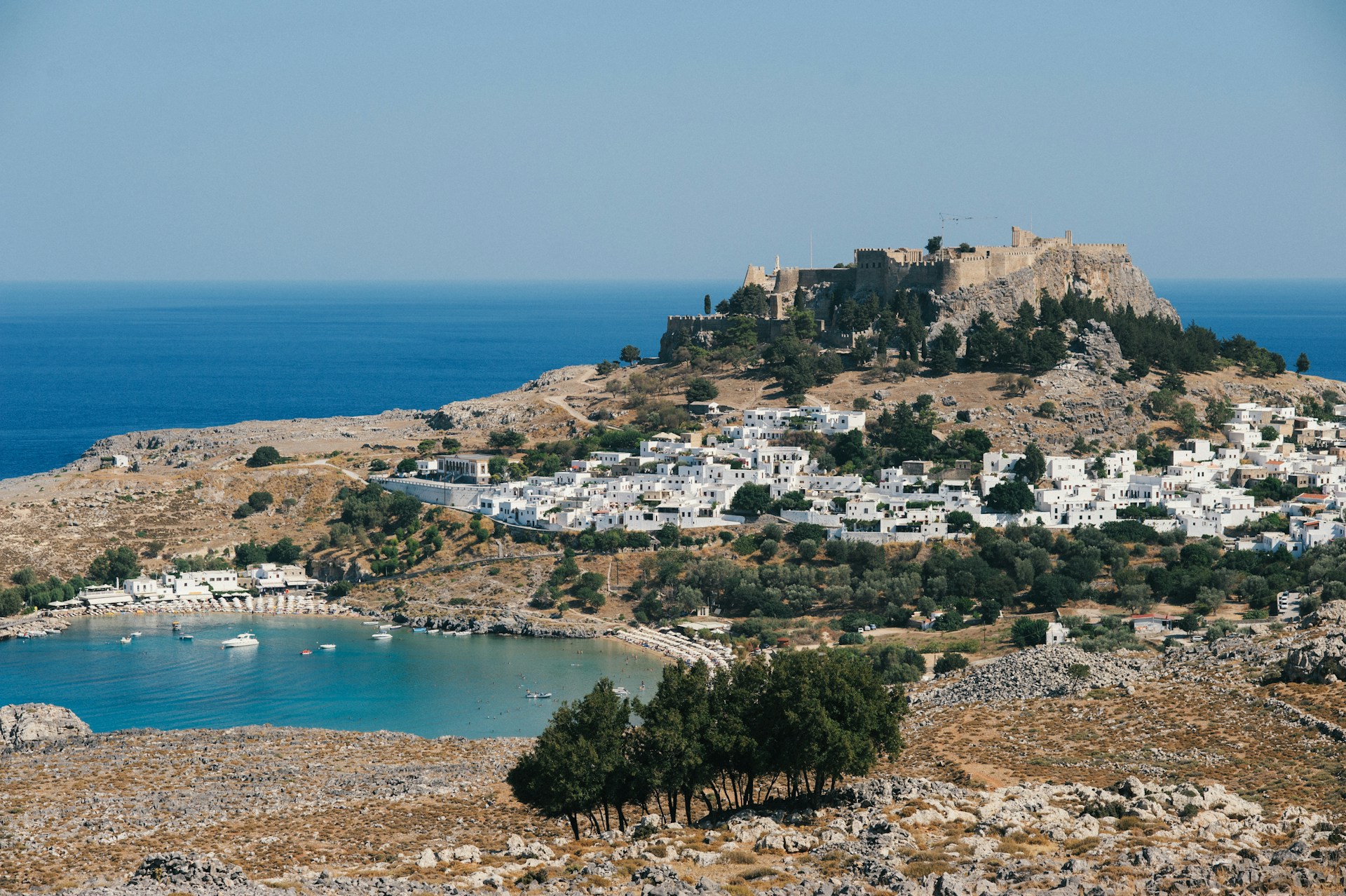
City view of Patmos, Greece

Patmos

Patmos, where John the Apostle received his Revelation in the 1st century AD, is crowned by the Monastery of Saint John the Theologian (1088 AD), its fortified walls safeguarding a library of rare Byzantine manuscripts and 12th-century icons. Adjacent, the Cave of the Apocalypse—scene of John’s vision—is marked by a modest chapel with mosaic-paved floors and flickering candles. Winding through whitewashed houses and hidden chapels, stone-paved Chora leads to Skala’s harbor, where caiques bob beside waterfront tavernas serving grilled sardines and ouzo. Each summer, the Patmos International Film Festival and European Music Festival transform medieval courtyards into open-air concert stages beneath starry skies. Olive-studded hills and secluded coves await hikers along ancient footpaths. From sacred pilgrimage to cinematic spectacle, Patmos blends spiritual heritage, unspoiled nature and cultural celebration into one profound Aegean sanctuary.

Top attractions & things to do in Patmos

If you’re searching for the best things to do in Patmos, this guide brings together the top attractions and must-see places to visit in Patmos. The top picks below highlight the most visited sights for first-time visitors, plus a few local favorites worth adding.

Cave of the Apocalypse in Patmos, Greece

Cave of the Apocalypse

Carved into the slopes of Mount Pateras, the Cave of the Apocalypse is famed as the site where Saint John the Theologian received the divine revelations ca. 95 AD. Pilgrims enter through an arched vestibule first enclosed around 1088 and later enhanced with stone walls under Emperor Alexios I. Inside, 17th-century Cretan frescoes adorn the chapel’s vaulted ceiling, while original prayer inscriptions and chipped crosses remain visible on the rugged rock. A medieval cistern, rediscovered during conservation works in 1963, once provided spring water for ritual purification. Candlelit guided tours illuminate hidden niches and relic reliquaries, revealing how geology merged with faith to inspire the Book of Revelation. UNESCO inscribed the Cave, along with the Monastery, as a World Heritage Site in 1999. Visitors today experience a palpable sense of spiritual awe, as soft echoes and rock formations evoke two millennia of Christian devotion on this sacred island.
Ads place
Ads place
Ads place
Ads place
Ads place
Chora & Castle in Patmos, Greece

Chora & Castle

Dominating the serene hilltop above Skala, Chora and its medieval castle were constructed by the Knights of Saint John in 1481 atop earlier 9th-century Byzantine fortifications. The thick stone walls and bastions once protected monks and villagers from pirate incursions, while hidden bastions and lookout points reveal military ingenuity. Within the citadel’s narrow alleys, visitors discover whitewashed chapels, merchants’ houses, and the Patmos Byzantine Museum, founded in 1960 to display exquisite icons and ecclesiastical vestments. Each Easter, candlelit processions wind through the maze-like streets, evoking centuries of liturgical tradition. Restoration efforts in 2005 unearthed Ottoman graffiti scratched into threshold stones, offering a glimpse into successive rulers. Terraced viewpoints afford sweeping panoramic vistas of the Aegean Sea, dotted with tiny islets. UNESCO designated Chora & Castle a World Heritage Site in 1999, praising its harmonious blend of military, civic, and religious architecture that defines Patmos’s hilltop charm.
Ads place
Ads place
Ads place
Ads place
Ads place
Monastery of Saint John the Theologian in Patmos, Greece

Monastery of Saint John the Theologian

Rising majestically above Chora, the Monastery of Saint John the Theologian was founded in 1088 AD by the Byzantine monk Christodoulos under patronage of Emperor Alexios I Komnenos. Its fortress-like ramparts enclose a basilica, crypts, chapels, and an invaluable library housing over 2,500 manuscripts, including the iconic Codex Patmios. The octagonal bell tower, added by the Knights of Rhodes in the 15th century, offers panoramic views of the Aegean Sea and nearby islands. Elaborate frescoes within depict scenes from the Book of Revelation, a nod to the adjacent Cave of the Apocalypse where Saint John received his visions. Annual pilgrimages on September 26 draw devotees to venerate relics believed to include fragments of the disciple’s writings. Meticulous restorations completed in 2001 preserved intricate stone iconostases and marble cloisters, blending medieval craftsmanship with modern conservation techniques. Today, incense-scented corridors and echoing chants transport visitors through a millennium of Orthodox devotion, Byzantine art, and monastic tradition.
Ads place
Ads place
Ads place
Ads place
Ads place
Petra Beach & Chapel in Patmos, Greece

Petra Beach & Chapel

On Patmos’s rugged western shore, Petra Beach entices sun-seekers with its azure waters and sandy-pebble shoreline leading to a rocky outcrop crowned by the Chapel of Panagia Petra. Legend holds that a humble fisherman discovered an ancient icon here in the 14th century, inspiring the chapel’s founding. Its interior walls, meticulously frescoed in 1600, depict the Virgin Mary’s Assumption—restored to vibrant hues during conservation works in 2015. Cannon embrasures added in the 17th century remain visible, reminders of pirate threats. Geologists date the limestone outcrop to the Mesozoic era, its striations bearing witness to millions of years of tectonic shifts. Each August 15, a maritime procession circles the islet as candlelit boats glide across the bay. Coastal tavernas specialize in cuttlefish stews and Patmian lupins, marrying culinary tradition with natural splendor.
Ads place
Ads place
Ads place
Ads place
Ads place
Skala Harbour & Maritime Museum in Patmos, Greece

Skala Harbour & Maritime Museum

Skala, the bustling maritime gateway of Patmos, flourished in the 16th century when Genoese traders established stone warehouses along its crescent harbor. Rebuilt after devastating raids in 1829, the port now hosts colorful fishing boats and sleek yachts against a backdrop of steep cliffs. The Maritime Museum, housed in a repurposed 19th-century soap factory, showcases amphorae and anchors from shipwrecks dating to 200 BC. Interactive exhibits detail the epic 1928 voyage of navigator Giannis Pittakis, whose charts expanded sea routes across the Aegean. A small chapel of Panagia Koumaniani, built in 1650, sits at the quay’s edge, believed to watch over mariners. Restoration in 2010 preserved original cobblestones and gantry beams, creating an authentic ambiance. Each summer, the Skala Cultural Festival animates waterfront squares with music and dance, celebrating the island’s seafaring heritage beneath starlit skies.
Ads place
Ads place
Ads place
Ads place
Ads place