
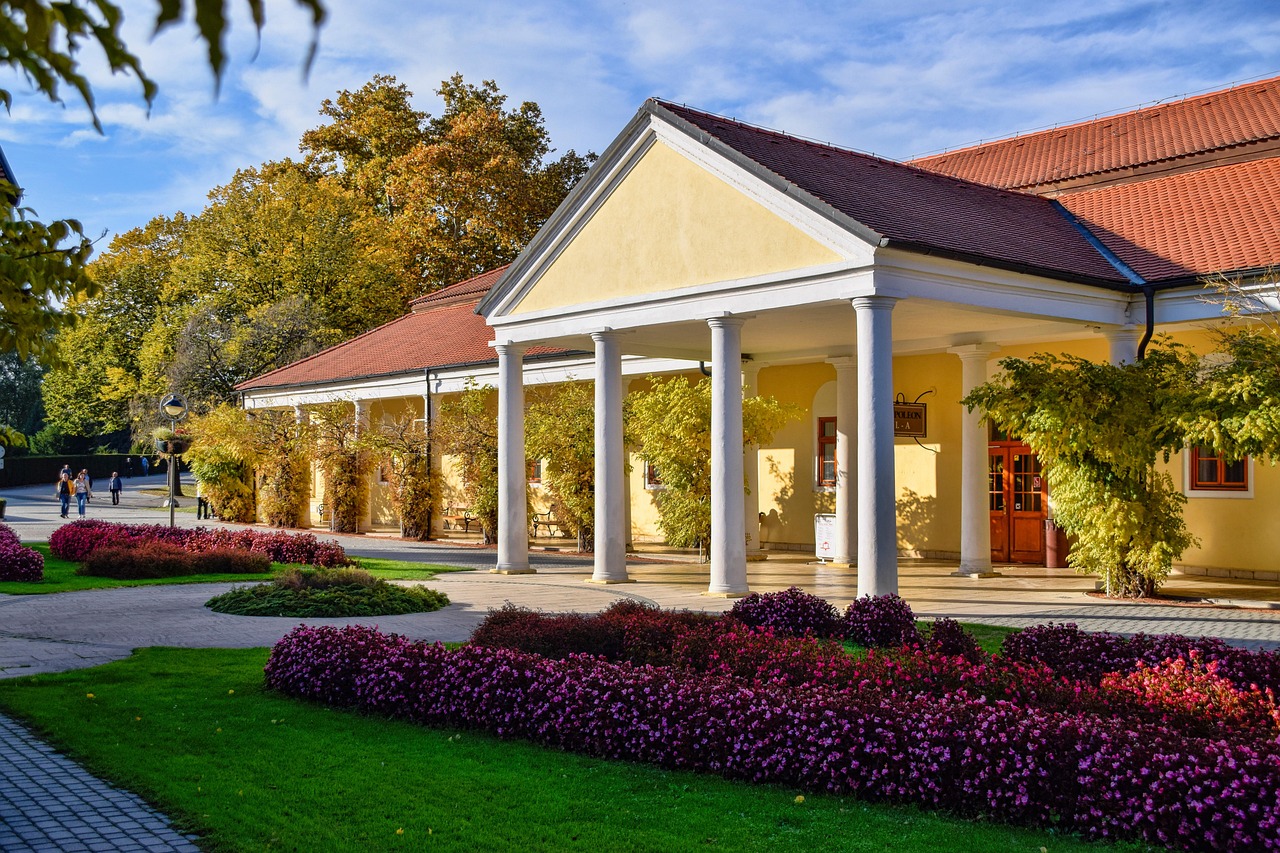
City view of Piestany, Slovakia

Piestany

Piestany invented a lifestyle around healing mud and then cleverly added tennis, pastry, and river sunsets. The spa island moves at walking speed, with colonnades that turn shade into an amenity. Elegant hotels host generations of returning guests who know exactly which pool cures which complaint. In town, cafes decorate cakes with architectural ambition and cyclists loop along the Vah like they own the embankment. Museums explain how medicine met marketing to create a global destination long before hashtags. Order duck with lokse, then stroll past the statue of a man breaking a crutch, a confident piece of branding that still works. Boats idle in summer while jazz leaks from terraces. A fun extra, the local bridge glows in programmable colors at night, and residents unofficially vote with phone photos for their favorite palettes, making the river a community mood ring with excellent lighting.

Top attractions & things to do in Piestany

If you’re searching for the best things to do in Piestany, this guide brings together the top attractions and must-see places to visit in Piestany. The top picks below highlight the most visited sights for first-time visitors, plus a few local favorites worth adding.

Balneological Museum in Piestany, Slovakia

Balneological Museum

If you want the spa to speak in full paragraphs, begin here. The Balneological Museum gathers archaeology, folk craft, and medical technology into rooms paced for attention rather than haste. A founding date in the 1930s is often cited, and the collection’s range is quietly ambitious: Roman shards, river tools, guild chests, and early hydrotherapy apparatus that hums with practical intent. Labels stay factual—temperatures, compositions, indications—so visitors can see how treatments grew from observation, not legend. One gallery traces Imrich Winter and civic partners who turned baths into infrastructure, pairing archives with photographs that explain money, maintenance, and manners. A small section on archaeology maps settlement layers along the Vah; another exhibits porcelain and pharmacy jars that once measured trust in teaspoons. Conservation notes demystify storage and humidity, making the backstage part of the story. You leave understanding that Piestany’s cure is not only chemistry and heat; it is organization, record-keeping, and a town’s decision to make care visible in public space.
Ads place
Ads place
Ads place
Ads place
Ads place
Colonnade Bridge in Piestany, Slovakia

Colonnade Bridge

A covered arcade stretches across the river like a calm sentence, inviting an unhurried crossing between town and treatment. Locals know it as the Colonnade Bridge, a modern gesture from the 1930s that turned weather into company for walkers. Contemporary guides often credit architect Emil Bellus with the elegant proportions, while glass and inscriptions once framed the ritual of arrival. The span was damaged near the end of World War II and later repaired, a reminder that bridges are biographies as much as structures. Today, the canopy edits rain into music and sun into measured light, making even ordinary errands feel curated. Plaques sketch the bridge’s reinforced concrete logic and the way its joints manage seasonal movement; a small diagram shows how the deck drains without fuss. Stand mid-span and the river reads like a slow conversation between the Vah and the island’s steam. At dusk, silhouettes stack—hills, rooflines, walkers—and the arcade becomes a camera that anyone can use well.
Ads place
Ads place
Ads place
Ads place
Ads place
Spa Island in Piestany, Slovakia

Spa Island

Cross the footbridge and the town exhales; paths curve past colonnades, plane trees, and quiet pavilions as steam drifts lightly above the river. Spa Island is where mud, mineral water, and method became a culture of healing rather than a marketing line. The geothermal springs, commonly measured around 67 C, feed pools and treatment rooms designed to conserve heat as carefully as care. Therapists still use sulphurous mud matured in settling pits, a craft with its own protocols and seasons. Medical boards explain balneotherapy regimens with a clinician’s calm—time, temperature, and rest balanced like a score. The modern layout took shape in the early 20th century, when promenades, gardens, and clinics were planned together so patients could keep dignity and routine. You will notice small, sensible details: handrails placed by habit studies, benches set at social distances that feel natural. Evening light smooths the river, and the island remembers footsteps more than speeches. It is healthcare as landscape, anchored by mineral springs and the everyday choreography of staff who treat punctuality as kindness.
Ads place
Ads place
Ads place
Ads place
Ads place
Spa Park and Crutch Breaker Statue in Piestany, Slovakia

Spa Park and Crutch Breaker Statue

Lawns, tall trees, and a bandstand set the mood; Spa Park is the city’s outdoor waiting room where time keeps good posture. Paths are level for conversation, fountains keep company with benches, and birdsong edits traffic into background. At the heart stands the bronze figure known locally as the Crutch Breaker, installed in the 1930s: a patient snapping support in half, turning cure into emblem. The statue became a logo before logos, reproduced on brochures and hotel china with cheerful persistence. Gardeners work by season and spreadsheet—pruning, planting, and irrigation managed like a quiet performance. Notice the alleys laid to catch breeze and shade, a small science of microclimate planning that keeps summers civil. Concerts and charity runs share the calendar with flower shows, proving that public space is also a form of care. Arrive early and you will meet walkers with measured strides; come at dusk and the lawns collect a last band of light. Either way, you leave with a steadier step.
Ads place
Ads place
Ads place
Ads place
Ads place
Thermia Palace and Irma Spa Complex in Piestany, Slovakia

Thermia Palace and Irma Spa Complex

A sweep of Art Nouveau curves announces hospitality before you even touch the door handle. Thermia Palace and the adjacent Irma Spa formed a flagship ensemble in the early 20th century, where architecture and medicine learned to share a timetable. Guests stepped from a grand hotel lobby into tiled corridors leading to the famous mud pool—nicknamed the “Mirror”—a ritual perfected by staff with exact protocols. Opening literature from 1912 celebrated the synthesis of comfort and cure, and period photographs show dining rooms where etiquette and acoustics mattered as much as menu and music. Today, restorers preserve stained glass, mosaics, and ironwork while keeping treatment rooms compliant with modern hygiene. The sequence still works: diagnosis, bath, wrap, rest, then a slow walk under colonnades designed for shade and sociability. Look for floral motifs repeating across railings and ceilings like a whispered theme. The complex proves that therapy can be beautiful without losing rigor, and that beauty, applied carefully, can be therapeutic.
Ads place
Ads place
Ads place
Ads place
Ads place