
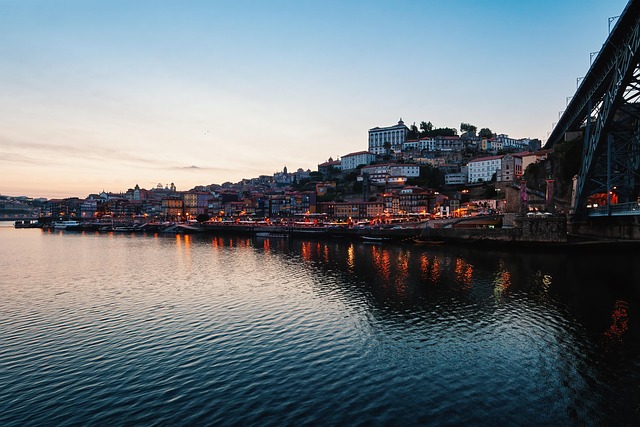
Ribeira Waterfront
In Porto, Portugal .
More places to visit in Porto
Discover more attractions and things to do in Porto.
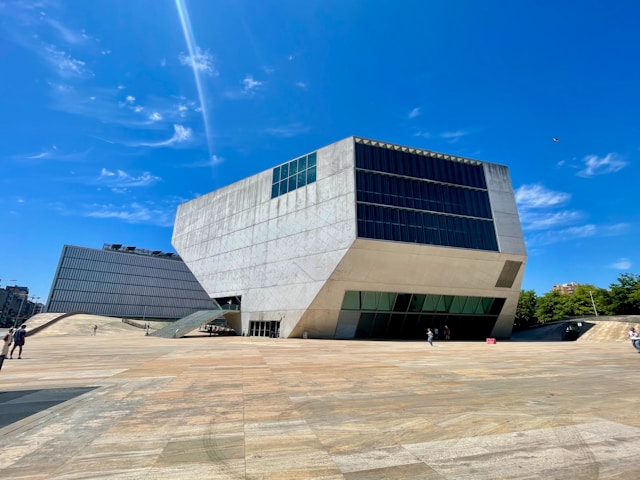
Casa da Musica
Angles slice the sky where an arena of concrete and glass treats sound as architecture. Opened in 2005 and designed by Rem Koolhaas , the hall tests acoustics with adjustable panels and a shoebox geometry beloved by engineers. Windows frame the city during rehearsals, turning scales into urban postcards. Programs range from Baroque suites to electronics, and the resident orchestra shares the calendar with visiting provocateurs. Tours walk catwalks above the stage, explaining isolation joints and how rumble from the metro was tamed. The building earned instant icon status—Porto's modern shorthand for ambition that still respects the ear. Even the cafe hums with a light buzz of ideas, and the plaza outside works as a layover for skaters and sun.
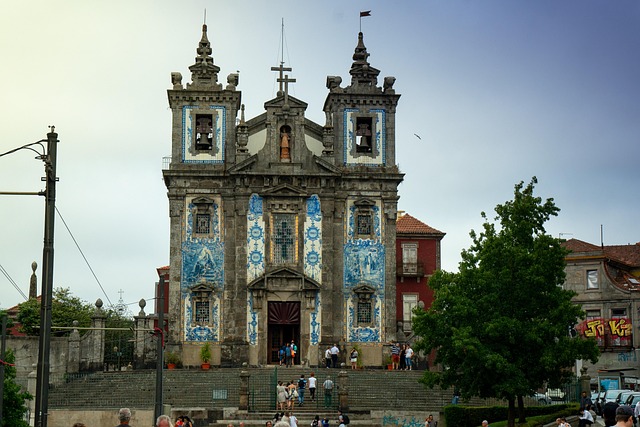
Church of Saint Ildefonso
Climbing from the bustle of Batalha Square, this church greets the city with twin bell towers wrapped in a mosaic of blue and white azulejos. Completed in 1739 , it reflects the transition from late Baroque into early Rococo , and its facade later received nearly 11,000 tiles painted by Jorge Colaco in the 1930s . Inside, a gilded altarpiece glows with woodcarving that feels almost liquid in its movement, echoing the theatrical spirit of Porto's ecclesiastical art. The nave remains compact yet powerful, a reminder that scale is not the only measure of grandeur. From the square, the church has witnessed processions, protests, and parades, always standing as both stage and backdrop to civic life. A curious note: the original structure replaced an even older medieval chapel that succumbed to storm damage, proving resilience is as much architectural as spiritual. Today Saint Ildefonso continues to ring across the city, its bells bridging centuries with every peal.
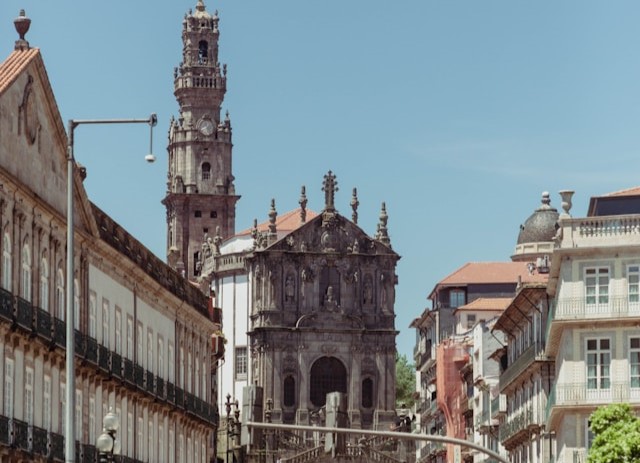
Clerigos Tower and Church
A granite needle announces itself long before you reach the square, and the climb rewards patience with a river wide horizon. Designed by Nicolau Nasoni in the 18th century , the ensemble pairs a theatrical Baroque church with a tower whose 76 meters once guided sailors home. Inside, gilded woodwork curls like smoke, while an elliptical nave tucks devotion into a precise geometry. The staircase winds through stone so tightly that strangers become companions for a minute; emerging at the top feels like a small coronation. Concerts in the nave show how acoustics love curves, and a museum next door decodes sketches and tools from Nasoni's studio. After sunset the tower glows, a gentle lighthouse for night walkers. A neat fact: the bell's mechanism still keeps honest time against phones that drift, proving engineering does not age as quickly as fashion.
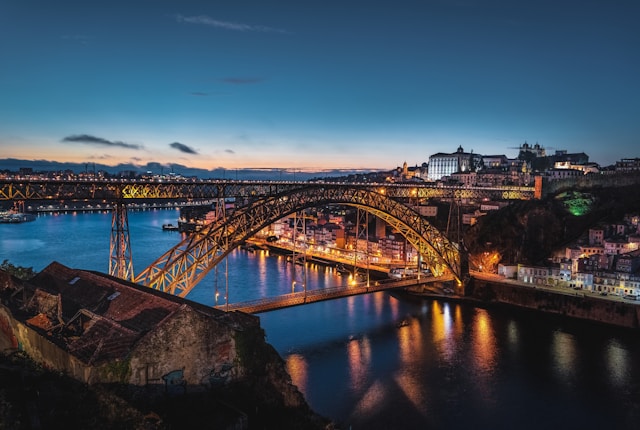
Dom Luis I Bridge
Rising above the Douro like a drawn bow, this double deck metal span turned river crossings into theater for trams, cars, and unhurried pedestrians. Conceived in the late 19th century by engineer Theophile Seyrig , a onetime partner of Gustave Eiffel , it solved a problem of grade and current with an audacious arch of iron . The upper deck now carries the metro, and walkers claim the wind and skyline as their reward, while the lower deck keeps close to Riberia's stones. From the midpoint you can read centuries at once: rabelo boats, tiled facades, and monasteries turned viewpoints. At night, lamps sketch the geometry with a precision that flatters every rivet. A curious detail: the project beat out an alternative suspension design, anchoring Porto's identity to latticework instead of cables. Lean on the rail and you will feel the river trying to recount the whole history of trade in one breath.
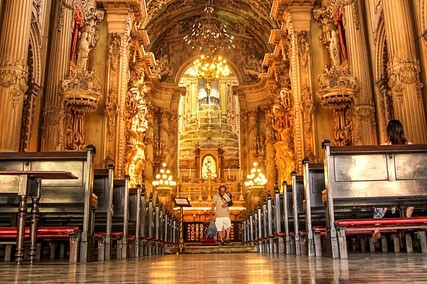
Igreja de Sao Francisco
From outside, stone keeps a straight face; inside, gold leaf loosens its tie. The church began in the 14th century with sober Gothic lines, then acquired an avalanche of Baroque carving in the 17th and 18th centuries . Altars bloom with vines, doves, and saints so numerous the eye needs a moment to breathe. Down below, catacombs store tombs and the odd curiosity that rewards a calm glance at inscriptions. A small museum reads the Franciscan story with a practical voice: poverty in rule, richness in craft donated by guilds. One legend claims wood from Brazilian ships found a second life here, a tidy metaphor for empire turned devotion. Step back into daylight and granite looks newly modest after such interior weather.
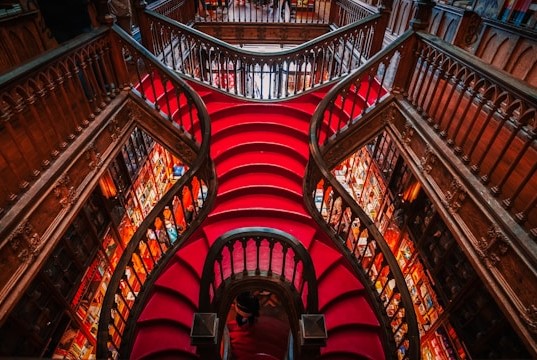
Livraria Lello
Queues form under a neo Gothic facade, but the payoff is a staircase that seems to hover, curving like a crimson wave under a canopy of stained glass. Opened in 1906 by the Lello brothers, the bookshop married commerce and spectacle before either needed hashtags. Shelves climb to carved ceilings; a mezzanine circulates readers as softly as a whisper. Legends link its curves to J. K. Rowling —she taught English in Porto in the 1990s —though the architecture stands on its own merits. Restoration introduced a ticket system that doubles as a purchase voucher, a practical nod to demand. First editions mingle with handsome reprints, and staff slide ladders with librarian grace. The best seat is anywhere the light spills a paragraph across the floor. A small exhibition traces printing in Portugal, reminding visitors that good typography can outlive fashions and queues alike.
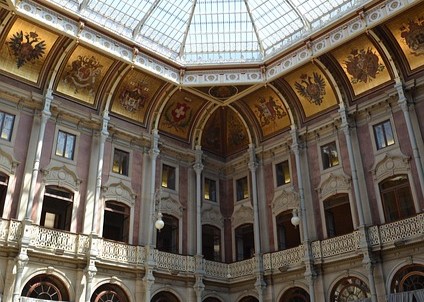
Palacio da Bolsa
Merchants built a palace for contracts and managed to smuggle in a fantasy of diplomacy. Raised by the Commercial Association in the 19th century , it stages the Arab Room —completed in 1880 —as a gilded echo of Nasrid motifs, where treaties met chandeliers. Stairs sweep upward with cool assurance; murals remember voyages that banked the city's fortunes. Guides pivot neatly from economics to ornament, pointing out the stock exchange hall and the courtroom where business dressed as ceremony. A registry of consuls lines one corridor, proof that Porto traded conversation as deftly as wine. Today receptions and concerts inhabit the rooms with respectful flair, and even the quiet corridors feel rehearsed for history. The building remains a lesson in confidence: civic power choosing beauty without forgetting arithmetic.
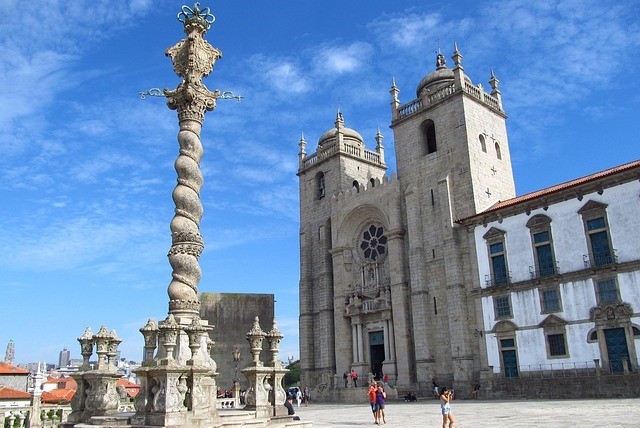
Porto Cathedral (Se do Porto)
Above steep alleys, the cathedral sits like a granite thesis on persistence. Begun in the 12th century , it layers Romanesque bones with Gothic cloisters and later Baroque flourishes, a syllabus of styles in one compact campus. The cloister's azulejos recount the Song of Solomon , turning verse into blue geometry around a palm. From the terrace, rooftops pour toward the Douro in shingles and shade, and the bridge's arch cuts a perfect parenthesis in view. Inside, a silver altarpiece flashes like a firm handshake, confident but not gaudy. Bells share the hour with seagulls that forgot to stay at the river. Somewhere between chapel and stone stair you realize the city has been editing this building for eight centuries without deleting its first sentence.
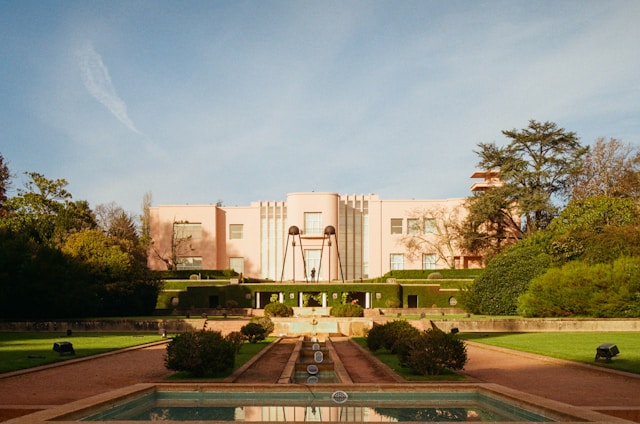
Serralves Museum and Park
A pink villa whispers Art Deco while a crisp white museum finishes the sentence in contemporary terms. The cultural foundation opened the museum in 1999 under director Alvaro Siza Vieira , whose galleries respect light like a co author. Outside, Roberto Burle Marx inspired gardens mix axial walks with a tree top canopy walk that lends children courage and adults perspective. Exhibitions tilt international yet keep an eye on Portuguese voices; installations often spill into lawns and ponds. The old Casa de Serralves remains part of the circuit, proof that eras can converse without raising voices. On weekends, families picnic as if modern art were just another form of shade. The park teaches an elegant thesis: culture thrives when architecture, horticulture, and programming move in step.