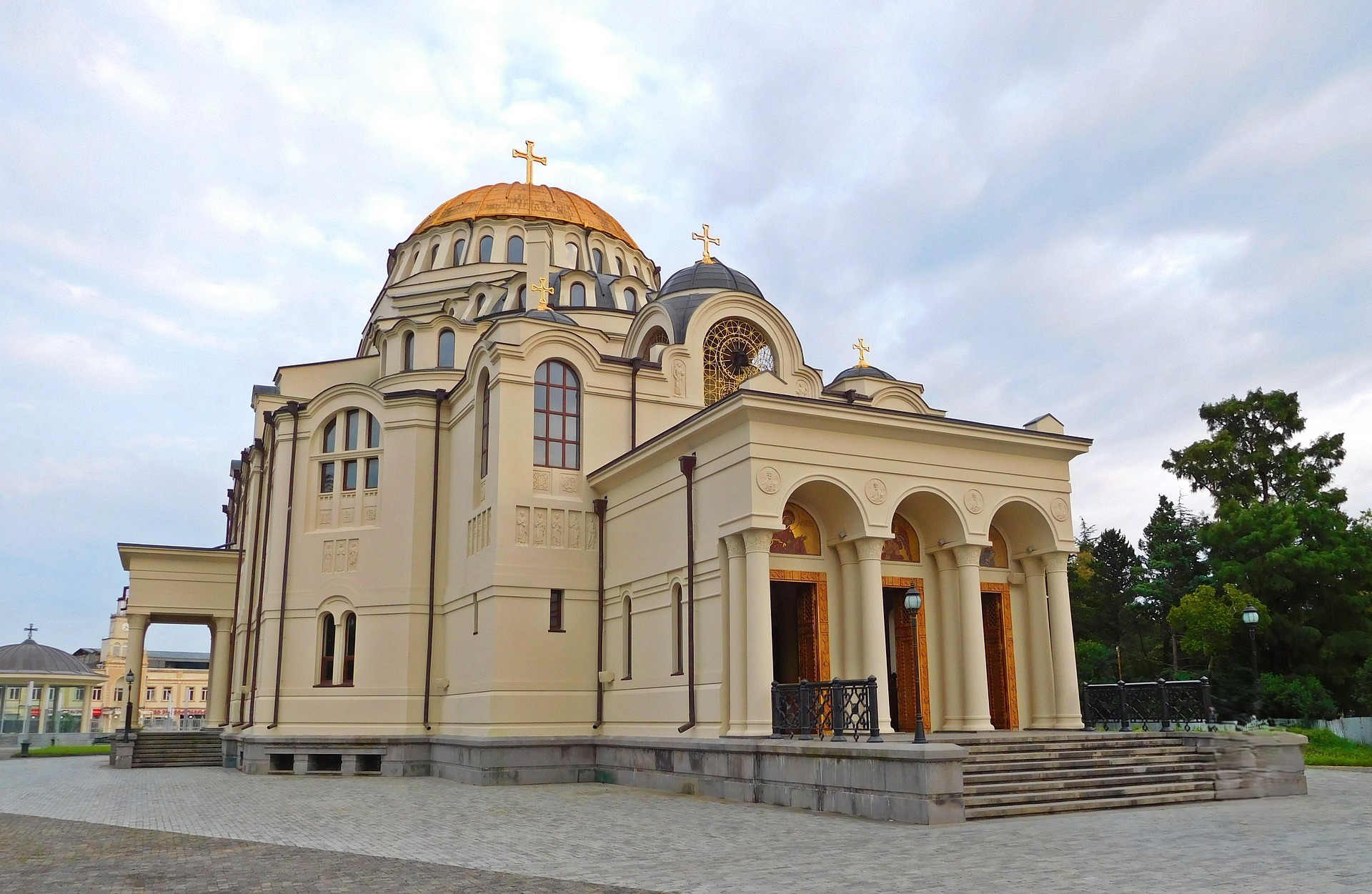

City view of Poti, Georgia

Poti

Poti, a bustling port city on Georgia’s Black Sea coast, anchors the nation’s maritime and industrial trade. The city’s strategic location at the Rioni River delta has shaped its character: expansive docks handling cargo, busy markets selling fresh seafood, and Soviet-era warehouses repurposed into modern logistics centers. History aficionados will find the Poti Cathedral of the Theotokos—a restored medieval church—as well as the nearby complex of archaeological sites at Phasis, revealing layers of Greek, Roman, and Byzantine settlement. Ecotourism thrives in the adjacent Kolkheti National Park, a Ramsar-designated wetland where vast reed beds and brackish lagoons attract flamingos, pelicans, and other migratory birds. Local eateries dish up must-try specialties like grilled Black Sea mullet and anchovies, while cafés along the waterfront offer sweeping harbor views. Though often bypassed by mainstream tourists, Poti’s raw, working-port energy and rich ecological tapestry reward curious travelers.

Top attractions & things to do in Poti

If you’re searching for the best things to do in Poti, this guide brings together the top attractions and must-see places to visit in Poti. The top picks below highlight the most visited sights for first-time visitors, plus a few local favorites worth adding.

Green Cape Nature Reserve in Poti, Georgia

Green Cape Nature Reserve

Formed by sediment deposition at the mouth of the Rioni River, Green Cape is a dynamic coastal headland featuring sand dunes, maritime forests, and salt marshes. Established as a nature reserve in 2006, it protects rare habitats for the European pond turtle and the endemic Caucasus newt. A network of trails winds through Aleppo pines and olive groves, leading to vantage points where visitors can observe Caspian and Mediterranean flyway birds. The reserve’s environmental center offers workshops on dune stabilization, highlighting traditional methods using local grasses like Arundo donax. Archaeological surveys here unearthed traces of Colchian fishermen’s seasonal huts dating to the 2nd century AD, now marked by interpretive signs. As tides reshape the shoreline, dramatic sand spits emerge, creating ephemeral pools that attract flamingos in winter months. With no permanent structures beyond low-impact boardwalks, Green Cape Nature Reserve remains one of Poti’s most pristine escapes, revealing the interplay of river, sea, and human history.
Ads place
Ads place
Ads place
Ads place
Ads place
Kolkheti National Park in Poti, Georgia

Kolkheti National Park

Spanning over 28,000 hectares of coastal wetlands, Kolkheti National Park is a biodiversity hotspot designated a Ramsar site in 1999. Its mosaic of brackish lagoons, reed beds, and peat bogs supports over 250 bird species—including migrating flamingos, pelicans, and the elusive Dalmatian pelican. Boardwalks and observation towers allow visitors to traverse the marshes while minimizing disturbance, leading to hidden salt-marsh orchards once cultivated during Ottoman rule. The park’s visitor center displays interactive exhibits on ancient Colchian myths, linking local flora such as sea lavender and Phragmites reeds to folkloric tales. In spring, wild irises carpet the floodplains, and guided kayak tours navigate the Rioni delta to view submerged Bronze-Age stilt houses discovered in underwater surveys. A little-known trail leads to a 19th-century lighthouse ruin on Pichori Spit—once a navigational marker for ancient mariners. Offering birdwatching, educational programs, and seasonal research initiatives, Kolkheti National Park showcases Georgia’s commitment to conserving its unique Black Sea heritage.
Ads place
Ads place
Ads place
Ads place
Ads place
Phasis Archaeological Museum & Site in Poti, Georgia

Phasis Archaeological Museum & Site

Nestled on the banks of the Rioni River, the Phasis Archaeological Site preserves the remains of a once-thriving ancient city that flourished between the 6th century BC and the medieval era. Systematic excavations beginning in 1982 have unearthed Roman amphora shards, Byzantine mosaic fragments, and the foundations of a 5th-century basilica—all evidence of Phasis’s role as a crucial Black Sea trading hub. The on-site museum houses curated displays of ancient pottery, coin hoards, and imported Mediterranean tableware, illustrating the city’s far-reaching commercial ties. Lattice-roofed walkways guide visitors through exposed brick walls and column bases, while interpretive panels detail Phasis’s evolution under Greek, Roman, and Persian influences. A highlight is the reconstructed water cistern system, showcasing sophisticated hydraulic engineering used to manage seasonal river floods. Despite its proximity to modern Poti’s port facilities, Phasis retains an aura of quiet discovery—especially at dawn, when mist drifts across the ruins and the surrounding wetlands echo with migratory birds. This blend of ancient urbanism and natural beauty makes Phasis Archaeological Site a compelling window into Georgia’s classical past.
Ads place
Ads place
Ads place
Ads place
Ads place
Poti Cathedral of the Theotokos in Poti, Georgia

Poti Cathedral of the Theotokos

Perched on a low rise overlooking the Rioni River delta, Poti Cathedral of the Theotokos was constructed in 1906 to serve the spiritual needs of the coastal community under Russian Imperial patronage. Its eclectic design blends Byzantine and Neo-Classical elements, featuring a cruciform plan, a central dome adorned with frescoes by local artist Giorgi Abuseridze, and cruciform windows set in walls of hand-cut limestone. The cathedral’s iconostasis houses 19th-century icons rescued from nearby Monastery of Shermukhi, while a memorial plaque commemorates the church’s use as a wartime field hospital during World War I. Less known is the underground crypt, discovered in a 2015 renovation, which revealed medieval gravestones representing early Christian burials in the region. Outside, a centuries-old sycamore tree shades the entrance—legend says it was planted by a local fisherman who survived a storm at sea. Today, the cathedral remains an active place of worship and a testament to Poti’s layered religious heritage.
Ads place
Ads place
Ads place
Ads place
Ads place
Poti Sea Port Terminal in Poti, Georgia

Poti Sea Port Terminal

Established in 1894 under Tsarist administration, Poti Sea Port remains Georgia’s primary maritime gateway to the Black Sea. Its historic grain silos, built in 1902, still dominate the waterfront skyline, repurposed today as exhibition halls for maritime heritage displays. Modern expansion in 2008 introduced a container terminal equipped with rail-to-ship gantries, linking Poti to European freight corridors. A guided dockside tour highlights the port’s logistical evolution—from Soviet-era bulk carrier traffic to current multi-modal operations handling oil, grain, and fertilizer exports. Inside the port museum, interactive maps trace the ancient trade axis from Phasis to Byzantium, while photographs document the port’s role in World War II convoys. Overlooking the quays, a restored lighthouse lantern lamp—removed in 1965—stands on display, evoking bygone navigation. For travelers, the port’s café terrace offers views of cranes silhouetted against dawn light, where fishermen still unload catches alongside massive livestock carriers. Poti Sea Port Terminal thus bridges centuries of maritime commerce and technological progress on Georgia’s western frontier.
Ads place
Ads place
Ads place
Ads place
Ads place