
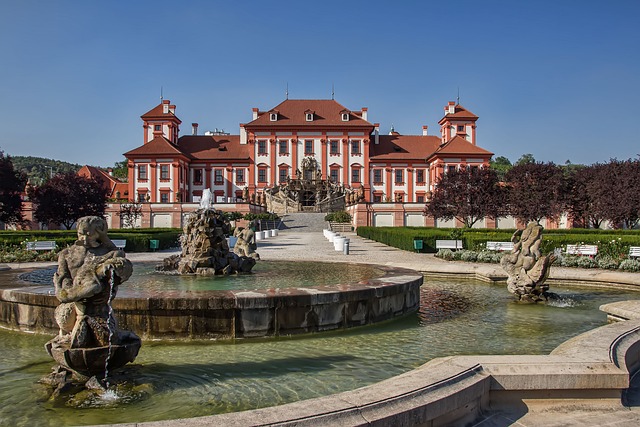
Troja Park
In Prague, Czech Republic .
More places to visit in Prague
Discover more attractions and things to do in Prague.
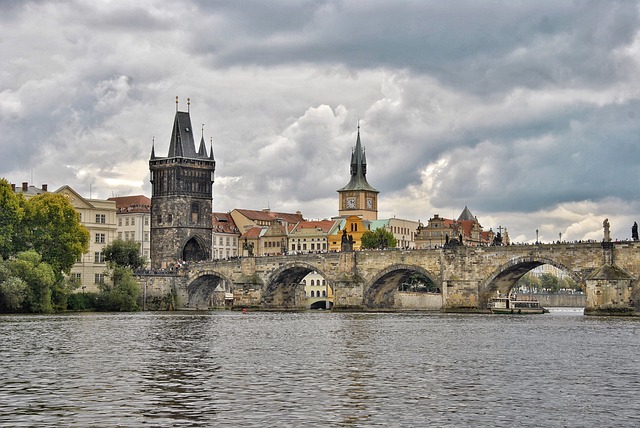
Charles Bridge
Charles Bridge stretches 516 meters across the Vltava River, its 16 stone arches supported by fortified Gothic towers at each end. Commissioned by Emperor Charles IV in 1357, its first foundation stone was laid at exactly 5:31 a.m. on a numerologically auspicious date. Over the following centuries, 30 Baroque statues of saints were added along its balustrade by Prague’s craft guilds. The St. John of Nepomuk monument marks the spot where the saint was thrown into the river—rubbing its bronze relief is said to bring good luck. Secret rainwater cisterns lie beneath the roadway, designed to supply defenders during sieges. At dawn, street musicians and portrait painters set up stalls, while at dusk, lantern-lit vendors sell garnet jewelry. From the Old Town Bridge Tower, visitors enjoy a golden sunrise over Prague Castle’s silhouette. Recent preservation efforts have restored original mortar and repointed centuries-old stones, ensuring this living museum of medieval engineering and artistic heritage endures as Prague’s most beloved pedestrian thoroughfare.
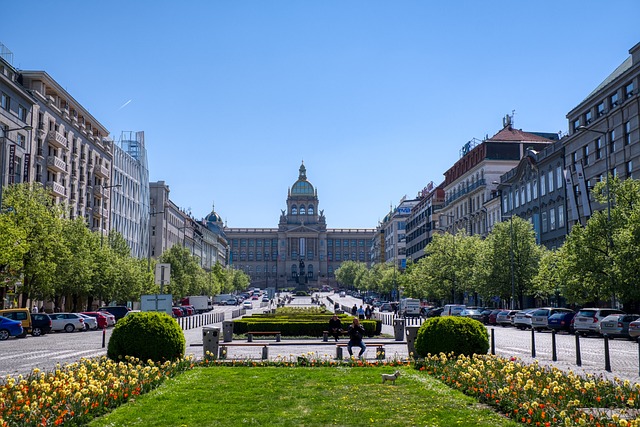
National Museum
Crowning Wenceslas Square, the National Museum’s neo-Renaissance façade and central dome were completed in 1891 to house collections founded in 1818. Inside, the Grand Staircase leads to halls showcasing natural history, archaeology, art, and ethnography. Highlights include a life-size mammoth skeleton , Celtic coin hoards, and medieval Bohemian gold artifacts . The Salt Mountain exhibit recreates historic salt mines, illustrating the region’s trade importance, while a new underground wing houses interactive digital displays. The research library holds over three million volumes, from Mozart family letters to rare illuminated manuscripts. Seasonal special exhibitions draw millions with blockbuster international loans, and a rooftop café offers panoramic city views. Meticulous restoration has returned original stucco and vaulted ceilings to their former glory, ensuring that Prague’s premier cultural institution continues to educate and inspire.
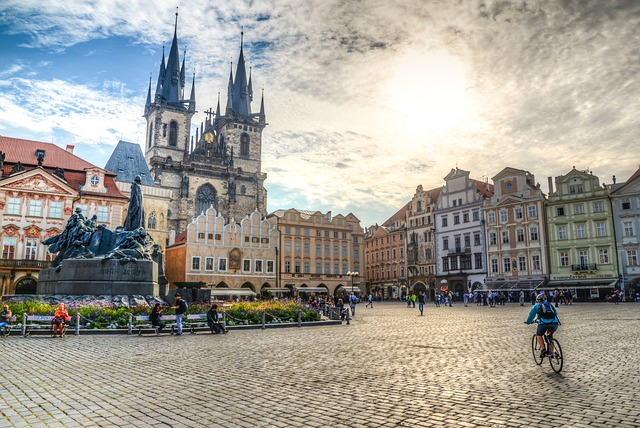
Old Town Square
Old Town Square has hosted merchants and ceremonies since the 12th century, enclosed by a kaleidoscope of Baroque façades , Gothic spires, and Art Nouveau details. Its centerpiece is the 1915 Jan Hus Memorial , honoring the reformer martyred in 1415. Behind it, the twin 80 m spires of the Church of Our Lady before Týn dominate the skyline, while the 14th-century Astronomical Clock mesmerizes hourly crowds as Apostles and Death emerge in mechanical procession. Seasonal Christmas markets fill the square with wooden chalets, handcrafted ornaments, and svarak, and summertime open-air concerts echo off the cobblestones. Tucked away are the plague column erected in 1650, narrow alleyways that once housed alchemists, and hidden panels showing remnants of medieval frescoes. Cafés spilling onto terraces serve Czech pastries and strong coffee to patrons watching horse-drawn carriages trotting past. Beneath the surface, recent excavations revealed the foundations of 13th-century townhouses and a section of the city’s first defensive wall, making Old Town Square both a lively public space and an archaeological treasure trove.
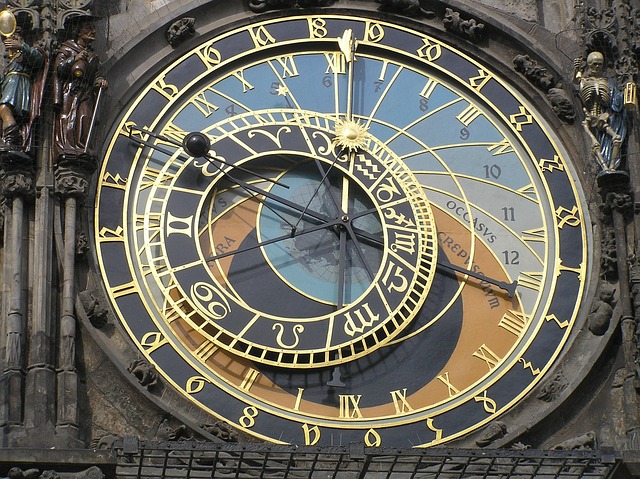
Prague Astronomical Clock
Mounted on the southern wall of the Old Town Hall, the Prague Astronomical Clock—crafted in 1410—displays zodiac positions , planetary motion , and medieval time on its ornate dial. Each hour, mechanical figures emerge: the Apostles appear in windows, Death tolls his bell, and the Turk shakes his head in mock defiance. The lower dial’s calendar plate marks Czech saints’ feast days, while hidden inscriptions credit its anonymous master clockmaker. After WWII damage, restorers preserved the original Gothic wheels and weights, supplementing them with modern hydraulics. Folklore warns that Prague would suffer if the clock ever stops, making its monthly maintenance a civic ritual. Crowds gather to witness the spectacle, then linger in nearby cafés to discuss its ingenious blend of art, science, and craftsmanship.
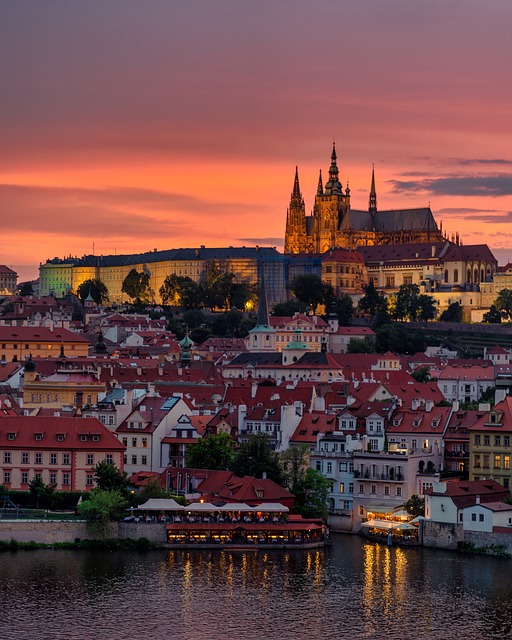
Prague Castle
Perched on a hill overlooking the city, Prague Castle covers nearly 70 000 m², making it the largest continuous castle complex in the world. Founded in the 9th century by Prince Borivoj I, it grew to encompass the Romanesque Basilica of St. George, the soaring Gothic vaults of St. Vitus Cathedral, and the Renaissance Golden Lane’s tiny houses once home to alchemists. The vast Vladislav Hall hosted jousting tournaments beneath its intricate ribbed vault ceiling. Visitors can witness the Changing of the Guard ceremony at the First Courtyard or explore the Royal Garden terraces overlooking the Malá Strana rooftops. Franz Kafka lodged briefly at Golden Lane No. 22, and recent excavations uncovered Bronze Age artifacts beneath the southern ramparts. A network of underground cellars once stored provisions during medieval sieges. Guided tours delve into Habsburg coronations, Gothic restoration work by Peter Parler, and the castle’s role as the seat of Czech presidents. With its blend of architectural styles and panoramic views, Prague Castle embodies a millennium of Bohemian history.
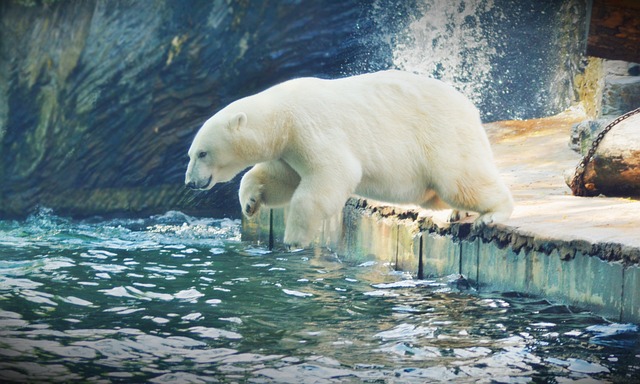
Prague Zoo
Founded in 1931 in the Troja district’s deep valley, Prague Zoo spans 60 hectares of hillside habitats and is famed for its pioneering biotope enclosures . The Indonesian Jungle Pavilion immerses guests among free-roaming gibbons, while the Aquapalace showcases seals and otters in recreated riverine settings. The African Savannah exhibit features giraffes, zebras, and rhinos, and the Przewalski’s horse breeding program has reintroduced over 200 horses to the Mongolian steppes. Elevated Madagascar island habitats allow lemurs to leap among baobab replicas, and nocturnal houses reveal elusive creatures under dim red light. Conservation partnerships support over 50 global species-survival plans, and on-site researchers track migratory birds along the Vltava flyway. Family attractions include rope-bridge circuits, petting zoos, and a scenic steam train ride. A panoramic café overlooks waterfalls and glass tunnels, making Prague Zoo a world-class blend of wildlife conservation and immersive education.
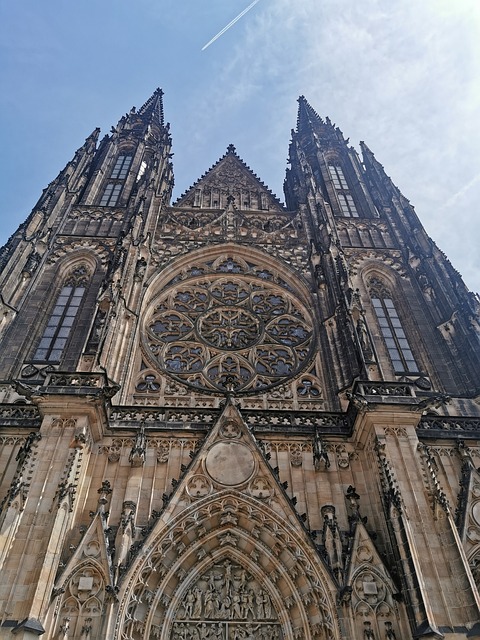
St. Vitus Cathedral
St. Vitus Cathedral took nearly 600 years to complete (1344–1929) and stands as the spiritual heart of the Czech Republic. Its Gothic spires and flying buttresses dominate Prague Castle’s skyline. Commissioned by Charles IV, master builder Peter Parler introduced pioneering net vault chapels and sculptural stonework. The Chapel of St. Wenceslas glitters with 650 kg of gold and semiprecious stones, and the royal crypt houses the tombs of Bohemian saints and monarchs. Alfons Mucha’s 20th-century stained glass floods the nave with jewel-toned light, complementing medieval windows depicting biblical tales. Visitors climb the Great South Tower’s 286 steps for sweeping city views, while beneath the choir stalls the Coronation Cross and priceless regalia lie on display. Annual organ concerts resonate through the vaulted interior, and recent restoration uncovered fragments of original frescoes behind Baroque plaster. As both a place of worship and a national monument, St. Vitus Cathedral embodies centuries of architectural innovation, royal ceremony, and Czech resilience.
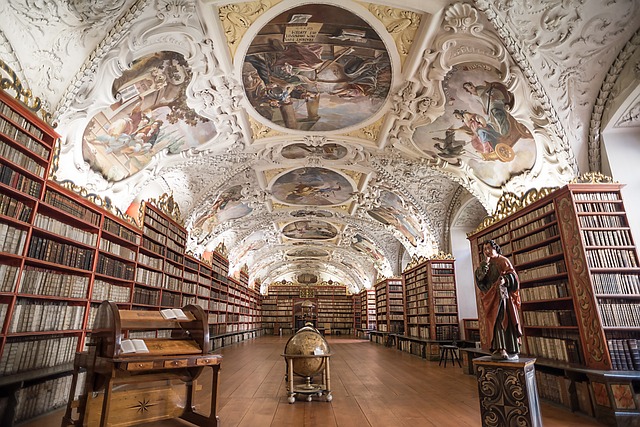
Strahov Monastery
Strahov Monastery, founded in 1143, remains a living testament to Premonstratensian devotion and scholarship. Its Baroque library houses over 200 000 volumes in two majestic halls: the Theological Hall, with frescoes depicting divine wisdom, and the Philosophical Hall, adorned with trompe-l’œil murals. The adjacent Basilica of the Assumption features Gothic vaults and a 17th-century high altar carved from white marble. The monastery’s art gallery holds Gothic Madonnas, Renaissance panels, and Rococo altarpieces, while monastic workshops continue producing traditional liqueurs and honey mead. Terraced vineyard gardens overlook the Prague Castle silhouette, and a new eco-project has introduced wildflower meadows to support pollinators. Seasonal concerts of sacred music in echoing halls attract visitors worldwide, making Strahov a serene haven of faith, art, and history.
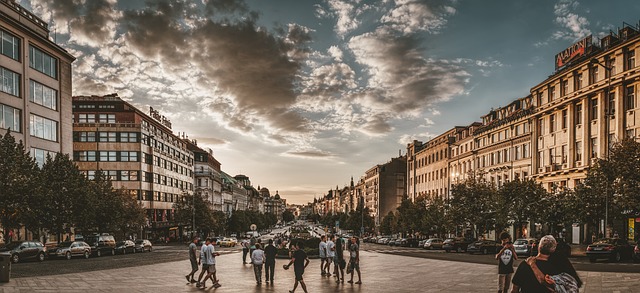
Wenceslas Square
Wenceslas Square stretches over 750 meters as Prague’s vibrant boulevard , originally laid out in the 14th century for the horse market . Flanked by Neo-Renaissance façades, Art Nouveau treasures, and modern shops, its centerpiece is the grand National Museum dome. The equestrian Statue of Saint Wenceslas presides over countless historic events: coronations, the 1848 revolutions, and the Velvet Revolution demonstrations of 1989. Underneath, pedestrian underpasses connect to metro lines, while hidden Art Deco mosaics decorate tunnel walls. Seasonal Christmas markets line the median with festive stalls, and open-air concerts fill summer nights with music. Cafés spilling onto terraces offer people-watching over tramlines and horse-drawn carriages. Historic hotels like the Grand Hotel Europa recall early 20th-century elegance. On quieter mornings, joggers trace its length before sunlight gilds the museum steps, making Wenceslas Square a dynamic intersection of Prague’s past and present.