
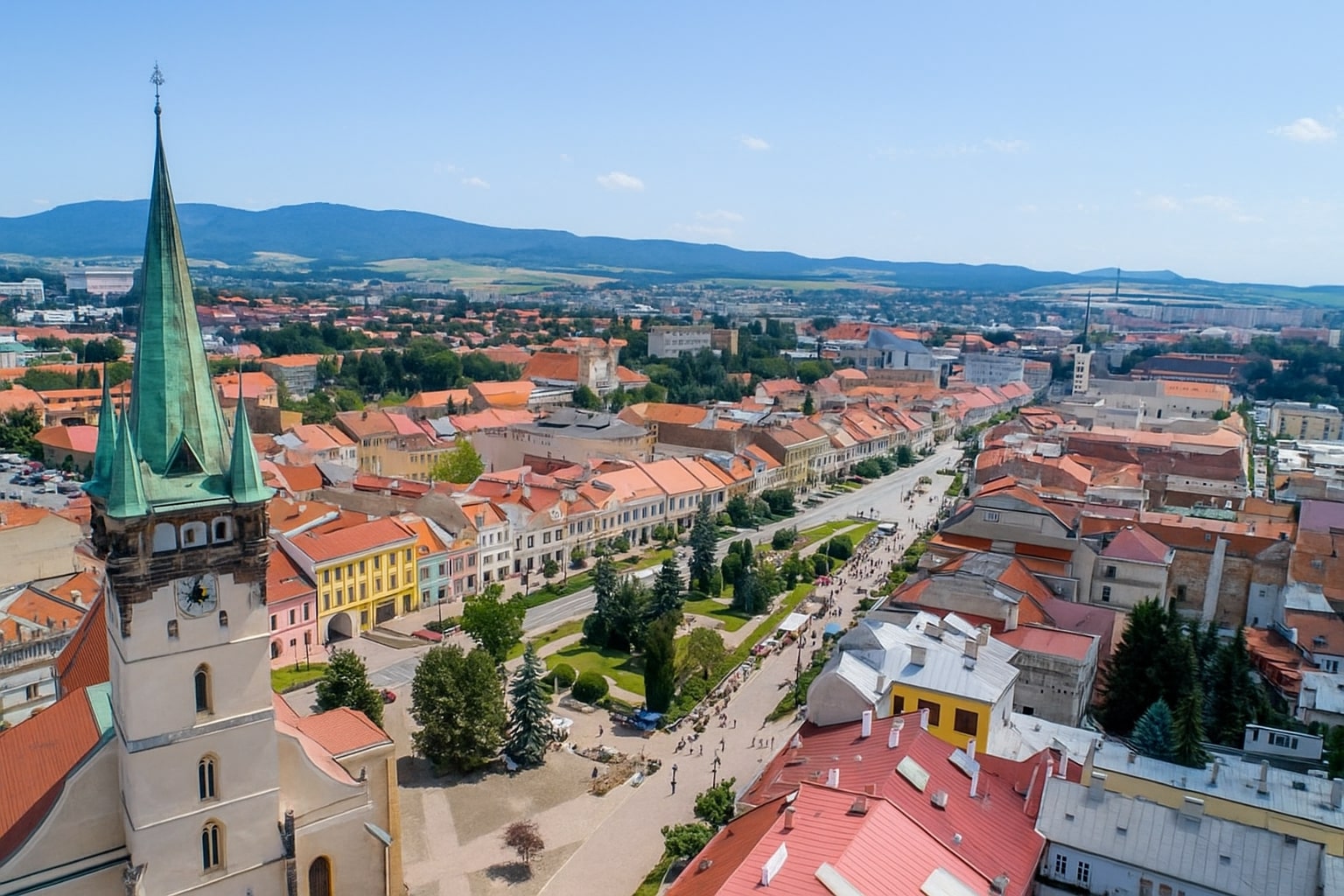
City view of Presov, Slovakia

Presov

Presov moves at the tempo of its wide square where salt barons once sealed deals and students now argue about films. Churches change the skyline without battling for attention, and a synagogue with Moorish curves quietly tells a longer European story. Street corners deliver comforting aromas of langos, while wine bars pour from the Tokaj zone that begins just beyond the city limits. Trenches of history are never far away, especially in nearby Solivar where wooden machinery explains how brine became fortune. Presov likes theater that talks back to the audience, and festivals use the square as an open book. People watch from benches under lime trees, comparing notes about ice hockey and exam schedules. Here is a fun twist, a local museum houses a 17th century mechanical theater that still moves when coaxed, and somehow it mirrors the city’s mix of patient craft and expressive performance.

Top attractions & things to do in Presov

If you’re searching for the best things to do in Presov, this guide brings together the top attractions and must-see places to visit in Presov. The top picks below highlight the most visited sights for first-time visitors, plus a few local favorites worth adding.

Jonas Zaborsky Theatre in Presov, Slovakia

Jonas Zaborsky Theatre

Evenings in Presov often begin with a ticket: Jonas Zaborsky Theatre turns anticipation into architecture. The main house opened in the 1950s and grew through later refurbishments, balancing generous foyers with a disciplined proscenium stage. A cushioned rake ensures sightlines that flatter actors rather than egos, and acoustic panels added during 1990s works keep dialogue crisp. The repertoire moves from classics to contemporary premieres, and a puppet stage next door keeps families loyal without talking down to them. Watch the curtain call from the aisle and you will see how a repertoire company breathes together—bows as choreography, not habit. Look for foyer murals and a modest bust of Jonas Zaborsky, local reminder that literature is infrastructure too. The pit accommodates an orchestra when seasons demand it, and a modern lighting grid lets designers paint in cues rather than guesses. Step outside afterward and the square feels newly tuned, the city walking home in a higher key.
Ads place
Ads place
Ads place
Ads place
Ads place
Orthodox Synagogue in Presov, Slovakia

Orthodox Synagogue

A few streets from the main square stands the Orthodox Synagogue, a brick-and-stone landmark that balances modesty with ceremony. Built in the late 19th century—records from the 1890s are often cited—it mixes Moorish Revival motifs with a basilical plan adapted to community needs. The women's gallery floats on cast iron like a balcony in a quiet opera house, and a restored Torah ark anchors the focus with disciplined ornament. Wartime rupture emptied the building, but careful stewardship returned it to cultural use without erasing scars. Listen during a chamber concert as the dome gathers strings into a single, rounded tone; even silence sounds room-shaped here. Plaques explain names, losses, and continuities with frank economy, while curators prefer verified dates over legend. On the facade, patterned brickwork handles light with quiet pride, proof that civic memory and architecture can still hold a conversation. A small exhibit on Hebrew inscriptions explains letter forms and materials, turning pale ink and stone into legible time.
Ads place
Ads place
Ads place
Ads place
Ads place
Presov Calvary in Presov, Slovakia

Presov Calvary

Climb the slope gently and a chain of chapels counts out the hill like beads: the Calvary above Presov is part devotion, part landscape design. Most of the ensemble dates to the 18th century, when towns built outdoor ways of the cross to bring prayer into walking, and the sequence here embraces a distinctly Baroque sense of staging. Locals time their visit for golden hour when shadows lengthen and the city relaxes below. Each stop has its own microclimate—stone cooled by shade, grass warm from sun—and the rhythm of the chapels settles thinking. At the crest, a small sanctuary gathers the route into a single breath and a panorama worth the steps. Tradition speaks of processions that once threaded the lanes on feast days, giving the hillside a temporary choreography. Today joggers share the path with pilgrims, and a posted notice asks for care during nesting season in the nature reserve margins. Bring water and calm curiosity; the descent teaches the same story again, only softer.
Ads place
Ads place
Ads place
Ads place
Ads place
Solivar Saltworks in Presov, Slovakia

Solivar Saltworks

Salt shaped Presov as surely as weather, and nowhere explains that better than Solivar, the historic saltworks on the city's edge. The complex gathers a brine house, storage barns, and a shaft system from the 17th century that lifted saline water to the surface with ingenious gearing. Visitors trace the path from well to evaporation pans, where heat, patience, and rakes turned liquid into paydays. A catastrophic fire in the 1750s is recorded in municipal notes; reconstruction followed with safer layouts and supervised furnaces. Wooden lifting frames once powered by a large waterwheel survive in explanatory models, while the coopers' workshop demonstrates barrel craft at human scale. Docents talk about brine density, crystallization windows, and the labor calendar that synchronized families with boilers. On event days, steam whistles punctuate tours and the air smells faintly mineral; on quiet mornings, the timber halls feel like a cathedral to logistics. End where finished blocks were stacked for transport and you will understand how the town's economy once depended on punctual heat.
Ads place
Ads place
Ads place
Ads place
Ads place
St Nicholas Cathedral in Presov, Slovakia

St Nicholas Cathedral

Step into the cool nave and listen to how the town quiets around stone and light; low aisles guide you forward before the tower introduces itself outside. Parish notes place the first church here in the 14th century, later heightened and refined in a Late Gothic campaign that kept the plan legible. Craftsmen from regional shops—some attributed in ledgers to Master Paul’s wider circle—left tracery that still catches dust like lace. After periodic fires in the 16th century, chapels were rebuilt with a practical patience that shows in their sober proportions. Stand near the crossing and count bays; the three-aisled rhythm reads like measured music. A carved pulpit, a set of calm side altars, and a font smooth with fingertips turn theology into furniture. Listen for the organ testing a chord before rehearsal; the building answers with a soft echo that arrives like agreement. Step back outside and the facade looks less like a monument than a chronicle of repairs and reconciliations—ordinary history made legible.
Ads place
Ads place
Ads place
Ads place
Ads place